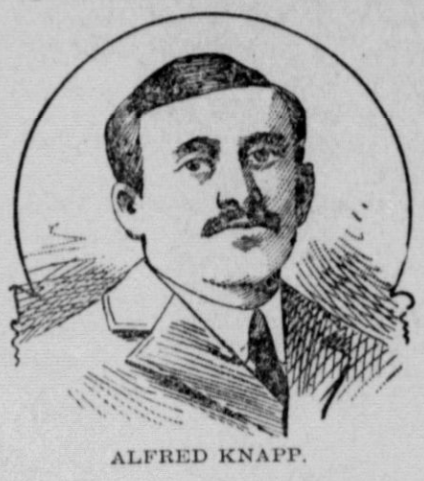
Alfred Knapp
American Serial Killer Case
CLASSIFICATION: Serial Homicide
LOCATION
Cincinnati, Ohio
TIME PERIOD
1894-1904
VICTIMS
5 confirmed
Alfred Andrew Knapp, known as The Hamilton Strangler, was an American serial killer active between 1894 and 1902, responsible for the murders of at least five women and girls. He was apprehended on February 25, 1903, in Hamilton, Ohio, following the disappearance and subsequent murder of his third wife, Hannah Knapp, whose body he disposed of in the Great Miami River after strangling her on December 21, 1902. During his interrogation, Knapp confessed not only to Hannah's murder but also to the killings of four other victims, including his second wife, Jennie Connors Knapp, and a child named Ida Gebhard. He was convicted of first-degree murder and executed by electrocution on August 19, 1904, at the Ohio State Penitentiary. Significant evidence included his own confessions and the circumstances surrounding the disappearances of his victims, which linked him to multiple unsolved cases.
Alfred Knapp is believed to have killed at least five women and girls, leading to speculation that he may have had a pattern of targeting vulnerable individuals. Some theorists suggest that his violent tendencies were exacerbated by his history of incarceration for assaults on women. Additionally, there is speculation that his religious affiliations were a façade to mask his darker impulses, as he was known to present himself as a man of unassuming manners while committing heinous acts.
The Tale of Alfred Knapp: The Hamilton Strangler
A Portrait of a Killer
Alfred Andrew Knapp, born in 1863 in Terre Haute, Indiana, would become infamously known as "The Hamilton Strangler." His reign of terror spanned from 1894 to 1902, leaving a trail of at least five murdered women and girls in his wake. Knapp's life was a tapestry woven with criminal deeds that ultimately led to his execution on August 19, 1904, at the Ohio State Penitentiary in Columbus, Ohio. He met his end by electrocution, with his crimes casting a long shadow over the states of Ohio and Indiana.
Early Life and Descent into Darkness
Alfred Knapp was one of two children born to Cyrus and Susannah Knapp in Terre Haute. His formative years were marred by a propensity for violence, as evidenced by his frequent incarcerations for brutal assaults on women. Despite this dark side, Knapp was a member of the Fourth Christian Church and was involved with the Christian Endeavor Society, where he was seen as a man of unassuming manners. At the time of his arrest, Knapp was living with his fourth wife in Indianapolis, a city that would soon come to know the depths of his depravity.
The Murder of Hannah Knapp
On December 21, 1902, the disappearance of Hannah Knapp, Alfred's third wife, marked a turning point in his criminal career. That fateful morning, Knapp awoke with an uncontrollable urge to strangle her. After committing the murder, he placed her lifeless body into a box, nailed it shut, and transported it two miles away, dumping it into the Great Miami River. In the days following her disappearance, Knapp remained in Cincinnati, visiting his sister, Sadie Wenzel, under the pretense of searching for his missing wife. He then relocated to Hamilton before settling in Indianapolis, where he quickly married Anna May Gamble on February 4, 1903.
Confessions of a Serial Killer
Alfred Knapp's arrest on February 25, 1903, on suspicion of murdering Hannah marked the beginning of the end for him. Apprehended in Hamilton, Knapp confessed to strangling his wife and disposing of her body in the river. His confession soon expanded to include four more victims:
- Emma Littleman, murdered in a Cincinnati lumberyard on June 21, 1894.
- Mary Eckert, killed on Walnut Street in Cincinnati on August 1, 1894.
- Jennie Connors Knapp, his second wife, strangled on Liberty Street in Cincinnati on August 17, 1894.
- Ida Gebhard, a child, killed in Indianapolis in July 1896.
Despite his confessions, authorities suspected Knapp was responsible for additional crimes, as he admitted to attacking and choking innocent children.
Trials and Tribulations
Knapp's trial captivated the public, elevating him to a grim celebrity status. As he was escorted to the courtroom, he chatted amiably with police officers, despite having no legal representation. His sister Sadie stood by him, attempting to argue his mental instability in hopes of securing his commitment to a mental institution. At first, the prosecution struggled with a lack of physical evidence, as Hannah's body had not yet been found.
However, on March 3, 1903, the discovery of a woman's nude body in the river in New Albany, Indiana, shifted the tides. The jewelry and rings matched those Hannah wore on the day of her disappearance, corroborating Alfred's confession. Despite this, Alfred remained indifferent when confronted with the evidence.
On March 10, Knapp was called as a witness in the trial of Joseph Roth, suspected of assaulting two girls, Hattie and Stella Motzer. Although Knapp denied involvement, his resemblance to Roth led to speculation about his possible misidentification.
Verdict and Execution
Knapp's trial concluded on July 16, 1903, with a conviction for first-degree murder and a death sentence. His sister and mother were devastated, but Knapp remained detached, commenting casually on his fate. A motion for a new trial was dismissed on September 2, yet on January 4, 1904, Judge Swing granted a retrial due to procedural errors, including the jury's exposure to Knapp's written confession.
Despite a final appeal by his lawyer, Thomas Darby, to the State Board of Pardons on July 22, 1904, Knapp's fate was sealed. He was executed by electric chair on August 19, 1904, steadfast in his refusal to confess to any further crimes. His execution drew comparisons to H. H. Holmes, with newspapers noting Knapp's crimes seemed driven by a sheer desire for malevolence.
Sources
No Recent News
No recent news articles found for this case. Check back later for updates.
No Evidence Submitted
No evidence found for this case. Be the first to submit evidence in the comments below.
Join the discussion
Loading comments...
Hannah Knapp Disappears
Alfred Knapp's third wife, Hannah, goes missing after he strangles her and disposes of her body.
Knapp Arrested
Alfred Knapp is arrested on suspicion of murdering his wife, later confessing to her murder and four others.
Hannah's Body Found
The nude body of Hannah Knapp is discovered in the river, confirming Alfred's confession.
Conviction and Sentencing
Alfred Knapp is convicted of murder and sentenced to death without possibility of commutation.
New Trial Granted
A new trial is granted to Knapp due to errors in the first trial, particularly regarding his confession.
Execution
Alfred Knapp is executed by electric chair in Ohio Penitentiary, dying six minutes after the shock.
Alfred Andrew Knapp, known as The Hamilton Strangler, was an American serial killer active between 1894 and 1902, responsible for the murders of at least five women and girls. He was apprehended on February 25, 1903, in Hamilton, Ohio, following the disappearance and subsequent murder of his third wife, Hannah Knapp, whose body he disposed of in the Great Miami River after strangling her on December 21, 1902. During his interrogation, Knapp confessed not only to Hannah's murder but also to the killings of four other victims, including his second wife, Jennie Connors Knapp, and a child named Ida Gebhard. He was convicted of first-degree murder and executed by electrocution on August 19, 1904, at the Ohio State Penitentiary. Significant evidence included his own confessions and the circumstances surrounding the disappearances of his victims, which linked him to multiple unsolved cases.
Alfred Knapp is believed to have killed at least five women and girls, leading to speculation that he may have had a pattern of targeting vulnerable individuals. Some theorists suggest that his violent tendencies were exacerbated by his history of incarceration for assaults on women. Additionally, there is speculation that his religious affiliations were a façade to mask his darker impulses, as he was known to present himself as a man of unassuming manners while committing heinous acts.
The Tale of Alfred Knapp: The Hamilton Strangler
A Portrait of a Killer
Alfred Andrew Knapp, born in 1863 in Terre Haute, Indiana, would become infamously known as "The Hamilton Strangler." His reign of terror spanned from 1894 to 1902, leaving a trail of at least five murdered women and girls in his wake. Knapp's life was a tapestry woven with criminal deeds that ultimately led to his execution on August 19, 1904, at the Ohio State Penitentiary in Columbus, Ohio. He met his end by electrocution, with his crimes casting a long shadow over the states of Ohio and Indiana.
Early Life and Descent into Darkness
Alfred Knapp was one of two children born to Cyrus and Susannah Knapp in Terre Haute. His formative years were marred by a propensity for violence, as evidenced by his frequent incarcerations for brutal assaults on women. Despite this dark side, Knapp was a member of the Fourth Christian Church and was involved with the Christian Endeavor Society, where he was seen as a man of unassuming manners. At the time of his arrest, Knapp was living with his fourth wife in Indianapolis, a city that would soon come to know the depths of his depravity.
The Murder of Hannah Knapp
On December 21, 1902, the disappearance of Hannah Knapp, Alfred's third wife, marked a turning point in his criminal career. That fateful morning, Knapp awoke with an uncontrollable urge to strangle her. After committing the murder, he placed her lifeless body into a box, nailed it shut, and transported it two miles away, dumping it into the Great Miami River. In the days following her disappearance, Knapp remained in Cincinnati, visiting his sister, Sadie Wenzel, under the pretense of searching for his missing wife. He then relocated to Hamilton before settling in Indianapolis, where he quickly married Anna May Gamble on February 4, 1903.
Confessions of a Serial Killer
Alfred Knapp's arrest on February 25, 1903, on suspicion of murdering Hannah marked the beginning of the end for him. Apprehended in Hamilton, Knapp confessed to strangling his wife and disposing of her body in the river. His confession soon expanded to include four more victims:
- Emma Littleman, murdered in a Cincinnati lumberyard on June 21, 1894.
- Mary Eckert, killed on Walnut Street in Cincinnati on August 1, 1894.
- Jennie Connors Knapp, his second wife, strangled on Liberty Street in Cincinnati on August 17, 1894.
- Ida Gebhard, a child, killed in Indianapolis in July 1896.
Despite his confessions, authorities suspected Knapp was responsible for additional crimes, as he admitted to attacking and choking innocent children.
Trials and Tribulations
Knapp's trial captivated the public, elevating him to a grim celebrity status. As he was escorted to the courtroom, he chatted amiably with police officers, despite having no legal representation. His sister Sadie stood by him, attempting to argue his mental instability in hopes of securing his commitment to a mental institution. At first, the prosecution struggled with a lack of physical evidence, as Hannah's body had not yet been found.
However, on March 3, 1903, the discovery of a woman's nude body in the river in New Albany, Indiana, shifted the tides. The jewelry and rings matched those Hannah wore on the day of her disappearance, corroborating Alfred's confession. Despite this, Alfred remained indifferent when confronted with the evidence.
On March 10, Knapp was called as a witness in the trial of Joseph Roth, suspected of assaulting two girls, Hattie and Stella Motzer. Although Knapp denied involvement, his resemblance to Roth led to speculation about his possible misidentification.
Verdict and Execution
Knapp's trial concluded on July 16, 1903, with a conviction for first-degree murder and a death sentence. His sister and mother were devastated, but Knapp remained detached, commenting casually on his fate. A motion for a new trial was dismissed on September 2, yet on January 4, 1904, Judge Swing granted a retrial due to procedural errors, including the jury's exposure to Knapp's written confession.
Despite a final appeal by his lawyer, Thomas Darby, to the State Board of Pardons on July 22, 1904, Knapp's fate was sealed. He was executed by electric chair on August 19, 1904, steadfast in his refusal to confess to any further crimes. His execution drew comparisons to H. H. Holmes, with newspapers noting Knapp's crimes seemed driven by a sheer desire for malevolence.
Sources
No Recent News
No recent news articles found for this case. Check back later for updates.
No Evidence Submitted
No evidence found for this case. Be the first to submit evidence in the comments below.
Join the discussion
Loading comments...
Hannah Knapp Disappears
Alfred Knapp's third wife, Hannah, goes missing after he strangles her and disposes of her body.
Knapp Arrested
Alfred Knapp is arrested on suspicion of murdering his wife, later confessing to her murder and four others.
Hannah's Body Found
The nude body of Hannah Knapp is discovered in the river, confirming Alfred's confession.
Conviction and Sentencing
Alfred Knapp is convicted of murder and sentenced to death without possibility of commutation.
New Trial Granted
A new trial is granted to Knapp due to errors in the first trial, particularly regarding his confession.
Execution
Alfred Knapp is executed by electric chair in Ohio Penitentiary, dying six minutes after the shock.