ANALYZING EVIDENCE
Processing case files...
Processing case files...
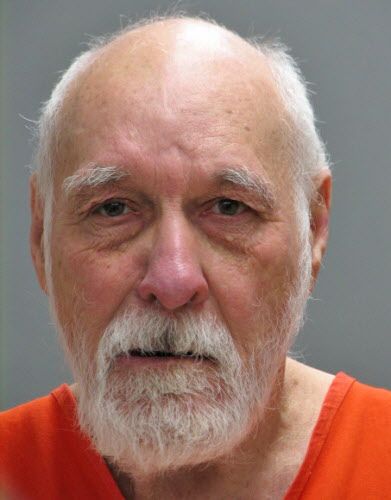
Questionable Serial Killer Case
CLASSIFICATION: Serial Homicide
LOCATION
Minneapolis, Minnesota
TIME PERIOD
1985-1987
VICTIMS
3 confirmed
Billy Richard Glaze, a convicted serial killer, was apprehended on August 31, 1987, in New Mexico for violating parole related to a previous rape conviction. He was linked to the murders of three Native American women in Minneapolis, Minnesota, between 1985 and 1987, following tips from a waitress and a girlfriend. Glaze was convicted based on hair samples found on a crowbar in his possession and sentenced to life imprisonment, maintaining his innocence throughout. However, DNA evidence discovered in 2009 and 2014 excluded Glaze and implicated another convicted rapist, prompting his attorneys to file for a new trial. As of now, the Minneapolis Police Department and Hennepin County Attorney's Office are re-investigating the case, although Glaze passed away in prison on December 22, 2015, due to lung cancer.
Some believe modern DNA testing excludes Billy Glaze and instead implicates another Minnesota convicted rapist, a theory advanced by the Minnesota Innocence Project which has pointed to a cigarette butt and rape-kit DNA that match the alternate suspect and to recanted or unreliable eyewitness testimony at Glaze’s trial. Investigators and prosecutors have countered that the original case evidence (including hair on a crowbar, eyewitness accounts, and a alleged 2004 confession) overwhelmingly tied Glaze to the killings, so responsibility for the Minneapolis murders remains disputed and prompted an official re‑investigation.
On a Tuesday morning, a man long branded a Minneapolis serial killer died in prison after spending more than 25 years behind bars.[1] His name was Billy Glaze, and a jury had once found him guilty of murdering three women in the city in the late 1980s.[2] He was serving three life sentences.[1]
In the weeks before his death, attorneys were arguing in court that new DNA testing showed “not a single item” tied him to the killings that had put him there.[2][3] They were pressing for a new trial while Hennepin County prosecutors, pointing to what they called overwhelming evidence and a later confession, asked for more time to respond.[2]
Glaze did not live to see whether the system that condemned him would take a second, harder look.
Between July 1986 and April 1987, the bodies of three women were discovered in Minneapolis, each in locations frequented by transients.[3] All three were found nude or mostly nude.[1] The crimes unfolded against a backdrop of public anger over violence against American Indian women and how such cases were investigated.[1]
The three victims were:
They were part of what was described contemporaneously as a series of murders of American Indian women in Minneapolis in the 1980s, a string of killings that drew intense media attention and accusations that police had not aggressively pursued crimes against Native women.[1]
The investigation eventually focused on one man: Billy Glaze.
By 1989, Glaze was on trial in Minneapolis, accused of killing Bullman, Whitebird-Sweet, and Green.[2][4] According to later reporting, his 1989 conviction was based largely on testimony from witnesses and jail inmates.[3]
© Mapbox © OpenStreetMap
Prosecutors also presented a handwritten note, purportedly from Glaze, that read: “I killed them. I was mad at them.”[3] A jury ultimately found him guilty of first- and second-degree murder in the bludgeoning death of 19‑year‑old Kathy Bullman.[1] He was also convicted in connection with the deaths of Angeline Whitebird‑Sweet and Angela Green, the three murders forming a single, high‑profile case for authorities.[1][2]
There was no DNA evidence at the time. Minnesota Innocence Project attorney Julie Ann Jonas would later note that the state simply did not have such testing available when Glaze was prosecuted.[3] The case instead leaned on what people said they saw or heard—and that contested note from jail.
Years later, Innocence Project lawyers would argue that the witness testimony was unreliable and the physical evidence, including the note, did not actually prove Glaze guilty.[3]
After the jury’s verdict, Glaze received three life sentences and was transferred out of Minnesota to serve his time.[1] By 1990, he had been housed at the Delaware State Penitentiary, where he would remain for decades.[5]
From behind those walls, Glaze became one more name in a system distant from the Minneapolis streets where the women had been found. Attorneys later said he suffered from mental illness.[3] Regardless, the legal record on paper was clear: a 1989 Minneapolis serial‑murder case, three dead women, a convicted killer serving life.[3][4]
For many in Minneapolis, the convictions closed a dark chapter. For others, particularly advocates concerned about how crimes against Native women were investigated, questions lingered.[1]
The case might have stayed frozen in the late 1980s if not for a tool that simply did not exist when Glaze was tried.
In a court filing, attorneys with the Minnesota Innocence Project laid out the results of new DNA testing on evidence from the murder scenes.[2][3] They reported that tests on 39 items taken from the scenes showed no link to Billy Glaze.[2] “There is not a single item that has come up that matches Billy,” said Ed Magarian, a partner at Dorsey & Whitney who was working with the Minnesota Innocence Project on Glaze’s behalf.[1][3]
The attorneys argued that the original case—which they said relied heavily on witnesses and inmates—could not withstand scientific scrutiny.[3] In their view, the new DNA results did more than just fail to support the state’s theory; they pointed away from Glaze.
An MPR News headline captured their stance starkly: “DNA tests show man innocent of 1980s Minn. murders, lawyers say.”[5] Those lawyers were asking for a new trial.[3]
They also emphasized that the kind of DNA testing now available had simply not existed during the original prosecutions.[3] To them, Glaze’s case fit a pattern seen across the national Innocence Network, which by then had helped free more than a thousand people, hundreds of them through DNA evidence.[3]
The DNA results did not just fail to implicate Glaze. According to the Innocence Project, they pointed toward someone else.
In their filings, the attorneys said they had identified a newly implicated suspect through the testing, though they did not name him in public court documents.[3] The organization later described the man as a convicted rapist.[2] At the Innocence Project’s request, a defense investigator tracked him down.[2]
When contacted, the man denied knowing any of the three murdered women or ever being at any of the murder scenes, according to Innocence Project attorneys.[2] The group declined to name him publicly but said they had provided Hennepin County prosecutors with the DNA test results that led them to him.[2][3]
To Glaze’s advocates, this alternate suspect underscored how precarious the original conviction looked once DNA entered the picture. To prosecutors, it was one more development to be studied in a case file that by then ran to thousands of pages.
Hennepin County prosecutors did not simply concede that the new DNA results exonerated Glaze. In a motion to the court, they asked for extra time—until the end of October—to formally respond to the Innocence Project’s claims.[2] The case, they noted, involved more than 6,800 pages of investigative reports and court transcripts, and they said they needed time to locate and consult DNA analysts to review the scientific evidence.[2]
The prosecutors handling the matter were working part time, and their motion cited previously scheduled trips out of town over the summer and fall as another reason for delay.[2]
Innocence Project attorneys countered that they believed that confession was false.[2] To them, it fit uneasily with the physical evidence the new DNA testing was uncovering.
Even as they sought more time, prosecutors were clear about their position. In their motion, they wrote that “the evidence of Glaze’s responsibility for these murders is overwhelming.”[2] They pointed to a 2004 episode in which Glaze, they said, confessed to the three Minneapolis murders while speaking with Los Angeles police.[2]
Innocence Project attorneys countered that they believed that confession was false.[2] To them, it fit uneasily with the physical evidence the new DNA testing was uncovering.
Angela Greene in At War with the Army 1950.jpg
Wikimedia Commons· Public domain
By the time the legal fight over the new DNA results picked up, Glaze had been locked up for decades. He had been serving his sentence at Delaware State Penitentiary since 1990.[5] In the final stretch of his life, he became the focal point of a full‑court press from the Minnesota Innocence Project and outside counsel.
Then came a diagnosis: stage 4 lung cancer.[1] Days later, he was dead in prison, having spent more than 25 years behind bars.[1]
Even the simplest detail of his death carried an echo of the uncertainties in his case. Some accounts listed his age as 72; others said he was 70.[1][3]
Ed Magarian, the Dorsey & Whitney partner working with the Innocence Project, later described the blow of Glaze’s death. “We are devastated by his loss. We were confident that he would be exonerated in 2016, and he would walk out of prison a free man,” he said.[1] According to Magarian, Glaze’s “dying wish was that we clear his name.”[1]
Magarian said he was looking into how the case might proceed despite Glaze’s death and added, “If we can go forward we will, whether it’s this forum or another forum.”[1] The attorneys signaled that, for them, the questions raised by the DNA testing and the newly identified suspect did not vanish with their client.
The murders of Kathy Bullman, Angeline Whitebird‑Sweet, and Angela Green devastated families and helped spark a wider reckoning over how violence against American Indian women was treated in Minneapolis.[1] A jury’s verdict and three life sentences once seemed to offer a measure of closure.[1]
Decades later, that certainty has cracked. The Innocence Project’s testing of 39 items from the murder scenes reportedly failed to connect a single one to the man in prison for the crimes.[2][3] The group says those same tests led them to an unnamed, convicted rapist who denies any role.[2][3] Prosecutors, meanwhile, continue to emphasize a thick case file, a purported confession in 2004, and what they insist is overwhelming evidence of Glaze’s guilt.[2][3]
Glaze himself is no longer here to speak, whether to maintain innocence or explain the alleged confession. He died in a distant prison, his name still legally attached to three murders that reshaped a city’s sense of safety and justice.[1]
What remains are records: 6,800 pages of reports and transcripts, the fragile recollections of witnesses from the 1980s, a contested note from a jail cell, and strands of DNA extracted from evidence that sat for years in storage.[2][3] They tell overlapping, contradictory stories about who killed three young women in Minneapolis.
Whether the system will ever reconcile those stories—and what that might mean for the legacies of both the victims and the man convicted of killing them—still hangs unresolved.
Adapted from Wikipedia: Billy Glaze.
This case file is an original Bloody Likely narrative synthesis based on the cited sources. Article © Bloody Likely. All rights reserved. Source materials remain the property of their respective owners. Facts, public records, quotations, and cited references are used for reporting, research, commentary, and documentation. Bloody Likely content license
No recent news articles found for this case. Check back later for updates.
No evidence found for this case. Be the first to submit evidence in the comments below.
Join the discussion
Loading comments...
Billy Glaze becomes a suspect in the murders of three Native American women in Minneapolis.
Glaze is arrested for DUI and found with a bloody shirt, crowbar, and nightstick.
Glaze is convicted of three counts of first degree murder and sentenced to life imprisonment.
DNA testing shows semen from a victim's rape kit does not match Glaze, implicating another man.
Glaze's attorneys file for a new trial based on DNA evidence and unreliable eyewitness testimony.
Billy Glaze dies in prison after being diagnosed with stage four lung cancer.