ANALYZING EVIDENCE
Processing case files...
Processing case files...
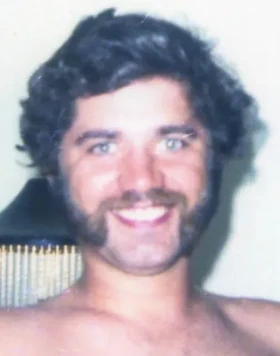
Illinois Serial Killer and Rapist
CLASSIFICATION: Serial Homicide
LOCATION
Aurora, Illinois
TIME PERIOD
1974-1981
VICTIMS
3 confirmed
Bruce Everitt Lindahl, an American serial killer and rapist, was active in the Chicago suburbs from 1974 to 1981, committing a series of rapes and murders. He was connected to the death of 16-year-old Pamela Maurer, who was murdered on January 13, 1976, in DuPage County, Illinois, and DNA evidence linked him to the murder of Kathy Halle in March 1979. Lindahl was declared a suspect in at least 12 murders and nine rapes during this period. He was killed on April 4, 1981, by one of his victims who managed to stab him, leading to further investigations that confirmed his identity as a perpetrator in multiple cases. Current investigations are ongoing, with DNA testing being conducted to potentially link him to additional unsolved murders.
Some investigators and journalists have speculated that Lindahl was a prolific serial predator responsible for at least a dozen killings and multiple rapes beyond the three confirmed cases, with tips and photographs found in his possession suggesting many more victims, including missing teens like Deborah McCall. Critics and cold-case detectives have argued that misogyny and inept or compromised policing — for example, reports that a rape victim’s testimony was discounted because the assault occurred in the home of a police officer friend of Lindahl — allowed him to evade arrest and possibly facilitated a broader pattern of unprosecuted violent crimes. There is also investigative speculation that Lindahl had motive and opportunity to murder Debra Colliander to prevent her testifying at his trial and that he may have planned retaliatory violence against reporter Jim Ridings, though these claims remain unresolved and based on circumstantial evidence and witness reports.
When Naperville patrol officer Robert Marshall stepped into a small apartment in 1981, he found a scene that “perplexing” barely covered. [1] On the floor near a sliding glass door lay 18‑year‑old Charles Huber, stabbed to death. [1][2] On top of him was the body of another man, later identified as Bruce Lindahl. [1]
At first, investigators thought they were looking at a double homicide and that a killer might still be on the loose. [1] The truth turned out to be stranger. According to the coroner’s report, Lindahl had severed his own femoral artery during a frenzied knife attack on Huber and bled to death while lying on top of him. [1] Authorities later described it as an apparent accident: Lindahl sliced open his femoral artery while stabbing Huber more than two dozen times. [3] DuPage County State’s Attorney Robert Berlin would later say Lindahl stabbed Huber 28 times. [2]
Because Lindahl fatally injured himself in the attack, there was no one to charge in Huber’s killing. [1] Years later, Marshall would look back on that night and say the stabbing had stopped Lindahl from victimizing more people. [1]
At the time, it was a brutal but contained crime: one young man murdered by another in a Naperville apartment belonging to Lindahl’s ex‑girlfriend, whose discovery of the bodies had triggered the call to police. [1][3] Only decades later would authorities publicly link the dead attacker—Bruce Lindahl of Aurora—to a chain of rapes and suspected murders stretching across nearby communities, and to the unsolved 1976 killing of a 16‑year‑old girl named Pamela Maurer. [1][3]
Before his name became attached to cold‑case files, Bruce Lindahl moved easily through social circles in and around Downers Grove, Lisle and Woodridge, where he grew up, and later Aurora, where he lived. [2][3]
One of the people who knew him then was a man named Torres. Torres started skydiving in 1975 at the Hinckley Parachute Center, a popular drop zone, and met Lindahl there. [4] Both in their 20s, they became friends—playing racquetball, drinking, partying, eating together, and heading to local parties after days of jumping. [4]
Torres later recalled that Lindahl had a temper. Once, he said, Lindahl got into a fight with a driver doing donuts near the skydiving drop zone. [4] It was a flash of violence that, in hindsight, looks very different set against what investigators now say about Lindahl’s later years.
According to police, Lindahl is linked to several crimes, including rape and murder, committed between 1974 and 1981 in the Naperville, Aurora, Lisle, Woodridge and Downers Grove areas. [3]
On a winter night in 1976, 16‑year‑old Pamela Maurer left a friend’s house in Woodridge to buy a Coke at a nearby McDonald’s. [2] The walk from the neighborhood to the restaurant was less than three‑quarters of a mile. [2] She never returned.
The next day, her body was found alongside College Road in Lisle. [2] Authorities said she had been strangled. [2] For decades, the case remained unsolved—a teenage girl killed on a short, ordinary walk, with no one held responsible.
Until recently, authorities said no one knew that the same Bruce Lindahl who died on top of Charles Huber in 1981 was also responsible for killing Maurer. [1] That changed when forensic science caught up with the evidence.
Investigators later used DNA technology that hadn’t existed in the 1970s to link Lindahl to the 1976 strangulation of Pamela Maurer. [1] At a news conference, DuPage County State’s Attorney Robert Berlin announced that police had solved the 1976 murder and named Bruce Lindahl the killer, identifying him as being from Aurora. [2]
© Mapbox © OpenStreetMap
Authorities said advances in forensic science and genealogy enabled them to identify Maurer’s killer. [2] Police used a new type of DNA analysis—described as a first for Illinois—that relies on the same style of genealogical sleuthing used in the Golden State Killer case. [3] On a Monday in January, they publicly identified Bruce Lindahl as the man responsible for Maurer’s rape and strangulation. [3]
Maurer’s murder, once a lonely cold case from 1976, had just been tied to a man long buried—and to a much larger pattern of violence.
By 1980, Lindahl was living in a house on the 1000 block of Solfisburg Avenue in Aurora. Torres had sold him the house, along with Lindahl’s girlfriend, in October 1979, and records show Lindahl lived there until his death in 1981. [4]
On the morning of June 23, 1980, authorities say Lindahl abducted an Aurora woman named Debra Colliander from the Northgate Shopping Center. [3] Police said he threatened her with a handgun, raped her and took several nude photographs before taking her to his house in Aurora. [3][4] Colliander ultimately escaped, according to police. [4]
Around that time, Torres was on duty in a squad car when he heard a call over the radio: a naked woman was pounding on a door in his old neighborhood, looking for help. [4] An officer mentioned they knew the location because it was Torres’ former residence—the Solfisburg Avenue house he had sold to Lindahl. [4]
Torres said he was the first officer through the door when they responded. Inside, he told Lindahl, “we have to talk to you,” and that Lindahl needed to go downtown. [4] Torres later said he never came into contact with Lindahl again after that incident. [4]
The criminal case that followed was serious. Lindahl was charged in relation to the Colliander incident and released on bond. [4] He was later indicted in Kane County on counts of deviate sexual conduct, rape and aggravated kidnapping. [3]
Then, Colliander vanished.
Debra Colliander of Aurora was last seen leaving work at Copley Hospital in October 1980. [3] Beacon‑News archives show she was due to testify in a criminal trial against Lindahl two weeks after she disappeared. [3] Lindahl was out on bond and about to stand trial when she went missing. [3]
Without its key witness, the case against him collapsed. The charges stemming from her abduction and assault were eventually dismissed because of her disappearance. [3]
In April 1982, Colliander’s body was found in a farm field in Oswego. [3] Authorities have said they never charged Lindahl in her death but believe he killed her. [3]
Publicly, Colliander’s disappearance and murder, the Maurer cold case, and the 1981 killing of Charles Huber remained separate tragedies. Lindahl had been charged only in the Colliander assault—and with his own death in 1981, that prosecution had already stalled out. [1][4] It would take the exhumation of his body, and the revival of decades‑old files, to bring those threads together.
The end of Lindahl’s life began at a bowling alley.
Police later determined that Lindahl and 18‑year‑old Charles Huber met at Gala Lanes, a bowling alley on Aurora Avenue in Naperville. [1] What passed between them that night is still unknown. What is known is that Huber ended up at Lindahl’s ex‑girlfriend’s apartment. [3]
A woman later identified as Lindahl’s girlfriend walked into that apartment and found two bodies. [1] Marshall and a small group of officers and a sergeant were called to the scene. [1] He would later describe the crime scene as “very perplexing.” [1]
Investigators initially treated the deaths as a double homicide, assuming someone else had killed both men. [1] Instead, the coroner’s report showed that Lindahl had stabbed Huber to death near the sliding glass door, then severed his own femoral artery during the attack and bled to death on top of him. [1] Berlin later stated that Lindahl stabbed Huber 28 times and accidentally stabbed himself in an artery in the process. [2]
As another account put it, Lindahl bled to death after slicing open his femoral artery in an apparent accident during the attack. [3] With the attacker dead, police had no one to charge in the 1981 incident. [1]
At that point, Lindahl’s history on paper was grim but narrow: the attacker in a fatal stabbing, the defendant in a dismissed rape and kidnapping case, and the man Colliander had once accused. Over time, as Marshall learned about the other allegations and the newly uncovered link to Maurer, he said the experience was disturbing. [1] His conclusion was stark: “My take‑away is justice can be delivered in many different ways.” [1]
Behind the scenes, DuPage County was rethinking its old homicide files. DuPage State’s Attorney Chief of Investigations Robert Guerrieri said several local law enforcement agencies formed an ad‑hoc committee to tackle cold cases and compile a comprehensive list of unsolved homicides. [3] He estimated there were 75 to 80 unsolved deaths in the county dating back to the mid‑1970s. [3]
Guerrieri pointed to the practical problems of investigating crimes this old: the condition of physical evidence from the 1970s and 1980s, the challenge of locating old police reports, and the question of whether witnesses and people involved were still alive or nearby. [3]
As part of that push, Lindahl’s body was exhumed late in the year before the Maurer announcement. Authorities obtained his DNA profile and preserved it for future use. [3] That profile, run through advanced forensic genealogy, became the key that finally unlocked Maurer’s case.
Authorities said they used a new type of DNA analysis—akin to the method that helped crack the Golden State Killer case—to link Lindahl to Maurer’s murder, calling it a first for Illinois. [3] Advances in forensic science and genealogy, Berlin said, enabled them to identify Lindahl as the killer. [2]
Until that moment, Lindahl’s name did not appear in Maurer’s file. [1] Once it did, investigators began to look back at every unsolved case in the region that might bear his fingerprints.
The numbers attached to Bruce Lindahl’s name are chilling and, even now, not entirely settled.
Police have said Lindahl is linked to several crimes, including rape and murder, committed between 1974 and 1981 in Naperville, Aurora, Lisle, Woodridge and Downers Grove. [3] One investigator told a reporter that the man newly linked by DNA to the 1976 murder of a Woodridge teenager is a suspect in the murders of at least 12 people. [3]
Lisle police detective Chris Loudon—who helped announce the DNA identification in Maurer’s case—has said he is confident Lindahl committed nine murders. [3] In another account, he said he suspects a total of 12 murder victims connected to Lindahl. [3] The figures differ in phrasing, but all point to a suspected victim count far higher than the few names long associated with Lindahl.
Loudon has said that when he began re‑examining Lindahl’s history, he first searched for cases of local young women who had disappeared. Over time, tips and information suggested Lindahl had “spread out to more than just women.” [3]
According to Loudon, Lindahl is linked to nine rape cases, with some of those victims still alive and some dead. [3] Most of Lindahl’s victims, Loudon said, were strangled, stabbed, or both. [3]
The detective has been inundated with information. Since authorities announced Lindahl’s identification in Maurer’s murder, Loudon said he has received more than 70 tips, and that he is still getting calls from people whose accounts contain details matching known patterns. [3] He has described learning new things every day—and said the case has left him sleeping little and plagued by bad dreams. [3]
Even beyond the specific cases Loudon has spoken about, authorities now say Lindahl is suspected in the disappearance of a Downers Grove teenager, the disappearance and death of an Aurora woman, and the rapes of other women. [1]
When investigators searched Lindahl’s home after his death, they found something that still drives the open‑ended nature of this case: photographs. Lindahl was known to take nude images of his victims. [3]
Authorities are using photos discovered in his house after he died to try to identify potential victims and piece together where and when they may have been harmed. [3] One of those photos appears to show Deb McCall, a Downers Grove North High School student who disappeared in 1979. [3]
Her image, if the identification is confirmed, would place Lindahl in proximity to yet another missing teenager from the region—one more thread in a tangle of unsolved disappearances and deaths that predate his own violent end in 1981.
Legally, the ledger on Bruce Lindahl will never be fully balanced. He died in April 1981 while murdering Charles Huber, ending any possibility of standing trial for the crimes investigators now attribute to him. [2] The only criminal case to reach court—the Kane County indictment for deviate sexual conduct, rape and aggravated kidnapping in the Colliander assault—was dismissed when she disappeared. [3]
No jury will ever weigh the full body of evidence; no judge will ever sentence Lindahl for the murders beyond the conclusively solved Maurer case. [2] Yet for families whose loved ones vanished or were killed in the mid‑1970s through early 1980s, his name has become a focal point for long‑unanswered questions.
Guerrieri’s cold‑case committee still has 75 to 80 unsolved deaths to consider in DuPage County alone. [3] In light of what they now know about Lindahl, investigators have asked people associated with other possible victims to contact the DuPage County State’s Attorney’s Office or Lisle police. [1] One article urged anyone with information about unsolved crimes that may involve Lindahl to call the DuPage County State’s Attorney’s Office at 630‑407‑8107 or Lisle police at 630‑271‑4252. [3]
Jardin Huber cropped.JPG
Wikimedia Commons· Public domain
For Pamela Maurer’s family, the genealogy match brought a name to the person who ended a 16‑year‑old’s walk to buy a Coke. [2] For Charles Huber’s loved ones, it reframed a baffling apartment homicide as just one point in a much longer, darker pattern. [1][3] And for the unidentified victims who may still be hiding in old reports and faded photographs, the case of Bruce Lindahl remains unfinished business—an investigation still expanding, decades after the man at its center bled out on a Naperville floor. [1][3]
Adapted from Bruce Lindahl (criminal) - Wikipedia.
This case file is an original Bloody Likely narrative synthesis based on the cited sources. Article © Bloody Likely. All rights reserved. Source materials remain the property of their respective owners. Facts, public records, quotations, and cited references are used for reporting, research, commentary, and documentation. Bloody Likely content license
Audio narration © Bloody Likely. All rights reserved. The audio player is provided for personal streaming/listening only.
No recent news articles found for this case. Check back later for updates.
No evidence found for this case. Be the first to submit evidence in the comments below.
Join the discussion
Loading comments...
16-year-old Pamela Maurer is killed in DuPage County, Illinois.
The body of 19-year-old Kathy Halle is discovered in the Fox River.
Bruce Lindahl abducts and rapes Debra Colliander in Aurora.
Bruce Lindahl is convicted for illegal phone tapping and assault.
Bruce Lindahl is fatally stabbed by his victim, Chuck Huber.
Bruce Lindahl is officially linked to Pamela Maurer's murder via DNA.
Lindahl is declared a suspect in at least 12 murders and 9 rapes.
New DNA evidence links Lindahl to the murder of Kathy Halle.