ANALYZING EVIDENCE
Processing case files...
Processing case files...
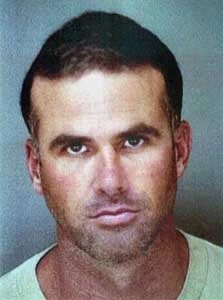
Yosemite National Park Serial Killer
CLASSIFICATION: Serial Homicide
LOCATION
Mariposa County, California
TIME PERIOD
February 15 – July 21, 1999
VICTIMS
4 confirmed
Cary Stayner, known as the Yosemite Killer, committed a series of murders between February and July 1999, targeting four women whose bodies were found near Yosemite National Park, California. He was apprehended on July 24, 1999, and subsequently convicted of multiple counts of first-degree murder, receiving a death sentence in 2002. Stayner is currently incarcerated at San Quentin State Prison, awaiting execution.
Some believe Stayner may have additional victims beyond the four confirmed, with investigators explicitly considering unsolved homicides and disappearances in the Yosemite/central California area — most notably the 1982 disappearance and later-identified remains of Patricia Marie Hicks Dahlstrom, whom authorities have suggested he may have killed in retaliation for her testimony against cult leader Donald Gibson. Others have speculated about his involvement in a string of local cases (including the 1990 unsolved shotgun slaying of his uncle Jesse Jerrold Stayner, the 1994 dismemberment/torso cases tied to Sharalyn Murphy and Denise Smith, and the 1996 disappearance of Michael Larry Madden), and there remains debate over motive and responsibility with defense claims of family sexual abuse, mental illness/paraphilia and the impact of his brother Steven’s abduction contested by prosecutors and ultimately rejected when he was found legally sane.
The body was found just 100 yards from her rented home in the tiny community of Foresta, inside Yosemite National Park.[1]
Joie Ruth Armstrong, a naturalist who made a life out of interpreting the wilderness for visitors, had been decapitated.[1] Within days, investigators focused on a quiet handyman from a nearby motel, a man whose last name was already etched into California crime history.
Cary Stayner, 37, of El Portal, was arrested and formally charged with Armstrong’s murder in July 1999.[1] He was taken into custody not in the mountains but at a nudist park in southeast Sacramento County, far from the alpine meadows where Armstrong had worked.[1]
By the time the handcuffs closed around his wrists, federal agents and local sheriffs were already asking a darker question: was this just one killing, or the visible edge of a much longer trail?
Years later, a national retrospective would state it plainly—Cary Stayner murdered four women in Yosemite.[2] In the summer of 1999, that conclusion didn’t exist yet. What authorities had instead were bodies, gaps in the record, and a suspect whose family name carried its own tragic legend.
Stayner Memorial Arena (Fisheye) - Stayner, ON.jpg
Before he was in headlines, Cary Stayner was the man who fixed things at the Cedar Lodge, a motel on Highway 140 in El Portal that catered to Yosemite tourists.[1] In February 1999, three sightseers—Carole Sund, 42; her 15‑year‑old daughter, Julie; and Julie’s 16‑year‑old friend, Silvina Pelosso—were last seen alive at that lodge.[1]
In March, a hunter discovered a burned‑out rental car off Highway 108 near the small town of Long Barn in Tuolumne County. Inside were the bodies of Carole Sund and Silvina Pelosso.[1] About a week later, searchers found Julie Sund’s body near Don Pedro Reservoir, northwest of Moccasin.[1]
The killings of the three women shocked Northern California. Investigators focused on multiple suspects; at one point, agents said they had linked fibers from a Modesto‑area suspect’s vehicle to the victims.[1] The FBI interviewed Stayner after the Sund and Pelosso killings, then moved on.[1]
Months later, when Armstrong was killed, that decision would come under political fire.
At the time Armstrong’s body was discovered, the FBI publicly named Cary Stayner as a suspect in the Sund, Sund, and Pelosso deaths, but he had not been charged in connection with those killings.[1] One newspaper reported that he had “reportedly…confessed” to killing Armstrong and the three Yosemite sightseers who had last been seen at Cedar Lodge in February.[1]
Still, the legal record lagged behind the suspicions. Agents now had a man under arrest for Armstrong’s murder, a cluster of dead tourists linked to the same patch of Yosemite gateway country, and reasons to wonder what else in the Sierra foothills might trace back to him.
The Stayner name had been attached to a different crime long before federal agents zeroed in on Cary.
In December 1972, seven‑year‑old Steven Stayner was walking home from school along Highway 140 in Merced, the family’s hometown, when a man named Kenneth Parnell and an accomplice, Ervin Murphy, abducted him.[2] Parnell worked at the Yosemite Lodge, roughly two hours from Merced.[2] He’d enlisted Murphy, a co‑worker, to help carry out the kidnapping.[2]
Stayner ON.JPG
Parnell told Steven that his parents no longer wanted him.[2] For years after Steven did not come home, Merced police mounted a wide‑ranging search.[2] While Steven disappeared into a shifting life with Parnell—enrolled in school under a new name, Dennis Parnell[2]—life in Merced was frozen around his absence.
Cary, one of six children in the Stayner family, was devastated by his younger brother’s disappearance and, according to a childhood friend, would wish on a star for Steven to come home.[2]
For seven years, Parnell moved around California with Steven, while the boy endured abuse and manipulation.[2] In early 1980, Parnell decided to abduct an even younger child. He paid a local high‑school student to bring him a boy; that teenager lured five‑year‑old Timothy White in Ukiah.[2]
Steven watched White suffer the same terror of separation he had known.[2] On March 1, 1980, while Parnell was at work, Steven fled with Timothy White, hitchhiking back into Ukiah and, in doing so, ending one of California’s most infamous kidnapping cases.[2]
A television mini‑series later dramatized Steven’s ordeal and return home.[1] It cast the Stayner name, and by extension the entire family, into a harsh national spotlight.
By then, Cary was in high school in Merced. While Steven was a freshman at Mendocino High School, living under the name Dennis, Cary was an upperclassman back home.[2] Classmates saw him as “the kid who had his brother kidnapped,” a reputation that hung over him.[2] He was also known as a talented artist—voted “most creative” and remembered as a very good cartoonist.[2]
A childhood friend, Martin Purdy, recalled Cary as a “nice guy,” if quiet, who spent time biking and skateboarding.[2] But there were unsettling details. Purdy said Cary always wore a hat because he compulsively pulled out his own hair.[2] As an adult, Cary later admitted to exposing himself to one of his sister’s friends.[2] Reporter Ted Rowlands, who would later cover the Yosemite murders, said Cary described a compulsion to get close to women even as he struggled to form normal relationships.[2]
Decades later, that tangle of family tragedy and personal disturbance would be re‑examined through the lens of the crimes at Yosemite.
In July 1999, that history intersected violently with the life of Joie Ruth Armstrong.
Armstrong, a naturalist working in Yosemite National Park, lived in a rented home in Foresta, a small residential pocket inside the park boundaries. Her decapitated body was discovered within 100 yards of the house.[1]
Within days, Cary Stayner—by then a 37‑year‑old handyman in nearby El Portal[1]—was arrested and formally charged with her murder.[1] Officers tracked him down at a nudist park in southeast Sacramento County and took him into custody there.[1]
He was arraigned in connection with Armstrong’s slaying and did not enter a plea.[1] Behind the scenes, agents fanned out across the Sierra foothills and central California valleys, hunting for any other deaths that resembled Armstrong’s or the Sund and Pelosso killings.
One of the first calls went to Calaveras County, where deputies had been staring at an unsolved horror since 1994.
That October, the Tuolumne County Sheriff’s Department had recovered a pair of detached human hands from the banks of New Melones Reservoir near Parrotts Ferry Bridge.[1] Two months later, boys burning yard debris off Camp Nine Road near Vallecito, in neighboring Calaveras County, came across a headless, handless body.[1] A forensic pathologist determined the hands belonged to the torso.[1]
Detectives were left with a mutilated body and only one usable fingerprint from the recovered hands.[1] Investigators from Tuolumne and Calaveras counties spent more than a year comparing that print to hundreds of entries in missing‑persons files.[1] In December 1995, they finally got a match: the victim was identified as Sharalyn Mavonne Murphy.[1]
Murphy was a native of Washington State who had moved to Sacramento in 1993.[1] She had lived in West Sacramento and Carmichael; her last known address was in North Highlands, another Sacramento‑area community.[1] Her headless corpse had been found on a remote Calaveras County road.[1]
Murphy’s killing had already drawn periodic attention. The arrest of Loren Joseph Herzog and Wesley Howard Shermantine in March 1999, in connection with the murder of Cindi Vanderheiden, had briefly sparked renewed interest in whether their case intersected with Murphy’s. No link was made.[1]
After Stayner’s arrest in Armstrong’s murder, the FBI called again. Calaveras County Undersheriff Randy Grasmuck said agents contacted his department specifically about the unsolved killing of Sharalyn Murphy because of its similarities to Armstrong’s slaying.[1] Detectives from Calaveras County could travel to interview Stayner, Grasmuck said, though at that point they had no firm plans.[1] In the meantime, his office would share information with the FBI and allow federal agents to question Stayner about Murphy’s death while they questioned him about other matters.[1]
Cherie Stayner and Mike Eccles 2007.jpg
The inquiry underscored that authorities were now looking at Stayner not only as the accused killer of a Yosemite naturalist, but as a potential link in older, unsolved violence stretching beyond the park.
The ripple effects reached into other case files as well.
Tuolumne County, which had already been rocked by the discovery of Carole Sund and Silvina Pelosso in a burned car and Julie Sund’s body near Don Pedro Reservoir,[1] also carried an unsolved killing in its records: the death of Denise Smith. Her decomposed body was found in a 50‑gallon burn barrel off Jacksonville Road near Lake Don Pedro in December 1994.[1] A sheriff’s lieutenant said there appeared to be a “narcotics connection” to Smith’s killing but declined to elaborate.[1]
Even as investigators weighed whether Smith’s death might be connected to Stayner, FBI officials cautioned against assuming too much. Nick Rossi, an FBI spokesman, said a team of investigators had been assigned to compile a timeline of Stayner’s activities and whereabouts over the previous 20 years.[1] He described that work as “standard investigative process” and stressed that it should not be interpreted to mean Stayner had been definitively linked to other crimes.[1] Rossi added that agents would “vigorously pursue every logical lead” as they researched his past.[1]
That painstaking reconstruction of two decades of a handyman’s life was meant to do two things at once: look for ties to unsolved killings like Murphy’s, and rule out his involvement where the facts didn’t fit.
While agents and detectives combed through old murder books, another part of the story unfolded in a jail interview room.
Television reporter Ted Rowlands, covering the case for Bay Area station KNTV, sat down with Stayner after his arrest. Rowlands later said that when Stayner apparently confessed in that conversation, “It was like he was a third person talking about all the things that he did.”[1] According to Rowlands, Stayner told him he wanted a “Movie of the Week” made about the killings and wanted everybody to hear his story.[1]
Serial Killer Timeline.pdf
A contemporary account in a California paper likewise reported that Stayner had “reportedly…confessed” to killing Armstrong and the three Yosemite sightseers.[1] Another article noted that he spoke in the third person and expressed interest in seeing his story dramatized.[1]
These were journalist‑described confessions, not courtroom testimony. They shaped public understanding of the case and intensified scrutiny on the FBI’s earlier decisions, but they were still a step removed from a judge, a jury, and a formal verdict.
As the scope of the inquiry widened, so did the criticism.
Iowa Senator Charles Grassley, chair of a Senate subcommittee overseeing the Justice Department, publicly questioned the FBI’s handling of the Yosemite investigations.[1] He pointed out that agents had interviewed Stayner after the Sund and Pelosso killings, then turned their attention to other suspects, and suggested that Armstrong’s murder “may have been preventable.”[1]
Grassley also attacked James Maddock, the FBI’s top agent on the Yosemite case, over Maddock’s earlier role responding to reports of problems at the bureau’s national crime lab.[1] The implication was that mishandling in one high‑stakes arena might have bled into another.
FBI officials pushed back. Spokesman Tron Brekke defended Maddock’s work and said investigators had to go where the evidence led them.[1] Another former FBI agent, Rick Smith, called Grassley’s criticism “a cheap shot” and added, “It’s tragic…that somebody else was murdered.”[1]
Even smaller details from the investigation drew scrutiny. The Sacramento Bee reported that Stayner, who worked at Cedar Lodge, had apparently helped agents collect evidence at the motel when the FBI requested samples of blankets from guest rooms.[1] The paper cited conflicting accounts about whether Stayner actually handled the blankets or merely accompanied agents to the rooms.[1] The image of a future suspect moving alongside federal agents through potential crime scenes fed a sense that the case had been badly, perhaps fatally, mismanaged.
From the perspective of 1999, the Stayner story was a set of interlocking mysteries: a naturalist murdered near her Yosemite home, three tourists found dead in the foothills, a Sacramento woman’s headless body identified only through a single fingerprint, and a handyman whose life had already been shaped by one of California’s most infamous kidnappings.
© Mapbox © OpenStreetMap
In the years since, public accounts have closed some of those loops. ABC News, in a 2019 examination of the Stayner brothers, stated bluntly that Cary Stayner murdered four women in Yosemite.[2] Those four were Armstrong, Carole Sund, Julie Sund, and Silvina Pelosso—the women whose deaths had already been under the microscope in that fraught summer of 1999.[1]
Other threads remain uncertain. Investigators in Calaveras County looked hard at Sharalyn Murphy’s unsolved killing but stopped short of naming Stayner as anything more than a subject of inquiry.[1] In Tuolumne County, the narcotics‑tainted death of Denise Smith still sits in the files, a separate mystery that happened to unfold in the same terrain and era.[1]
FBI Mugshot of serial killer en:Cary Stayner taken by the FBI following his arrest by Agent Jeff Rinek at a nudist resort in Wilton.
Wikimedia Commons· Public domain
What is clear is that by the time he was arrested at a nudist park outside Sacramento, Stayner’s story no longer belonged only to his family or his hometown. It stretched from a Merced boy wishing on stars for his kidnapped brother to a middle‑aged handyman under suspicion in a series of killings on the edge of Yosemite—four women dead, and a long, painstaking effort by investigators to determine whether the violence ended there.
Adapted from Wikipedia: Cary Stayner.
This case file is an original Bloody Likely narrative synthesis based on the cited sources. Article © Bloody Likely. All rights reserved. Source materials remain the property of their respective owners. Facts, public records, quotations, and cited references are used for reporting, research, commentary, and documentation. Bloody Likely content license
No recent news articles found for this case. Check back later for updates.
No evidence found for this case. Be the first to submit evidence in the comments below.
Join the discussion
Loading comments...
Cary Stayner begins his killing spree, murdering two women and two teenagers.
The bodies of Carole Sund and Silvina Pelosso are discovered in a burned car.
The remains of Juliana Sund are found after an anonymous tip leads police to her location.
Joie Ruth Armstrong's decapitated body is discovered, leading to Stayner becoming a prime suspect.
Cary Stayner is arrested at a nudist resort after confessing to the murders during interrogation.
Stayner is placed on death row at San Quentin State Prison, awaiting execution.
Stayner is found guilty of three counts of first-degree murder and one count of kidnapping.
Cary Stayner is sentenced to death for his crimes.