ANALYZING EVIDENCE
Processing case files...
Processing case files...
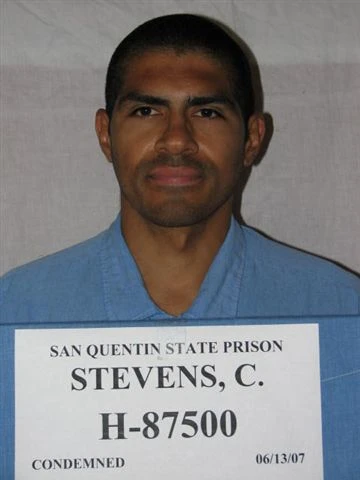
Interstate Serial Killer Case
CLASSIFICATION: Serial Homicide
LOCATION
Oakland, California
TIME PERIOD
1989
VICTIMS
4 confirmed
Charles Arnett Stevens, known as "The I-580 Killer," committed a series of shootings along Interstate 580 in California between April 3 and July 27, 1989, resulting in the deaths of four individuals and injuries to several others. He was apprehended on July 27, 1989, and subsequently sentenced to death for his crimes. Stevens is currently incarcerated at San Quentin State Prison, where he remains on death row.
Some believe Stevens may be linked to additional crimes beyond the freeway shootings — notably Oakland police have publicly suggested he is responsible for the unsolved April 1989 stabbing of Brenda Belvins after a DNA match, a connection described in news coverage but not yet resulting in filed charges at the time. Investigators and defense filings have also fueled debate over trial fairness and responsibility: Stevens’ lawyers argued his original counsel was ineffective for not challenging ballistics evidence or rigorously cross‑examining co‑defendant Richard Clark (who testified he shot one victim under alleged duress), while Stevens later claimed prosecutors used peremptory strikes in a racially biased way to remove Black jurors — a contention ultimately rejected on appeal but remaining a focal point of dispute about the conviction and sentence.
Just after 1 a.m. on July 27, 1989, traffic on Interstate 580 in Oakland was light enough that two cars could run side by side for a while. In one, 23‑year‑old Rodney Stokes was driving home at about 45 miles an hour. In the other, a white Mazda eased up alongside him. [1]
© Mapbox © OpenStreetMap
The Mazda’s driver motioned to Stokes and smiled. Stokes rolled down his passenger window and looked over—just in time to realize the man next to him was alone in the car. Then the shots began. [1]
By the end of that night, another driver, Raymond August, was dead, his car smashed against a pillar under the 35th Avenue overpass. [1] The white Mazda sat abandoned nearby, and the man police said pulled the trigger—the 20‑year‑old behind a months‑long string of random freeway attacks—was in handcuffs on the on‑ramp. [1][2]
The man was Charles Arnett Stevens, later convicted as a serial killer for murdering four people and attempting to murder six more during a 1989 shooting spree on and near I‑580. [1][2]
Between April 3 and July 27, 1989, Interstate 580 in Oakland became an invisible crime scene. Prosecutors said that during those months, Charles Stevens carried out a series of random attacks by shooting at people on or near the freeway. [1] All but one of the victims were in cars when they were attacked, drivers and passengers moving through the city with no connection to the man aiming at them. [1]
Annual report of the town of Weymouth (IA annualreportofto1862weym).pdf
Wikimedia Commons· Public domain
The pattern, as jurors later heard it, was chilling in its arbitrariness. Stevens was ultimately found to have killed four people—Leslie Ann Noyer, Lori Anne Rochon, 16‑year‑old Laquann Sloan, and driver Raymond August. [1]
He was also convicted of attempting to kill six others: Karen Alice Anderson, Janell Lee, Julia Peters, Paul Fenn, Upendra de Silva, and Rodney Stokes. [1]
The shootings came without warning, often at close range, and involved a semiautomatic handgun. [2] With no obvious motive and victims who had simply been in the wrong lane at the wrong time, the terror on that stretch of freeway was less about who might be targeted next than the realization that there was no way to know.
One of the first murders tied to Stevens was that of Leslie Ann Noyer. A jury later found that Stevens killed Noyer and that his palm print was discovered on her vehicle, physically linking him to the crime. [1]
Noyer’s case stood apart procedurally because it was the only count in which Stevens did not stand alone in the dock. He was charged with her murder alongside Richard Clark, a friend whose story about that night would change repeatedly over time. [1]
Another of the victims, Lori Anne Rochon, was also killed in her car. [1] At trial, Richard Clark testified about what he said unfolded on the morning of July 6, 1989. According to Clark, he and Stevens were riding in a stolen car when Stevens suddenly announced, “Man, I got to shoot somebody,” and later added, “I’ll shoot somebody white.” Clark said Stevens then fired at Rochon’s car. [1]
Notes on metallurgical mill construction (IA notesonmetallurg00ingarich).pdf
Wikimedia Commons· Public domain
Jurors later convicted Stevens of murdering Rochon. [1]
Sixteen‑year‑old Laquann Sloan was the only victim not in a vehicle. Prosecutors proved that Stevens killed her as she walked down the street. [1] Sloan was shot in the head; no witness saw the shooting itself. [1]
In a trial dominated by prosecution evidence, Sloan’s case was the only murder count on which the defense presented its own evidence on Stevens’s behalf. [1] Whatever that defense was, it did not persuade the jury. Stevens was convicted of her killing along with the others. [1]
The last murder in the sequence belonged to the freeway scene that finally exposed the gunman. Shortly after Stokes fled the white Mazda, another motorist, Raymond August, crashed his car into a pillar under the 35th Avenue overpass. [1] He was found in the wreckage with a large amount of blood, and would later be counted as Stevens’s fourth murder victim. [1]
The July 27 attack on Rodney Stokes unfolded in seconds.
Stokes was driving home on I‑580 around 1:15 a.m. when the white Mazda eased up alongside him. [1] When the driver motioned and smiled, Stokes rolled down his window. Only after he saw there was no passenger did Stokes realize the danger—but by then, the first shot had already been fired. [1]
Stokes dropped down onto the seat, turned off his headlights, and briefly lost control of the car. [1] He managed to regain it and was traveling at about 30 miles per hour when he looked up again. [1] The Mazda was now in front of him, and the driver—later identified as Stevens—fired two more times. [1]
As Stokes maneuvered away, he lost sight of the Mazda and another car, then heard at least two more gunshots before he saw them again. [1] That other car was driven by Raymond August, who soon after crashed into the pillar at the 35th Avenue overpass. [1]
The Billboard 1918-08-31- Vol 30 Iss 35 (IA sim billboard 1918-08-31 30 35).pdf
Wikimedia Commons· Public domain
When police converged on the crash scene, the white Mazda that had menaced Stokes was found parked on the shoulder of the on‑ramp. Stevens was on the on‑ramp, “looking at the scene” when the first officer arrived. [1]
What happened next solidified the case against Stevens.
As officers approached the Mazda, they ordered Stevens out of the vehicle. He looked startled, began to drive away, then stopped, got out, walked backward—and suddenly bolted toward a retaining wall. [1] An officer grabbed him. In that instant, the officer heard a heavy metallic object hit the ground.
It was a loaded.357 magnum Desert Eagle semiautomatic pistol. [1]
Later, Stokes arrived at the scene and identified Stevens to police as the man who had shot at him on the freeway. [1] That same night, investigators collected a piece of lead slug from Stokes’s vehicle, though it would prove too damaged for any useful ballistic comparison. [1]
During questioning, Stevens told police he had possessed the Desert Eagle for the last three to four months—since about March, just before the April 3 start of the freeway shooting spree. [1]
A search of Stevens’s room pulled the lens back further. Officers found a box and operator’s manual for the Desert Eagle, a canvas gun case, gun‑cleaning equipment, a.357 magnum cartridge and magazine, trays of bullets, and practice targets. [1] They also found a collection of Oakland newspapers containing articles about the freeway shootings, as well as an envelope on which Stevens had written out citations to Penal and Vehicle Code sections on murder, assault, vehicle theft, and weapons offenses. [1]
Physical evidence also tied Stevens to earlier crimes in the spree. His palm print was lifted from victim Leslie Ann Noyer’s vehicle. [1]
In one unrecorded interview, Stevens made a remark about the type of person who would commit random freeway shootings. He said the only reason someone would do such a thing was “mental, or loneliness,” and that the shooter would eventually be caught if “somebody told on him or if he pulled over like I did.” [1]
Richard Clark sat at the center of one of the case’s most contested threads: the murder of Leslie Ann Noyer.
Stevens was charged alone in all of the crimes except Noyer’s killing, for which Clark was tried as a codefendant. [1] By the time the case reached a jury, Clark had given police several different statements about his involvement.
In his last statement before trial, Clark claimed that he—not Stevens—had shot Noyer, and that he had done it under duress because Stevens had threatened to shoot him if he refused. [1] But when Clark took the witness stand, he walked that back completely. He testified that he had not been present at Noyer’s murder at all and said he had fabricated the earlier confession using details he picked up from officers. [1]
Clark also provided a window into other parts of the spree. He testified that on the morning of July 6, he and Stevens were riding in a stolen car when Stevens declared, “Man, I got to shoot somebody,” later adding, “I’ll shoot somebody white,” before firing at Lori Rochon’s car. [1] Clark further said that when he saw a newspaper article on July 18 about assaults on freeway motorists Paul Fenn, Julia Peters, and Upendra de Silva, he called Stevens, who responded, “Man, don’t say that over the phone.” [1] Clark’s sister corroborated that he had told her that month to let him know when the news came on because Stevens had shot someone on the freeway. [1]
The jury ultimately deadlocked on the murder charge against Clark in the Noyer case, and the trial court declared a mistrial as to him. [1] Stevens, however, was convicted of Noyer’s murder, with the palm print evidence and overall pattern of shootings weighing heavily against him. [1]
Their relationship appears to have fractured completely by the time Stevens was awaiting trial. In 1993, Sheriff’s Deputy Timothy Durbin testified that Stevens said he would kill Clark if he got the chance because Clark had “snitched” on him. [1]
Jurors heard that the I‑580 attacks did not emerge from nowhere.
In June 1987, two years before the freeway shootings, a man named Randall Shumpert testified that after a verbal exchange, Stevens drove away, then returned with his headlights off and fired at him. [1] The 1989 trial also included evidence of other misconduct: the parties stipulated that Stevens had been convicted in 1989 of three counts of felony auto theft, a detail that fit with Clark’s description of riding in a stolen car with him just before the Rochon shooting. [1]
There was also a glimpse of Stevens’s temper behind bars. On November 30, 1988, Sheriff’s Deputy William Borland and Sergeant Steve Wilson responded to a disturbance in the county jail mess hall. According to their testimony, Stevens threw a carton of milk at Wilson and swore at him. [1]
The writings of Abraham Lincoln (IA writingsofab1108linc).pdf
Wikimedia Commons· Public domain
Taken together, the testimony suggested a young man already familiar with guns, stolen cars, and sudden eruptions of violence even before the 1989 highway shootings began.
During the penalty phase, the defense turned to psychiatrist Dr. Harry Kormos to explain who Stevens was beneath the headlines.
Kormos met with Stevens roughly ten times, for about three hours each session, over four to five months. [1] He testified that Stevens had an unspecified personality disorder with schizoid and borderline traits but “suffered from no mental illness.” [1] In Kormos’s view, Stevens was not mentally retarded; testing placed his IQ between 80 and 90 and showed no sign of organic brain disease, tumors, or malformations. [1]
Kormos also told jurors that Stevens’s mother had stopped drinking about five years before his birth, and that Stevens did not have fetal alcohol syndrome. [1] Another family detail emerged: Stevens had an older brother, seventeen years his senior, who had himself been convicted of murder in 1978. [1]
By the time of the I‑580 spree, Stevens was 20 years old. [2] His own comment about “mental, or loneliness” being behind random freeway shootings, and his prediction that a gunman would eventually be caught when someone “told on him” or if he “pulled over like I did,” offered one of the only glimpses into how he framed his own actions. [1]
Eight witnesses delivered victim impact testimony, describing the accomplishments of their loved ones and the damage done by the murders. [1] The human cost of the freeway shootings was laid out in grief, not abstractions.
The jury’s verdicts were sweeping.
Stevens was convicted of four counts of first degree murder—the killings of Noyer, Rochon, Sloan, and August—and six counts of attempted murder against Anderson, Lee, Peters, Fenn, de Silva, and Stokes. [1]
Jurors found true a special circumstance allegation that Stevens had committed multiple murders, as well as a lying‑in‑wait special circumstance for one of the killings. [1] They also found that he had personally used a firearm in all of the crimes. [1] With those findings in place, the jury set his punishment at death. [1]
As in all California capital cases, the conviction was subject to automatic appeal. [1] Years later, on June 4, 2007, the state’s Supreme Court affirmed the death sentence for Stevens, described in news coverage as a serial killer who had murdered four people and attempted to murder six more during the I‑580 shooting spree. [2]
Image of convicted American serial killer Charles Stevens
Wikimedia Commons· Public domain
On review, Stevens challenged the sufficiency of the evidence for the lying‑in‑wait special circumstance related to one of the freeway motorists. The high court rejected that claim. [2] It also noted that “lying in wait” is itself a special circumstance that can qualify a defendant for the death penalty under state law, as can multiple murders. [2] All of the justices agreed that, at a minimum, Stevens’s multiple murders justified upholding his death sentence. [2]
With that ruling, his place on California’s death row was secured.
For all the physical evidence and eyewitness testimony, parts of the I‑580 case remain clouded.
Richard Clark’s degree of involvement in Noyer’s death is still unresolved in any legal sense. Clark first told police that he had shot Noyer under duress because Stevens threatened to shoot him—a serious confession, if true. [1] At trial, he insisted he was never there and had only pieced together a false confession from what detectives told him. [1] Jurors could not reach a verdict on his guilt, and a mistrial was declared, leaving his precise role in that killing officially undecided. [1]
Even with the recovered Desert Eagle, not every round fired on I‑580 could be traced back conclusively. The piece of lead slug retrieved from Rodney Stokes’s car, for example, was too damaged to match to the pistol, a reminder that not all forensic gaps can be neatly closed. [1]
What is clear is this: during a span of a few months in 1989, a 20‑year‑old with a semiautomatic handgun turned a Bay Area freeway into a corridor of fear, killing four strangers and attempting to kill six others with no warning and no discernible pattern beyond opportunity. [1][2] The law answered with a death sentence and an affirmed conviction. It could not, and did not, fully explain why.
Adapted from Charles Stevens (serial killer) - Wikipedia.
This case file is an original Bloody Likely narrative synthesis based on the cited sources. Article © Bloody Likely. All rights reserved. Source materials remain the property of their respective owners. Facts, public records, quotations, and cited references are used for reporting, research, commentary, and documentation. Bloody Likely content license
No recent news articles found for this case. Check back later for updates.
No evidence found for this case. Be the first to submit evidence in the comments below.
Join the discussion
Loading comments...
Charles Stevens and accomplice Richard Clark kill Leslie Noyer in a parked vehicle.
Stevens kills 16-year-old Laquann Sloan on Interstate-580.
Stevens shoots and kills 36-year-old Lori Rochon on the highway.
Stevens shoots at Paul Fenn and Julia Peters while driving on the highway.
Stevens kills Raymond August; arrested after being followed by a witness.
Stevens found guilty of multiple murders and sentenced to death.
Stevens attempts to appeal his death sentence based on ineffective counsel.
Ninth Circuit affirms denial of Stevens' habeas corpus petition.
U.S. Supreme Court denies Stevens' petition for writ of certiorari.