ANALYZING EVIDENCE
Processing case files...
Processing case files...
Mass Murder and Arson Case
CLASSIFICATION: Mass Murder
LOCATION
Washington, D.C.
TIME PERIOD
May 13-14, 2015
VICTIMS
4 confirmed
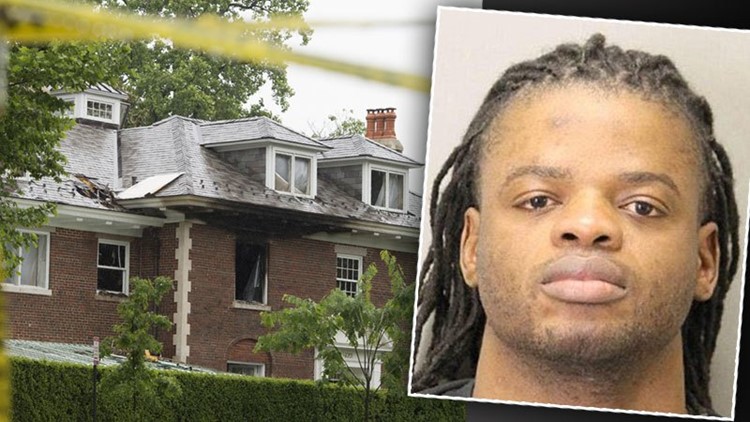
On May 13-14, 2015, a mass murder occurred at the Savopoulos residence in Woodley Park, Washington, D.C., resulting in the deaths of Savvas Savopoulos, his wife Amy, their 10-year-old son Philip, and their housekeeper Veralicia Figueroa. The victims were held hostage for 19 hours, during which Philip was tortured to extract $40,000 in cash, ultimately leading to their deaths by blunt force trauma and stabbing before the house was set ablaze. Daron Wint, a former employee of Savvas Savopoulos, was arrested and later convicted on October 25, 2018, for multiple counts of murder, kidnapping, and extortion, receiving four consecutive life sentences without the possibility of parole. Significant evidence included DNA found on a pizza crust delivered to the house during the hostage situation, which linked Wint to the crime scene.
Some investigators and commentators have speculated that Daron Wint did not act alone — pointing to the complexity of the 18–24 hour hostage ordeal, multiple vehicles, and prosecution/defense claims that Wint’s brothers or others (including the family’s assistant Jordan Wallace) may have been involved or even masterminded the killings. Others have raised alternative theories about motive and investigatory failures — questioning whether the crime was a disgruntled-employee attack versus a ransom plot (given that $40,000 was paid), why the victims were killed after the money was delivered, and whether evidence was improperly collected or ignored, fueling allegations of missed leads and possible cover-up or incomplete accountability.
On a Thursday afternoon in May 2015, D.C. firefighters were dispatched to reports of smoke coming from a large home in the 3200 block of Woodland in Northwest Washington, an affluent neighborhood not far from the National Cathedral.[1]
Dispatchers warned of heavy fire conditions on the second floor and in the attic.[1] About 50 firefighters responded; within roughly half an hour they had the blaze under control.[1]
When crews pushed inside to fight the fire, they made a different kind of discovery. Three adults and one child were found dead inside the house.[1] Mayor Muriel Bowser later said fire personnel discovered all four victims at the scene.[1]
The home belonged to Savvas and Amy Savopoulos.[1] Before long, the four bodies were identified as 46‑year‑old Savvas, 47‑year‑old Amy, their 10‑year‑old son, Philip, and 57‑year‑old housekeeper Veralicia Figueroa.[2][3][4]
The killings inside the multi‑million‑dollar Northwest D.C. mansion would come to be known, grimly, as the D.C. mansion murders.[4]
Almost immediately, investigators saw reasons to doubt this was a tragic house fire. The flames were described as suspicious[1]—and would later be formally ruled arson.[3] Police found no obvious signs of forced entry.[1][3] Within days, they announced a chilling working theory: the family and their housekeeper had likely been held captive inside their own home for roughly a day before they were killed.[3][4]
Savvas Savopoulos was not just another homeowner on Woodland. He was the president and CEO of American Iron Works, a building‑materials manufacturer based in Hyattsville, Maryland.[1][3] Neighbors described the family as active in local schools and said the couple had three children.[1] Reports noted two teenage daughters and a younger son.[1]
The house itself was a symbol of that success: a large Northwest D.C. mansion on Woodland, described in coverage as being worth anywhere from $3 million to $4.5 million.[3][4]
Miguel Libunao Siojo Mansion 2026-06-21 Poblacion San Miguel 06.jpg
The family employed housekeepers who worked at the home.[1] One of them told a local station she had been working for the Savopouloses for twenty years.[1] She was at the mansion on the Wednesday before the fire, and said that that night, the couple, their 10‑year‑old son, and another housekeeper all slept in the home.[1] That other housekeeper was 57‑year‑old Veralicia Figueroa, who would be found among the dead the following day.[3][4]
As investigators worked back through the final hours of the four victims’ lives, they came to believe that the crime had begun long before firefighters arrived.
According to law‑enforcement accounts summarized in news reports, investigators believed the killers entered the house on Wednesday and kept the family bound through Thursday afternoon.[3] They estimated that the victims were confined for more than a day, or roughly 18 hours, before the fire.[3][4]
There were still no signs of forced entry.[1][3] That detail, combined with the sustained captivity, led investigators to think the perpetrators knew the family and their routines.[3] One report described investigators’ belief that whoever did this had intimate knowledge of when people came and went from the house, and how to move around inside without immediately raising an alarm.[3]
From the outset, police did not assume a lone attacker. News outlets reported that investigators believed there was more than one killer[3] and that, initially, they thought others were involved in the crime.[2]
Inside the burned‑out mansion, they began what D.C. Police Chief Cathy Lanier said would be seven to ten days of painstaking evidence recovery.[3]
On the day of the fire, the blaze itself drew as much scrutiny as the deaths it revealed.
Lanier told reporters there were “no obvious signs of forced entry” at the home.[1] She also called the nature and origin of the fire “very suspicious.”[1] A joint arson task force—bringing together D.C. police, the fire department, and the Bureau of Alcohol, Tobacco, Firearms and Explosives—took over the investigation.[1]
As more forensic work was done, the suspicion hardened into a formal finding: the fire at the Savopoulos home was ruled arson.[3]
Investigators believed the blaze had been set after the long period in which the family and their housekeeper were held captive.[3] The timing suggested the fire was part of the crime, not the cause of it.
Lanier emphasized that the investigation would be deliberate. She said detectives would be at the crime scene all week looking for clues[3] and that they expected to spend up to ten days collecting and processing evidence from inside the home.[3] Publicly, she declined to discuss motive or possible suspects, saying it would be premature to do so while leads were still being developed.[3]
One of the sharpest early leads wasn’t inside the burned mansion at all. It was missing from the driveway.
A blue 2008 Porsche 911 belonging to the household was seen at the home at about 10:30 a.m. on Thursday before it left the area.[1] That same day, the car was reported stolen from the house.[3]
By late afternoon, police located the Porsche in Maryland, where it sat by itself.[1] It wasn’t just abandoned—it had been burned and left in the parking lot of St. Christopher’s Episcopal Church in Lanham, Maryland.[3]
Investigators said they were trying to find out who torched the car and why.[3] The burned Porsche, taken the day of the fire and destroyed a short drive away across the D.C.–Maryland line, seemed unlikely to be a coincidence.
That night, police canvassed the Woodland neighborhood, asking residents for anything they had seen or heard.[1] They also urged anyone who had seen the blue Porsche while it was missing from the home to come forward.[1]
Within days, Lanier said police had received a number of tips.[3] “We’ve gotten a lot of good information; I feel really good about the leads that we are working,” she said.[3] But she still would not publicly identify any suspects or motives.[3]
As forensic testing progressed, attention eventually coalesced around one man from nearby Maryland: Daron—or, in some reports, Darron—Wint, of Lanham.[4][5]
Police accused Wint of kidnapping the four victims, extorting $40,000 from them, killing them, and setting the house on fire.[4] He was charged as the man who had held a wealthy D.C. couple, their young son, and their housekeeper captive in a Northwest Washington mansion before their deaths.[4]
© Mapbox © OpenStreetMap
According to prosecutors, Wint allegedly kept the victims captive for roughly 18 hours.[4] They said he then killed them and set the fire that gutted the house on Woodland.[3][4]
The Greene Murder Case (1929) - Greene Mansion.png
Wikimedia Commons· Public domain
By the time those allegations were laid out in charging documents, the earlier speculation about multiple attackers had taken on a new shape. Police previously said they believed Wint had help from others holding the Savopouloses and Figueroa captive, according to those documents.[4] In other words, their working theory still involved more than one perpetrator—even as only one man’s name appeared on the charge sheets.
The investigation into the Woodland mansion was sprawling. Prosecutors later said they had tested hundreds of items recovered from the Savopoulos home.[4]
Out of that mass of forensic work, they pointed to a handful of key pieces. DNA testing, according to the prosecution, linked Wint to five separate items.[4]
Those alleged DNA matches became the backbone of the government’s case, tying Wint not just to the victims, but to the inside of the house where they had been held and killed.[4]
The broader narrative prosecutors outlined was stark: that Wint had entered the Savopoulos mansion, held the family and their housekeeper captive for many hours, forced the transfer of $40,000, killed all four, and then tried to erase the crime with fire.[3][4]
By the time the case was fully charged, Wint was facing 20 felony counts linked to the killings at the Savopoulos home.[4] He pleaded not guilty to all of them.[4]
The murder allegations alone were sweeping. The charges included four counts each of:
Each murder count carried tremendous weight. Prosecutors said Wint faced life in prison without the possibility of release on each murder charge, with a minimum sentence of 30 years for each one.[4]
In other words, if convicted on even a portion of the charges, Wint’s remaining life could plausibly be spent behind bars.
The legal process moved slowly. Media coverage in early 2017 described prosecutors pressing to get a trial date set, while the defense sought more time to analyze the evidence.[4] At the last status hearing before that reporting, defense lawyers told the court they needed additional time to test the prosecution’s evidence.[4]
On February 3, 2017, a judge set a date: the trial of the man accused of killing the couple, their 10‑year‑old son, and their housekeeper in the Northwest mansion would begin September 4, 2018, at 11 a.m.[4]
The case continued to draw intense public interest. In 2019, Wint’s murder trial became the focus of WTOP’s original podcast “22 Hours: An American Nightmare,” an in‑depth audio series examining the crime and its courtroom aftermath.[5]
Even years after the fire on Woodland, the litigation had not fully ended. In one later development, federal prosecutors were given until February 23 to file their brief in reply to Wint’s appeal, a deadline that reports noted was likely to be extended.[5]
From the first day, this case arose from a set of unsettling contradictions.
There was no obvious forced entry, yet four people were found dead in their home.[1][3] The fire was suspicious enough to warrant a joint arson task force and was eventually ruled arson, but it came only after what investigators believed was a long period of captivity inside the house.[1][3] A family Porsche was taken, torched, and abandoned in a church parking lot in another state, adding another layer of planning and flight.[3]
Early on, investigators said they believed there was more than one killer.[2][3] Later, charging documents reflected police suspicions that Wint had help holding the Savopouloses and Figueroa captive.[4] Yet despite those consistent suggestions of accomplices, no other suspects have ever been publicly identified.[4]
Even the street name of the crime scene—variously described in coverage as Woodland Road and Woodland Drive—carried the faint echo of how quickly this case moved from a fire call to a national headline.[1][3] Within hours, one family’s private home had become a sealed crime scene deep in the heart of one of Washington’s most affluent neighborhoods.
Publicly, police leaders were careful not to speculate on motive.[3] What drove the kidnapping, the alleged extortion of $40,000, and the killing of a couple, their child, and the woman who worked in their home remains one of the darkest threads running through the story.[4]
What is clear is the human cost. Savvas and Amy Savopoulos died alongside their 10‑year‑old son Philip in the house where they had built their life.[3][4] Veralicia Figueroa, who had come to the family’s home for work, never left it alive.[1][3][4]
The fire on Woodland ended four lives. The questions it lit up—for investigators, for the courts, and for a city that watched in horror—have taken far longer to extinguish.
Adapted from Wikipedia: D.C. mansion murders.
This case file is an original Bloody Likely narrative synthesis based on the cited sources. Article © Bloody Likely. All rights reserved. Source materials remain the property of their respective owners. Facts, public records, quotations, and cited references are used for reporting, research, commentary, and documentation. Bloody Likely content license
Audio narration © Bloody Likely. All rights reserved. The audio player is provided for personal streaming/listening only.
No recent news articles found for this case. Check back later for updates.
No evidence found for this case. Be the first to submit evidence in the comments below.
Join the discussion
Loading comments...
The Savopoulos family and their housekeeper are taken hostage in their home.
The bodies of the Savopoulos family and their housekeeper are discovered after the house is set on fire.
Daron Wint is arrested after DNA evidence links him to the crime scene.
Trial date for Daron Wint is set to begin in September 2018.
Opening statements are made in the trial of Daron Wint.
Daron Wint is found guilty of 20 counts including murder and kidnapping.
Daron Wint is sentenced to four consecutive life terms without parole.
The D.C. Court of Appeals affirms Wint's conviction and denies a new trial.