ANALYZING EVIDENCE
Processing case files...
Processing case files...
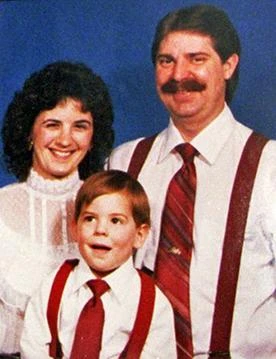
Unsolved Quadruple Homicide
CLASSIFICATION: Mass Murder
LOCATION
Ina, Illinois
TIME PERIOD
November 17-18, 1987
VICTIMS
4 confirmed
On November 18, 1987, police discovered the bodies of Russell Keith Dardeen, 29, his wife Ruby Elaine, 30, and their son Peter, 2, in their mobile home in Ina, Illinois, after Keith failed to report to work. The family had been brutally beaten, with Ruby going into labor due to the violence, and the newborn girl subsequently found dead. Keith's body was later located in a nearby field, having been shot and mutilated. Initial investigations focused on Keith as a suspect, but he was later ruled out. The case remained unsolved for decades until serial killer Tommy Lynn Sells claimed responsibility in the 2000s; however, he was never charged due to doubts about his confession and his inability to assist in the investigation. The case remains cold with no definitive leads or suspects identified.
Some locals speculated the brutality and mutilation pointed to Satanic ritual activity or a ritualistic “sacrifice,” a theory bolstered in rumor but officially dismissed by police who also ruled out robbery, rape, drug-dealing and infidelity as motives. Investigators and the community have debated whether the murders were the work of a drifter/serial killer (Tommy Lynn Sells claimed responsibility decades later) or a more personal, targeted act—there is ongoing dispute over Sells’ confession because of inconsistencies, family skepticism, his history of false confessions, and Texas authorities’ refusal to allow him to travel to Illinois to assist the probe. Questions also remain about whether Keith Dardeen was the perpetrator or a separate victim (given the different scene and timing), and whether the killings involved one assailant or multiple attackers, leaving the case’s ultimate responsibility unresolved.
On November 17, 1987, in the village of Ina, Illinois—population roughly 2,500 at the time—a young family dropped out of sight. [1][2][3]
When Russell “Keith” Dardeen failed to show up for his shift at a local water plant, his mother, Joeann, grew worried enough to ask police to check on him, his pregnant wife Elaine, and their 3‑year‑old son, Peter. [2]
Officers who entered the family’s mobile home found a scene so violent it would haunt investigators for decades: Elaine, about seven months pregnant, and her little boy were dead. During the attack, the trauma had forced Elaine into labor. Her newborn baby girl, delivered into that chaos, had been killed as well. [1][2]
© Mapbox © OpenStreetMap
Keith was nowhere in sight. For a brief, chilling window, some wondered if he had done this. [1]
Within about a day, hunters found his body in a nearby field, shot in the head and sexually mutilated. [1][2][3]
The Dardeen murders would become one of southern Illinois’ most notorious cold cases—brutal, baffling, and still unresolved despite a later confession from a roaming serial killer who claimed the crime as his own. [2]
Thirteen years after the crime, a Chicago reporter summed up the night Elaine died as a “chilly autumn” evening, but almost everything else about what happened inside the Dardeen home defied simple description. [3]
Thirty‑year‑old Ruby “Elaine” Dardeen was at home in the family’s mobile home in Ina when she was bound, gagged, and beaten to death. [2][3] She was about seven months pregnant. [1][3]
According to later accounts, Elaine and 3‑year‑old Peter were bludgeoned, reportedly with a baseball bat kept in the home. [1][2][3] The beating was so severe that it forced Elaine into labor; she gave birth during the attack. [1][2][3]
The newborn girl was then clubbed to death. [1][2][3] The attacker also clubbed Peter, killing him. [1][2][3]
In one of the most disturbing details, the killer appeared to linger after the violence. Investigators later said the attacker cleaned up the scene and then tucked Elaine and both children together on the bed—later described as a waterbed—positioning their bodies as if they were simply sleeping. [2][3]
Because Keith was missing from the home and his car was gone, he briefly became the leading suspect by default. [1]
That suspicion collapsed as soon as his body turned up. Accounts differ on the exact timing—some say the next day, others two days later—but hunters discovered Keith’s body in a field near Ina, about a mile from the trailer. [1][2][3] He had been shot in the head, and his genitals had been mutilated. [1][3]
What looked at first like a classic family‑annihilation scenario now appeared to be something else entirely: a quadruple homicide in which all members of the household had been slaughtered, including an unborn child forced into life only to be killed moments later. [1][2][3]
Jefferson County’s top prosecutor at the time, Gary Duncan, would later call the brutality of the crime “extreme and egregious.” [2]
The murders leveled Ina. It was a tiny southern Illinois town, the kind of place where a young family in a modest trailer blended silently into the landscape of working‑class life—until their deaths became the subject of fearful speculation. [2][3]
Investigators cast a wide net, entertaining theories that ranged from the ordinary to the lurid: marital infidelity, drugs, gambling, even devil worship were all explored as possible motives. [3] Yet each lead fell apart. Over the years, the investigation came up empty‑handed. [3]
Suspects were scarce. For a long time, authorities had no clear person of interest at all. [2] The Dardeen killings hardened into a local legend—proof, to some, that something chilling had passed briefly through Ina and then vanished.
Meanwhile, the case sat unsolved in Jefferson County’s files. [2]
More than a decade after the Dardeens were killed, a New Year’s Eve attack near Del Rio, Texas, cracked open a different case—and eventually pointed back toward Ina. [1][3]
On that night, a 10‑year‑old girl survived a throat‑slashing assault. [3] Her description helped authorities track down a 35‑year‑old drifter and former carnival worker named Tommy Lynn Sells within two days. [3]
Sells had spent years roaming the country since his teens before settling in Del Rio in 1998 and getting married. [3] Once in custody, he began to talk—a lot. He ultimately claimed responsibility for as many as 70 killings in multiple states. [2] Authorities would later link him, with varying degrees of certainty, to nearly two dozen murders. [2]
The Texas investigator who first arrested Sells said Sells described waking up in unfamiliar places, covered in blood, with no clear memory of what he had done. [2] According to that investigator, Sells boasted that his “tools of death” ranged from guns and knives to an ice pick and his bare hands. [2]
As word of his confessions spread, dozens of law enforcement agencies across the country contacted Texas authorities, hoping to clear their own cold cases by tying them to Sells. [3]
Among the cases Sells began to claim was one from a tiny town in southern Illinois: the slaughter of the Dardeen family in Ina. [2][3]
Around 2000, Sells confessed to killing the Dardeen family. [1][3] Texas authorities said they were nearly certain he was responsible, citing specific details he gave about the crime. [3] Texas Department of Public Safety spokesman Tom Vinger said Sells provided such precise information that investigators there considered him a prime suspect in the Ina killings. [3]
In Illinois, Jefferson County officials said it would be at least 60 days before they decided whether to charge him. [3] Detectives there would later say they felt confident they knew who killed the Dardeens and that the person they believed responsible was on death row in another state, making a local prosecution unlikely. [1]
But as investigators dug into Sells’ account, cracks appeared.
Sells accurately described some aspects of the massacre, but those could have been gleaned from media coverage. [2] When questioned about a detail that had never been made public—how Elaine’s body was found—he first gave a wrong answer, then corrected himself. [2] Jefferson County prosecutor Gary Duncan later said it was possible Sells had simply deduced the correct nonpublic detail rather than speaking from firsthand knowledge. [2]
Some claims were flat‑out inconsistent with the evidence. Sells insisted he had shot Keith in a particular seat of the victim’s car, but physical evidence refuted that. [2]
To Duncan, the confession sat in a murky middle ground. There was “a lot of ambiguity” in Sells’ story, he said, yet nothing that made his guilt completely discountable. [2]
Sells even offered to be escorted back to Illinois to point out where he said he had hidden key evidence related to the murders. [2] But Duncan later said it quickly became clear Texas would not allow Sells to leave the state. [2] Without physical evidence and with a confession riddled with doubts, Duncan refused to bring charges in Illinois. [2]
Because of those unanswered questions about the truthfulness of Sells’ confession, the Dardeen murders were never formally linked to him. [2] As of 2014, no one had been brought to justice in the Jefferson County case. [2]
No one carried the weight of the uncertainty more than Keith’s mother, Joeann.
In the early 2000s, after news of Sells’ confession broke, Joeann said she was “just sure” that he was the man who killed her son’s family. [3] Years later, she told a television reporter she was “99 percent sure” Sells had committed the killings, but she still wondered whether he might have had help. [1]
She hoped to meet Sells face‑to‑face before his execution for other crimes, she said, believing that if he could truly convince her he was responsible, she might finally be able to “let it go.” [1]
At the same time, she watched in horror as websites popped up glorifying Sells and other serial killers, complete with figurines, clocks, and trading cards—a grotesque commercialization of the man who might have destroyed her family. [1]
By 2014, as Sells’ execution neared, Joeann’s public comments reflected deeper doubt. She said she did not believe Sells had killed her son’s family and that she wanted him to stay alive until she knew positively that he hadn’t. [2]
Her statements over the years trace the same jagged path as the investigation itself: hope for an answer, fear of being wrong, and the torment of not knowing.
While Illinois prosecutors held back, Texas pushed forward with its own cases against Sells. He was sentenced to death there for the 1999 stabbing death of a 13‑year‑old girl. [2]
Sells was scheduled for execution in May 2006, but that date was stayed amid questions about his mental competency. [1] A higher court later rejected his appeal, though as of that report no new execution date had been set. [1]
Eventually, Texas carried out the sentence. In April 2014, at age 49, Tommy Lynn Sells was executed for the 1999 child murder. [2]
By then, he had claimed responsibility for dozens of killings, including the Dardeens’. [2] Yet Illinois authorities, wary of the holes in his story and lacking physical proof, never charged him in the Ina murders. [2]
Gary Duncan, who served as Jefferson County’s top prosecutor for 17 years until his retirement in 2008, has said the case still weighs on everyone who touched it. [2] He has spoken bluntly about the possibility that the real killer—or at least someone involved—may still be at large. [2]
For Ina, the crime ended a long vigil of fear but not of uncertainty. Some residents have suspected that Sells’ confession was nothing more than morbid bragging. [3] Texas investigators, in contrast, remain convinced that the specifics he gave make him a prime suspect. [3]
Adapted from Dardeen family homicides - Wikipedia.
This case file is an original Bloody Likely narrative synthesis based on the cited sources. Article © Bloody Likely. All rights reserved. Source materials remain the property of their respective owners. Facts, public records, quotations, and cited references are used for reporting, research, commentary, and documentation. Bloody Likely content license
Audio narration © Bloody Likely. All rights reserved. The audio player is provided for personal streaming/listening only.
No recent news articles found for this case. Check back later for updates.
No evidence found for this case. Be the first to submit evidence in the comments below.
Join the discussion
Loading comments...
Police find the bodies of Elaine, Peter, and a newborn in their mobile home, all brutally beaten.
Keith Dardeen's body is discovered in a nearby field, shot and mutilated.
Local police and Illinois State Police form a task force to investigate the quadruple homicide.
Serial killer Tommy Lynn Sells claims responsibility for the Dardeen family murders while on death row.
Tommy Lynn Sells is executed in Texas, leaving the Dardeen case unresolved.
Authorities express doubts about Sells' confession, and the case remains unsolved.