ANALYZING EVIDENCE
Processing case files...
Processing case files...
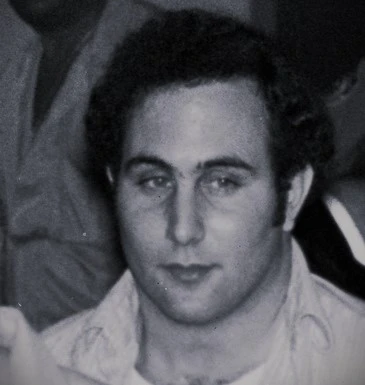
New York City Serial Killer
CLASSIFICATION: Serial Homicide
LOCATION
New York City, New York
TIME PERIOD
1975-1977
VICTIMS
6 confirmed
Between December 24, 1975, and July 31, 1977, David Berkowitz, also known as the "Son of Sam," terrorized New York City by committing a series of shootings that resulted in the deaths of six individuals and injuries to eleven others. Armed with a .44 Special caliber Bulldog revolver, Berkowitz's attacks primarily targeted young couples in parked cars, leading to a massive manhunt that captivated the public and media. He was apprehended on August 10, 1977, after a tip-off from a witness, and subsequently confessed to the crimes, claiming he was influenced by a demon dog named "Sam." Berkowitz was sentenced to six concurrent life sentences in prison, where he remains incarcerated at Shawangunk Correctional Facility. The case prompted the enactment of "Son of Sam laws" in New York, aimed at preventing criminals from profiting from their notoriety, and has led to ongoing discussions regarding his mental state and potential connections to unsolved arsons in the city.
Some believe Berkowitz’s early claims that a demon manifested as a neighbor’s black dog (“Sam”) controlled him reflect genuine supernatural coercion, while others view the dog-and-devil story as a hoax he later admitted fabricating. Investigators and researchers have speculated that Berkowitz may not have acted entirely alone or that the shootings were connected to a wider pattern of criminality—he was implicated in numerous unsolved arsons and, in the mid‑1990s, amended his confession to allege involvement in a violent Satanic cult, a claim that prompted a 1996 reinvestigation that was suspended after inconclusive findings. Some observers and commentators have also argued that Berkowitz cultivated or enjoyed the intense media attention his crimes produced (spurring the “Son of Sam” laws to prevent criminals profiting from publicity), raising debate over motive, notoriety, and whether aspects of the case were fully disclosed or remain unresolved.
In the summer of 1976, someone began hunting people in parked cars across New York City.[1][2]
Over the following year, six people were killed and seven more were wounded, most of them couples sitting together in the dark in the Bronx, Brooklyn, and Queens.[1][2]
The gunman used a.44 caliber revolver.[2]
He called himself “Son of Sam.”[2]
And for a year, New York lived with the knowledge that he was still out there.
The man later identified as the gunman was David Richard Berkowitz, born June 1, 1953.
He would eventually confess, plead guilty, and spend the rest of his life behind bars.[1][2]
But during that year between his first shot and his arrest, the fear he created reshaped how millions of people moved through their own city. Members of the public later described changed routines and lasting terror in the wake of the “Son of Sam” killings.[1]
Library of Congress records list him simply: Berkowitz, David Richard, 1953–, with a variant name, Son of Sam.
Behind that stark heading lay a fragmented life that he would only fully outline years later from a prison visiting room.
David Berkowitz screams obscenities as guards struggle to drag him from the courtroom.tif
Wikimedia Commons· Public domain
In a 1999 interview conducted inside Sullivan Correctional Facility in Fallsburg, New York, Berkowitz described a childhood marked by psychological and behavioral problems.[1]
He said he was disruptive in school and struggled with depression and suicidal thoughts, to the point that school officials arranged weekly sessions with a child psychologist for about two years.[1]
He told the interviewer he had been adopted, that his adoptive mother, Pearl, died in 1967, and that his adoptive father was still alive and in regular contact with him.[1]
Later, in his early twenties, he said he located his natural mother and learned his natural father had died in the early 1970s.[1]
After high school, Berkowitz joined the U.S. Army.
He said he served three years and received an honorable discharge.[1]
Back in New York, he described an ordinary life on the surface. He said he lived in the Bronx, had his own apartment, enrolled in community college, and worked nights as a security guard.[1]
According to his own account, he was 21 years old when he began the series of events that would become known as the Son of Sam shootings.[1]
By his own later description and contemporary reporting, the killing spree began in the summer of 1976.[1]
Over roughly the next year, Berkowitz killed six people and wounded seven others.[1][2]
Using a.44 caliber revolver, he targeted couples sitting in cars in the Bronx, Brooklyn, and Queens, turning secluded side streets and lovers’ lanes into crime scenes.[2]
Victims’ names are largely absent from the surviving summaries and official catalogues, but contemporary accounts agree on those numbers: six dead, seven injured.[1][2]
One of those killed was a young woman named Stacy Moskowitz, whose name would later appear in a key piece of forensic evidence.[1]
For New Yorkers, the fear was not abstract. In later video clips, residents described how the shootings changed their behavior: avoiding certain neighborhoods, abandoning late-night outings, and looking over their shoulders even in previously familiar places.[1]
As detectives from different boroughs tried to connect a growing list of shootings, a pattern emerged: the same caliber weapon, the same kind of targets, and no obvious traditional motive.[1][2]
Then the shooter gave himself a name.
Berkowitz later said—and multiple accounts confirmed—that he began calling himself “Son of Sam.”
According to a contemporary report, he wrote letters to New York Daily News columnist Jimmy Breslin, taunting the police and detailing his “escapades” while dubbing himself the “Son of Sam.”[2]
Meeting with Masayoshi Son and Sam Altman (February 3, 2025).jpg
Those letters turned a nameless gunman into a persona. Library of Congress authority records now list “Son of Sam, 1953–” as a variant form of his name.
For investigators, the letters were a clue. For the city, they were proof that the killer was watching, answering the headlines with his own words and refusing to disappear.
The trail finally narrowed in August 1977.
On August 10, 1977, police arrested David Berkowitz at his home in Yonkers, New York.[2]
Officers had traced him by a seemingly minor detail: his car had been ticketed near the scene of the last shooting.[2]
© Mapbox © OpenStreetMap
That parking ticket connected a vehicle to a crime scene. When investigators followed the lead to Yonkers, the focus of a sprawling citywide hunt abruptly converged on one man.
News footage from that night shows officers leading Berkowitz into police headquarters. In the clip, one officer says police are convinced they have “bagged the Son of Sam.”[1]
What they found in his car would soon harden that belief into a case.
A video segment broadcast years later described the crucial piece of physical evidence: an “infamous”.44 caliber bulldog revolver recovered from Berkowitz’s car and rushed to ballistics.[1]
2025-04-30 ALBA Berlin gegen Syntainics MBC (Basketball-Bundesliga 2024-25) by Sandro Halank–052.jpg
Within hours, ballistics experts reported they were sure the.44 was the same weapon used to kill Stacy Moskowitz.[1]
Other accounts similarly state that police found a.44 caliber revolver in his car and that ballistics experts said it matched the weapon used to kill at least one victim.
That revolver linked Berkowitz’s vehicle—and therefore Berkowitz himself—to the murder weapon that had defined the Son of Sam investigation. Combined with the parking ticket trail and the ongoing pattern of.44 shootings, it gave detectives a clear suspect whose alleged weapon tied directly to one of the homicides.
After his arrest, Berkowitz did not force a trial that would stretch on for years.
In the 1999 prison interview, he said he had “confessed to the crimes and pled guilty,” and that therefore “there was never a trial.”[1]
Court summaries from contemporary reporting state that in June 1978, he pleaded guilty and was sentenced to life in prison with the possibility of parole.[2]
Berkowitz has described his sentence in stark terms. He told the interviewer he was serving consecutive life sentences totaling more than 300 years.[1]
He said his commitment papers listed consecutive terms that he understood to effectively mean life without parole, even though they included formal parole eligibility.[1]
By the time of that 1999 conversation, Berkowitz said he had already been in prison for 22 years.[1]
Berkowitz’s decades in New York’s prison system have been violent, regimented, and—in later years—highly structured.
Stacy Moscowitz Son of Sam Janesville Gazette Newspaper August 11, 1977.jpg
Wikimedia Commons· Public domain
He said he was first held at facilities including Clinton and Attica prisons.[1]
In 1979, another inmate slashed the side of his neck with a razor.[1]
According to Berkowitz, a prison doctor told him it was a “miracle” he survived.[1]
He said he never pressed charges against the attacker, who was then moved to a different location.[1]
By his own account, he later spent time at Marcy Psychiatric Center after suicidal episodes, and he received medication both at Kings County shortly after his arrest and while at Attica.[1]
Eventually, Berkowitz was transferred to Sullivan Correctional Facility, a maximum-security prison in Fallsburg, New York.[1]
He said that by 1999 he had been at Sullivan for about 12 years, living in his own cell as part of the general population, like most men there.[1]
At Sullivan, he described an unexpected role: working as a peer counselor in the prison’s mental health unit, known as the intermediate care program.[1]
He said he worked there Monday through Friday every morning alongside a team that included a psychologist, social worker, and psychiatrist.[1]
His days, he said, included time out of his cell for that work and for chapel.[1]
He told the interviewer he did not watch television even though sets were available in the day room, and that he wore the prison’s drab green uniform—“official prison garb,” as he put it.[1]
From inside Sullivan, Berkowitz has tried to recast his identity, though not his culpability.
He said he became a Christian in prison and had been a believer in Jesus for 12 years by the time of the 1999 interview.[1]
He credited the sharing of his Christian “testimony” with helping him form friendships with people on the outside over the years.[1]
He also spoke about reaching out to some of the families whose lives he shattered. He said he prays for relatives of his victims and has written to some of them.[1]
One example he gave was a long letter he wrote to the mother of Stacy Moskowitz many years after the crime, after receiving a letter from her in 1993.[1]
These gestures did not change his sentence, nor could they undo what happened in New York in 1976 and 1977. But they became central to the way he now talks about his own story: not as a path to freedom, but as an attempt at remorse from within a system he expects never to leave.
Formally, Berkowitz’s sentence left room for the possibility of parole.[2]
Practically, it has never come close to happening.
'Son of Sam' serial killer David Berkowitz, as pictured within the 13 August 1977 edition of the Mount Vernon Argus. Direct link here
Wikimedia Commons· Public domain
Berkowitz has been eligible for parole since 2002.[2]
He acknowledged in the 1999 interview that he technically had parole eligibility but called the prospect “very doubtful.”[1]
Since 2002 he has had multiple parole hearings.[2]
At least one such hearing was held—or scheduled—at Sullivan Correctional Facility in Fallsburg.[2]
In one reported decision, a two-person panel consisting of Parole Commissioners Milton Johnson and Lisa Elovich denied his release.[2]
They ruled there was a “reasonable possibility” that he “would not live and remain at liberty without violating the law.”[2]
The panel concluded that releasing him “would so deprecate the serious nature of the crime as to undermine respect for law,” and emphasized that he had “terrorized the public and therefore seriously threatened public safety.”[2]
In that instance, Berkowitz did not appear in person. The panel noted he had waived the hearing and criticized his no-show, arguing that his absence meant they had no opportunity to discuss his case directly.[2]
The name “Son of Sam” now sits in library catalogs and crime histories as a fixed label, formally attached to “Berkowitz, David Richard, 1953–.”
It encapsulates a year when a man with a.44 revolver killed six people, wounded seven, and forced one of the world’s largest cities to rearrange its most basic habits out of fear.[1][2]
Berkowitz’s own narrative—of early psychological trouble, military service, ordinary jobs, sudden violence, a stabbing behind bars, religious conversion, and work as a prison peer counselor—now unfolds entirely within prison walls.[1]
Outside those walls, the enduring facts remain stark. Six people never came home.[1][2]
Seven others lived on with the physical and psychological scars of being in his path.[1][2]
And a city that once scanned the shadows of parked cars for a man with a.44 still remembers the summer when “Son of Sam” became more than a headline—it became a reason to be afraid of the dark.[1][2]
Adapted from Wikipedia: David Berkowitz.
This case file is an original Bloody Likely narrative synthesis based on the cited sources. Article © Bloody Likely. All rights reserved. Source materials remain the property of their respective owners. Facts, public records, quotations, and cited references are used for reporting, research, commentary, and documentation. Bloody Likely content license
No recent news articles found for this case. Check back later for updates.
No evidence found for this case. Be the first to submit evidence in the comments below.
Join the discussion
Loading comments...
David Berkowitz stabs two women in Co-op City, marking the beginning of his violent crime spree.
Berkowitz shoots and kills Donna Lauria and injures Jody Valenti in the Pelham Bay area of the Bronx.
Berkowitz shoots Carl Denaro and Rosemary Keenan in Queens, further escalating his crime spree.
Christine Freund is shot and killed while sitting in a car with her fiancé John Diel in Queens.
Virginia Voskerichian is shot and killed while walking home from school, becoming one of Berkowitz's victims.
Berkowitz kills Valentina Suriani and Alexander Esau in the Bronx, using the same .44 caliber weapon.
Berkowitz sends a letter to the media, identifying himself as the 'Son of Sam' and taunting the police.
David Berkowitz is arrested in Yonkers after police find a .44 caliber revolver in his car.
Berkowitz pleads guilty to multiple counts of murder and is sentenced to 25 years to life in prison.