ANALYZING EVIDENCE
Processing case files...
Processing case files...
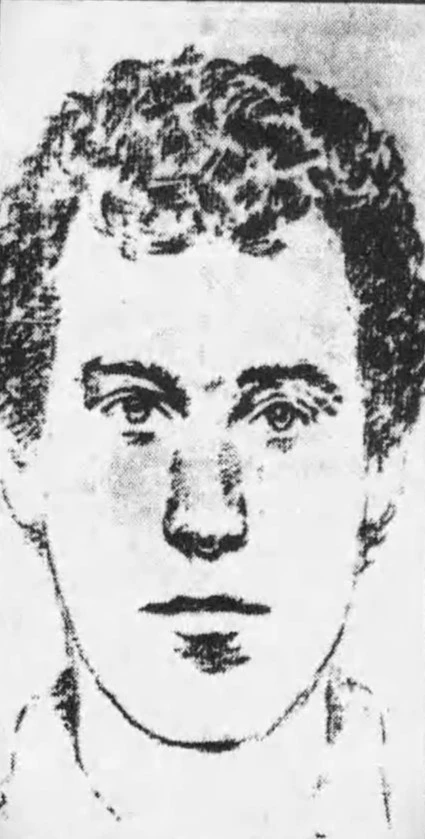
1890s Denver Serial Killer
CLASSIFICATION: Serial Homicide
LOCATION
Denver, Colorado
TIME PERIOD
1894–1903
VICTIMS
3 confirmed
Between 1894 and 1903 an unidentified assailant known as the Denver Strangler is believed to have killed at least three prostitutes in Denver, using ligatures and garroting as his method. Confirmed Denver victims include Lena Tapper (found strangled in her Market Street residence), Marie Contassoit (strangled in her bed), and Kiku Oyama (found with a towel tied around her neck); two additional deaths (Julia Voght in 1898 and Mabel Brown in 1903) have been linked speculatively. Multiple suspects were arrested over the course of the investigations — most notably Richard Demady, who was tried and acquitted — but no one was ever convicted or apprehended. Key evidence noted in the cases included tight ligature marks, signs of robbery, disturbed rooms, and witness testimony linking various suspects to victims or locations, but none produced prosecutable proof.
Some believe the Denver Strangler was responsible not only for the three 1894 Market Street killings but also for the later deaths of clairvoyant Julia Voght (1898) and Mabel Brown (1903), with Voght’s murder often framed as an attempt to silence someone who claimed to “see” the killer. Investigators and locals speculated that membership in the secret French order Macquereaux linked several victims and suspects, and that internal feuds and mutual accusations (notably between Richard Demady, Victor Monchereaux, and Alphonse Lemaire) masked the true perpetrator; in Demady’s case newspapers and prosecutors alleged a check had been used to bribe a judge, fueling cover‑up claims after his acquittal. Others have pushed wider theories tying the Strangler to similar 1894 murders in Cincinnati, New York and Buffalo (cases later connected to Alfred Knapp), and debate endures over whether the killings were the work of one roaming murderer, a small local circle tied to the Macquereaux, or several unrelated assailants.
The name sounds like a headline that should exist somewhere in old newsprint:
the Denver Strangler, a killer stalking the streets of Denver, Colorado. [1]
Juneteenth parade, Denver Colorado, early 80’s.jpg
Instead, the case lives in the margins—surfacing not in court records or preserved clippings, but in the promise of a story inside modern true‑crime books about the city’s wicked past. [1]
What follows is not the tale of a solved—or even properly documented—murderer. It’s the story of how a supposed killer survives only as a shadow in Denver’s historical crime lore.
The clearest footprint of the Denver Strangler appears in a compact true‑crime volume with an equally compact mission: to round up “mile‑high misdeeds and malfeasance” from Denver’s past. [1]
Published in August 2012 by The History Press, Wicked Denver: Mile‑High Misdeeds and Malfeasance gathers 160 pages of historical crime, scandal, and vice. [1] The book’s descriptive text does something important for this story: it explicitly promises that among its Denver tales is “the case of the Denver Strangler.” [1]
That simple line is the anchor point. It treats the Denver Strangler not as rumor, but as a “case”—one episode in the long catalog of wrongdoing in Denver, Colorado. [1]
The same description hints at the larger world this case inhabits. It notes that Denver’s past included criminals who disguised themselves—“men posed as women while committing crimes”—and “murderous madams” who left “trails of scarred girls and ruined lives.” [1] In that gallery of deception and exploitation, the Denver Strangler is invoked as another dark thread. [1]
But in public-facing material, that’s all the case gets: a name, and the assurance that somewhere in Denver’s history, someone earned it. [1]
The people who chose to include the Denver Strangler are not casual storytellers plucking legends from thin air. Wicked Denver is co‑authored by Sheila O’Hare and Alphild Dick, whose careers sit at the intersection of scholarship, records, and research. [1]
O’Hare is described as an assistant professor at Emporia State University, with earlier work as a social sciences bibliographer, attorney, and archivist. [1] Those roles point toward a life spent inside stacks, collections, and case files: the raw material of historical true crime.
Her co‑author, Alphild Dick, is identified as a graduate research assistant at Emporia State who earned an M.A. in Slavic Languages and Literature at the University of Kansas and previously served as a fellow for the American Councils for International Education. [1] Their shared background is steeped in academic and archival research, the kind of work that turns scattered, brittle documents into coherent stories.
The table of contents for Wicked Denver reads like a map of the city’s darker corners: “Saloons and Street Life,” “Poison, Abuse and Vilification,” “The Unwritten Law,” “Unsolved,” “Disturbance of Mind,” “Bad Kids,” “Pecuniary Motives,” and “The Perils of Everyday Life.” [1] That structure signals the authors’ intent to organize Denver’s past crimes not just as isolated incidents, but as patterns—of vice, greed, mental unraveling, and everyday dangers. [1]
© Mapbox © OpenStreetMap
Somewhere inside that framework, the Denver Strangler’s story is tucked away. The description guarantees its presence; the table of contents shows the type of company it keeps. [1]
The Denver Strangler’s afterlife isn’t confined to one city‑focused volume. The atmosphere that gives a killer that kind of nickname—the mix of frontier myth, civic anxiety, and real violence—runs through a broader genre of Western true crime and gothic history.
Mile High Marker Steps Denver 02.jpg
In 2019, Indiana University Press published Weird Wild West: True Tales of the Strange and Gothic, by Keven McQueen, an instructor in the Department of English at Eastern Kentucky University. [2] The book pulls together eerie and macabre accounts from across the West, covering Texas, Oklahoma, Nevada, the Dakotas, Utah, Arizona, New Mexico, Idaho, Montana, Colorado, Wyoming, Oregon, and Washington. [2]
Within that spread, Colorado gets its own dedicated section: “CREEPY COLORADO.” [2] The book’s description name‑checks the body‑snatching of Billy the Kid and a revenge curse laid by a former deputy district attorney in Colorado, placing the state’s stories firmly in a hybrid zone of true crime and gothic legend. [2]
In that landscape, a figure like the Denver Strangler fits naturally—even if Weird Wild West does not name the case outright in its overview. [2] Colorado’s darker history, as McQueen presents it, is a place where crimes and curses sit side by side, and where an ominous moniker like “the Denver Strangler” would not be out of place.
Most notorious killers leave thick paper trails: arrests, indictments, trial transcripts, breathless newspaper coverage, anniversary features. They become fixtures in the public record.
The Denver Strangler—at least as visible from surviving, broadly accessible modern references—does not. Instead, the case drifts in on the edge of another story: a line in a description of Wicked Denver promising readers that among the city’s saloons, street life, poisons, and “pecuniary motives,” they will encounter “the case of the Denver Strangler.” [1]
A street in Denver.jpg
That phrasing is revealing in its own quiet way. It tells readers that the authors regard the Denver Strangler as part of Denver’s historical tapestry of crime and wrongdoing, alongside documented episodes of “murderous madams” and cross‑dressing criminals. [1] It also underscores how some cases—even those sensational enough to earn a cinematic nickname—can dissolve over time into little more than that name.
Without dates, victim identities, or legal outcomes attached in the modern public framing, the Denver Strangler becomes a kind of cipher: an empty outline labeled “case,” anchored only to Denver, Colorado and the promise that something terrible once happened there. [1]
Seen through these later works, the Denver Strangler sits in a twilight between legend and documented history. On one side are scholars and writers—O’Hare, Dick, McQueen—who specialize in excavating strange and violent stories from local archives and Western lore. [1][2] On the other is a public record where, at a glance, the killer exists mainly as a promise of a chapter rather than a fully told narrative. [1]
For true‑crime readers, that tension is both frustrating and telling. It suggests that Denver’s history holds more stories than the familiar canon of headline‑grabbers—cases that, for any number of reasons, never lodged themselves firmly in the broader cultural memory. Some were too fragmented, too poorly reported, or too overshadowed to survive as anything more than a single chilling line in a later book.
The Denver Strangler, as it appears now, is one of those stories. A name. A city. A hint of violence. [1]
Denver, Colorado's capital and largest city (iss073e0252026).jpg
Wikimedia Commons· Public domain
The rest, for the moment, stays in the dark.
Adapted from Wikipedia: Denver Strangler.
This case file is an original Bloody Likely narrative synthesis based on the cited sources. Article © Bloody Likely. All rights reserved. Source materials remain the property of their respective owners. Facts, public records, quotations, and cited references are used for reporting, research, commentary, and documentation. Bloody Likely content license
No recent news articles found for this case. Check back later for updates.
No evidence found for this case. Be the first to submit evidence in the comments below.
Join the discussion
Loading comments...
Contemporary accounts attribute a series of prostitute stranglings in Denver to an unidentified killer beginning in 1894; newspapers later summarized the span
Richard Demady, Tapper's lover and member of the Macquereaux, was tried on charges related to Tapper's death amid wide publicity and numerous witnesses; the
A jury acquitted Richard Demady of the murder charge; he later left for Brazil.
Lena Tapper, a French prostitute and member of the Macquereaux, was discovered strangled to death on her bed in her Market Street residence.
Kiku Oyama, a 24-year-old Japanese immigrant, was found with a towel tied around her neck and signs of a violent struggle; she died in her home after being
Several other suspects (including Frank Roch and an Italian identified as H. Meller) were arrested or questioned in connection with the stranglings but were
Clairvoyant Julia Voght was discovered with a towel tied around her neck; newspapers and investigators speculated she may have been killed because she claimed
Mabel Brown was found with hands bound, a handkerchief in her mouth, and strangulation marks on her throat; some reports linked her death to the Denver
Despite multiple arrests, trials, and public attention, no perpetrator was convicted or captured and the Denver Strangler remained unidentified.