ANALYZING EVIDENCE
Processing case files...
Processing case files...
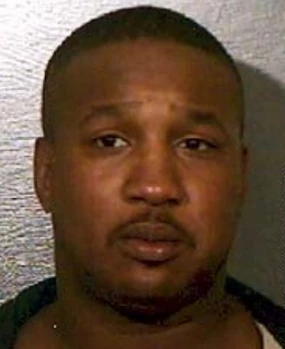
Baton Rouge Serial Killer
CLASSIFICATION: Serial Homicide
LOCATION
Baton Rouge, Louisiana
TIME PERIOD
1998-2003
VICTIMS
7 confirmed
Derrick Todd Lee, known as the Baton Rouge Serial Killer, committed the murders of at least seven women between 1998 and 2003 in the Baton Rouge and Lafayette areas of Louisiana. Lee was apprehended on May 27, 2003, after DNA evidence linked him to the crimes, despite initial misidentification of the suspect's race leading to a prolonged investigation. He was convicted in separate trials for the murders of Geralyn DeSoto and Charlotte Murray Pace, receiving a death sentence for the latter. Lee died on January 21, 2016, from heart disease while awaiting execution at Louisiana State Penitentiary. Investigative findings revealed common methods among the murders, including the removal of victims' cell phones and a lack of forced entry, while also uncovering that another serial killer, Sean Vincent Gillis, was active in the same region during Lee's crime spree.
Some believe Derrick Todd Lee was responsible for additional unsolved killings in the Baton Rouge/Lafayette area beyond the seven linked by DNA, with newspapers and investigators speculating connections based on geography and patterns of abduction. Investigators and commentators have debated the investigation’s course — citing the erroneous FBI profile that focused on a white suspect, the controversial use of DNAPrint Genomics ancestry testing to redirect the dragnet to a Black suspect, unheeded tips from survivors (notably Collette Dwyer) and disputes over whether leads were fully followed — and urban legends (such as the “crying baby” lure) and conspiracy claims of Lee feigning innocence have circulated around the case.
On a humid July night in 2002, a man forced his way into a home in St. Martin Parish and attacked Dianne Alexander. [1] Her adult son, Herman, walked in mid‑assault and chased the intruder off the property before he could finish whatever he had come there to do. [1]
Alexander survived, reported the attack, and did something that would ripple across South Louisiana: she remembered his face. [1] Within a year, that face would be on composite sketches and photo lineups, tied to a suspect investigators believed might be the “South Louisiana Serial Killer.” [1]
Her information helped point authorities toward Derrick Todd Lee. [1] But when Crime Stoppers organizations splashed six‑figure rewards across billboards and newspapers and the suspect was finally in custody, Alexander and her son never saw a cent. Instead, they ended up in a courtroom, asking judges to order Crime Stoppers to pay them the money they believed they had earned. [1]
Their case became an unusual collision of terror, bureaucracy, and contract law, exposing how the fine print of a public reward can leave even pivotal witnesses empty‑handed.
According to court records, the attack on Dianne Alexander happened on July 9, 2002, inside her home in St. Martin Parish. [1] Her son Herman returned home during the assault and chased the attacker from the property. [1]
From the Niger to the Nile (IA fromnigernile01alex).pdf
Wikimedia Commons· Public domain
Alexander reported what had happened to local police and later, along with her son, gave a description of the attacker to the St. Martin Parish Sheriff’s Department. [1] Lieutenant Boyd, a detective there, became the lead investigator on the case. [1]
At first, it was one more violent crime in a region already shaken by the murders of multiple women. By the summer of 2002, a Multi Agency Homicide Task Force had been established to investigate several killings of women in South Louisiana. [1] Authorities believed the same person, dubbed the “South Louisiana Serial Killer,” was responsible. [1]
As investigators in different parishes began comparing notes, patterns emerged. After the death of a woman in Lafayette was linked to the suspected serial killer, Lieutenant Boyd began to suspect that the man who had attacked Alexander might be that same offender. [1] In May 2003, he shared information about Alexander’s case with the Lafayette Parish Sheriff’s Department, which in turn passed it on to the Task Force. [1]
Alexander’s story was no longer just a local assault. It had become a potential key to a multi‑parish serial murder investigation.
On May 22, 2003, almost a year after the attack, Dianne Alexander sat down with an FBI agent assigned to the Task Force. [1] She gave a detailed account of her assailant’s appearance. The next day, May 23, a composite sketch based on her interview was drawn and released to the public. [1]
Investigators believed that sketch looked strikingly like someone they already had their eye on in a separate case being handled by the Louisiana Attorney General’s Office and the Zachary Police Department. [1]
Two days later, on May 25, they moved to confirm their suspicions. A photo lineup was prepared and shown to Alexander. [1] She picked out one man as both her attacker and the same individual suspected in the Zachary case: Derrick Todd Lee. [1]
That identification would echo through every part of the investigation that followed. It tied a living witness who had escaped with her life to a suspect in a widening cluster of murders.
Not long afterward, authorities moved in. Lee, then 34, was arrested in Atlanta and held without bond. [2] He was named as the suspect responsible for five murders in Baton Rouge and Lafayette. [2]
Investigators publicly outlined the potential charges they believed he might face: murder and rape in the deaths of five women, and attempted murder and attempted rape in the attack on a sixth woman in St. Martin Parish, along with kidnapping and burglary. [2] Police in St. Martin Parish began reviewing all cases that could fit Lee’s profile. [2] Authorities were also looking into other cases in at least half a dozen parishes. [2]
The net around Lee widened fast. Sheriff Austin Daniel described how investigators dug up a driveway at a house once occupied by a man suspected in the killings of five women, searching for a woman’s body and coming up empty. [2] He said they planned to examine two more concrete slabs at other locations, both connected to serial‑killings suspect Derrick Todd Lee. [2] Daniel declined to explain exactly how the sites were tied to Lee. [2]
The focus of that search was the body of 28‑year‑old Randi Mebruer, who had disappeared in 1998. [2] A former neighbor told investigators that a concrete slab at one of the properties had been poured in the middle of the night around the time Mebruer vanished. [2] At that time, Lee worked for a concrete company and stayed at the house with a girlfriend. [2]
When investigators broke through the slab, they uncovered a four‑inch bone fragment beneath it. [2] Testing showed it was an animal bone, not human remains. [2]
Beyond Mebruer’s case, Baton Rouge police were investigating a possible link between Lee and the murder of 23‑year‑old Christine Moore, whose family believed she was a victim of the serial killer. [2] Attorney General Richard Ieyoub said his office obtained warrants to search Lee’s home outside St. Francisville in connection with the disappearance of 65‑year‑old Mari Ann Fowler and the murder of 21‑year‑old Geralyn DeSoto. [2] Fowler, the wife of imprisoned former state Elections Commissioner Jerry Fowler, had been abducted on Christmas Eve from a sandwich shop in Port Allen. [2] DeSoto, from Addis, was killed and her body was found in January 2002. [2]
© Mapbox © OpenStreetMap
Sheriff Daniel also said he wanted to talk to Lee about the December 2002 disappearance of 67‑year‑old Glenn Tankersley. [2]
In East Baton Rouge Parish, District Attorney Doug Moreau stated bluntly that prosecutors would seek the death penalty. [2]
Meanwhile, the public defender’s office, headed by Michael Mitchell, was appointed to represent Lee. [2] Mitchell told reporters his office had not handled a case with this level of national attention, but he was confident they could manage it, and described it as a capital murder case of the kind he had handled before. [2] He said the state could go to a grand jury within three or four weeks. [2] At that point, as he emphasized, “Mr. Lee has only been charged by law enforcement with having committed these offenses. He has not been indicted.” [2]
Those legal stages—charges, potential indictments, possible capital trials—were still ahead when another kind of machinery was already in motion: Crime Stoppers reward campaigns promising massive payouts to anyone who could help catch the “South Louisiana Serial Killer.”
In April 2003, Baton Rouge Crime Stoppers (BRCS) launched a high‑profile reward offer related to the hunt for the serial killer. [1] The organization publicized the offer in newspapers, on television, and across billboards around Baton Rouge. [1]
The BRCS ad in the Morning Advocate spelled out the terms. It offered a $100,000 reward for information leading to the arrest and indictment of the “South Louisiana Serial Killer.” [1] Tipsters were told to call 334‑STOP or 1‑877‑723‑7867, and the ad warned that the reward would expire on August 1, 2003. [1]
Shortly after, Lafayette Crime Stoppers (LCS) joined in with a parallel campaign. [1] Its May 14, 2003 press release announced a $50,000 reward, with $25,000 of that matched through Chamber of Commerce members. [1] The release laid out tight conditions:
And there was a hard deadline: the qualifying tip had to be received before midnight on August 1, 2003. [1]
The same release noted that all callers to the Crime Stoppers tips line would remain anonymous and listed the phone numbers 232‑TIPS and 1‑800‑805‑TIPS. [1]
Both BRCS and LCS structured their reward offers to close on the same date: August 1, 2003. [1] Legally, those offers were considered “irrevocable” for the duration of that period because they specified a time window for acceptance. [1] Under Louisiana Civil Code Article 1934, acceptance of such an irrevocable offer becomes effective when it is received by the offeror—in this case, the Crime Stoppers organizations. [1]
Those details would become crucial for Dianne and Herman Alexander.
By the time the Crime Stoppers deadlines rolled around, Derrick Todd Lee had been identified in a photo lineup as Dianne Alexander’s attacker and as the suspect in the Zachary investigation. [1] She had been interviewed by an FBI agent working with the Task Force and had helped generate the composite sketch that investigators saw as a match to a pre‑existing suspect description. [1]
Portret van Herman Alexander Röell, RP-P-1906-2882.jpg
In other words, Alexander believed she and her son had provided exactly the kind of information the Crime Stoppers ads were begging the public for: a lead that pointed to a suspect, a name that helped unlock an investigation. [1]
But according to court findings, neither Dianne nor Herman called the Crime Stoppers hotlines before the August 1 reward expiration date. The plaintiffs themselves admitted that they did not contact either BRCS or LCS before that deadline. [1] Instead, they had always gone through law enforcement—the St. Martin Parish Sheriff’s Department, the Lafayette authorities, and the Task Force. [1]
On or about August 14, 2003, roughly two weeks after the reward period closed, Alexander called Lafayette Crime Stoppers to try to collect the advertised money. [1] LCS told her she was ineligible for the award. [1]
From Crime Stoppers’ perspective, the rules were simple: no call to the tips line within the stated time window meant no contract, and without a contract, no obligation to pay. [1] For Alexander, it likely felt far less abstract. She had been nearly killed, had helped authorities identify a suspect, and now, faced with a wall of fine print, was being told that none of it counted.
On February 22, 2006, Dianne Alexander and her son Herman filed suit against Baton Rouge Crime Stoppers and Lafayette Crime Stoppers. [1] They demanded specific performance—an order compelling the organizations to pay the reward money they said they were owed: $100,000 from BRCS and $50,000 from LCS. [1]
At the heart of their claim was a straightforward idea. The Alexanders argued that they had provided information leading to Lee’s identification and arrest in connection with the very crimes the Crime Stoppers campaigns targeted, and that this performance entitled them to the publicly advertised rewards. [1]
The Crime Stoppers organizations responded with motions for summary judgment, a request for the court to rule in their favor without a full trial. [1] They argued there was no genuine dispute over the key facts: the Alexanders had never provided information through the Crime Stoppers hotlines and had not complied with the “form, terms, or conditions” spelled out in the reward offers. [1]
In other words, even if the Alexanders’ information helped solve the case, Crime Stoppers insisted they had not accepted the offer in the way the offer required. [1]
The trial court sided with Crime Stoppers. It granted the defendants’ motions for summary judgment, ending the case at that level. [1]
The judge’s reasoning turned on the precise wording of the reward advertisements. The court found that the offers were explicitly conditioned on information being provided to the Crime Stoppers entities themselves—not to police departments, not to the Task Force, and not to the FBI. [1]
Because the plaintiffs admitted they never contacted BRCS or LCS before August 1, 2003, the trial court concluded that the Alexanders had not accepted the offers as written. [1]
Dianne and Herman appealed, but the Court of Appeal affirmed the ruling. [1] The appellate judges agreed that both reward offers were “irrevocable offers” that stayed open until August 1, 2003. [1] Under Article 1934 of the Louisiana Civil Code, acceptance of such offers becomes effective only when the offeror actually receives it. [1]
Looking at the record, the appellate court found no evidence that either Crime Stoppers organization had been notified by the Alexanders in the “time and manner indicated in the offers.” [1]
The court acknowledged one important fact: the Alexanders may well have provided information to local law enforcement and the Task Force that related to Derrick Todd Lee’s arrest or indictment. [1] But there was nothing in the Crime Stoppers ads suggesting that police or the Task Force were “offerors” or had authority to accept the reward offers on Crime Stoppers’ behalf. [1]
Because there was no evidence that BRCS or LCS received acceptance of their offers as Article 1934 and the advertisements required, the court held that no contract had been formed under Louisiana Civil Code Article 1927. [1] All costs of the proceedings were assessed against the Alexanders as the losing parties on appeal. [1]
Legally, it was a clean victory for Crime Stoppers. The Alexanders had not dialed the hotlines before the deadline. The advertisements made that the only acceptable way to claim the reward. From a contract‑law standpoint, the case was closed. [1]
What that left behind was a harder, more human question: in a case where a survivor’s memory helped put a suspected serial killer in custody, what does “earning” a reward really mean if the system only recognizes a phone call made to the right number at the right time?
Years after Derrick Todd Lee’s name became synonymous with the South Louisiana serial murders, it appeared in a very different criminal file—this time as a father’s surname.
In 2019, WBRZ reported on the case of Dedrick (also spelled “Dedrick”) Lee, described in its reporting as the son of convicted serial killer Derrick Todd Lee. [3] The younger Lee was convicted on three charges—principal to attempted robbery, obstruction of justice, and negligent homicide—stemming from the shooting death of 16‑year‑old Valentae Brooks. [3]
According to WBRZ, investigators said the shooting occurred during the filming of a rap video with friends in a bedroom in Jackson. [3] Lee told detectives that Brooks handed him a gun when it discharged. [3]
Most of Lee’s sentence was deferred, leaving him to serve 60 days in East Feliciana Parish Prison. [3] He began serving that term on June 11, 2019. [3] During sentencing, the judge urged him to attend college and ordered him to stay away from guns as a condition of his sentence. [3] WBRZ published its account of the case on August 9, 2019. [3]
For families like Brooks’s, and for survivors like Dianne Alexander, the names and faces change, but the damage does not.
The claims and court records tied to Derrick Todd Lee paint a picture of a sprawling, multi‑parish investigation: the Task Force formed in 2002 to pursue a suspected serial killer; [1] a near‑fatal attack in St. Martin Parish that produced the crucial identification; [1] the search of concrete slabs for Randi Mebruer; [2] warrants connected to the disappearance of Mari Ann Fowler and the murder of Geralyn DeSoto; [2] questions about possible links to Christine Moore and Glenn Tankersley. [2]
Derrick on Blackness Castle Pier - geograph.org.uk - 3049320.jpg
They also show prosecutors publicly committing to seek the death penalty and defense lawyers reminding everyone that at that moment, Lee had been charged by law enforcement, but not yet indicted. [2] Within the bounds of those records, many of the ultimate outcomes in those investigations are left unstated.
What is clear is this: a woman in St. Martin Parish survived an attack and remembered the face of the man who tried to kill her. [1] Her description became the backbone of a composite sketch that helped focus a massive manhunt. [1] Detectives and prosecutors built sprawling cases around that identification. [1][2]
But when it came to the rewards that agencies used to draw out that kind of information, the law drew a hard line. The Crime Stoppers offers were not a moral promise—they were contracts. They demanded not just courage and cooperation, but a phone call to the right number before the clock ran out. [1]
Dianne and Herman Alexander had done almost everything the system asks of victims and witnesses. [1] On paper, it still wasn’t enough.
Adapted from Wikipedia: Derrick Todd Lee.
This case file is an original Bloody Likely narrative synthesis based on the cited sources. Article © Bloody Likely. All rights reserved. Source materials remain the property of their respective owners. Facts, public records, quotations, and cited references are used for reporting, research, commentary, and documentation. Bloody Likely content license
Audio narration © Bloody Likely. All rights reserved. The audio player is provided for personal streaming/listening only.
No recent news articles found for this case. Check back later for updates.
No evidence found for this case. Be the first to submit evidence in the comments below.
Join the discussion
Loading comments...
Derrick Todd Lee begins a series of murders in Louisiana.
Geralyn DeSoto is murdered, later linked to Lee via DNA.
Dianne Alexander survives an attack by Lee, providing a description.
Derrick Todd Lee is apprehended in Atlanta, Georgia.
Lee is convicted of the murder of Geralyn DeSoto and sentenced to life imprisonment.
Lee is convicted of the murder of Charlotte Murray Pace and sentenced to death.
The Louisiana Supreme Court upholds Lee's murder conviction and death sentence.
Derrick Todd Lee dies of heart disease while awaiting execution.