ANALYZING EVIDENCE
Processing case files...
Processing case files...
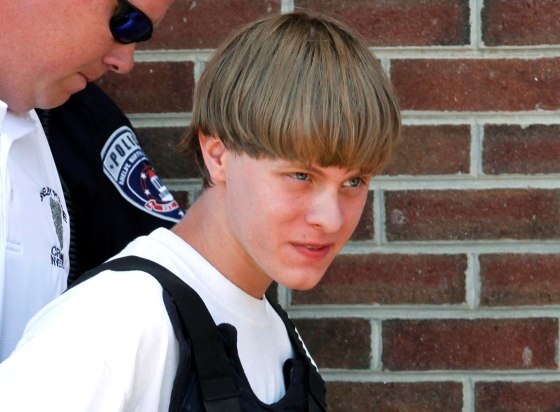
Charleston Church Mass Shooting
CLASSIFICATION: Mass Murder
LOCATION
Charleston, South Carolina
TIME PERIOD
June 17, 2015
VICTIMS
9 confirmed
Nine African-American parishioners were shot and killed during a Bible study at Emanuel African Methodist Episcopal Church in Charleston on June 17, 2015. The assailant, Dylann Storm Roof, was identified, arrested the next day in Shelby, North Carolina, and confessed that he intended to ignite a race war. He was federally tried, convicted on hate-crime and related counts, sentenced to death, and later pleaded guilty in state court receiving nine consecutive life terms; he is currently incarcerated on federal death row. Key evidence included eyewitness identification, Roof's confession, a manifesto and website tying him to white‑supremacist ideology, and the firearm he purchased shortly before the attack.
Some believe that Roof was largely self-radicalized online — soaking up white‑supremacist imagery and propaganda and explicitly seeking to “start a race war,” a motive he laid out in his manifesto. Investigators have speculated he may not have originally targeted the church but aimed for the College of Charleston, allegedly settling for Emanuel AME after encountering security, which fuels debate over his true primary target. Others point to administrative failures — including a disputed misclassification of a prior arrest that might have affected firearm background checks — and argue that how authorities and media labeled the attack (terrorism vs. hate crime) shaped the political and legal framing of responsibility and response.
On a June Wednesday night in 2015, a small Bible study at a historic Black church in downtown Charleston opened with prayer and ended in slaughter.[1][2] By the time the gunfire stopped inside Emanuel African Methodist Episcopal Church—known simply as “Mother Emanuel”—nine African-American parishioners lay dead.[3][4] One of them was the church’s pastor, the Rev. Clementa C. Pinckney, who was also a South Carolina state senator.[2][5]
Emanuel African Methodist Episcopal (AME) Church Corrected.jpg
Emanuel AME is one of the oldest Black churches in the South and a landmark of Black religious and political life in Charleston.[8] On the evening of June 17, 2015, it hosted a weeknight Bible study in the church’s fellowship hall.[5][9]
Roof walked into the church and joined the group.[9] Survivors later testified that the shootings began when the parishioners closed their eyes to pray during the study.[1][6] At some point after sitting through roughly 45 minutes of Bible study, he opened fire with a handgun.[5][9]
Authorities said he ultimately fired 77 shots as many worshippers tried to hide under tables.[9] All nine parishioners killed were African American.[4] Among them were longtime congregants like Susie Jackson, who sang in the choir, and the beloved pastor Pinckney.[2][5] A tenth person was injured but survived.[5]
In the days that followed, the shooting was investigated and charged as a hate crime.[2][3] Federal prosecutors later alleged that Roof specifically targeted the Black Bible study “in order to interfere with their exercise of religion.”[3]
Roof was born on April 3, 1994, and grew up in South Carolina.[5] As a young adult he drifted on the margins: former classmates described him as someone who had Black friends but who also made racist jokes and “Southern pride” comments that increasingly troubled people who knew him.[10]
In early 2015, a few months before the massacre, he landed on police radar for low‑level offenses around a Columbia shopping mall. Twice that year, security at the Columbiana Centre called officers about Roof.[10] On February 28, he was dressed in all black and “acting bizarrely” in stores; when officers searched him—with his consent—they found several strips of Suboxone, a powerful medication used to treat opioid addiction.[10] He was arrested for misdemeanor drug possession and banned from the mall.[5][10]
On March 13, Columbia police again encountered Roof while he sat in his parked car near a downtown park. A search of the vehicle turned up a forearm grip for an AR‑15‑style rifle and six unloaded magazines, but no charges followed because possessing the items was not illegal.[5][6]
Despite the drug arrest, Roof was able to obtain a handgun. According to authorities and relatives, he turned 21 in April 2015 and received a gun from his father for his birthday, later purchasing the pistol used in the attack with birthday money at a retail shop in West Columbia.[5][10] FBI Director James Comey would later say Roof’s February drug case was incorrectly entered as a felony in a database, then treated as a misdemeanor, contributing to lapses that allowed the purchase to go through.[5]
On April 26, Roof was arrested again at the Columbiana Centre—this time for trespassing in violation of his ban, which the mall extended for three more years.[5][10]
Meanwhile, his visible identification with white supremacy hardened. On Facebook, his profile photo showed him in a dark jacket emblazoned with the flags of apartheid‑era South Africa and white‑ruled Rhodesia, both symbols popular with modern white supremacists.[7][10] Other photos posted online showed him posing with a Confederate flag and a car bearing a “Confederate States of America” plate.[5][10]
The night of the shooting, Charleston’s police chief quickly labeled the attack a hate crime.[11] Authorities released photos of the suspect and his car from the church surveillance system, and Roof’s father and uncle contacted police to identify him and the vehicle.[12]
By the next morning, the search had spread across state lines. In Shelby, North Carolina—about four hours’ drive from Charleston—florist Debbie Dills was driving to work when she noticed a black Hyundai with South Carolina plates and a small Confederate flag.[13] The driver, with a distinctive blond bowl haircut, looked like the man in the wanted photos she had seen on the news.[13]
“I think this is the guy from Charleston who shot the people. I’m right beside him,” Dills told her boss on the phone as she tailed the car, later recalling her words.[13] She followed the vehicle for about 35 miles while her boss alerted King’s Mountain police.[13] Officers soon converged on the highway and pulled the car over. Roof did not resist when they arrested him.[13]
A.45‑caliber pistol was found in the car.[5] Roof was taken back to South Carolina, where he was housed on suicide watch in protective custody at the Al Cannon Detention Center in North Charleston.[12]
As investigators searched his belongings and online footprint, a portrait emerged of a young man animated by racist ideology and a desire for notoriety.
A website calling itself “The Last Rhodesian” was discovered days after the shooting and later confirmed to belong to Roof.[5] It hosted photos of him posing with a handgun, the Confederate battle flag, and the numbers “88” and “1488”—codes commonly used among neo‑Nazis.[5] Other images showed him at former plantations and slavery‑related historical sites in the Carolinas.[5]
Charleston Church shooting CCTV Still.png
Wikimedia Commons· Public domain
The site also contained a manifesto in which Roof described developing white supremacist views after reading about the killing of Trayvon Martin and obsessing over perceived “Black‑on‑white crime.”[5] In later journals, portions of which were read aloud in federal court, he wrote explicitly that he hoped the massacre would spark a race war and inspire others to take similar action.[6]
“I did what I thought would make the biggest wave, and now the fate of our race is in the hands of my brothers who continue to live freely,” he wrote in one entry.[6] In another, he added that he “would rather live in prison knowing I took action for my race than live with the torture of sitting idle.”[6]
Federal prosecutors and commentators pointed to this body of writing, along with his choice of target—a historic Black church—as evidence that the killings met common definitions of terrorism as well as hate crime.[8][14] The Justice Department ultimately pursued him under hate‑crime and civil‑rights statutes rather than a terrorism charge, since U.S. law contains no standalone crime of “domestic terrorism.”[6][14]
Two days after the shooting, Roof appeared via video before a Charleston judge for a bond hearing, facing state charges including nine counts of murder and a weapons offense.[12][15] Relatives of all nine victims addressed him, many through tears.[15]
In an extraordinary display that drew national attention, some family members told Roof they forgave him even as they described their anguish.[16] That mixture of grief and grace would become a recurring theme in the courtroom as the legal process unfolded.
On the federal side, Attorney General Loretta Lynch announced five days after the shooting that a grand jury had indicted Roof on 33 counts, including hate‑crime charges and obstruction of the free exercise of religion—charges that carried the possibility of a federal death sentence.[3][6]
In July 2015, at his federal arraignment, his lawyer David Bruck told the court that Roof wished to plead guilty, but the defense was waiting to see whether prosecutors would seek the death penalty.[3][5] The government eventually did.
Roof’s federal trial began in Charleston on December 7, 2016.[4][5] Over days of testimony, survivors and relatives reconstructed what had happened inside Mother Emanuel.[1][6] One survivor described how the attack began when the group closed their eyes to pray.[6] Others spoke about the enduring void left in their families and congregation.[1]
Jennifer Pinckney, widow of Clementa Pinckney, told jurors how she shielded the couple’s young daughter in her husband’s office as shots rang out in the nearby fellowship hall.[6] Throughout the proceedings, observers described Roof as placid and, at times, unapologetic as he listened to the testimony.[1]
In December, the jury found him guilty on all 33 counts, many of them related to hate crimes and obstruction of religion.[4][6]
The question of Roof’s mental state shadowed the case without ever altering its course. As trial approached, his own standby counsel asked the judge to order a competency evaluation, over Roof’s objections.[4] After two days of closed‑door testimony, U.S. District Judge Richard Gergel ruled that Roof understood the nature of the proceedings and was competent to stand trial.[4][16]
Roof nevertheless took the extraordinary step of firing his lawyers for key portions of the case. He represented himself through jury selection, then allowed his defense team to handle the guilt phase, only to dismiss them again before sentencing.[4][6] Acting as his own lawyer, he insisted he would not call witnesses or present any mental‑health evidence that might persuade jurors to spare his life.[4][17]
Victims’ Families Address Dylann Roof
His attorneys later argued that this decision flowed from delusional beliefs—that he would be rescued from prison by white nationalists if he kept mental‑health information out of the record—but those arguments failed on appeal.[18]
At the penalty phase, jurors heard more about his racist writings, including a journal in which he dismissed psychology as “a Jewish invention” and rejected the idea that he suffered from any mental illness.[17] Prosecutors presented evidence they said showed he chose his victims because of their race, killed to incite further violence, and showed no remorse.[17]
In his brief closing argument to the jury, Roof told them, “I have the right to ask you to give me a life sentence, but I'm not sure what good it would do anyway... I still feel like I had to do it.”[6]
Even after the federal verdict, Roof still faced a separate state trial on nine murder charges, where local prosecutors had also been seeking the death penalty.[17][19] That proceeding had been on hold until the federal case concluded.[19]
Behind the scenes, 9th Circuit Solicitor Scarlett Wilson began talking with victims’ families about a different path. In a letter to them, she described her goal as securing an “insurance policy” to the federal conviction by obtaining a state guilty plea and life sentence, then moving Roof into federal custody, where his death sentence could be carried out.[19][20] Many relatives, some opposed to the death penalty on religious grounds, also expressed a strong desire to avoid reliving the evidence in a second capital trial.[6][19]
On April 10, 2017, Roof appeared in a Charleston courtroom and pleaded guilty to state murder charges and related counts.[5][6][19] Judge J.C. Nicholson imposed nine consecutive life sentences without the possibility of parole.[5][6]
Before sentencing, members of Emanuel AME told the court about the toll the attack had taken on their lives and community.[6] Pastor Eric Manning spoke of how its impact had been “far reaching” but said the church’s resilience would continue to inspire others.[6]
Relatives of the dead again showed a spectrum of responses. Blondelle Gadsden, whose sister Myra Thompson was killed, spoke of hoping Roof would repent.[6] Eva Dilligard, whose sister Susie Jackson died in the shooting, said she believed Roof deserved the death penalty.[6]
Roof’s grandfather, Columbia attorney Joe Roof, also addressed the court, telling the judge, “I want everyone to understand that nothing is all bad, and Dylann is not all bad,” and saying he and his wife prayed nightly for the Emanuel families.[6]
Under the plea agreement, Roof received life in prison on the state charges, sparing survivors and families the ordeal of another trial.[6] Wilson’s deal cleared the way for him to be transferred into federal custody.[19][20]
After the state plea, Roof, then 23, returned to the local jail while formally placed in the custody of the U.S. Marshals Service, pending transfer to a federal Bureau of Prisons facility.[1][6] Prison officials and local records show he had been held at the Al Cannon Detention Center since shortly after his arrest.[12][21]
Within weeks, marshals moved him out of South Carolina.[6][21] Male federal death‑row prisoners are typically housed at the U.S. Penitentiary in Terre Haute, Indiana, home to the federal execution chamber.[21] By late April 2017, records confirmed Roof had arrived there.[5][21]
He joined a small group of men awaiting execution under federal sentences.[21] As of a later report, he was held under maximum security at Terre Haute, on federal death row and awaiting execution.[18]
Roof’s case continued through the courts for years after the verdicts. In August 2021, a panel of the Fourth Circuit Court of Appeals unanimously upheld his convictions and federal death sentence, writing that the legal record could not fully capture “the full horror” of what he had done.[5][18]
His lawyers petitioned the U.S. Supreme Court, arguing that he had been wrongly allowed to represent himself during sentencing and that disputes over his mental health had been mishandled.[18] In October 2022, the Court denied his appeal without comment.[5][18]
While those appeals played out, the federal government’s approach to the death penalty shifted. In 2021, the Justice Department instituted a moratorium on federal executions to review protocols and procedures.[22] In December 2024, President Joe Biden commuted the death sentences of 37 of the 40 people then on federal death row, converting their punishments to life without parole.[22] Three men were expressly excluded from clemency: the gunman in the Tree of Life Synagogue massacre in Pittsburgh, the surviving Boston Marathon bomber—and the shooter who killed nine worshippers at Mother Emanuel in Charleston.[22] The White House later noted that cases involving terrorism and hate‑motivated mass murder fell outside the scope of the commutations.[5][22]
© Mapbox © OpenStreetMap
Roof therefore remains under a federal death sentence even as executions are paused.
Even amid trials and appeals, Emanuel AME’s congregation has worked to keep its focus on remembrance and resilience. Pastor Manning told the court that the church’s capacity to endure would continue “to inspire not only the church members … but we would pray the entire state, country and world.”[6]
Survivors carry the memories of that night in their own bodies. Felicia (Felecia) Sanders, who lost both her son and her aunt in the attack, has described how she survived by playing dead on top of her granddaughter during the gunfire.[2] Years later, when told that the state would accept Roof’s guilty plea and forgo a second death‑penalty trial, she responded with two words passed through her attorney: “Praise God.”[1][19]
Loved ones like the Rev. Sharon Risher, whose mother was killed at Mother Emanuel, have spoken of relief that Roof will never be free again, coupled with an ongoing grief that no sentence can erase.[19]
The man who tried to trigger a race war now spends his days alone in a cell in Indiana, his writings and actions chronicled in court records rather than inspiring imitators on the streets.[6][18] The community he attacked, meanwhile, continues to gather for Bible study and prayer in the same fellowship hall where the shooting began—insisting that their story is not defined by the killer but by the lives he tried, and failed, to extinguish.
This case file is an original Bloody Likely narrative synthesis based on the cited sources. Article © Bloody Likely. All rights reserved. Source materials remain the property of their respective owners. Facts, public records, quotations, and cited references are used for reporting, research, commentary, and documentation. Bloody Likely content license
Audio narration © Bloody Likely. All rights reserved. The audio player is provided for personal streaming/listening only.
No recent news articles found for this case. Check back later for updates.
No evidence found for this case. Be the first to submit evidence in the comments below.
Join the discussion
Loading comments...
Dylann Storm Roof is born in Columbia, South Carolina.
Roof was arrested at the Columbiana Centre mall for possession of buprenorphine/naloxone without a prescription and banned from the mall.
An off-duty officer recognized Roof; a search of his parked car found an AR-15 forearm grip and multiple unloaded magazines, but no charges were filed.
During a Bible study at Emanuel AME Church, Roof opened fire with a handgun, killing nine people and injuring a tenth.
Roof was captured during a traffic stop in Shelby, North Carolina, after tips and a civilian tail, and was transported back to South Carolina.
Lastrhodesian.com, a website registered to Roof containing racist photos and a manifesto, was discovered and linked to him by investigators.
A federal grand jury indicted Roof on 33 counts including hate crimes and firearm offenses; many charges carried potential death-penalty exposure.
Roof's federal trial for the hate‑crime and related charges commenced in federal court in Charleston.
A federal jury found Roof guilty on all 33 federal counts, including hate crimes resulting in death.
Judge Richard Gergel formally sentenced Roof to death following the jury's recommendation.
Roof agreed to plead guilty in South Carolina state court to avoid a second death sentence.
Roof was sentenced in state court to nine consecutive life sentences without the possibility of parole.
Roof arrived at USP Terre Haute to begin serving his federal death sentence and to await execution.
A panel of the U.S. Court of Appeals for the Fourth Circuit unanimously rejected Roof's appeal and upheld his federal death sentence.
The U.S. Supreme Court declined to hear Roof's appeal of his conviction and sentence, leaving lower-court rulings in place.