ANALYZING EVIDENCE
Processing case files...
Processing case files...
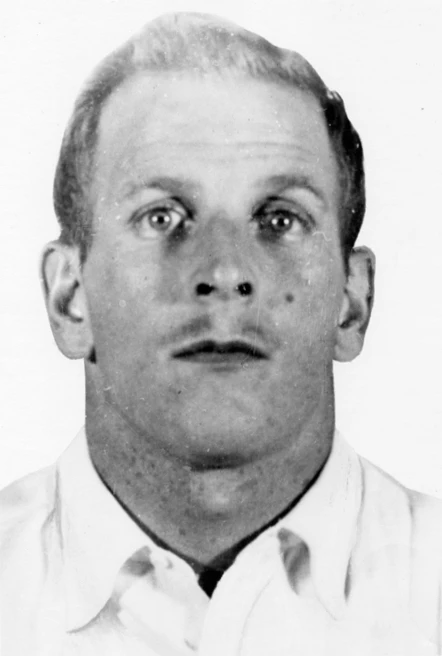
Serial Killer and Fugitive
CLASSIFICATION: Serial Homicide
LOCATION
Ohio, United States
TIME PERIOD
1977-1996
VICTIMS
5 confirmed
Edward Wayne Edwards, an American serial killer, was active between 1977 and 1996, committing at least five confirmed murders in Ohio and Wisconsin. He was initially captured in 1962 after a series of gas station robberies and served time in prison, being paroled in 1967. Following his release, Edwards led a transient lifestyle, during which he committed his murders. He was apprehended in 2009 after a cold case investigation linked him to the crimes, and he was subsequently convicted of multiple counts of aggravated murder and first-degree intentional homicide. Edwards died in prison on April 7, 2011, while serving a life sentence, leaving behind a legacy of suspected additional victims, with estimates ranging from 9 to over 15. Significant evidence in the case included DNA analysis and witness testimonies that connected him to the murders.
Some investigators and authors have speculated that Edwards was responsible for many more killings than the five for which he was convicted, with Detective Chad Garcia expressing confidence in “at least five to seven more” and a published list of up to 15 confirmed and suspected victims. Retired detective John A. Cameron and others have advanced high‑profile linkage theories—most notably that Edwards was the Zodiac Killer and that he may be connected to cases like the Peyton–Allan murders and even JonBenét Ramsey—claims that have been widely disputed and met with skepticism by law enforcement and other researchers. Edwards’ daughter and media producers have reiterated suspicions of broader culpability, but these broader attributions remain controversial and unproven.
In the annals of American crime, the name Edward Wayne Edwards stands as a haunting specter, weaving through the shadows of the 20th century. Born Charles Wayne Murray on June 14, 1933, in Akron, Ohio, Edwards would become known as an infamous serial killer, rapist, and longtime fugitive. His life was a tapestry of crime, deceit, and, ultimately, a chilling legacy that spanned decades.
Edwards' early life was marred by hardship and abuse. Growing up in an orphanage, he endured physical and emotional torment at the hands of nuns. In an attempt to escape this grim existence, Edwards joined the U.S. Marines, only to find himself dishonorably discharged after going AWOL. His subsequent years were a series of odd jobs and frequent travels, as he drifted from place to place, assuming various roles such as a ship docker, vacuum cleaner retailer, and handyman.
In 1955, Edwards made his first significant break from the law by escaping jail in Akron and embarking on a spree of gas station robberies across the country. His audacity knew no bounds; he reportedly committed these crimes without disguise, driven by a desire for notoriety. His criminal activities eventually landed him on the FBI's Ten Most Wanted Fugitives list in 1961, following an escape from a Portland, Oregon jail. Captured in 1962, he was sent to USP Leavenworth and paroled in 1967. During his time in prison, Edwards claimed to have been reformed by a benevolent guard, a transformation he chronicled in his 1972 autobiography, "The Metamorphosis of a Criminal: The True Life Story of Ed Edwards." By the early 1980s, however, he had returned to his criminal ways, serving time for arson in Pennsylvania.
Edwards' life of crime took a deadly turn in 1977 with the murder of William Joseph "Billy" Lavaco and his girlfriend, Judith Lynn "Judy" Straub, in Norton, Ohio. Their bodies were discovered in a park, shot at close range with a 20-gauge shotgun. This marked the beginning of a series of murders that would span nearly two decades.
In 1980, the "Sweetheart Murders" shocked Concord, Wisconsin, when Timothy John "Tim" Hack and Kelly Joye Drew were found stabbed and strangled. Although Edwards was initially questioned, it wasn't until nearly 30 years later that DNA evidence, along with a tip from his daughter April Balascio, linked him to the crime.
Another victim, Dannie Boy Edwards, was not only a foster son but a pawn in a cold-blooded insurance scheme. In 1996, Edwards lured Dannie Boy, who had gone AWOL from the Army, into the woods near his home in Burton, Ohio. There, Edwards shot him twice in the face, leaving his body in a shallow grave. The motive was a $250,000 insurance policy.
It was not until 2009 that Edwards' reign of terror came to an end. Arrested in Louisville, Kentucky, he was described by neighbors as a pleasant figure, an image starkly contrasting with his monstrous deeds. In 2010, Edwards confessed to the murders of Lavaco and Straub, as well as Hack and Drew, and was sentenced to life imprisonment for these heinous acts. Shortly thereafter, he admitted to the murder of his foster son Dannie Boy, resulting in a death sentence in March 2011. However, Edwards would never face execution; he died of natural causes in his prison cell in Columbus, Ohio, on April 7, 2011.
Even after his death, Edwards' shadow loomed large over numerous unsolved cases. Detective Chad Garcia, who played a crucial role in solving the "Sweetheart Murders," speculated that Edwards may have been responsible for at least five to seven additional murders. Despite the unlikelihood, some even suggested his involvement in the infamous Zodiac killings and the murder of JonBenét Ramsey, though these claims remain highly controversial.
Edwards' life and crimes have permeated popular culture, from his appearance on the television game show "To Tell the Truth" in 1972 to the true crime podcast "The Clearing," where his daughter recounts her harrowing realization of her father's true nature. The case has been scrutinized in various documentaries, such as A&E's "It Was Him: The Many Murders of Ed Edwards," and continues to captivate true crime enthusiasts and investigators alike.
Edward Wayne Edwards was a man of many faces, both charming and deceitful, whose life was a chilling journey through the darkest corners of human nature. His story serves as a grim reminder of the evil that can lurk behind even the most benign facades.
This case file adapts material from Wikipedia and is licensed under Creative Commons Attribution-ShareAlike 4.0 International. Additional Bloody Likely interface elements, metadata, images, comments, app features, and audio may be separately protected. Creative Commons Attribution-ShareAlike 4.0 International
Audio narration © Bloody Likely. All rights reserved. The audio player is provided for personal streaming/listening only.
No recent news articles found for this case. Check back later for updates.
No evidence found for this case. Be the first to submit evidence in the comments below.
Join the discussion
Loading comments...
Edward Edwards starts a series of gas station holdups across the country.
Edwards is placed on the FBI's Ten Most Wanted Fugitives list after escaping from jail.
Edward Edwards is captured and imprisoned at USP Leavenworth.
Edward Edwards murders William Lavaco and Judith Straub in Ohio.
Tim Hack and Kelly Drew are murdered in Wisconsin; Edwards is questioned but not charged.
Edwards is arrested in Louisville, Kentucky for multiple murders.
Edwards pleads guilty to the murders of Lavaco, Straub, Hack, and Drew.
Edwards is sentenced to death for the murder of his foster son, Dannie Boy Edwards.
Edward Edwards dies in prison, believed to be from natural causes.