ANALYZING EVIDENCE
Processing case files...
Processing case files...
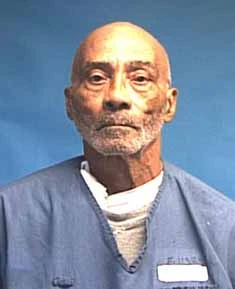
Suspected Serial Killer and Rapist
CLASSIFICATION: Serial Homicide
LOCATION
Aliquippa, Pennsylvania
TIME PERIOD
1977-1978
VICTIMS
18 confirmed
Edward Arthur Surratt, an American murderer and rapist, was convicted of one murder and multiple rapes in 1978, with crimes occurring in Pennsylvania, Ohio, and South Carolina between 1977 and 1978. Despite serving 29 years in prison and confessing to six additional murders in 2007 and six more in 2021, he has not been charged for these confessions, and the case remains officially unsolved. Surratt is currently imprisoned in Florida, where he is serving multiple life sentences.
Some believe Surratt was the long‑haul trucker who terrorized western Pennsylvania and eastern Ohio in 1977–78, with investigators linking his routes, fingerprints and possession of victims’ property to at least 18 similar killings and the panic in the region. Investigators and commentators have speculated that the spree ended when he was arrested in 1978, but unresolved debates persist because prosecutors repeatedly declined to pursue additional state charges (citing his existing life terms and transport/security issues) despite his 2007 and 2021 confessions and offers to reveal burial sites in exchange for concessions. Open questions remain about several missing victims (notably Ranee Gregor), which of the confessed crimes can be forensically corroborated, and whether jurisdictions’ decisions not to prosecute represent pragmatic resource choices or a de facto closure without full accountability.
In the span of a year, from late 1977 into 1978, Western Pennsylvania and Eastern Ohio were shaken by more than two dozen unsolved murders. [1] Panic settled over steel towns and rural stretches alike as couples were attacked in their homes, husbands cut down by shotgun blasts. [2] Years later, authorities would quietly link 18 of those killings to a long‑haul trucker from Aliquippa named Edward A. Surratt. [1]
By then, Surratt was already hundreds of miles away—locked in a Florida prison, serving two life sentences and carrying a murder conviction out of South Carolina. [3] Decades after the bloodshed stopped, he began to talk. In a series of interviews and prison‑cell sessions, he confessed to six Pennsylvania murders from the 1970s and implicated himself in others, even as prosecutors signaled he would likely never be brought back to stand trial there. [1][3]
This is the story of the man investigators believe was behind that season of fear—and the Pennsylvania cases that still sit unresolved on the books.
By early 1978, state police investigators in southwestern Pennsylvania were starting to see a pattern they could not ignore. An article at the time described the January slaying of 46‑year‑old John Shelkons in his Baden home as the fourth time in several months that a man in the region had been killed at home by shotgun blasts, with his wife either killed, wounded, or believed abducted. [2]
© Mapbox © OpenStreetMap
In that same account, police described one man as the chief suspect in those deaths: a 36‑year‑old from Aliquippa named Edward Surratt. [2] Another later report boiled the pattern down starkly—Surratt “was known for a pattern of immediately killing the husband with a shotgun blast and raping and killing the wife.” [1]
Authorities would go on to connect that pattern to a much broader campaign of violence. Panic had already taken hold across Western Pennsylvania and Eastern Ohio, where more than two dozen murders had gone unsolved in 1977 and 1978. [1] Eventually, investigators linked 18 of them to a long‑haul truck driver from Aliquippa: Edward A. Surratt. [1]
Fulton Theater, 101 Sixth Street, Pittsburgh, Allegheny County, PA HABS PA,2-PITBU,27- (sheet 7 of 11).png
Wikimedia Commons· Public domain
On paper, Surratt did not look like the archetype of a drifter suspect. A contemporaneous profile described him as 36 years old and from Aliquippa, an honor‑roll student in high school. [2]
He’d gone on to military service, and not just in one branch. One article said he was a veteran of both the Army and the Marine Corps and that he had served in combat missions in Vietnam, working at one point as a military chaplain’s assistant. [2]
By the late 1970s, he was back in Pennsylvania and working the highways. Later reporting would describe him as a truck driver and a former resident of Aliquippa. [3] That lifestyle—the constant movement, the cover of legitimate freight runs—would loom large when investigators began comparing murder maps to trucking routes.
The case that came to symbolize the terror of that period unfolded on December 3, 1977. Richard Hyde, principal at Fern Hollow Elementary School in Moon, and his wife, Donna, were killed that day. [1]
Richard Hyde (1783 - 1854) Edward Greene Malbone (page 220 crop).jpg
Wikimedia Commons· Public domain
Richard Hyde was found dead of a gunshot wound to the stomach. [1] Donna Hyde’s body was discovered several miles away; she had been beaten to death. [1] For years afterward, the Hyades were “long thought to be among Surratt’s victims,” though he has never been tried for their murders. [1]
Their deaths fit the pattern investigators were beginning to fear: a family attacked, the husband dispatched with a firearm, the wife subjected to a brutal, fatal assault. [1][2]
Just over a month later, violence struck again in Beaver County. On January 7, 1978, John and his wife, often identified as Catherine or Katherine Shelkons, were attacked in their Baden home. [1][2]
Accounts differ on the precise outcome for Catherine. One later summary described both John and Catherine Shelkons as “found dead” in their home that day and listed them among the suspected victims of Surratt. [1] Another report, closer in time to the crime, said state police charged Surratt with the January murder of John Shelkons, 46, in his Baden home and with the aggravated assault of his wife, Katherine. [2]
Whatever the exact details, the Shelkons case fit the grim series playing out across the region. It was cited as the fourth such shotgun killing of a man in his home in southwestern Pennsylvania, with the wife killed, injured, or believed abducted. [2] Police openly described Surratt as the chief suspect in these linked attacks. [2]
As police zeroed in, they painted a wider picture. One article said Surratt had already been charged with murder in Ohio and South Carolina and was accused of murder in all three states—Pennsylvania, Ohio, and South Carolina. [2] State police wanted to question him not only in the Shelkons killing but also in three Breezewood, Pennsylvania, slayings and a shooting at a Lovers Lane in suburban Pittsburgh. [2]
In Aliquippa, the attempts to capture him turned dramatic. According to a contemporaneous account, Surratt fled from seven state troopers who were pursuing him through a parking lot, ran into a sprawling steel mill, and managed to elude them. [2]
Three weeks later, he was taken into custody far from Beaver County. Police arrested him in South Velano Beach, Florida, where he was allegedly holding a family hostage. [2] At the time, one paper reported, he was in a Florida jail cell on rape charges. [2]
Fulton Theater, 101 Sixth Street, Pittsburgh, Allegheny County, PA HABS PA,2-PITBU,27- (sheet 5 of 11).tif
Wikimedia Commons· Public domain
A separate report simply noted that he was arrested in Florida in 1978—and that after his arrest, the killings that had terrorized Western Pennsylvania and Eastern Ohio stopped. [1]
Once Surratt was in a Florida jail, Beaver County authorities moved quickly on the Shelkons case. State police charged him with the January murder of John Shelkons and with the aggravated assault of Katherine in their Baden home. [2]
Beaver County District Attorney Edward Toed said Surratt confessed to the Shelkons murder during a session in a Florida cell. [2] Toed explained that his staff was preparing extradition papers but admitted he did not know when—or if—Surratt would be returned to Pennsylvania to face trial. [2] He also noted that Surratt was wanted in Ohio and South Carolina as well as Pennsylvania, underscoring the multistate complexity of the case. [2]
The confession itself came during a tape‑recorded interview in St. Augustine, Florida, with Beaver County detective Townsend Smith. [2] Smith later recounted that, at one point, Surratt asked him “which one did I want to know about,” and Smith answered accordingly. [2] Smith said Surratt promised he would talk about other cases but did not elaborate. [2]
Crucially, Smith emphasized that there were “no deals or possible deals” made with Surratt in exchange for his statements. [2] Toed suggested that Surratt may have chosen to open up to Smith because they came from the same town and that Surratt preferred to deal with people he knew. [2]
Even then, there were doubts he would ever appear in a Pennsylvania courtroom. One article bluntly concluded that Surratt might never return to Pennsylvania to face the charges he had allegedly admitted. [2]
Those doubts proved well‑founded. In 1980, a judge dismissed the Pennsylvania charges against Surratt in the Shelkons case. [3] According to a contemporaneous Pittsburgh Post‑Gazette account, the judge cited Surratt’s other convictions and the security risk of transporting him to Pennsylvania for trial as reasons for dropping the case. [3]
By that time, Surratt’s legal troubles outside Pennsylvania were mounting. He had been charged with murder in Ohio and South Carolina, [2] and a later report noted that he was convicted of murder in South Carolina. [3] In Florida, he was sentenced to two life terms and has been incarcerated there since October 1978. [3]
While Pennsylvania’s most directly built case against him—the Shelkons prosecution—disappeared from the docket, the suspicion surrounding his name did not. Investigators and reporters kept circling back to 1977 and 1978, to the more than two dozen unsolved murders in Western Pennsylvania and Eastern Ohio and the 18 killings authorities had linked to the long‑haul trucker from Aliquippa. [1]
Suspected victims listed in later accounts included John and Catherine Shelkons, as well as Richard and Donna Hyde. [1]
The life and works of Edward Greene Malbone.djvu
Wikimedia Commons· Public domain
For years, those suspicions amounted to little more than open case files and local memory. That began to change in the 2000s, when Surratt started talking in more detail about his past.
In 2007, he told an interviewer that he was involved in Pennsylvania and Ohio killings dating to the 1970s. [3] That same year, he formally confessed to six murders in Western Pennsylvania, according to later reporting. [1]
Those statements set the stage for another round of questioning. Pennsylvania State Police said that an inmate serving life in Florida had confessed to killing six people in Pennsylvania in the 1970s. [3] Investigators obtained those confessions in March during interviews with Edward A. Surratt at a state prison in Raiford, Florida. [3]
When state police made contact with Surratt again in 2018, they said, he provided new information about six Pennsylvania deaths. [3]
In those conversations, Surratt implicated himself in a string of specific 1977 slayings: William and Nancy Adams in Beaver County; Guy and Laura Mills in McConnellsburg; and Joel Krueger in Bedford County. [3] He also implicated himself in the 1978 death of John Shelkons in Beaver County—the very case he had once confessed to in that Florida jail cell decades earlier. [2][3]
Taken together, the interviews and confessions suggested a broad footprint of violence across Pennsylvania’s counties during the late 1970s, overlaid on top of what authorities had already suspected.
The numbers never quite line up. Authorities linked 18 of the panic‑era murders in Western Pennsylvania and Eastern Ohio to Surratt, based on patterns and investigative work from the late 1970s onward. [1] Decades later, he confessed to six murders in Western Pennsylvania and told an interviewer he was involved in Pennsylvania and Ohio killings dating back to that same period. [1][3]
Yet those confessions have not translated into new prosecutions. State police have said that county prosecutors do not plan to prosecute Surratt for the Pennsylvania deaths he has now admitted. [3] The reasoning echoes what a judge cited in 1980 when dismissing the Shelkons charges: Surratt’s existing convictions and sentences, and the security and logistical problems of moving a dangerous inmate across states. [3]
Image of convicted American murderer and suspected serial killer Edward Surratt
Wikimedia Commons· Public domain
Meanwhile, the broader pattern remains chilling. More than two dozen murders went unsolved in 1977 and 1978 in Western Pennsylvania and Eastern Ohio. [1] After Surratt’s arrest in Florida in 1978, the killings that fit the suspected pattern stopped. [1]
He is now an aging inmate in Florida, described in a 2021 account as a truck driver and former Aliquippa resident, still serving two life sentences and carrying that South Carolina murder conviction. [3] He has been incarcerated since October 1978. [3]
For the families of Richard and Donna Hyde, John and Catherine Shelkons, William and Nancy Adams, Guy and Laura Mills, Joel Krueger, and the many unnamed victims folded into that count of 18 linked murders, the story is more complicated than a simple solved‑or‑unsolved label. [1][3]
A man has confessed from his prison cell. Investigators have drawn their lines on the map. The murders stopped the year he was taken off the road. [1]
But in Pennsylvania, where the fear began, the courts have never said aloud what so many detectives and families have long believed about Edward Surratt.
Adapted from Edward Surratt - Wikipedia.
This case file is an original Bloody Likely narrative synthesis based on the cited sources. Article © Bloody Likely. All rights reserved. Source materials remain the property of their respective owners. Facts, public records, quotations, and cited references are used for reporting, research, commentary, and documentation. Bloody Likely content license
Audio narration © Bloody Likely. All rights reserved. The audio player is provided for personal streaming/listening only.
No recent news articles found for this case. Check back later for updates.
No evidence found for this case. Be the first to submit evidence in the comments below.
Join the discussion
Loading comments...
Series of murders begins in Pennsylvania, Ohio, and South Carolina.
Edward Surratt comes under police suspicion due to his truck driving routes.
66-year-old Luther Langford is murdered in South Carolina; Surratt is linked to the crime.
Surratt is arrested in Florida after attacking a family.
Surratt's trial for burglary, assault, and rape begins in Volusia County.
Surratt is sentenced to two life terms and 200 years for his crimes in Florida.
Surratt is extradited to South Carolina for the murder of Luther Langford.
Surratt confesses to six additional murders but no charges are filed.
Surratt confesses to more murders while imprisoned, but no new charges are brought.