ANALYZING EVIDENCE
Processing case files...
Processing case files...
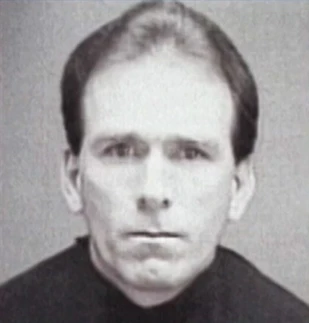
Texas Serial Killer and Rapist
CLASSIFICATION: Serial Homicide
LOCATION
Wichita Falls, Texas
TIME PERIOD
1984-1986
VICTIMS
5 confirmed
Faryion Edward Wardrip is an American serial killer and rapist who committed a series of murders between late 1984 and mid-1986, targeting five young women in Wichita Falls and Fort Worth, Texas. He was apprehended on May 9, 1986, and subsequently convicted of multiple counts of capital murder, currently residing on death row. The case is considered solved, with Wardrip's crimes leading to significant law enforcement collaboration across multiple jurisdictions.
Some observers and news reports have argued that the fact the murders occurred across multiple jurisdictions — with three law-enforcement agencies running isolated investigations — delayed linking the crimes and ultimately hindered Wardrip’s earlier capture. Critics and community members have speculated that the criminal-justice system failed by paroling Wardrip after serving only 11 years for one murder (despite use of an ankle monitor) and that this early release and limited monitoring enabled him to remain a risk; investigators reopening the cases later have questioned why Wardrip’s own 1986 claim of knowing Ellen Blau was not pursued sooner. Others have pointed to the serious investigative missteps that led to wrongful suspicion of individuals such as Danny Laughlin and Debra Taylor’s husband, fueling debate over whether suspect-handling and forensic follow-up were adequate in the original probes.
On the morning of December 21, 1984, nurse Leza Boone came home to her Wichita Falls apartment after pulling a double shift at Wichita General Hospital and found her own front door locked against her.[1] She called the landlord for help.[1]
© Mapbox © OpenStreetMap
Inside, the landlord discovered Boone’s roommate, 20‑year‑old Midwestern State University student Terry Sims, lying dead on the bathroom floor.[1]
It was the first known killing in what would later be recognized as a 16‑month spree that left five young women dead in North Texas — four in Wichita County and one in Tarrant County.[2][3] For years, the cases would sit unsolved, scattered among agencies and theories. The man eventually held responsible, Faryion Wardrip, was already in prison for another woman’s murder before DNA and one routine coffee break finally dragged the rest of the story into court.
Terry Sims’ murder showed the kind of violence that would haunt investigators. Forensic pathologist Dr. Allen Stilwell, who performed her autopsy, later testified that Sims had been stabbed multiple times in the chest and back, and that cuts on her hands and fingers showed she’d tried to fight her attacker.[1] He described “tease wounds” meant to “get her attention,” inflicted before the fatal blows.[1]
Sims was an MSU student; her body was found just two blocks from an apartment where Faryion Wardrip lived at the time.[1] According to court documents cited later, Sims had once seen Wardrip “screaming at the stars,” and when he confronted her at the apartment door, she slammed it and locked it. Wardrip then rushed the door, broke it down, and, in the words of those documents, “just ransacked her, just slung her all over the house in a violent rage.”[1]
Two months after Sims’ body was found, another young woman disappeared. On February 15, 1985, electrician Charles Haynes spotted something off Highway 281 and discovered the body of 23‑year‑old nurse Toni Gibbs.[1] She had been bludgeoned to death; her clothes were found separately in a trolley car near the field where her body lay.[1]
Police soon focused on a local man, Danny Laughlin, after he seemed to know details about the crime he wasn’t supposed to know.[1] Laughlin was charged with Gibbs’ murder, but later acquitted when his DNA didn’t match the evidence from the crime scene.[1]
Roughly seven months after Gibbs’ body was found, county worker Don Morgan discovered another victim: 21‑year‑old MSU student and waitress Ellen Blau, who had moved to Texas from Connecticut.[1] She’d been missing for about a month by the time her body turned up.[1] Decomposition had gone so far that any DNA or sexual‑assault evidence was impossible to recover.[1]
And still, the killings were not over.
On May 6, 1986, yet another Wichita Falls woman, Tina Kimbrew, was killed. An account later stated that Wardrip asphyxiated her with a pillow.[1] Three days after Kimbrew’s death, Wardrip called authorities. He admitted knowing Kimbrew and claimed to have information about the earlier victim, Ellen Blau.[1] For reasons that would loom large later, his claims about Blau were not pursued in any serious way for nearly 15 years.[1]
At the time, investigators were dealing with what one campus account would later describe as three separate investigations with little communication among agencies.[1] MSU Chief of Police Dan Williams recalled that detectives suspected the same man might be responsible for the murders but lacked the evidence to connect the cases.[1]
There was one case they could close. After Kimbrew’s murder in May 1986, Wardrip left Wichita Falls, drove to Galveston, and surrendered to officers there.[3] He ultimately pleaded guilty to killing Kimbrew that year.[2]
For that murder, Wardrip received a 35‑year sentence. He served 11 years before being released on parole on December 11, 1997.[1]
By then, the other victims’ families had been waiting more than a decade for answers. In March 1990, Wichita County District Attorney Barry Macha ordered DNA testing of two semen samples from the Sims and Gibbs crime scenes to see if they matched each other.[1] The tests confirmed that the same offender had raped both women, but investigators still lacked a suspect’s DNA to compare it to.[1]
So the cases — Sims, Gibbs, Blau — remained officially unsolved.
When Wardrip walked out of prison, he did not return to Wichita Falls. He moved about an hour away to the small town of Olney, Texas.[1] There, he remarried, became active in his church, and held a steady job at Olney Screen and Door.[1]
Back in Wichita Falls, the unsolved murders of young women had become part of the city’s uneasy history. A 2013 campus newspaper feature on the case bore the headline “The Body Snatcher.”[1] Students at Midwestern State University still knew the names: Sims, Gibbs, Blau.
What they did not know — what even police had not yet pieced together — was how closely the paroled killer in Olney was tied to all three.
About 15 years after the first killing, investigator John Little was assigned to re‑examine the old cases.[1] Working back through reports that had sat for years, Little began to see threads no one had fully pulled.
He noticed that years earlier, three days after killing Kimbrew, Wardrip had called authorities and volunteered that he knew both Kimbrew and missing student Ellen Blau.[1] Police had never seriously followed up on that claim.[1]
Little also learned that before his 1986 arrest, Wardrip had worked as a janitor at Wichita General Hospital — the same hospital where victim Toni Gibbs was a nurse.[1] Terry Sims’ body, meanwhile, had been found just two blocks from the apartment from which Ellen Blau had been reported missing, and near where Wardrip once lived.[1]
To Little, the proximity and relationships looked less like coincidence and more like a pattern. But the case still needed hard evidence.
Investigators already had DNA from the Sims and Gibbs crime scenes, but still no reference profile to match it to.[1] If they could somehow get a sample from Wardrip without tipping him off, they could finally test the theory that the quiet factory worker in Olney was the serial killer they’d been looking for.
Summerfest 2025 01 (The Terry Sims Band).jpg
On February 5, 1999, John Little set that plan in motion. He went to a laundromat across the street from where Wardrip worked and pretended to wash clothes while watching for his target.[1] When Wardrip stepped out for a coffee break, Little followed, struck up a casual interaction, put a pinch of tobacco in his mouth, and asked if he could use Wardrip’s coffee cup as a spit cup.[1]
Wardrip said yes.[1]
Little sent the discarded cup to the private lab Genescreen for comparison.[1] The test came back a match: the DNA on the coffee cup matched the DNA left at multiple crime scenes in Wichita Falls.[1][2] The lab results tied a paroled murderer, living quietly on supervision, to a killing spree from December 1984 to May 1986 that had left five young women dead.[2][3]
Once the DNA match was confirmed, investigators called Wardrip in. He believed he was going to meet with his parole officer.[1] Instead, John Little was waiting.
Questioned by Little, Wardrip initially denied knowing the victims.[1] That denial, one account says, held for three days.[1]
From this point, accounts of what Wardrip said diverge sharply.
One detailed narrative of the case reports that after those three days, Wardrip confessed to the murders of Terry Sims, Toni Gibbs, Ellen Blau, and another woman, later identified as Debra (or Deborah) Taylor.[1] He reportedly told investigators he was not even sure of Taylor’s full name when he was confessing.[1] Another source says he claimed he committed the crimes because of his abuse of illegal drugs.[3]
A separate line in that same campus account, however, flatly states: “He has never confessed to the crimes.”[1]
Other reporting from Wichita Falls and Amarillo notes that he later “reportedly confessed” to the murder of Tina Kimbrew after surrendering in Galveston.[3]
Taken together, the public record leaves a contradictory picture: formal guilty plea for Kimbrew, reported post‑DNA confessions to multiple murders, and at least one summary insisting he never confessed at all. Testimony and forensic evidence would ultimately carry the burden where the words attributed to Wardrip could not be agreed upon.
Once the DNA tied him to the old cases, prosecutors moved quickly. By 1999, courts had connected Wardrip to the entire North Texas spree: five murders committed between late 1984 and May 1986, four in Wichita County and one in Tarrant County.[3]
He had already pleaded guilty in 1986 to killing Wichita Falls woman Tina Kimbrew and served 11 years of a 35‑year sentence for that crime.[1][2][4]
In 1999, a Wichita County jury convicted him of the stabbing, murder, and rape of 20‑year‑old Terry Sims and sentenced him to die by lethal injection for that murder.[1][2] In separate proceedings, he received three life terms for killing nurse Toni Gibbs, student‑waitress Ellen Blau, and a fourth victim identified in court records as Deborah Taylor.[2]
One later article summarized that he was “convicted in 1999 of killing four women,” while also noting he had already served time for killing another Wichita Falls woman in 1986.[4] Read closely, that description reflects the full portrait of his known violence: five women dead, one earlier conviction for Kimbrew, and four additional convictions clustered around the 1999 trial.
The court verdicts did not end the case. They moved it into a different arena: decades of appeals in state and federal court.
Wardrip argued that his trial counsel had been ineffective, echoing a complaint reported earlier that a public defender “did not adequately represent him” at his original trial.[1][4] A campus piece later said he appealed on grounds of ineffective legal counsel.[1]
At one stage, the Northern District of Texas granted habeas corpus relief in his case. An April 5 ruling — the year not specified in that account — ordered that relief be granted, on the theory that evidence should have been presented to show him “in a better light,” including his work on a prison newspaper.[1] That same report stated that, as a result, “the death penalty sentence is now off the table.”[1]
Another news outlet described the federal district court’s order this way: the court had stopped Wardrip’s death sentence and would allow him to be released only if the State began a new trial or imposed a life sentence within 180 days.[3] In the wake of that decision, at least one account said Wardrip was “now serving three consecutive life sentences.”[1]
But the legal tide turned yet again. The Fifth Circuit U.S. Court of Appeals ultimately reversed the district court’s relief, rejected his request for a new trial, and reinstated the death sentence.[3] The appeals court’s decision was described as final; a motion for further appeal was denied.[3]
The back‑and‑forth continued in other filings. A later report said a federal district court magistrate had denied Wardrip relief and that Wichita County District Attorney John Gillespie explained the magistrate had recommended the district judge deny Wardrip’s remaining claims.[2] Gillespie noted there was no legal time frame for the federal judge to decide whether to adopt or reject those recommendations.[2] If the judge denied the claims, Wardrip could appeal to the Fifth Circuit and then seek review from the U.S. Supreme Court; only after those avenues closed would an execution date be set.[2]
Through this period, U.S. Magistrate Judge Paul D. Stickney was the federal judicial officer most closely associated with the case. He had handled Wardrip’s habeas petition since 2002, and there was no deadline requiring him to send it back to the trial judge in Wichita Falls to set an execution date.[4]
In December 2014, the Texas Court of Criminal Appeals — the state’s highest criminal court — dismissed Wardrip’s latest effort to avoid a death sentence.[4] The death at issue, that court noted, involved a Wichita Falls woman killed during the late‑1984‑to‑early‑1986 rampage.[4]
By then, one article could describe the case as “another ruling in a long series of appeals and rulings by numerous judges in different courts,” and suggest that, after a quarter century on death row, Wardrip appeared “closer to lethal injection.”[2]
Even decades later, basic details about Wardrip’s status can look slippery in the public record. One report described him as 55 years old when recounting his 1999 conviction; another, published years later, said he was 66.[2][4]
Some coverage, written in the wake of the district court’s habeas ruling, spoke of him as serving three consecutive life sentences with the death penalty “off the table.”[1] Subsequent reporting focused on the Fifth Circuit’s decision reinstating his death sentence and on later federal rulings that left him, according to those accounts, still fighting from death row and edging closer to execution.[2][3]
What is not in dispute are the victims.
Terry Sims, a 20‑year‑old MSU student whose landlord had to break into her locked apartment.[1]
Toni Gibbs, a nurse whose body was found near Highway 281, clothes discarded in a trolley car.[1]
Ellen Blau, a 21‑year‑old student and waitress whose disappearance stretched into weeks before her body was discovered, too decomposed for DNA to speak for her.[1]
Debra (or Deborah) Taylor, whose identity surfaced through Wardrip’s own reported, uncertain recollection.[1]
And Tina Kimbrew, smothered in her Wichita Falls apartment, the one murder for which he pleaded guilty long before DNA caught up with the rest.[1][2]
Together, their cases show how a fragmented investigation, a parole that came too soon, and an offender who appeared to reinvent himself in a new town delayed justice for years. They also show how a single coffee cup, lifted in a laundromat on an ordinary Friday in 1999, finally forced a reckoning — one that the courts are still, in some ways, working through.
Adapted from Faryion Wardrip - Wikipedia.
This case file is an original Bloody Likely narrative synthesis based on the cited sources. Article © Bloody Likely. All rights reserved. Source materials remain the property of their respective owners. Facts, public records, quotations, and cited references are used for reporting, research, commentary, and documentation. Bloody Likely content license
Audio narration © Bloody Likely. All rights reserved. The audio player is provided for personal streaming/listening only.
No recent news articles found for this case. Check back later for updates.
No evidence found for this case. Be the first to submit evidence in the comments below.
Join the discussion
Loading comments...
Terry Sims, a 20-year-old EKG specialist, is murdered by Wardrip in Wichita Falls.
Toni Gibbs, a 23-year-old nurse, is abducted and murdered by Wardrip.
Debra Taylor, 25, is killed by Wardrip after rejecting his advances in Fort Worth.
Ellen Blau, a 21-year-old waitress, is abducted and murdered by Wardrip.
Wardrip murders Tina Kimbrew, a 21-year-old waitress, in her apartment.
Wardrip confesses to the murder of Tina Kimbrew while threatening suicide.
Wardrip is arrested and confesses to the murders of four women, including Kimbrew.
Wardrip is sentenced to death for the murder of Terry Sims and receives life terms for others.
Wardrip's request for a new trial is denied, and his death sentence is reinstated.