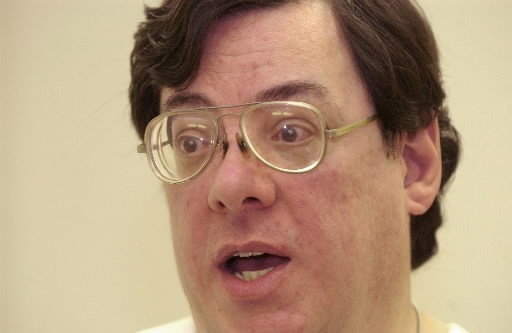
Frank Spisak
Neo-Nazi Serial Killer Case
CLASSIFICATION: Serial Homicide
LOCATION
Cleveland, Ohio
TIME PERIOD
February 1 – August 30, 1982
VICTIMS
3 confirmed
Frank G. Spisak Jr. was a neo-Nazi serial killer who committed three murders and two attacks in Cleveland, Ohio, between February and August 1982, targeting victims based on their race. He was convicted in 1983 and sentenced to death, ultimately being executed by lethal injection in 2011 after spending over 27 years on death row. The case is considered solved, with Spisak's actions motivated by his extremist beliefs.
Frank Spisak's case has led to speculation regarding the motivations behind his murders, particularly his desire to instigate a race war influenced by his neo-Nazi beliefs. Some theories suggest that his violent actions were not only a product of personal ideology but also a reflection of broader societal tensions during the early 1980s. Additionally, his connections with other neo-Nazi figures while in prison have raised questions about the potential for radicalization and the spread of extremist ideologies within the prison system.
Frank Spisak
A Profile of America’s Neo-Nazi Serial Killer
Frank G. Spisak Jr. (June 6, 1951 – February 17, 2011) was an American serial killer whose heinous acts were fueled by a toxic blend of neo-Nazism and a desire to incite a race war. Between February and August of 1982, Spisak murdered three individuals and attempted to kill two others in a chilling spree that unfolded primarily on the campus of Cleveland State University. His victims included two black men and one white man, the latter of whom Spisak mistakenly believed was Jewish. A member of the neo-Nazi National Socialist White People's Party (NSWPP), Spisak was convicted of his crimes in 1983 and sentenced to death.
Quick Facts
- Born: June 6, 1951, Cleveland, Ohio, U.S.
- Died: February 17, 2011 (aged 59), Southern Ohio Correctional Facility, Lucasville, Ohio, U.S.
- Cause of Death: Execution by lethal injection
- Political Affiliation: American Nazi Party
- Criminal Status: Executed
- Motive: Neo-Nazism, desire to start a race war
- Convictions: Aggravated murder (3 counts), attempted murder, aggravated robbery (2 counts)
- Criminal Penalty: Death
- Victims: 3 killed, 1 injured
- Span of Crimes: February 1 – August 30, 1982
- State: Ohio
While incarcerated, Spisak maintained correspondence with fellow neo-Nazi James Mason, who praised him in his radical newsletter, SIEGE. After relentless appeals, including a final rejection by the U.S. Supreme Court in 2010, he was executed in 2011 after spending over 27 years on death row—a record for Ohio.
Early Life
Frank G. Spisak Jr. was born into a working-class family in Cleveland, Ohio. His father was a factory worker who relocated the family to Middleburg Heights, hoping to escape the growing black population due to migration. As a youth, Spisak was described as socially awkward, a member of the chess club, and someone who infamously doodled swastikas. He later enrolled at Cleveland State University but dropped out after one year due to financial constraints.
Neo-Nazism
Spisak became actively involved in the neo-Nazi movement, joining the NSWPP (formerly the American Nazi Party). In 1970, he met James Mason at a party bookstore in Cleveland, and they attended meetings at the party's headquarters in Arlington, Virginia. Interestingly, in 1975, he faced criticism from the White Confederacy neo-Nazi group for falsely claiming to still be an officer in an organization from which he had been expelled.
At 22, Spisak married Laverne and fathered a daughter, but his extreme ideologies alienated his wife. After suffering a head injury in a car accident, his behavior became increasingly erratic. He explored gender transition, underwent hormone replacement therapy, and took on the name "Frankie Ann," engaging in relationships with men, which ultimately led to his wife leaving him.
In a perplexing turn of events, Spisak abandoned his transition plans and instead immersed himself in Nazi memorabilia—collecting swords, posters of Adolf Hitler, and stockpiling firearms. During this tumultuous time, he also dated a black sex worker, showcasing a jarring contrast to his radical beliefs.
The Murders
The chilling details of Spisak's murders reveal a deeply disturbed mind. In 1982, he embarked on a series of lone wolf terrorist attacks on the Cleveland State University campus, driven by his obsession to spark a race war. His first victim was Reverend Horace Rickerson, a 57-year-old black man whom he shot in a campus bathroom on February 1, 1982. Just prior to this, Spisak had been engrossed in a book about Hitler at the university library.
Following the murder, he returned to the scene to witness the chaos he had created, where he encountered Timothy Sheehan, a 50-year-old campus maintenance worker. Spisak later recounted feeling a sense of accomplishment after the shooting, indicating a disturbing thrill from the act. He soon formed a friendship with Ron Reddish, another neo-Nazi, and together they prowled for black men to target.
In June of that year, Spisak shot John Hardaway, another black man, five times in a café; remarkably, Hardaway survived. In the months that followed, Spisak returned to the university, firing at a woman in a chemistry lab but missing her. As crowds gathered, he managed to escape, prompting a reward for information leading to his capture.
On August 27, 1982, he shot and killed Timothy Sheehan in the same bathroom where he had previously encountered him, stealing his wallet as a further act of depravity. The very next night, he murdered 17-year-old Brian Worford, who was waiting at a bus stop outside the university.
Legal Proceedings
Spisak's capture was almost comically ironic; he was arrested a week after his final murder when he drunkenly shot his gun inside his home. Initially, police did not connect him to the murders, and he was released on bond. However, he bragged about his killings to both his ex-wife and girlfriend, which led to an anonymous tip-off about his involvement.
During his 1983 trial, Spisak attracted attention by growing a toothbrush moustache reminiscent of Hitler's and performing Nazi salutes in the courtroom. His defense attorney attempted to depict him as insane, but a doctor testified that while he had a personality disorder, he was not legally insane. After being convicted, Spisak infamously shouted "Heil Hitler" as he exited the courtroom.
In the years following his conviction, Spisak filed numerous appeals, claiming he was too mentally ill to face execution, citing a diagnosis of bipolar disorder. He attributed his violent actions to his mental illness and his struggles with sexual identity.
While behind bars, Spisak's correspondence with Mason and the SIEGE newsletter fueled his notoriety among neo-Nazis. Mason initially criticized Spisak for his sexual history but later praised him, declaring him a martyr of sorts for the cause.
Execution
On February 17, 2011, Frank Spisak was executed via lethal injection at the Southern Ohio Correctional Facility near Lucasville, Ohio. At the age of 59, he had spent more than 27 years on death row—the longest in Ohio's history. His last meal consisted of spaghetti with tomato sauce, a salad, chocolate cake, and coffee.
In a poignant reflection on justice, the family of Timothy Sheehan stated, "Today we chose to celebrate the life of husband and father, Timothy Sheehan, not the death of Frank Spisak [...] We are grateful that the justice system has worked, and appreciate those in the criminal justice system whose diligent efforts have helped bring this matter to a final resolution."
See Also
- List of people executed in Ohio
- List of people executed in the United States in 2011
- List of serial killers in the United States
- List of white defendants executed for killing a black victim
Sources
- "Frank G. Spisak Jr. #1241". Clark County Prosecutor. Retrieved December 27, 2021.
- Klaus, Jared (December 6, 2006). "Cheating Death". Cleveland Scene. ISSN 1064-6116. Retrieved March 27, 2025.
- Sunshine, Spencer (2024). Neo-Nazi Terrorism and Countercultural Fascism: The Origins and Afterlife of James Mason's Siege. Routledge Studies in Fascism and the Far Right. Routledge. ISBN 978-0-429-57601-0.
- Jabali-Nash, Naimah (February 27, 2011). "Frank Spisak Executed in Ohio for Nazi-Inspired Murders". CBS News. Retrieved December 27, 2021.
- Phillips, Peter J.; Pohl, Gabriela (May 1, 2014). "Prospect Theory and Terrorist Choice". Journal of Applied Economics. 17 (1): 139–160. doi:10.1016/S1514-0326(14)60006-4. ISSN 1514-0326.
- Ingram, Kiriloi M.; Campion, Kristy (2024). "Of Heroes and Mothers: Locating Gender in Ideological Narratives of Salafi-Jihadist and Extreme Right Propaganda". Studies in Conflict & Terrorism. 0: 1–27. doi:10.1080/1057610X.2024.2322758. ISSN 1057-610X.
No Recent News
No recent news articles found for this case. Check back later for updates.
No Evidence Submitted
No evidence found for this case. Be the first to submit evidence in the comments below.
Join the discussion
Loading comments...
First Murder
Frank Spisak shoots and kills Reverend Horace Rickerson at Cleveland State University.
Survivor Attack
Spisak shoots John Hardaway at a café, but Hardaway survives the attack.
Second Murder
Spisak kills Timothy Sheehan, a campus maintenance man, in a bathroom.
Third Murder
Spisak shoots and kills 17-year-old Brian Worford at a bus stop.
Arrest
Spisak is arrested after shooting a gun inside his home; initially released on bond.
Trial Begins
Frank Spisak's trial begins, where he displays Nazi symbols and gestures.
Conviction
Spisak is convicted of three counts of aggravated murder and sentenced to death.
Supreme Court Ruling
The U.S. Supreme Court rules against Spisak's appeal in Smith v. Spisak.
Execution
Frank Spisak is executed by lethal injection at the Southern Ohio Correctional Facility.
Frank G. Spisak Jr. was a neo-Nazi serial killer who committed three murders and two attacks in Cleveland, Ohio, between February and August 1982, targeting victims based on their race. He was convicted in 1983 and sentenced to death, ultimately being executed by lethal injection in 2011 after spending over 27 years on death row. The case is considered solved, with Spisak's actions motivated by his extremist beliefs.
Frank Spisak's case has led to speculation regarding the motivations behind his murders, particularly his desire to instigate a race war influenced by his neo-Nazi beliefs. Some theories suggest that his violent actions were not only a product of personal ideology but also a reflection of broader societal tensions during the early 1980s. Additionally, his connections with other neo-Nazi figures while in prison have raised questions about the potential for radicalization and the spread of extremist ideologies within the prison system.
Frank Spisak
A Profile of America’s Neo-Nazi Serial Killer
Frank G. Spisak Jr. (June 6, 1951 – February 17, 2011) was an American serial killer whose heinous acts were fueled by a toxic blend of neo-Nazism and a desire to incite a race war. Between February and August of 1982, Spisak murdered three individuals and attempted to kill two others in a chilling spree that unfolded primarily on the campus of Cleveland State University. His victims included two black men and one white man, the latter of whom Spisak mistakenly believed was Jewish. A member of the neo-Nazi National Socialist White People's Party (NSWPP), Spisak was convicted of his crimes in 1983 and sentenced to death.
Quick Facts
- Born: June 6, 1951, Cleveland, Ohio, U.S.
- Died: February 17, 2011 (aged 59), Southern Ohio Correctional Facility, Lucasville, Ohio, U.S.
- Cause of Death: Execution by lethal injection
- Political Affiliation: American Nazi Party
- Criminal Status: Executed
- Motive: Neo-Nazism, desire to start a race war
- Convictions: Aggravated murder (3 counts), attempted murder, aggravated robbery (2 counts)
- Criminal Penalty: Death
- Victims: 3 killed, 1 injured
- Span of Crimes: February 1 – August 30, 1982
- State: Ohio
While incarcerated, Spisak maintained correspondence with fellow neo-Nazi James Mason, who praised him in his radical newsletter, SIEGE. After relentless appeals, including a final rejection by the U.S. Supreme Court in 2010, he was executed in 2011 after spending over 27 years on death row—a record for Ohio.
Early Life
Frank G. Spisak Jr. was born into a working-class family in Cleveland, Ohio. His father was a factory worker who relocated the family to Middleburg Heights, hoping to escape the growing black population due to migration. As a youth, Spisak was described as socially awkward, a member of the chess club, and someone who infamously doodled swastikas. He later enrolled at Cleveland State University but dropped out after one year due to financial constraints.
Neo-Nazism
Spisak became actively involved in the neo-Nazi movement, joining the NSWPP (formerly the American Nazi Party). In 1970, he met James Mason at a party bookstore in Cleveland, and they attended meetings at the party's headquarters in Arlington, Virginia. Interestingly, in 1975, he faced criticism from the White Confederacy neo-Nazi group for falsely claiming to still be an officer in an organization from which he had been expelled.
At 22, Spisak married Laverne and fathered a daughter, but his extreme ideologies alienated his wife. After suffering a head injury in a car accident, his behavior became increasingly erratic. He explored gender transition, underwent hormone replacement therapy, and took on the name "Frankie Ann," engaging in relationships with men, which ultimately led to his wife leaving him.
In a perplexing turn of events, Spisak abandoned his transition plans and instead immersed himself in Nazi memorabilia—collecting swords, posters of Adolf Hitler, and stockpiling firearms. During this tumultuous time, he also dated a black sex worker, showcasing a jarring contrast to his radical beliefs.
The Murders
The chilling details of Spisak's murders reveal a deeply disturbed mind. In 1982, he embarked on a series of lone wolf terrorist attacks on the Cleveland State University campus, driven by his obsession to spark a race war. His first victim was Reverend Horace Rickerson, a 57-year-old black man whom he shot in a campus bathroom on February 1, 1982. Just prior to this, Spisak had been engrossed in a book about Hitler at the university library.
Following the murder, he returned to the scene to witness the chaos he had created, where he encountered Timothy Sheehan, a 50-year-old campus maintenance worker. Spisak later recounted feeling a sense of accomplishment after the shooting, indicating a disturbing thrill from the act. He soon formed a friendship with Ron Reddish, another neo-Nazi, and together they prowled for black men to target.
In June of that year, Spisak shot John Hardaway, another black man, five times in a café; remarkably, Hardaway survived. In the months that followed, Spisak returned to the university, firing at a woman in a chemistry lab but missing her. As crowds gathered, he managed to escape, prompting a reward for information leading to his capture.
On August 27, 1982, he shot and killed Timothy Sheehan in the same bathroom where he had previously encountered him, stealing his wallet as a further act of depravity. The very next night, he murdered 17-year-old Brian Worford, who was waiting at a bus stop outside the university.
Legal Proceedings
Spisak's capture was almost comically ironic; he was arrested a week after his final murder when he drunkenly shot his gun inside his home. Initially, police did not connect him to the murders, and he was released on bond. However, he bragged about his killings to both his ex-wife and girlfriend, which led to an anonymous tip-off about his involvement.
During his 1983 trial, Spisak attracted attention by growing a toothbrush moustache reminiscent of Hitler's and performing Nazi salutes in the courtroom. His defense attorney attempted to depict him as insane, but a doctor testified that while he had a personality disorder, he was not legally insane. After being convicted, Spisak infamously shouted "Heil Hitler" as he exited the courtroom.
In the years following his conviction, Spisak filed numerous appeals, claiming he was too mentally ill to face execution, citing a diagnosis of bipolar disorder. He attributed his violent actions to his mental illness and his struggles with sexual identity.
While behind bars, Spisak's correspondence with Mason and the SIEGE newsletter fueled his notoriety among neo-Nazis. Mason initially criticized Spisak for his sexual history but later praised him, declaring him a martyr of sorts for the cause.
Execution
On February 17, 2011, Frank Spisak was executed via lethal injection at the Southern Ohio Correctional Facility near Lucasville, Ohio. At the age of 59, he had spent more than 27 years on death row—the longest in Ohio's history. His last meal consisted of spaghetti with tomato sauce, a salad, chocolate cake, and coffee.
In a poignant reflection on justice, the family of Timothy Sheehan stated, "Today we chose to celebrate the life of husband and father, Timothy Sheehan, not the death of Frank Spisak [...] We are grateful that the justice system has worked, and appreciate those in the criminal justice system whose diligent efforts have helped bring this matter to a final resolution."
See Also
- List of people executed in Ohio
- List of people executed in the United States in 2011
- List of serial killers in the United States
- List of white defendants executed for killing a black victim
Sources
- "Frank G. Spisak Jr. #1241". Clark County Prosecutor. Retrieved December 27, 2021.
- Klaus, Jared (December 6, 2006). "Cheating Death". Cleveland Scene. ISSN 1064-6116. Retrieved March 27, 2025.
- Sunshine, Spencer (2024). Neo-Nazi Terrorism and Countercultural Fascism: The Origins and Afterlife of James Mason's Siege. Routledge Studies in Fascism and the Far Right. Routledge. ISBN 978-0-429-57601-0.
- Jabali-Nash, Naimah (February 27, 2011). "Frank Spisak Executed in Ohio for Nazi-Inspired Murders". CBS News. Retrieved December 27, 2021.
- Phillips, Peter J.; Pohl, Gabriela (May 1, 2014). "Prospect Theory and Terrorist Choice". Journal of Applied Economics. 17 (1): 139–160. doi:10.1016/S1514-0326(14)60006-4. ISSN 1514-0326.
- Ingram, Kiriloi M.; Campion, Kristy (2024). "Of Heroes and Mothers: Locating Gender in Ideological Narratives of Salafi-Jihadist and Extreme Right Propaganda". Studies in Conflict & Terrorism. 0: 1–27. doi:10.1080/1057610X.2024.2322758. ISSN 1057-610X.
No Recent News
No recent news articles found for this case. Check back later for updates.
No Evidence Submitted
No evidence found for this case. Be the first to submit evidence in the comments below.
Join the discussion
Loading comments...
First Murder
Frank Spisak shoots and kills Reverend Horace Rickerson at Cleveland State University.
Survivor Attack
Spisak shoots John Hardaway at a café, but Hardaway survives the attack.
Second Murder
Spisak kills Timothy Sheehan, a campus maintenance man, in a bathroom.
Third Murder
Spisak shoots and kills 17-year-old Brian Worford at a bus stop.
Arrest
Spisak is arrested after shooting a gun inside his home; initially released on bond.
Trial Begins
Frank Spisak's trial begins, where he displays Nazi symbols and gestures.
Conviction
Spisak is convicted of three counts of aggravated murder and sentenced to death.
Supreme Court Ruling
The U.S. Supreme Court rules against Spisak's appeal in Smith v. Spisak.
Execution
Frank Spisak is executed by lethal injection at the Southern Ohio Correctional Facility.