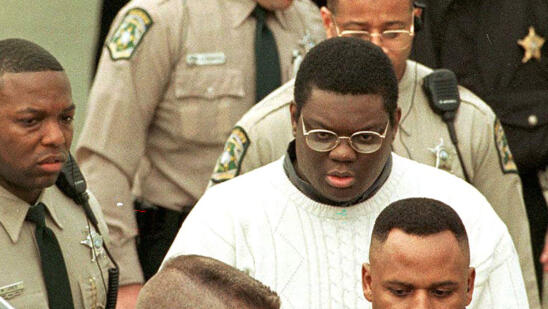
Henry Louis Wallace
Serial Killer and Rapist
CLASSIFICATION: Serial Homicide
LOCATION
Charlotte, North Carolina
TIME PERIOD
March 1990 - March 1994
VICTIMS
11 confirmed
Henry Louis Wallace, known as the "Taco Bell Strangler," is an American serial killer and rapist who murdered eleven black women in South Carolina and North Carolina between March 1990 and March 1994. He was apprehended on March 12, 1994, and is currently on death row at Central Prison in Raleigh, awaiting execution. The case is considered solved, with Wallace convicted of multiple counts of first-degree murder and sexual offenses.
Community analysis and theories will be displayed here when available.
Henry Louis Wallace
The Taco Bell Strangler
Henry Louis Wallace, born on November 4, 1965, in Barnwell, South Carolina, is a notorious American serial killer and rapist, infamously dubbed the "Taco Bell Strangler." Over a harrowing span from March 1990 to March 1994, Wallace preyed on eleven black women across South Carolina and North Carolina. As of now, he resides on death row at Central Prison in Raleigh, awaiting execution.
Quick Facts
- Born: November 4, 1965 (age 59)
- Birthplace: Barnwell, South Carolina, U.S.
- Convictions:
- First-degree murder (9 counts)
- First-degree rape (8 counts)
- Second-degree rape
- First-degree sexual offense (2 counts)
- Second-degree sexual offense (2 counts)
- Criminal Penalty: Death
- Victims: 11
- Span of Crimes: March 8, 1990 – March 8, 1994
- Apprehended: March 12, 1994
Early Life
Wallace's upbringing was far from idyllic. Raised by his mother, Lottie Mae Wallace, who worked long hours as a textile worker, he endured a childhood marked by verbal abuse and harsh criticism over the smallest of mistakes. Despite these challenges, he attended Barnwell High School, where he found some success—serving as a cheerleader and being elected to the student council. After graduating in 1983, Wallace took on a job as a disc jockey at a local radio station.
His path took a significant turn in 1985 when he enlisted in the U.S. Navy, marrying his high school sweetheart, Maretta Brabham, in 1987. However, his honorable discharge from the Navy in 1988 marked a downward spiral, as he began to indulge in drugs, particularly crack cocaine.
Early Criminal Career
Wallace's foray into crime began during his Navy service. He was implicated in several burglaries in the Seattle area and was arrested in January 1988 for breaking into a hardware store. He pled guilty to second-degree burglary and was sentenced to two years of supervised probation. Unfortunately, he failed to comply with the terms, missing numerous mandatory meetings.
The Murder Victims
The horror began on March 8, 1990, when Wallace murdered 18-year-old Tashanda Bethea, a Barnwell High School student. He callously discarded her body in a local lake, and it was weeks before it was discovered. Even though Wallace was questioned about her death, he was never charged. By this time, his marriage was crumbling, and he was fired from his job as a chemical operator.
The following year, in February 1991, Wallace broke into both Barnwell High School and the radio station where he used to work, stealing equipment. His escalating criminal behavior led him to Charlotte, North Carolina, in November 1991, where he found work at various fast-food restaurants, eventually becoming a manager at a Taco Bell near Eastland Mall.
Wallace's killing spree intensified in May 1992 with the brutal murder of 33-year-old Sharon Nance, a sex worker and drug dealer. After killing her for demanding payment, he discarded her body near railroad tracks, and it was found days later.
In June 1992, he raped and strangled Caroline Love, a 20-year-old college student and friend of his girlfriend. Wallace filed a missing person's report for her, while her body remained undiscovered until March 1994.
The pattern continued with the murder of 20-year-old Shawna Hawk on February 19, 1993, after he raped her. In a chilling twist, he even attended her funeral. Just a few months later, in June, he killed 24-year-old Audrey Spain, another Taco Bell co-worker.
The heinous acts escalated further with the murder of 21-year-old Valencia M. Jumper in August 1993, whom he set on fire after killing her. He then attended her funeral with his sister, feigning grief.
September brought the tragic murder of Michelle Stinson, a college student and friend from Taco Bell, whom he attacked in front of her young son. On February 4, 1994, Wallace was arrested for shoplifting, yet the police had no inkling of the murders connected to him.
Things took a darker turn on February 20, 1994, when he killed Vanessa Little Mack, a 25-year-old he knew through a Taco Bell co-worker. Just a day later, he murdered 24-year-old Betty Jean Baucom, making off with her valuables after the crime.
The final act of terror came on March 8, 1994, when he murdered 18-year-old Brandi June Henderson while she held her baby, also strangling the child, who miraculously survived. The community was on high alert as police increased patrols following the discovery of two bodies in East Charlotte.
Arrest and Confession
Wallace was arrested on March 13, 1994, and after an exhaustive 12-hour interrogation, he confessed to the murders of ten women in Charlotte, detailing each crime with chilling specificity. He also revealed the 11th murder of Tashanda Bethea, which had occurred before his relocation.
Aftermath and Criticism
Upon Wallace's arrest, Charlotte's police chief expressed relief, assuring that the community was safer. Yet, many within the black community voiced outrage, claiming the police had neglected the murders of black women. Critics pointed out that the victims were often dismissed as "fast girls" with little regard given to their lives or suffering.
The police chief later admitted that the department failed to connect the dots between the murders, with the killings initially perceived as isolated incidents rather than the work of a serial killer. It wasn't until March 1994, with the rapid succession of murders, that authorities alerted the public.
Trial
Wallace's trial began in September 1996, and it was fraught with delays concerning venue choice and jury selection. Prosecutor Marsha Goodnow sought the death penalty, while defense attorney Isabel Day argued for a life sentence, citing Wallace's mental illness. The prosecution painted a picture of Wallace's chaotic behavior during his killing spree, emphasizing how he often left behind evidence or failed to cover his tracks properly.
Psychologist Faye Sultan testified that Wallace's abusive upbringing contributed to his mental health issues, arguing against the death penalty. Ultimately, on January 7, 1997, Wallace was found guilty of nine murders and sentenced to death on January 29.
In a haunting statement after his sentencing, he addressed the victims' families, expressing that none of his victims deserved their fates.
On Death Row
On June 5, 1998, Wallace married Rebecca Torrijas, a former prison nurse, in a ceremony held next to the execution chamber, attended by prison officials. Since his sentencing, Wallace has attempted to appeal his death sentences, claiming his confessions were coerced and his rights violated. However, the North Carolina Supreme Court upheld his convictions in 2000, and subsequent appeals were denied, solidifying his place on death row.
Sources
- Wikipedia contributors. "Henry Louis Wallace." Wikipedia, The Free Encyclopedia. Last edited on October 3, 2023. https://en.wikipedia.org/wiki/Henry_Louis_Wallace.
- Various newspaper sources, including The Charlotte Observer, The Augusta (GA) Chronicle, New York Times, News and Observer (Raleigh, N.C.), and USA Today.
- Crime Magazine, WCNC, and AP News articles relevant to the case.
No Recent News
No recent news articles found for this case. Check back later for updates.
No Evidence Submitted
No evidence found for this case. Be the first to submit evidence in the comments below.
Join the discussion
Loading comments...
First Murder Committed
Henry Louis Wallace murders 18-year-old Tashanda Bethea and dumps her body in a lake.
Second Murder Committed
Wallace beats to death 33-year-old Sharon Nance after she asks for payment for services.
Final Murders Committed
Wallace murders Brandi June Henderson and Debra Ann Slaughter within days of each other.
Wallace Arrested
Henry Louis Wallace is arrested and confesses to the murders of 10 women.
Trial Begins
Trial for Henry Louis Wallace begins, focusing on his mental health and the murders.
Sentenced to Death
Wallace is sentenced to death after being found guilty of nine murders.
Marries in Prison
Henry Louis Wallace marries a former prison nurse next to the execution chamber.
Appeal Denied
North Carolina Supreme Court upholds Wallace's death sentences.
U.S. Supreme Court Denies Appeal
U.S. Supreme Court denies Wallace's appeal to overturn his death sentences.
Henry Louis Wallace, known as the "Taco Bell Strangler," is an American serial killer and rapist who murdered eleven black women in South Carolina and North Carolina between March 1990 and March 1994. He was apprehended on March 12, 1994, and is currently on death row at Central Prison in Raleigh, awaiting execution. The case is considered solved, with Wallace convicted of multiple counts of first-degree murder and sexual offenses.
Community analysis and theories will be displayed here when available.
Henry Louis Wallace
The Taco Bell Strangler
Henry Louis Wallace, born on November 4, 1965, in Barnwell, South Carolina, is a notorious American serial killer and rapist, infamously dubbed the "Taco Bell Strangler." Over a harrowing span from March 1990 to March 1994, Wallace preyed on eleven black women across South Carolina and North Carolina. As of now, he resides on death row at Central Prison in Raleigh, awaiting execution.
Quick Facts
- Born: November 4, 1965 (age 59)
- Birthplace: Barnwell, South Carolina, U.S.
- Convictions:
- First-degree murder (9 counts)
- First-degree rape (8 counts)
- Second-degree rape
- First-degree sexual offense (2 counts)
- Second-degree sexual offense (2 counts)
- Criminal Penalty: Death
- Victims: 11
- Span of Crimes: March 8, 1990 – March 8, 1994
- Apprehended: March 12, 1994
Early Life
Wallace's upbringing was far from idyllic. Raised by his mother, Lottie Mae Wallace, who worked long hours as a textile worker, he endured a childhood marked by verbal abuse and harsh criticism over the smallest of mistakes. Despite these challenges, he attended Barnwell High School, where he found some success—serving as a cheerleader and being elected to the student council. After graduating in 1983, Wallace took on a job as a disc jockey at a local radio station.
His path took a significant turn in 1985 when he enlisted in the U.S. Navy, marrying his high school sweetheart, Maretta Brabham, in 1987. However, his honorable discharge from the Navy in 1988 marked a downward spiral, as he began to indulge in drugs, particularly crack cocaine.
Early Criminal Career
Wallace's foray into crime began during his Navy service. He was implicated in several burglaries in the Seattle area and was arrested in January 1988 for breaking into a hardware store. He pled guilty to second-degree burglary and was sentenced to two years of supervised probation. Unfortunately, he failed to comply with the terms, missing numerous mandatory meetings.
The Murder Victims
The horror began on March 8, 1990, when Wallace murdered 18-year-old Tashanda Bethea, a Barnwell High School student. He callously discarded her body in a local lake, and it was weeks before it was discovered. Even though Wallace was questioned about her death, he was never charged. By this time, his marriage was crumbling, and he was fired from his job as a chemical operator.
The following year, in February 1991, Wallace broke into both Barnwell High School and the radio station where he used to work, stealing equipment. His escalating criminal behavior led him to Charlotte, North Carolina, in November 1991, where he found work at various fast-food restaurants, eventually becoming a manager at a Taco Bell near Eastland Mall.
Wallace's killing spree intensified in May 1992 with the brutal murder of 33-year-old Sharon Nance, a sex worker and drug dealer. After killing her for demanding payment, he discarded her body near railroad tracks, and it was found days later.
In June 1992, he raped and strangled Caroline Love, a 20-year-old college student and friend of his girlfriend. Wallace filed a missing person's report for her, while her body remained undiscovered until March 1994.
The pattern continued with the murder of 20-year-old Shawna Hawk on February 19, 1993, after he raped her. In a chilling twist, he even attended her funeral. Just a few months later, in June, he killed 24-year-old Audrey Spain, another Taco Bell co-worker.
The heinous acts escalated further with the murder of 21-year-old Valencia M. Jumper in August 1993, whom he set on fire after killing her. He then attended her funeral with his sister, feigning grief.
September brought the tragic murder of Michelle Stinson, a college student and friend from Taco Bell, whom he attacked in front of her young son. On February 4, 1994, Wallace was arrested for shoplifting, yet the police had no inkling of the murders connected to him.
Things took a darker turn on February 20, 1994, when he killed Vanessa Little Mack, a 25-year-old he knew through a Taco Bell co-worker. Just a day later, he murdered 24-year-old Betty Jean Baucom, making off with her valuables after the crime.
The final act of terror came on March 8, 1994, when he murdered 18-year-old Brandi June Henderson while she held her baby, also strangling the child, who miraculously survived. The community was on high alert as police increased patrols following the discovery of two bodies in East Charlotte.
Arrest and Confession
Wallace was arrested on March 13, 1994, and after an exhaustive 12-hour interrogation, he confessed to the murders of ten women in Charlotte, detailing each crime with chilling specificity. He also revealed the 11th murder of Tashanda Bethea, which had occurred before his relocation.
Aftermath and Criticism
Upon Wallace's arrest, Charlotte's police chief expressed relief, assuring that the community was safer. Yet, many within the black community voiced outrage, claiming the police had neglected the murders of black women. Critics pointed out that the victims were often dismissed as "fast girls" with little regard given to their lives or suffering.
The police chief later admitted that the department failed to connect the dots between the murders, with the killings initially perceived as isolated incidents rather than the work of a serial killer. It wasn't until March 1994, with the rapid succession of murders, that authorities alerted the public.
Trial
Wallace's trial began in September 1996, and it was fraught with delays concerning venue choice and jury selection. Prosecutor Marsha Goodnow sought the death penalty, while defense attorney Isabel Day argued for a life sentence, citing Wallace's mental illness. The prosecution painted a picture of Wallace's chaotic behavior during his killing spree, emphasizing how he often left behind evidence or failed to cover his tracks properly.
Psychologist Faye Sultan testified that Wallace's abusive upbringing contributed to his mental health issues, arguing against the death penalty. Ultimately, on January 7, 1997, Wallace was found guilty of nine murders and sentenced to death on January 29.
In a haunting statement after his sentencing, he addressed the victims' families, expressing that none of his victims deserved their fates.
On Death Row
On June 5, 1998, Wallace married Rebecca Torrijas, a former prison nurse, in a ceremony held next to the execution chamber, attended by prison officials. Since his sentencing, Wallace has attempted to appeal his death sentences, claiming his confessions were coerced and his rights violated. However, the North Carolina Supreme Court upheld his convictions in 2000, and subsequent appeals were denied, solidifying his place on death row.
Sources
- Wikipedia contributors. "Henry Louis Wallace." Wikipedia, The Free Encyclopedia. Last edited on October 3, 2023. https://en.wikipedia.org/wiki/Henry_Louis_Wallace.
- Various newspaper sources, including The Charlotte Observer, The Augusta (GA) Chronicle, New York Times, News and Observer (Raleigh, N.C.), and USA Today.
- Crime Magazine, WCNC, and AP News articles relevant to the case.
No Recent News
No recent news articles found for this case. Check back later for updates.
No Evidence Submitted
No evidence found for this case. Be the first to submit evidence in the comments below.
Join the discussion
Loading comments...
First Murder Committed
Henry Louis Wallace murders 18-year-old Tashanda Bethea and dumps her body in a lake.
Second Murder Committed
Wallace beats to death 33-year-old Sharon Nance after she asks for payment for services.
Final Murders Committed
Wallace murders Brandi June Henderson and Debra Ann Slaughter within days of each other.
Wallace Arrested
Henry Louis Wallace is arrested and confesses to the murders of 10 women.
Trial Begins
Trial for Henry Louis Wallace begins, focusing on his mental health and the murders.
Sentenced to Death
Wallace is sentenced to death after being found guilty of nine murders.
Marries in Prison
Henry Louis Wallace marries a former prison nurse next to the execution chamber.
Appeal Denied
North Carolina Supreme Court upholds Wallace's death sentences.
U.S. Supreme Court Denies Appeal
U.S. Supreme Court denies Wallace's appeal to overturn his death sentences.