ANALYZING EVIDENCE
Processing case files...
Processing case files...
Southern California Serial Killer
CLASSIFICATION: Serial Homicide
LOCATION
Southern California, United States
TIME PERIOD
1981-1986
VICTIMS
3 confirmed
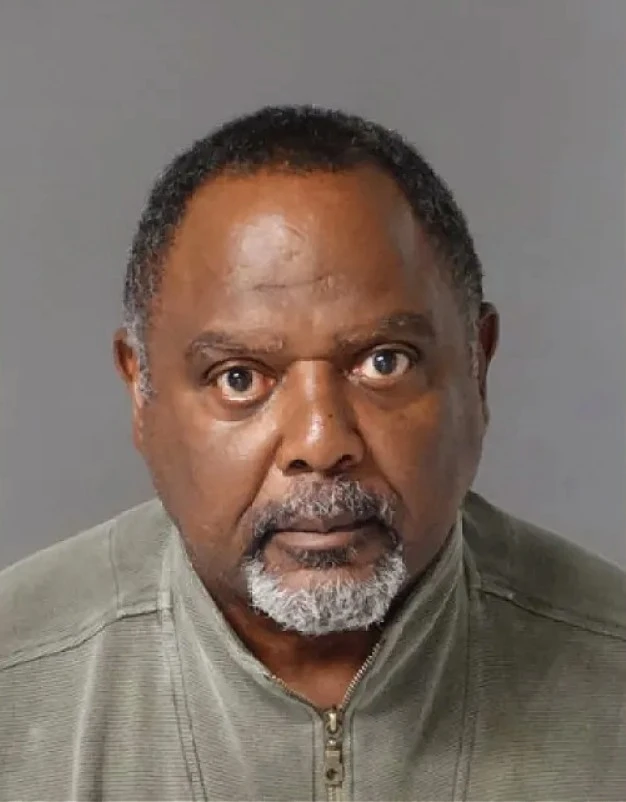
Horace Van Vaultz Jr. is an American serial killer convicted of the first-degree murders of two women, with confirmed killings occurring in Southern California between 1981 and 1986. He was apprehended on November 15, 2019, after DNA evidence linked him to the murders, and was subsequently sentenced to two consecutive life sentences without the possibility of parole in 2022. The case is considered solved, with Vaultz currently incarcerated at California State Prison, Corcoran.
Investigators have speculated that Vaultz may have had additional victims beyond the three linked by DNA, noting a cache of photographs of young women found in his home that police suspect could depict other victims (though several pictured have since been identified and are alive). The defense advanced an alternate theory at trial that Vaultz had consensual sexual encounters with the women as a self-described "swinger" and that another person — not Vaultz — later appeared and committed the murders; prosecutors countered that the DNA and pattern evidence pointed to a sexually motivated serial killer and argued the Rowe killing fit that pattern even though Vaultz was acquitted in 1988 and cannot be retried.
By the summer of 2019, the murders of two young women in Southern California had been cold for more than thirty years. [1]
Both had been sexually assaulted and killed in the 1980s — 20‑year‑old mother Selena Keough in Montclair and 22‑year‑old Mary S. Duggan in Burbank. [1][2] Prosecutors would later tell jurors that the same man was responsible, and that he was a sexually motivated serial killer: Horace Van Vaultz Jr., a former Bakersfield resident. [1][3]
In 2022, a Los Angeles County jury convicted Vaultz of raping and killing both women — a verdict built on a new kind of DNA sleuthing known as investigative genetic genealogy. [1] The case became the first criminal prosecution in Los Angeles County to rely on genealogical databases to identify a suspect, a landmark for both forensic science and long‑waiting families. [1][2][3][4][5]
Vaultz now faces life in prison without the possibility of parole, and if a jury so decides in a later phase, he could become eligible for the death penalty. [1][2]
On July 16, 1981, passersby found Selena Keough’s body under bushes along a Montclair street, near an apartment building in San Bernardino County. [1][2][3]
Horace Van Vaultz Guilty In Mary Duggan, Selena Keough Cases
According to the Los Angeles County District Attorney’s Office, Keough had been tied up, sexually assaulted, and strangled. [1][2] She was just 20 years old and a mother. [1][2]
Decades later, prosecutors would tell jurors that whoever killed her had lain in wait, turning an ordinary stretch of neighborhood street into an ambush site. [2]
But at the time, investigators could not identify a suspect. The case went cold and stayed that way for years. [1]
Nearly five years passed before another young woman was found dead under disturbingly controlled circumstances.
On June 9, 1986, 22‑year‑old Mary S. Duggan was discovered in the trunk of her car, which had been left in an empty parking lot outside a closed business in the Los Angeles suburb of Burbank. [1][2][3]
Prosecutors said Duggan had been bound and sexually assaulted. [2] She died from asphyxiation after someone shoved a tissue down her throat. [2] Both Duggan and Keough, authorities noted, had been strangled. [1]
Again, there was no arrest. Her killing, like Keough’s, faded into the backlog of unsolved homicides. [1]
By the late 1980s, the name Horace Van Vaultz Jr. had already surfaced in another California homicide.
Prosecutors charged him with the killing of 25‑year‑old Janna Rowe, who had been strangled and left on a trash pile. [1][3] In 1988, a jury acquitted him of Rowe’s death — a trial that unfolded before DNA evidence was commonly used in courtrooms. [1][3]
Because of that acquittal, the law is clear: Vaultz can never be tried again for Rowe’s killing. [1][3]
Years later, prosecutors would say that a re‑examination of evidence showed a DNA link between Vaultz and a third killing in Ventura County, prompting investigators to look statewide for other, similar unsolved murders. [1][2][3] Some reporting has described Rowe’s death in connection with Ventura County, placing that case at the center of a legal and forensic tension that cannot be resolved in court because of the earlier not‑guilty verdict. [1][3]
For the families of Keough and Duggan, the 1980s ended with their loved ones’ cases unresolved. For detectives, the only option was to preserve what they could and hope the science would someday change.
Burbank police Sgt. (later identified as Detective) Aaron Kay would eventually inherit the cold cases. He later said the original investigators had the foresight to preserve key evidence back when “DNA wasn’t even a thing” in 1981 and 1986. [6]
By the time Kay was assigned to re‑investigate the files, DNA technology had, as he put it, “caught up.” [6] New forensic tools allowed analysts to revisit biological evidence that had sat for decades. [1][2]
Kay recalled two moments when his heart pounded: identifying a suspect through the renewed testing, and standing in court to hear the jury’s verdict years later. [6]
Standard DNA profiling alone still could not put a name to the unknown killer in the Keough and Duggan cases. The turning point came with the rise of investigative genetic genealogy — a method made famous in other high‑profile cold cases and now entering courtrooms in Los Angeles County for the first time. [1][2][3][4][5]
Genetic genealogy leads to Horace Van Vaultz's conviction in Burbank, Montclair cold case murders - ABC7 Los Angeles
In broad terms, investigative genetic genealogy works like this: detectives or forensic genealogists create a DNA profile from crime‑scene evidence and upload it to commercial or open‑source genealogical databases, looking for distant relatives of an unknown suspect. [1][2][3][5] From there, they build family trees, narrow down potential candidates, and ultimately move to collect a direct DNA sample from the person they believe matches the crime‑scene profile. [2][5]
Burbank police said they identified Horace Van Vaultz as the suspect in the Keough and Duggan murders thanks to recently analyzed forensic evidence, which was then linked to him using investigative genetic genealogy. [1][2][4][5]
The Los Angeles County District Attorney’s Office said it was the first time this technique had been used to solve a crime in the county. [1][2][3] Then‑District Attorney Jackie Lacey framed it as a way for technology and forensic science to “‘virtually reach back in time and find those responsible for these vicious crimes.’” [2]
Detectives also began probing whether the same genetic trail might connect Vaultz to other murders across California. [2]
In 2019, investigators moved.
A 64‑year‑old man from Bakersfield — Horace Van Vaultz Jr. — was arrested and charged with murdering two young women in Burbank and Montclair in the 1980s. [1][2] He was taken into custody in Inglewood in connection with the Keough and Duggan killings. [2]
Prosecutors charged him with two counts of murder, adding special‑circumstance allegations that the killings involved multiple murders, were committed during rapes and sodomies, and that he had lain in wait for both victims. [2] Those allegations exposed him to a potential death sentence if convicted as charged. [2]
Detectives searching his home around the time of his arrest turned up something else: a cache of photographs of women. [4] Burbank police said the images could be important clues in the upcoming murder trial. [4]
Detective Aaron Kay later explained that he did not know who the women in the photos were. “I don’t know who they are,” he said, adding that his concern was that some could be missing or dead. [4]
The discovery reinforced fears that Keough and Duggan might not be the only victims. Detectives publicly confirmed they were looking into whether Vaultz could be linked to other murders across California. [2]
Vaultz was expected to be arraigned at the Foltz Criminal Justice Center in downtown Los Angeles and has remained in jail since his 2019 arrest. [1][2][3]
When the case finally went before a jury, it became a clash of narratives about sex, violence, and what the DNA truly proved.
Prosecutors argued that Horace Van Vaultz Jr. was a sexually motivated serial killer who raped and murdered two young women decades earlier. [1][3] They pointed to the forensic evidence tying him to both crime scenes and the similar ways Keough and Duggan were attacked. [1][2]
The defense did not contest that Vaultz’s DNA was present. Instead, attorneys argued that he had consensual sex with the women and that someone else killed them. [1][3]
On the stand, Vaultz described himself as a “swinger.” [1][3] He told jurors he could not remember ever meeting Keough or Duggan and denied involvement in their deaths. [1][3][5]
The courtroom testimony was grueling for families. Keough’s sister, Sabrina Plourde, said later that hearing the details during trial was “heart‑wrenching.” [6] She also said she felt “incredibly grateful for everybody that helped us get to this point,” even as she blamed Vaultz not only for her sister’s murder but for their mother’s death from a massive stroke at age 54, five years after Selena was killed. [6]
The jury of nine men and three women deliberated for about three hours. [5]
They found Horace Van Vaultz Jr. guilty of raping and killing both 20‑year‑old Selena Keough in 1981 and 22‑year‑old Mary Duggan in 1986. [1][3] Jurors also found true the special‑circumstance allegations of multiple murders, murder during rape involving both women, and murder during sodomy involving Keough. [5]
Mugshot of serial killer Horace Van Vaultz
Wikimedia Commons· Public domain
After the verdict, the prosecutor called it a “great moment to see the end of this reign of terror.” [6]
Juror Tyler Razo later said he felt fortunate to be part of delivering the verdict and that it “held a lot of weight.” [6]
Vaultz’s attorney told City News Service outside court that the outcome was a “tragedy,” though he believed his client had received a fair trial. [6]
Having been jailed since his 2019 arrest, [1][3] Vaultz now awaits sentencing. Prosecutors have said he could face life in prison without the possibility of parole, and if the special circumstances are fully upheld and pursued, he could become eligible for the death penalty. [1][2]
Meanwhile, the ripples of the case continue outward. Detectives are still examining whether the same DNA trail, the photographs found in Vaultz’s home, and the re‑examined Ventura County evidence might connect to other unsolved killings across California — even as one key case, the 1988 acquittal in the death of Janna Rowe, can never return to court. [1][2][3]
© Mapbox © OpenStreetMap
Adapted from Wikipedia: Horace Van Vaultz.
This case file is an original Bloody Likely narrative synthesis based on the cited sources. Article © Bloody Likely. All rights reserved. Source materials remain the property of their respective owners. Facts, public records, quotations, and cited references are used for reporting, research, commentary, and documentation. Bloody Likely content license
No recent news articles found for this case. Check back later for updates.
No evidence found for this case. Be the first to submit evidence in the comments below.
Join the discussion
Loading comments...
Horace Van Vaultz begins a series of murders in Southern California.
Vaultz is arrested for raping and attempting to strangle a woman in Huntington Beach.
25-year-old Janna Rowe is found strangled near the Ventura River.
Vaultz is arrested for the murder of Janna Rowe.
Vaultz is acquitted of the murder of Janna Rowe in a trial.
Vaultz is arrested again based on DNA evidence linking him to multiple murders.
Vaultz is found guilty of killing Selena Keough and Mary Duggan.
Vaultz is sentenced to two consecutive life terms without parole.