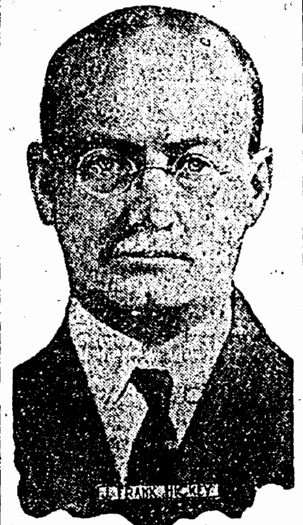
J. Frank Hickey
Child Molester Serial Killer
CLASSIFICATION: Serial Homicide
LOCATION
Lackawanna, New York
TIME PERIOD
1883-1911
VICTIMS
3 confirmed
John Frank Hickey, known as "The Postcard Killer," was an American serial killer and child molester who operated primarily between 1883 and 1911. His criminal activities began with the murder of pharmacist Edwin W. Morey in Lowell, Massachusetts, on September 1, 1883, where he later confessed to poisoning Morey with laudanum. Hickey was apprehended in 1912 and ultimately convicted of second-degree murder, receiving a sentence of 20 years to life in prison. He died on May 8, 1922, at Auburn Prison in New York. Significant evidence in the case included postcards Hickey sent to police and media, which contributed to his notoriety and identification as a serial killer, with three confirmed victims.
J. Frank Hickey is believed to have committed multiple murders over nearly three decades, with speculation suggesting he may have been involved in additional unsolved cases beyond the three confirmed victims. Some investigators theorize that his postcards to the police and media were a means of taunting law enforcement, indicating a desire for notoriety. Additionally, there are theories that his abusive upbringing may have contributed to his violent behavior, linking his childhood experiences to his criminal actions.
The Tale of J. Frank Hickey: The Postcard Killer
In the annals of American criminal history, few figures are as haunting as John Frank Hickey, a man whose life and crimes left an indelible mark on the early 20th century. Known infamously as "The Postcard Killer," Hickey's story is one of deception, violence, and a chilling correspondence with the authorities.
Early Life: Foundations of Darkness
John Frank Hickey was born in Lowell, Massachusetts, on October 29, 1865, to Irish immigrants Michael J. Hickey and Mary Ann Magrath. Baptized at St. Patrick's Church, young Hickey's childhood was marked by claims of physical abuse at the hands of his father. In his formative years, he sought solace in religion, joining Lowell's First Congregational Church and later becoming an official at the local YMCA and the Christian Endeavor.
First Murder: A Deadly Decision
The year was 1883, and an 18-year-old Hickey found himself embroiled in a sinister act that would set the stage for future horrors. On September 1, he alerted police to the death of Edwin W. Morey, a 34-year-old pharmacist and Hickey's colleague at McGibbon's Drugstore. Hickey initially portrayed Morey's demise as a tragic consequence of alcoholism, suggesting a suicide by poison. Morey briefly showed signs of life before succumbing shortly after midnight. It wasn't until years later that Hickey confessed to murdering Morey with laudanum, driven by the fear of losing his job should their employer discover Morey's intoxication.
The Masonic Connection
In 1887, Hickey, now listing his occupation as "Secretary of the YMCA," joined the William North Masonic Lodge in Lowell. By 1889, he had ascended to the rank of Master Mason. However, his relationship with the Masons soured in 1895 when he was arrested for stealing 20 gallons of alcohol. The Grand Lodge of Massachusetts expelled him, branding him "a liar and profane."
Second Murder: The Newspaper Vendor
After leaving Lowell in 1896, Hickey wandered through Canada and the Northeastern United States, taking on various industrial jobs. His next known crime occurred on December 10, 1902, when he encountered Michael R. Kruck, an eleven-year-old newspaper vendor. Promising to buy all his papers, Hickey lured Kruck into Central Park, where he strangled the boy, leaving the lifeless body with the newspapers as a makeshift pillow. The coroner found no evidence of sexual assault, and the inquest ruled Kruck's death as a result of strangulation by unknown hands.
Third Murder: The Tragic End of Joey Joseph
The autumn of 1911 saw Hickey employed as a steel plant supervisor in Lackawanna, New York. On October 12, he targeted seven-year-old Joey Joseph, first seen playing near his father's store. Hickey charmed the boy with pennies for candy, then led him away from his friend. In a secluded outhouse behind a saloon, Hickey strangled and molested the child before discarding his body in the outhouse pit.
The Postcards: A Killer's Taunt
The investigation into Joey Joseph's disappearance yielded little until October 30, 1911, when Lackawanna police chief Gilson received a cryptic postcard. It directed police to search a specific outhouse, claiming Joey's body lay within. The card hinted at a remorseful, whiskey-driven culprit, urging the authorities to act.
Trial, Imprisonment, and Death: A Justice Served
Hickey was eventually apprehended and charged with first-degree murder. In a surprising turn, the jury convicted him of second-degree murder, influenced by two jurors who believed him insane and unfit for execution. Sentenced to life imprisonment, Hickey spent his remaining days behind bars until his death on May 8, 1922, in Auburn Prison, New York.
Sources
- [The Cornell Daily Sun. November 30, 1912]
- [The Postcard Killers ISBN: 978-0-099-55375-5 p. 98]
- [McLaughlin, Vance. The Postcard Killer: The True Story of America's First Profiled Serial Killer and How the Police Brought Him Down, Thunder's Mouth Press, New York, 2006.]
- ["Proceedings of the Most Worshipful Grand Lodge of Ancient Free And Accepted Masons in the Commonwealth of Massachusetts" 1895, pp.121 – 22.]
- ["Newsboy Murdered in Central Park; Little Fellow was Strangled, Presumably with Knotted Cord. Queer Wound on Cheek Puzzles Coroner's Physician- No Clue to Perpetrator of Crime", New York Times, December 12, 1902. Page 16.]
- [Postcards from Murderer which Led to Discovery of Joseph Child's Body, Buffalo Evening News, November 16, 1912. Page 1.]
- [Shea, Kate (June 29, 2017). "Forgotten Crimes: 'Postcard Killer' taunts family of slain Lackawanna boy". The Buffalo News. Retrieved January 9, 2022.]
For further reading and detailed accounts, consult the sources listed above and explore the chilling life of J. Frank Hickey, a man whose crimes continue to echo through history.
No Recent News
No recent news articles found for this case. Check back later for updates.
No Evidence Submitted
No evidence found for this case. Be the first to submit evidence in the comments below.
Join the discussion
Loading comments...
First Murder Committed
J. Frank Hickey murders pharmacist Edwin W. Morey using laudanum.
Second Murder Committed
Hickey strangles 11-year-old Michael R. Kruck in Central Park.
Third Murder Committed
Hickey strangles and molests 7-year-old Joey Joseph, then disposes of the body.
Postcard Sent
Hickey sends a postcard revealing the location of Joey Joseph's body, taunting police.
Arrested
J. Frank Hickey is apprehended for the murder of Joey Joseph.
Trial Begins
Hickey's trial for first-degree murder begins, capturing public attention.
Verdict Delivered
Hickey is found guilty of second-degree murder and sentenced to life in prison.
Death in Prison
J. Frank Hickey dies in Auburn Prison while serving his sentence.
John Frank Hickey, known as "The Postcard Killer," was an American serial killer and child molester who operated primarily between 1883 and 1911. His criminal activities began with the murder of pharmacist Edwin W. Morey in Lowell, Massachusetts, on September 1, 1883, where he later confessed to poisoning Morey with laudanum. Hickey was apprehended in 1912 and ultimately convicted of second-degree murder, receiving a sentence of 20 years to life in prison. He died on May 8, 1922, at Auburn Prison in New York. Significant evidence in the case included postcards Hickey sent to police and media, which contributed to his notoriety and identification as a serial killer, with three confirmed victims.
J. Frank Hickey is believed to have committed multiple murders over nearly three decades, with speculation suggesting he may have been involved in additional unsolved cases beyond the three confirmed victims. Some investigators theorize that his postcards to the police and media were a means of taunting law enforcement, indicating a desire for notoriety. Additionally, there are theories that his abusive upbringing may have contributed to his violent behavior, linking his childhood experiences to his criminal actions.
The Tale of J. Frank Hickey: The Postcard Killer
In the annals of American criminal history, few figures are as haunting as John Frank Hickey, a man whose life and crimes left an indelible mark on the early 20th century. Known infamously as "The Postcard Killer," Hickey's story is one of deception, violence, and a chilling correspondence with the authorities.
Early Life: Foundations of Darkness
John Frank Hickey was born in Lowell, Massachusetts, on October 29, 1865, to Irish immigrants Michael J. Hickey and Mary Ann Magrath. Baptized at St. Patrick's Church, young Hickey's childhood was marked by claims of physical abuse at the hands of his father. In his formative years, he sought solace in religion, joining Lowell's First Congregational Church and later becoming an official at the local YMCA and the Christian Endeavor.
First Murder: A Deadly Decision
The year was 1883, and an 18-year-old Hickey found himself embroiled in a sinister act that would set the stage for future horrors. On September 1, he alerted police to the death of Edwin W. Morey, a 34-year-old pharmacist and Hickey's colleague at McGibbon's Drugstore. Hickey initially portrayed Morey's demise as a tragic consequence of alcoholism, suggesting a suicide by poison. Morey briefly showed signs of life before succumbing shortly after midnight. It wasn't until years later that Hickey confessed to murdering Morey with laudanum, driven by the fear of losing his job should their employer discover Morey's intoxication.
The Masonic Connection
In 1887, Hickey, now listing his occupation as "Secretary of the YMCA," joined the William North Masonic Lodge in Lowell. By 1889, he had ascended to the rank of Master Mason. However, his relationship with the Masons soured in 1895 when he was arrested for stealing 20 gallons of alcohol. The Grand Lodge of Massachusetts expelled him, branding him "a liar and profane."
Second Murder: The Newspaper Vendor
After leaving Lowell in 1896, Hickey wandered through Canada and the Northeastern United States, taking on various industrial jobs. His next known crime occurred on December 10, 1902, when he encountered Michael R. Kruck, an eleven-year-old newspaper vendor. Promising to buy all his papers, Hickey lured Kruck into Central Park, where he strangled the boy, leaving the lifeless body with the newspapers as a makeshift pillow. The coroner found no evidence of sexual assault, and the inquest ruled Kruck's death as a result of strangulation by unknown hands.
Third Murder: The Tragic End of Joey Joseph
The autumn of 1911 saw Hickey employed as a steel plant supervisor in Lackawanna, New York. On October 12, he targeted seven-year-old Joey Joseph, first seen playing near his father's store. Hickey charmed the boy with pennies for candy, then led him away from his friend. In a secluded outhouse behind a saloon, Hickey strangled and molested the child before discarding his body in the outhouse pit.
The Postcards: A Killer's Taunt
The investigation into Joey Joseph's disappearance yielded little until October 30, 1911, when Lackawanna police chief Gilson received a cryptic postcard. It directed police to search a specific outhouse, claiming Joey's body lay within. The card hinted at a remorseful, whiskey-driven culprit, urging the authorities to act.
Trial, Imprisonment, and Death: A Justice Served
Hickey was eventually apprehended and charged with first-degree murder. In a surprising turn, the jury convicted him of second-degree murder, influenced by two jurors who believed him insane and unfit for execution. Sentenced to life imprisonment, Hickey spent his remaining days behind bars until his death on May 8, 1922, in Auburn Prison, New York.
Sources
- [The Cornell Daily Sun. November 30, 1912]
- [The Postcard Killers ISBN: 978-0-099-55375-5 p. 98]
- [McLaughlin, Vance. The Postcard Killer: The True Story of America's First Profiled Serial Killer and How the Police Brought Him Down, Thunder's Mouth Press, New York, 2006.]
- ["Proceedings of the Most Worshipful Grand Lodge of Ancient Free And Accepted Masons in the Commonwealth of Massachusetts" 1895, pp.121 – 22.]
- ["Newsboy Murdered in Central Park; Little Fellow was Strangled, Presumably with Knotted Cord. Queer Wound on Cheek Puzzles Coroner's Physician- No Clue to Perpetrator of Crime", New York Times, December 12, 1902. Page 16.]
- [Postcards from Murderer which Led to Discovery of Joseph Child's Body, Buffalo Evening News, November 16, 1912. Page 1.]
- [Shea, Kate (June 29, 2017). "Forgotten Crimes: 'Postcard Killer' taunts family of slain Lackawanna boy". The Buffalo News. Retrieved January 9, 2022.]
For further reading and detailed accounts, consult the sources listed above and explore the chilling life of J. Frank Hickey, a man whose crimes continue to echo through history.
No Recent News
No recent news articles found for this case. Check back later for updates.
No Evidence Submitted
No evidence found for this case. Be the first to submit evidence in the comments below.
Join the discussion
Loading comments...
First Murder Committed
J. Frank Hickey murders pharmacist Edwin W. Morey using laudanum.
Second Murder Committed
Hickey strangles 11-year-old Michael R. Kruck in Central Park.
Third Murder Committed
Hickey strangles and molests 7-year-old Joey Joseph, then disposes of the body.
Postcard Sent
Hickey sends a postcard revealing the location of Joey Joseph's body, taunting police.
Arrested
J. Frank Hickey is apprehended for the murder of Joey Joseph.
Trial Begins
Hickey's trial for first-degree murder begins, capturing public attention.
Verdict Delivered
Hickey is found guilty of second-degree murder and sentenced to life in prison.
Death in Prison
J. Frank Hickey dies in Auburn Prison while serving his sentence.