ANALYZING EVIDENCE
Processing case files...
Processing case files...
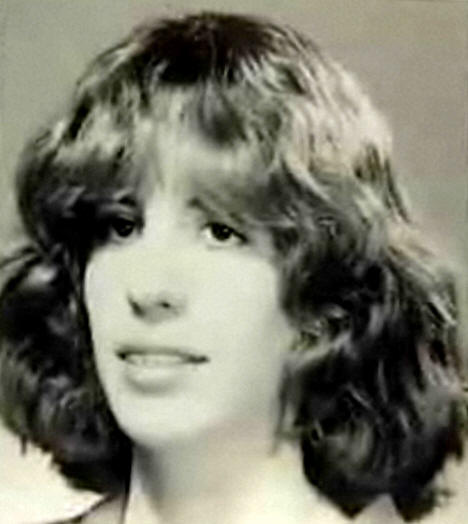
Alabama Serial Killer Case
CLASSIFICATION: Serial Homicide
LOCATION
Birmingham, Alabama
TIME PERIOD
1972-1992
VICTIMS
3 confirmed
Jack Harrison Trawick was an American serial killer convicted of two murders in Alabama, specifically the stabbing of Aileen Pruitt on June 17, 1992, and the rape and murder of Stephanie Gach on October 9, 1992. Trawick was arrested on October 29, 1992, subsequently sentenced to death in 1994 for Gach's murder, and executed by lethal injection on June 11, 2009. While he confessed to additional murders, he was not tried for those due to his death sentence, leaving the full extent of his crimes unresolved.
Some believe Trawick was responsible for many more killings than he was convicted of — he repeatedly confessed to additional murders in Alaska and the Pacific Northwest (including a purported Seattle-area victim dumped from a ship and a strangled hitchhiker in Oregon), leading investigators to suspect his true victim count could be between five and 14, though many of those claims remained uncorroborated. Investigators and commentators have also debated his possible involvement in unsolved Alabama cases from the early 1990s (such as the Toni Lim and Michele Saint Romain cases), creating unresolved questions about whether other men later charged or convicted in those crimes (e.g., Michael McNeily in the Saint Romain case) fully closed the door on Trawick’s suspected role. Additionally, there was controversy and conspiracy-style outrage over Trawick’s post-arrest writings and artwork published online — critics alleged he taunted victims’ families and profited from notoriety, sparking legal debates and proposed legislation to strip criminals of proceeds from such material.
On a June evening in 2009, a 62‑year‑old inmate lay strapped to a gurney inside Alabama’s Holman Correctional Facility, the state’s death‑row prison near Atmore. [1] At 6:17 p.m. Central time, after a series of lethal drugs flowed through his veins, Jack Harrison Trawick was pronounced dead. [1][2]
He had been condemned for abducting, stabbing, and strangling 21‑year‑old college student Stephanie Gach on the night of October 9, 1992. [1][2] Relatives of Gach and of another woman he had killed, 26‑year‑old Aileen Pruitt, watched through the glass as the execution unfolded. [1]
No last‑minute appeals were filed. State officials said there were no legal efforts to stop the execution. [1] In his final statement, Trawick apologized to the people he had hurt and asked for forgiveness, adding that he did not deserve it. [1][2]
It was Alabama’s fifth execution of the year, the 196th since the state resumed executions in the twentieth century, and the nineteenth carried out by lethal injection. [1] But for the families watching, it traced back to a night in Birmingham nearly seventeen years earlier, when a young woman did not come home.
© Mapbox © OpenStreetMap
In 1992, Stephanie Gach was a 21‑year‑old Jefferson State College student in the Birmingham area, living in Irondale, a suburb east of the city. [1][2][3] She was the youngest daughter of Mary Kate Gach. [4]
On the night of October 9, 1992, Stephanie was abducted, stabbed, and strangled. [1] The next day, October 10, her mother learned that her daughter had been murdered. [4] Mary Kate later said she was stunned and could not believe what she was being told. [4]
The shock did not come in isolation. A few months earlier, and only miles away, another young woman had been found dead under brutal circumstances. [4]
Before Stephanie’s killing, Birmingham police had already been wrestling with a disturbing case. In June 1992, the mutilated body of 26‑year‑old Aileen Pruitt had been discovered a few miles from where Stephanie would later be found. [1][4] Pruitt was described in reports as a prostitute. [3]
A retired Birmingham police lieutenant, Mike Walker, later said the coroner’s report showed that Pruitt had suffered more than fifty stabbing and cutting wounds. [4] Her murder, savage and unsolved, hung over the area when Stephanie was killed that October.
At the time, there was no official link between the two cases. Within weeks, one man’s confession would connect them—and then reach much farther.
The man who eventually confessed to both Birmingham murders had already spent a significant part of his life in prison. Trawick had been paroled from St. Clair Correctional Facility in 1990 after serving seven years of a burglary sentence. [3]
Trawick Quadrangle - DPLA - 55d5d826ef4613a2c13a4d5b6878cee9.jpg
Wikimedia Commons· Public domain
Later, in interviews about his history, he described a pattern of crimes that went well beyond theft. He said his burglaries were committed in part to terrify women he found attractive. [1] He told of cutting up women’s undergarments and leaving menacing lipstick messages on mirrors—behavior that suggested he was using break‑ins as a form of stalking and psychological violence, not just property crime. [1]
His defense attorney would later say that his life had been plagued by mental illness and decades of crime. [1] By the fall of 1992, that history collided with the unsolved killings in Birmingham.
Accounts differ slightly on the timing, but they agree on the essentials: within weeks of Stephanie Gach’s murder, Jack Harrison Trawick confessed.
A national television report later stated that three weeks after Stephanie’s murder, “a serial killer named Jack Trawick” confessed to the crime. [4] Another contemporaneous account records that he was first charged with murder on October 29, after being arrested for a parole violation and confessing to killing Stephanie on October 9. [3]
Stephanie, the 21‑year‑old Jefferson State student, thus became the first murder formally tied to him. [3]
Once in custody, Trawick did not stop at a single killing. He later confessed to stabbing to death 26‑year‑old Aileen Pruitt in June of that same year. [1][3] At the time of those confessions, he was being held in Alabama on murder charges in the recent stabbing deaths of Gach and Pruitt, along with a 1972 killing. [3]
The earlier case involved 17‑year‑old runaway Betty Jo Richards of Quinton. Trawick later confessed to murdering Richards in 1972 and was charged in her death. [3] He was also suspected in the attempted murder of another woman that same year. [3]
By the early 1990s, investigators thus had his confessions linking him to three homicides in Alabama—two in the Birmingham area in 1992, one dating back twenty years—and a suspected attempted murder. [1][3]
Only two of those killings, however, would ultimately lead to convictions.
As he sat in an Alabama jail facing murder charges, Trawick began to describe an even wider trail of violence. In an interview with an Alabama newspaper, he said he had killed two other women in the Pacific Northwest in the summer of either 1977 or 1978, including one from Seattle. [3]
Jabril Trawick.jpg
He told police that he killed a female runaway aboard a ship traveling between Seattle and Alaska, then dumped her body in the Pacific Ocean. [3] He also claimed he killed a fifth woman in the Ashland, Oregon, area, possibly near a ski resort. [3]
According to his own account, these murders took place during a trip he made by car from California to Vancouver, British Columbia. [3] He said the bodies were dumped, but did not say how the women were killed, what their names were, or exactly what he did with their bodies. [3] He indicated that he would provide more details later. [3]
The claims prompted attention from law enforcement far from Alabama. In Ashland, Oregon, police lieutenant Mel Clements said he was unaware of any unsolved murders in Ashland matching that description, though he cautioned that his lack of awareness did not mean a murder had not occurred. [3]
In Seattle, police sergeant David Ritter said he knew nothing of a woman being dumped from a ship during 1977–78, and a department spokeswoman, Vinette Tichi, said the shipboard murder did not sound familiar. [3] She added that detectives would likely be in communication with Birmingham police and would be checking missing‑persons and runaway reports from that time. [3]
On paper, then, Trawick’s own stories painted him as a roaming serial killer whose crimes stretched from Alabama to the Pacific. At the same time, the very departments he mentioned could find no immediate record to match his accounts. [3]
Even the timeline of his violence remained tangled—he was claiming murders in the late 1970s in the Pacific Northwest while also confessing to a 1972 killing in Alabama. [3] Whether those accounts represented truthful confessions, fantasy, or some mixture of both has never been conclusively resolved. What is clear is that only the Alabama murders of Stephanie Gach and Aileen Pruitt would definitively bear his name in court.
In the years after his arrest, prosecutors focused first on the Gach case. Trawick was tried and convicted for the 1992 murder of Stephanie Gach. [4] Following his 1994 conviction, Circuit Judge James Hard sentenced him to death.
The sentencing phase included a chilling twist. After the conviction, Trawick wrote to Judge Hard, threatening to kill a prison system employee if he was not sentenced to death. [1] Judge Hard did sentence him to die, and by that year, Trawick had been placed on Alabama’s death row at Holman Correctional Facility. [1]
Separately, he was convicted of stabbing Aileen Pruitt to death and received a sentence of life without parole for that killing. [1][3][4]
For the next fifteen years, he lived on death row at Holman, a condemned double murderer whose own letter had demanded the very punishment he ultimately received. [1]
For Mary Kate Gach, the aftermath of Stephanie’s murder did not end with the trial or even with the long wait on death row. Years later, she learned that there was a website devoted to her daughter’s killer. [4]
Mary Kate never visited the site herself, but friends told her what was there: letters written by Trawick that gloated about his crimes and offered instructions on how to torture and kill, along with drawings described as graphic, disturbing depictions of violence against women. [4]
Other reporting said Trawick had taunted Stephanie’s mother with grisly, graphic drawings and writings posted on the Internet. [2] He had drawn wide notice after describing how he beat, strangled, and stabbed Stephanie and killed other women in writings a prison pen pal put online. [2]
Separately, essays attributed to him that detailed the Gach murder and a drawing showing the mutilated body of a young woman were made available for sale on the web. [1]
Whether Trawick saw these writings and drawings as taunts, boasts, or something else remains unclear. For Mary Kate, the effect was direct. She reported suffering nightmares and crying as the trauma of her daughter’s murder came flooding back. [4]
Her youngest daughter had been killed at 21. [4] Years later, a digital afterlife of the man who killed her—letters, drawings, and essays circulating online—kept ripping the wound back open. [4]
The online presence around Trawick’s case did not end with his own writings. A small ecosystem developed around physical items linked to him.
One of the figures in that world was Tod Bohannon, who operated a website that auctions memorabilia from notorious criminals. [1] An envelope signed by Trawick appeared on Bohannon’s site with a starting bid of $15. [1]
As his execution approached, prison officials said Trawick had decided to give Bohannon several of his possessions: a Bible, a dictionary, a wallet, a television, and assorted photos and cosmetics. [1] He also planned to give pictures and a Bible to a cousin, Mary Anne Pearson. [1]
Alabama Department of Corrections spokesman Brian Corbett said authorities would examine all of the items before releasing them. [1]
For Mary Kate Gach, this trade in objects associated with her daughter’s killer was intolerable. She had originally planned to give a statement after the execution but chose not to travel to Atmore when she heard that Trawick planned to give his possessions to Bohannon. [1]
By then, the very category of “murderabilia” had attracted outside attention. British filmmaker Eliot Kew, who was planning a movie about people who collect items from serial killers, was in the Atmore area on the day of the execution. Prison officials kept him away from the execution site and from relatives of Trawick’s victims while he was on state property. [1]
On June 11, 2009, after fifteen years on death row, the state of Alabama carried out the sentence imposed in 1994. [1][2]
Prison officials said that throughout the day, Trawick was in a good mood, received visitors, and ate a last meal of fried chicken, French fries, onion soup, and a roll. [1] At 62, he was led into the execution chamber at Holman. [1][2] He was executed by lethal injection, the method Alabama had adopted years earlier, and pronounced dead at 6:17 p.m. [1][2]
Trawick, Alfriend H - 7th Battalion, Cavalry (State Guards) - DPLA - ea20d7ca9f29721ad7dce45586230147.jpg
Wikimedia Commons· Public domain
A small group gathered to witness his death. On the victims’ side, Stephanie’s sister, Heather Gach, watched him die, the lone representative of the Gach family in the viewing area. [1] A new state law allowed up to two members of another victim’s family to attend if the inmate had another murder conviction and if witness spots were not filled by relatives of the primary victim. [1]
Because Trawick had been convicted of killing Aileen Pruitt and sentenced to life without parole for that murder, the law opened the door for her family to be there as well. [1] Aileen’s sister, Donna Middlebrooks, took one of those seats and watched the execution. [1] Her son, Joshua Pruitt, had planned to attend but ultimately chose not to. [1]
On Trawick’s side of the glass, his designated witnesses included his cousins, Rebecca and Norman Sudduth. [1] James Slack, a University of Alabama at Birmingham faculty member who served as his spiritual adviser, was present. [1] So was Randy Susskind, an attorney with the Equal Justice Initiative, and Ben Sherrod of the Kairos prison ministry. [1]
Also among his witnesses was Tod Bohannon, the operator of the murderabilia website that had listed the signed envelope and that was poised to receive some of Trawick’s personal possessions. [1]
From the state’s perspective, it was one more statistic: the fifth execution in Alabama that year, the 43rd since executions resumed in 1983 after an 18‑year pause, and the 19th person in Alabama to die by lethal injection. [1] From the perspective of the families, it was the first time they had seen the man who had altered their lives take responsibility in any tangible way.
Even after his death, questions lingered about the full extent of Jack Harrison Trawick’s violence. Some reports and commentators labeled him a serial killer based on his confessions and claims. [1][4] He had admitted to killing Stephanie Gach and Aileen Pruitt, and the courts had convicted him of both murders. [1][2]
Beyond that, he had confessed to the 1972 murder of 17‑year‑old runaway Betty Jo Richards, been charged in that case, and was suspected in another attempted murder that same year. [3] He claimed additional killings in the Pacific Northwest in the late 1970s, including a runaway thrown from a ship and a woman near Ashland, Oregon, even as local police said they were unaware of such unsolved cases. [3]
The timeline of his own stories does not fit neatly together—accounts of a 1972 Alabama murder sit beside claims of a killing spree during a 1977–78 trip from California to Vancouver, British Columbia. [3] The sequence of his early confessions and charges in the Gach case is likewise murky in the public record, with one account placing his confession three weeks after the murder and another marking his first murder charge on October 29 following a parole‑violation arrest and confession. [3][4]
In life, Trawick alternated between admitting unspeakable acts and hinting at others without names, dates, or bodies. [2][3] In death, he left behind a confirmed record of two murdered women, a series of charged but unresolved cases, and a set of unverified claims stretching from Alabama to the Pacific coast. [1][2][3]
For the families of Stephanie Gach and Aileen Pruitt, the execution at Holman closed the legal chapter that began with phone calls and police visits in 1992. [1][4] It did not, and could not, unwind the years of fear, grief, and renewed trauma—years in which the man who killed their daughters not only confessed to more violence but also turned his crimes into words, drawings, and trinkets that others could buy. [1][2][4]
Adapted from Wikipedia: Jack Trawick.
This case file is an original Bloody Likely narrative synthesis based on the cited sources. Article © Bloody Likely. All rights reserved. Source materials remain the property of their respective owners. Facts, public records, quotations, and cited references are used for reporting, research, commentary, and documentation. Bloody Likely content license
No recent news articles found for this case. Check back later for updates.
No evidence found for this case. Be the first to submit evidence in the comments below.
Join the discussion
Loading comments...
Jack Trawick kills 17-year-old Betty Jo Richards in Quinton, Alabama.
Trawick murders 26-year-old Aileen Pruitt in Birmingham, Alabama.
Trawick rapes and murders 21-year-old Stephanie Gach in Birmingham.
Trawick is arrested for the murder of Stephanie Gach.
Trawick is sentenced to death for the murder of Stephanie Gach.
Trawick is found guilty of murdering Aileen Pruitt and sentenced to life without parole.
The U.S. Supreme Court denies Trawick's final appeal against his death sentence.
Jack Trawick is executed by lethal injection at Holman Correctional Facility.