ANALYZING EVIDENCE
Processing case files...
Processing case files...
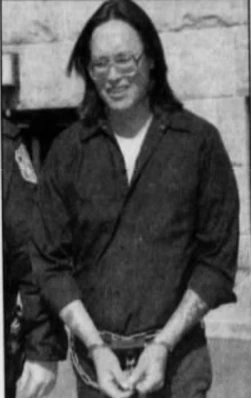
American Serial Killer Case
CLASSIFICATION: Serial Homicide
LOCATION
New Castle County, Delaware
TIME PERIOD
1973-1991
VICTIMS
5 confirmed
James Allen Red Dog, a Sioux and Assiniboine serial killer, was executed by lethal injection on March 3, 1993, at the James T. Vaughn Correctional Center in Delaware, following his conviction for the first-degree murder of Hugh Pennington. Red Dog's criminal activities spanned from 1973 to 1991, during which he was implicated in multiple murders and sexual assaults across several states, including Montana, California, Illinois, and Delaware. He was known for his violent behavior and had previously expressed a lack of remorse for his actions, claiming to be a "terminator." The case garnered national attention, leading to legislative changes proposed by then-Senator Joe Biden to improve notification protocols for dangerous criminals. As of now, the case is closed following Red Dog's execution, and no further legal actions are pending.
Some observers and Red Dog himself suggested his crimes grew out of childhood poverty on the Fort Peck Reservation and brutalizing experiences in prison, while prosecutors called his killings “essentially motiveless” — a debated explanation for his violent behavior. Investigators and commentators have speculated that his placement and relocation under the federal witness-protection program (and perceived failures in interjurisdictional notification) contributed to the circumstances that allowed him to offend in Delaware, a controversy that helped prompt legislation requiring federal notice to states. Others have noted that Red Dog’s insistence on refusing appeals as adherence to a “warrior’s code” (and his family’s support of that choice) is itself a contested, possibly symbolic motive for his acceptance of execution, and prosecutors argued that an earlier execution might have prevented subsequent murders.
James Allen Red Dog was born on February 1, 1954, in Poplar, Montana, amidst the sprawling plains of the Fort Peck Indian Reservation. His ancestry was a rich tapestry of Dakota Sioux and Assiniboine heritage, and he was a member of the Dakota tribe. From a young age, Red Dog's life was overshadowed by the hardships of reservation poverty. According to a family acquaintance, he idolized an older half-brother who was incarcerated, attempting to emulate his lifestyle by the tender age of eight or ten. This acquaintance observed that life offered very little to Red Dog beyond crime.
Defense attorneys, Steven P. Wood and Peggy J. Hageman, who would later prosecute him, struggled to find a motive for his crimes. Wood contended that attributing Red Dog's violent tendencies to his upbringing was an oversimplification. Despite the undeniable hardships Native Americans faced on reservations, few resorted to the extreme violence that became Red Dog's hallmark. Yet, Red Dog himself admitted to being a "terminator," someone who hurt people. In stark contrast, six of his eight sisters refuted the notion that he was a motiveless killer, suggesting that Delaware should appreciate his decision to accept his fate rather than burden taxpayers with endless appeals.
Red Dog's criminal journey began in 1973 with an armed robbery on his home reservation. Alongside Steven Wayne Lilley and Ralph James Clancy, he targeted a liquor and pizza store. During the heist, a fatal shot ended the life of the owner, William Clark Veseth. The legal consequences were complex: Clancy accepted a robbery charge, earning a six-year sentence, while Lilley faced a life sentence for first-degree murder, later overturned in a retrial. Red Dog, initially convicted of involuntary manslaughter and robbery, confessed during Lilley's retrial. Yet, double jeopardy laws protected him from a murder retrial. The judge, frustrated by the outcome, dismissed the manslaughter charge but sentenced Red Dog to 15 years for robbery, the maximum under law.
In a dramatic twist, Red Dog escaped while on furlough in 1977, fleeing to Los Angeles. There, he committed a double homicide, stabbing two Native American men in their sleep. He was convicted of two counts of second-degree murder, but his sentence ran concurrently with his robbery conviction, a decision that baffled prosecutors. In a 1983 incident, he provided heroin to eliminate a prison gang member, Joe Ortega, in Illinois. His testimony against fellow inmates in exchange for leniency placed him in the Federal Witness Protection Program, leading to his parole on June 27, 1990.
Released into Delaware, Red Dog resumed a semblance of normalcy, teaching Sioux traditions to the Nanticoke Indians. Yet, violence was never far behind. On February 9, 1991, Red Dog, intoxicated, invaded the home of Hugh Pennington, a friend of his wife, Bonnie Red Dog. In a fit of rage, he brutally murdered Pennington, binding him with duct tape and nearly decapitating him with a knife. This heinous act was followed by the kidnapping and repeated sexual assault of a 52-year-old woman, whom he forced to drive him across Delaware. Her eventual escape led police to a bizarre encounter with Red Dog, who had attempted to mask his scent with deer feces to evade capture.
Arrested and charged with murder, kidnapping, and multiple counts of rape, Red Dog offered no contest. He claimed amnesia due to intoxication and suggested that Pennington might have provoked a deep-seated prison hatred.
Red Dog's path to execution was unlike most. He pleaded guilty, requesting the death penalty, and refused all appeals, citing a warrior's code. His family supported this decision, seeing it as a dignified acceptance of responsibility. Red Dog became the second person executed in Delaware since the state's reinstatement of capital punishment in 1992, following Steven Brian Pennell. Despite his lawyer's efforts to persuade him to appeal, Red Dog remained resolute, wanting to expedite his punishment for the sake of his victims' families.
His execution was marked by a unique cultural rite performed by John H. Morsette, a tribal medicine man. Morsette, who had met Red Dog years earlier, conducted Native American rituals to prepare him for the afterlife. Red Dog faced his lethal injection on March 3, 1993, at the State Correctional Center near Smyrna, Delaware. He was 39 years old. His last words thanked his supporters and, as the drugs took effect, he assured his wife, "I'm going home, babe." Witnesses reported that he died with one eye open, at 10:28 a.m.
Red Dog's execution stirred legislative action. Then-Senator Joe Biden introduced a bill requiring states to be notified when dangerous criminals were relocated to their jurisdictions, a direct consequence of Red Dog's violent legacy. Prosecutor Steven Wood lamented that an earlier execution might have saved four lives, underscoring the tragic impact of Red Dog's criminal actions.
This case file adapts material from Wikipedia and is licensed under Creative Commons Attribution-ShareAlike 4.0 International. Additional Bloody Likely interface elements, metadata, images, comments, app features, and audio may be separately protected. Creative Commons Attribution-ShareAlike 4.0 International
No recent news articles found for this case. Check back later for updates.
No evidence found for this case. Be the first to submit evidence in the comments below.
Join the discussion
Loading comments...
James Red Dog kills William Veseth during a robbery.
Red Dog and accomplices stab two men to death in California.
Red Dog provides heroin to kill Joe Ortega in prison.
Red Dog is released from the Federal Witness Protection Program.
Red Dog murders Hugh Pennington in his home after a night of drinking.
Red Dog is arrested after kidnapping and raping a woman.
Red Dog pleads guilty and requests a death sentence.
James Allen Red Dog is executed at his own request.
Senator Joe Biden introduces legislation for criminal notifications.