ANALYZING EVIDENCE
Processing case files...
Processing case files...
Former Spokesman Child Sex Offender
CLASSIFICATION: Unknown
LOCATION
Zionsville, Indiana, U.S.
TIME PERIOD
2007–2015
VICTIMS
14 confirmed
A prominent Subway spokesman exchanged and received child pornography and paid for sex with underage victims, leading to a federal investigation and arrest. The investigation, prompted in part by the arrest of an associate, produced digital evidence recovered from the associate that tied the defendant to explicit images and communications. He was indicted, pleaded guilty to child pornography and child sex tourism charges in 2015, and was sentenced to 15 years and eight months in federal prison. The defendant remains incarcerated and was ordered to pay restitution and register as a sex offender for life.
Some believe Subway and certain franchisees turned a blind eye to warning signs and complaints—including text messages and recordings—raising questions about whether corporate officials were warned earlier and failed to act or actively concealed information to protect the brand. Investigators and commentators have speculated that the Jared Foundation’s murky finances and rapid dissolution, plus the role of its director Russell Taylor as an unindicted co‑conspirator, point to deeper organizational involvement or at least institutional negligence that has never been fully explained. Others debate whether Fogle acted alone or within a wider network of facilitators (franchisees, acquaintances, or service providers), leaving open who else knew what and when and whether anyone else should face accountability.
On a July morning in 2015, federal agents rolled up to a comfortable house in Zionsville, a suburb of Indianapolis, and began hauling out boxes of documents and electronics. [1][2] By the end of the day, the world’s most famous dieter—Jared Fogle, the “Subway Guy” who claimed to have dropped more than 200 pounds on a regimen of turkey subs and long walks—was no longer the wholesome corporate mascot he had played for fifteen years. [1][3][4]
Subway, which had built a billion‑dollar ad persona around him, abruptly suspended and then ended its relationship with Fogle as word spread that federal investigators were probing alleged sex crimes involving minors and child sexual abuse imagery. [1][4][5]
Jared Fogle at a Subway promotional event at SXSW in Austin, Texas.
Within weeks, court documents would lay out a pattern: travel to pay minors for sex, a pipeline of child pornography routed through a trusted charity executive, and at least fourteen identified victims. [4] Jared Fogle agreed to plead guilty and to accept a federal prison term measured in years, not months. [2][4][5]
Jared Fogle grew up in Indianapolis and later described being the only one in his family with a serious weight problem. [6] By college, the consequences were stark. In 1998, as a student at Indiana University, he weighed around 425 pounds. [1] He talked about choosing classes based on whether he could fit into the seats, taking a campus bus forty minutes out of his way to avoid a five‑minute walk, and struggling to cross campus without stopping every few steps. [3][6]
Doctors told him he had edema and warned him about the health consequences of his size. [2][3] By his own account, he was sometimes eating 10,000 calories a day—fast‑food breakfasts, whole pizzas, buffets, and late‑night burgers stacked one on top of another. [6]
Living in an apartment that literally shared a wall with a Subway shop, Fogle stumbled onto the idea that would transform his life and, for a time, his public image. [3] He said he studied the chain’s nutrition brochure, did the math in his head, and put himself on a strict routine: no breakfast, a small turkey sub for lunch, and a large veggie sub for dinner, with no oil, cheese, or mayonnaise, plus baked chips and diet soda. [3][6]
He added modest exercise—about a half‑hour of walking a day. [3] Within three months, he said he had dropped 94 pounds. [3] Within eleven months, he had gone from 425 pounds to about 190, shedding roughly 245 pounds in a year. [1][3][6]
The transformation was dramatic enough to catch local attention. In April 1999, a friend who lived in his dorm wrote about him for the Indiana Daily Student, the university newspaper. [1][2] The profile, focusing on a 245‑pound weight loss and a 60‑inch belt shrinking down to a normal waist, was picked up nationally and led to coverage by the Associated Press and in Men’s Health, which featured his story in a November 1999 piece titled “Stupid Diets That Work.” [1][2][3]
By the time he graduated in 2000, the “Subway diet” had turned a once‑anonymous student into a minor celebrity. [2]
Subway franchisees started mailing clippings about Fogle to the company’s headquarters. [1] The chain’s marketing department saw potential: a real‑life customer who claimed to have lost more than 200 pounds eating their food. [5][7]
Subway struck a deal and built an advertising campaign around his story. [1] Fogle appeared in his first Subway commercial in January 2000 and quickly became the company’s de facto face. [1][7][8] He later described himself as a highly paid, full‑time contracted employee of the chain. [7]
Over the next several years, Fogle filmed more than forty commercials and made hundreds of personal appearances on Subway’s behalf. [7] He appeared on talk shows like Jimmy Kimmel Live and in the documentary Super Size Me, and became a recurring pop‑culture reference—parodied on Saturday Night Live and made the centerpiece of a 2002 episode of South Park. [1][5]
Jared Fogle at Marine Corps Base Camp Lejeune 3.jpg
Wikimedia Commons· Public domain
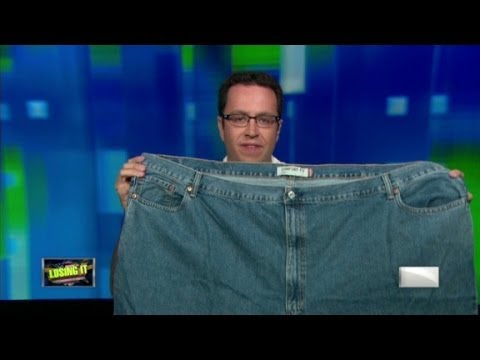
His “fat pants”—jeans with a 60‑inch waistband—became a traveling prop, held up on morning shows and at school assemblies to illustrate the peril of obesity and the promise of fast‑food moderation. [1][6][7] He told audiences, including children, that he wanted to reach them early about the importance of diet and exercise. [3][6]
The company wove him into sports and national events. He carried the Olympic torch through Indiana in 2002, tossed the coin at the 2003 Fiesta Bowl, and served as grand marshal of a Subway‑sponsored NASCAR race. [1] Subway capitalized on his image by partnering with the American Heart Association and promoting school‑centered fitness initiatives. [1]
By 2010, Fogle had regained about forty pounds, but Subway turned even that into a marketing hook, highlighting his training to run the New York City Marathon. [1] He finished the race in 5 hours, 13 minutes, and 28 seconds, later telling the Los Angeles Times he would “never do it again.” [1]
For Subway, the campaign worked. A 2013 study by Technomic’s Consumer Brand Metrics found Fogle’s story helped make the chain the restaurant industry’s most effective advertising brand. [1] When the company briefly pulled him from the air in 2005, AdAge reported that sales fell 10 percent. [1]
He became wealthy enough to describe the income as “not enough to retire on, but it’s going to make retirement pretty nice,” and he traveled the world on Subway’s dime, often flying first class, riding in limos and staying in five‑star hotels. [2]
In 2004, at the height of his fame, Fogle created The Jared Foundation, a children’s health charity aimed at fighting childhood obesity, particularly in inner cities. [1][2] Russell Taylor served as the foundation’s executive director. [5][8]
The charity fit neatly with his public mission. Fogle spoke in schools across the country, telling children about eating better and staying active, and said his preferred audience was fourth‑ through sixth‑graders. [3]
In Indianapolis’s Jewish community, he remained a local success story. He talked about spending summers at the Jewish Community Center, being confirmed at his Conservative‑Reconstructionist synagogue, and becoming a bar mitzvah in Israel. [7] He led the traditional blessing over bread at the opening of what was described as North America’s first kosher Subway and joined in a dedication ceremony there. [7]
Profiles called him a “local hero” for his transformation. [2]
Behind that image, however, prosecutors would later say that some of the same networks that brought him into contact with children were also feeding his private crimes. [5][8]
The first public sign that something was wrong came not from Fogle but from his charity’s director. In April 2015, Russell Taylor was arrested on preliminary child pornography charges. [8][9] Prosecutors later alleged that Taylor had secretly filmed minors using hidden cameras while they were nude or changing clothes. [5]
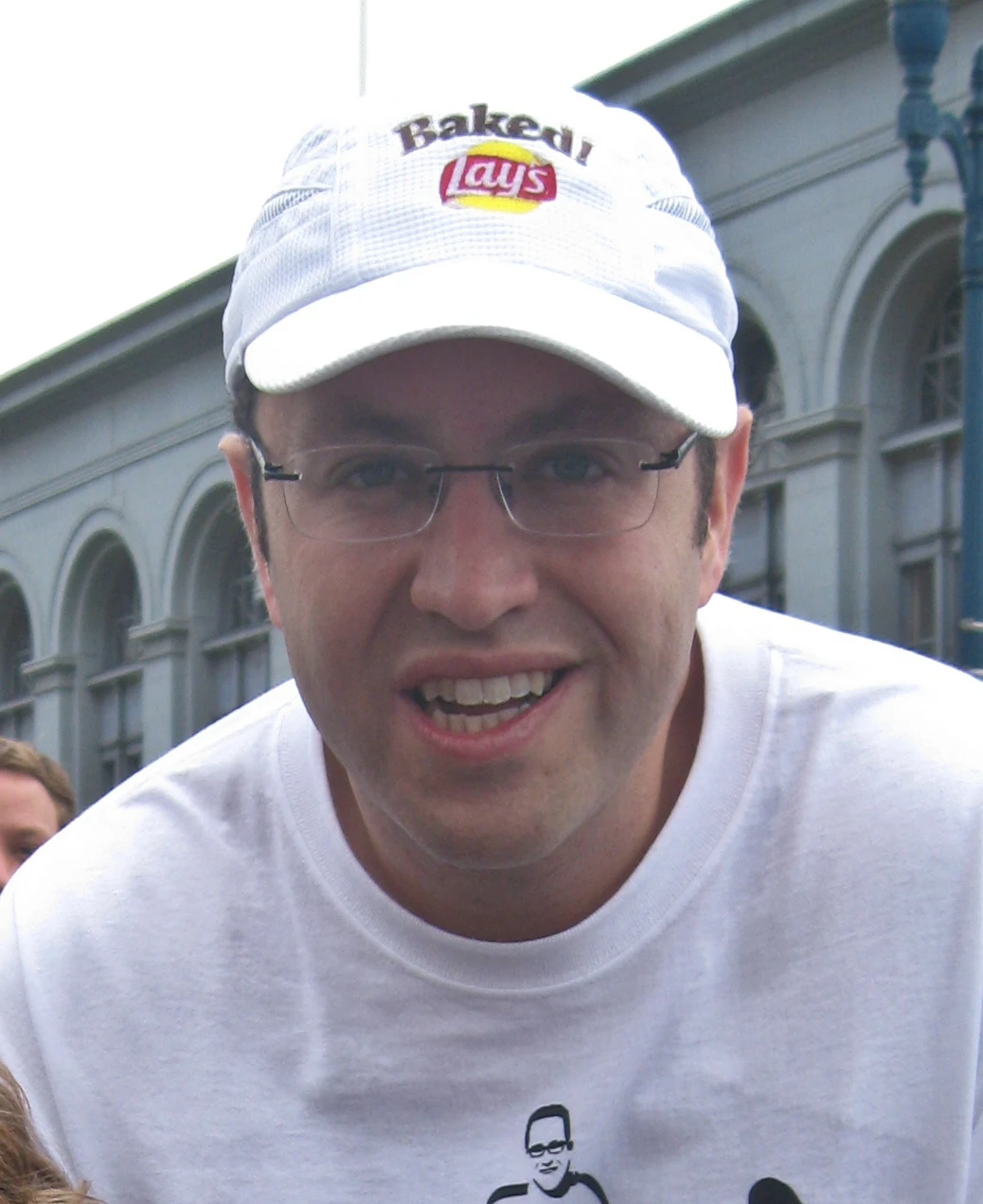
Jared Fogle in 2007, at the height of his fame as the face of Subway.
According to federal authorities, Taylor produced and possessed child sexual abuse material and supplied Fogle with images and videos of youths. [1][4] Assistant U.S. Attorney Steven DeBrota said Fogle received photos and videos from Taylor of several of the twelve youths involved, though not all of them, and that Fogle knew they were minors, some as young as 13 or 14. [5]
On July 7, 2015, FBI agents and local police converged on Fogle’s home in the Indianapolis suburbs, in Zionsville, Indiana. [1][2] Neighbors and reporters watched as agents carried out boxes of documents and electronic equipment. [1]
Zionsville, Indiana — suburb of Indianapolis where federal agents raided Jared Fogle’s home in July 2015.
© Mapbox © OpenStreetMap
Federal authorities declined to say exactly what they were investigating. [1] Fogle’s attorney at the time, Ron Elberger, told the Indianapolis Star that his client was cooperating and “has not been detained, arrested or charged with any crime or offense.” [1]
Subway, blindsided by the images of its longtime pitchman under federal scrutiny, moved quickly. The company said it was “shocked about the news” and began stripping his image from its website. [1] Within hours of the search, Subway announced that it and Fogle had “mutually agreed to suspend their relationship.” [1] By August, the company was emphasizing publicly that it no longer had any relationship with him and would not comment further. [2][4]
The fallout rippled through other institutions that had once claimed him. North Central High School in Indianapolis, where Fogle had graduated in 1995, removed his photo from its alumni Hall of Fame display after news broke that he planned to plead guilty to federal charges and had agreed to serve at least five years in prison. [9] A spokeswoman said simply, “It was just taken down.” [9]
Back in Bloomington, at Indiana University, the Subway on the corner of Atwater and Woodlawn—known to students as “the Jared Subway” because it was the restaurant he frequented while a grossly overweight undergrad—became an uncomfortable landmark. [5] One student told a reporter that learning he had lived near the “Jared Subway” had once given him a thrill; after the charges, he said he felt repulsed. [5] Another said the reaction had shifted from “Oh, cool, we had a celebrity in our area” to “ew.” [5]
The brand he had helped build raced to disown him. The communities that had celebrated him were forced to decide what to do with the pieces.
As investigators followed the digital trail seized from Fogle’s home and more witnesses came forward, a disturbing picture emerged.
Court documents say that between 2007 and June 2015, Fogle used the internet to arrange and travel to New York City to meet and have sex with underage girls, and that he also received and distributed child pornography. [4] Another filing, cited in coverage at the time, stated that he traveled to New York and had sex with at least two minors, ages 16 and 17, between 2010 and 2013. [8]
According to prosecutors, Fogle did not just exploit opportunities that came his way; he actively sought out minors. The Indianapolis Star reported that he solicited acquaintances—including both adult prostitutes and child victims—to connect him with other minors so he could have sex with them. [8]
Some of those encounters were detailed with specificity. Court documents describe Fogle having sex with two girls under 18 at New York City hotels and paying them for that sex. [5] One of the girls was 16 at the time, and both were adults by the time those documents were unsealed. [5] Another court document released the day Fogle appeared in court identified the Plaza Hotel and Ritz‑Carlton in New York as among the locations where he had sexual encounters with a minor. [2]
Russell Taylor, Jared Fogle's associate whose arrest in April 2015 led investigators to Fogle.
The evidence was not limited to travel and hotel receipts. Prosecutors said witnesses in Florida, Georgia, and Washington recorded conversations with Fogle in which he discussed his desire to engage in sex acts with minors. [4] NBC News similarly reported that witnesses from those states told investigators he had contacted them seeking sex with minors as young as 14 and 15, though those accounts were framed as allegations rather than proven facts. [9]
One of the earliest and most vocal figures to sound an alarm was Rochelle Herman‑Walrond, a former journalist in Florida. [4] She said she became acquainted with Fogle about ten years before his plea and that, during one of his trips to Florida, he spoke to her about being attracted to minors. [4] Herman‑Walrond said she reported the conversation to authorities and, over the next four years, served as an informant, wearing a wire to record additional conversations in which he discussed the ages he was interested in and said he had “done it before.” [4]
The FBI did not confirm Herman‑Walrond’s account, but her claims sit alongside the recorded‑witness references in court documents and the broader federal case. [4]
At the core of that case was the alleged pipeline between Russell Taylor and Jared Fogle. Authorities said Fogle received images and videos from Taylor of nude or partially clothed minors engaging in sexually explicit conduct, and that Fogle knew the people depicted were under 18. [4] Prosecutors alleged that Taylor had secretly filmed some of the youths using hidden cameras, and DeBrota said Fogle knew some of them were as young as 13 or 14. [5]
In addition to active abuse, prosecutors faulted Fogle for what he did not do: they said he failed to alert authorities about what Taylor was doing, thereby allowing further victimization. [5]
On August 19, 2015, Jared Fogle walked into federal court in Indianapolis to face charges of underage sex and child pornography. [4] His attorney, Jeremy (Jerry) Margolis, told reporters that Fogle had reached a plea agreement with the Justice Department and intended to plead guilty. [2][4]
Under that agreement, Fogle would plead to one count of traveling to engage in illicit sexual conduct with a minor and one count of distribution and receipt of child abuse images. [5][8] Margolis said his client “will fully and completely acknowledge his responsibility for his wrongdoing.” [4] He also told reporters that Fogle understood he required significant psychiatric treatment and counseling and had already begun extensive evaluation by an expert in sexual conditions. [2]
The plea agreement outlined a negotiated sentencing range. Prosecutors agreed not to seek more than 12 years in prison, and Fogle agreed not to ask for less than five. [5] ABC News summarized that he faced at least five to twelve years behind bars on the federal charges to which he would plead guilty. [2] Another outlet, citing the Indianapolis Star, pegged the expected range as between five and twelve‑and‑a‑half years. [8] A federal judge was scheduled to sentence him on November 19, 2015, with a minimum of five years set by the agreement. [5]
Crucially, the plea documents acknowledged 14 victims. [4] Those victims were not all the same type or age: some were minors Fogle paid for sex, including the New York hotel encounters; others were minors filmed or photographed in images he received, some as young as 13 or 14. [5] Accounts differ in some of the details about precisely how many victims fell into which category, but the total number in the plea materials remained consistent: fourteen.
Herman‑Walrond, who had spent years wearing a wire, said she feared there were additional victims beyond those in the plea. [4]
Money cannot undo trauma, but in Fogle’s case, restitution became an unusually visible part of the proceedings. The plea agreement provided for $1.4 million in restitution to the 14 victims—$100,000 each. [4][5][8] By the time prosecutors signed the deal, Fogle had already transferred that full amount to his law firm, which placed it in a trust account for federal prosecutors to draw on. [5]
Jared Fogle Mugshot.jpg
Wikimedia Commons· Public domain
Assistant U.S. Attorney Steven DeBrota said he had handled only one other case in nearly a quarter‑century where restitution reached victims before sentencing. [5] In this case, prosecutors moved quickly. Ten victims received their $100,000 checks—a total of $1 million—before Fogle’s scheduled sentencing. [5] The checks were hand‑delivered over several weeks to the victims or their parents, who signed forms acknowledging receipt and stating that the money was intended to benefit that particular victim. [5]
As of that point, three of the recipients were adults and seven were minors; prosecutors expected the remaining four victims to have received their checks or have disbursement plans in place by the time Fogle stood before the judge. [5] DeBrota said the restitution was meant to cover mental health counseling, medical care, and other recovery needs stemming from the abuse and exploitation. [5]
Outside observers noted that, in many child sexual abuse imagery cases, restitution orders are rarely fully paid. [5] Here, the money sat in trust, ready to be distributed, even before the gavel fell. [5]
Fogle’s own lawyer acknowledged the limits of what that could do. In an August statement, Margolis said Jared “fully recognizes that such monetary contribution will not undo the harm he has caused” but hoped it could help the victims move forward. [5]
While the federal case crystalized, Fogle’s family life and public legacy were coming apart.
ABC News reported that Fogle, 37 at the time, was a father of two young children with his second wife, Katie. [2][4][5] Katie Fogle, who had married him in 2010, announced in 2015 that she planned to seek a divorce. [2] In a statement, she said she was “extremely shocked and disappointed by the recent developments involving Jared,” adding that she was in the process of ending the marriage and that her focus was on the well‑being of her children. [2]
Institutions that had once featured him as a symbol of perseverance moved just as decisively. Subway issued a tweet saying, “We no longer have a relationship with Jared and have no further comment.” [2][4] North Central High School quietly removed his Hall of Fame photo. [9] At Indiana University, faculty mused aloud that the “Jared Subway” would become a strange, creepy footnote in local lore. [5]
In the space of a few months, the image of Jared Fogle as a harmless, self‑deprecating pitchman carrying his old pants and joking about his former size had been replaced by that of a man admitting to paying minors for sex and collecting images of children being abused. [1][4][5]
The legal case against Jared Fogle ended in a plea agreement—no trial, no contested cross‑examinations in front of a jury. [2][4][5] That certainty left other questions in its wake.
Jared Fogle July 2011.jpg
Some specifics about his conduct remain described differently from one document or report to another. Court filings and major outlets agree that he traveled to New York to pay minors for sex and that at least one of the girls was 16 at the time. [4][5] Other summaries, flagged as disputed in subsequent analysis, describe a pattern of travel to pay a girl for sex at both 16 and 17. [8][9]
Similarly, while prosecutors and DeBrota have said Fogle knew some of the youths in Taylor’s videos were as young as 13 or 14, other accounts focus on his attempts to arrange sex with minors as young as 14 and 15 through intermediaries in Florida, Georgia, and Washington. [4][5][9] Even within the government’s own descriptions, the precise contours of how many victims were targeted at which ages can blur.
And then there are the shadows cast by people like Rochelle Herman‑Walrond, who says she spent years recording conversations and still fears there are victims who have not been identified or heard. [4]
What is not in dispute is that a man once held up as an inspiration—who told obese children that they could change their lives if they just wanted it badly enough—used his fame, money, and access to exploit minors. [3][7] The story of Jared Fogle is no longer about pants sizes or sandwich choices. It is about how easily a carefully constructed image can mask predatory behavior—and how the damage from that betrayal is borne, most of all, by the young people who trusted the adult in front of them.
Adapted from Wikipedia: Jared Fogle.
This case file is an original Bloody Likely narrative synthesis based on the cited sources. Article © Bloody Likely. All rights reserved. Source materials remain the property of their respective owners. Facts, public records, quotations, and cited references are used for reporting, research, commentary, and documentation. Bloody Likely content license
Audio narration © Bloody Likely. All rights reserved. The audio player is provided for personal streaming/listening only.
No recent news articles found for this case. Check back later for updates.
No evidence found for this case. Be the first to submit evidence in the comments below.
Join the discussion
Loading comments...
University newspaper and later Men's Health publish stories about major weight loss that brought the subject to public attention.
First Subway commercial featuring the subject aired as a test regional ad; national appearances followed.
A journalist reported lewd comments and recorded conversations that brought the subject to the attention of law enforcement.
The director of the subject's foundation, Russell Taylor, was arrested on child exploitation and child pornography charges, triggering related investigations.
Federal indictment charged the subject with distribution and receipt of child pornography and traveling to engage in illicit sexual conduct with a minor.
Prosecutors and defendant reached a plea deal in which he would plead guilty to the two-count indictment and agree to restitution and supervised-release
The defendant formally pleaded guilty and was sentenced by a federal judge to 15 years and eight months in prison, plus fines, forfeiture, and lifetime
The defendant entered Bureau of Prisons custody at the Federal Transfer Center in Oklahoma City and was subsequently transferred to FCI Englewood.
The United States Court of Appeals for the Seventh Circuit upheld the defendant's sentence.