ANALYZING EVIDENCE
Processing case files...
Processing case files...
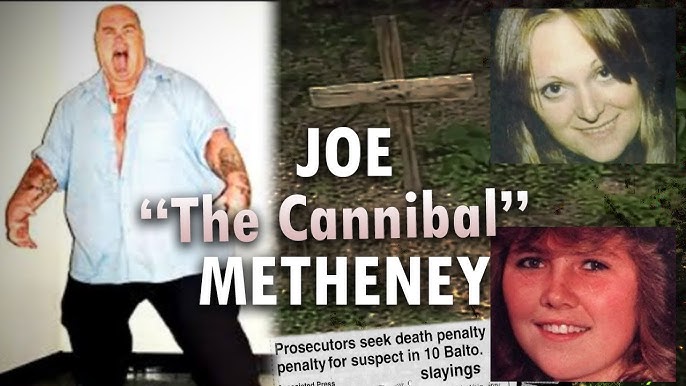
Baltimore Serial Killer Case
CLASSIFICATION: Serial Homicide
LOCATION
Baltimore, Maryland
TIME PERIOD
1976-1996
VICTIMS
2 confirmed
Joseph Roy Metheny, an American serial killer and rapist, was active primarily in the Baltimore, Maryland area from 1976 to 1996. He was apprehended on December 15, 1996, after confessing to the murders of Cathy Ann Magaziner and another unidentified victim, although he claimed to have killed up to 13 individuals. Metheny's criminal activities included kidnapping and rape, leading to his conviction for two murders, for which he was initially sentenced to death; this was later commuted to life imprisonment. Significant evidence included the discovery of Magaziner's body in a shallow grave at his workplace, along with Metheny's own confessions detailing the circumstances of the murders. He died in custody on August 5, 2017, at the age of 62.
Joe Metheny claimed to have killed 13 people, but investigators and the public remain skeptical about the veracity of this number, with most believing he was only responsible for two confirmed murders. There is speculation that Metheny's troubled childhood and military service may have contributed to his violent behavior, with some suggesting that his experiences in the Army, particularly claims of drug addiction, could have played a role in his criminal actions. Additionally, there are theories about potential undiscovered victims, as Metheny's own accounts imply a larger number of killings than what has been substantiated.
On December 15, 1996, workers at a Southwest Baltimore pallet company found the body of 23‑year‑old Kimberly Spicer hidden under a trailer on the lot. [1][2]
The discovery led police straight to one of their own forklift drivers, a large man everyone at the yard called “Tiny”: Joseph Roy Metheny. [1][3]
By the time the courts were done with him, Metheny had been sentenced to death, then to life without parole, for murdering Spicer and another woman, Cathy Ann Magaziner. [1][3]
Along the way, he boasted of more killings, hinted at cannibalism, and described himself as “a very sick person.” [1][3][4]
Police, unable to verify most of what he claimed, were left to untangle which horrors were real and which were the fantasies of a man who said he killed because he “enjoyed it.” [1]
Joseph Metheny was born in Baltimore on March 2, 1955. [3]
In court, his defense team painted a bleak childhood: an absent, alcoholic father, and a mother working double shifts in Essex to keep six children afloat. [1]
Pat Metheny 2019 02.jpg
He joined the U.S. Army in 1973. [3]
Years later, accounts describe him spending long stretches in South Baltimore, drinking heavily in bars and living among homeless encampments, including the tent city beneath the Hanover Street Bridge. [3]
Nearly all of his money, one account would later say, went to crack cocaine, heroin, and liquor. [3]
For all that, people who encountered him described an unsettling contrast. Metheny was a big man, but his nickname was “Tiny.” [1]
He was said to be intelligent, well‑spoken, and very well‑mannered. [3]
His own attorneys would later say he suffered from depression, and that drugs and alcohol had warped his personality and made him violent. [3]
By the mid‑1990s, he had something that many around him in those camps did not: a steady job as a forklift driver at a pallet factory in Southwest Baltimore, earning $7 an hour. [1][3]
That factory yard, and the trailer where he lived on site, would become the backdrop for the crimes he admitted—and the ones no one could ever prove.
Before anyone found bodies at the pallet yard, Metheny’s name surfaced in another violent case tied to South Baltimore’s homeless camps.
He was tried in the mid‑1990s for allegedly killing two homeless men, Randy Piker and Randall Brewer, with an axe at a tent city beneath the Hanover Street Bridge. [3][5]
One Baltimore account places his acquittal in 1996; another source says he was acquitted in 1998. [1][5]
Either way, a jury cleared him in those killings. [1][5]
© Mapbox © OpenStreetMap
The camp itself was volatile. Rival groups of homeless men were feuding, and another man, Larry Amos, was later convicted of stealing the same axe and using it to kill Everett Dowell. [3]
Amos pleaded guilty to manslaughter and served one year and nine months of an eight‑year sentence. [3]
Years later, after he was securely behind bars for other crimes, Metheny reportedly reversed himself and claimed that he had, in fact, committed the murders of Brewer and Piker—saying he had “lied and gotten away with it” when he denied involvement. [1][3]
Those post‑hoc admissions never changed the legal reality: he remained acquitted.
While the legal dust from the tent‑city case was still in the air, Metheny’s life at the pallet factory took on a much darker meaning.
He wasn’t just living and working at the Southwest Baltimore plant. Prosecutors later said he was using the grounds as a burial site. [1]
Investigators would allege that he buried the remains of his victims beneath or near the trailer where he lived on company property. [1]
Police said Metheny preyed on women addicted to heroin and cocaine, a pattern later echoed in accounts that described his victims as young white sex workers struggling with addiction. [1][3]
Those same accounts say the killings involved brutal sexual assaults. [3]
Among those women were Kimberly Spicer and Cathy Ann Magaziner. [1]
Both would become central to the state’s case—and to the question of whether Maryland would execute Joseph Metheny.
On December 8, 1996, Metheny brought a woman named Rita Kemper to the trailer where he was living at the pallet factory. [3]
Prosecutors said he shared drugs with her there before she fought off a violent attack. [3]
In later retellings, Kemper emerged as the victim who escaped him—and the one he feared would finally turn him in. [3][6]
What happened next unfolded partly in the courts.
Metheny was tried on charges that included kidnapping, an attempted sexual offense, and attempted murder in connection with Kemper’s ordeal. [5]
A Baltimore Sun report states that he was acquitted of attempting to murder her. [5]
Even so, by 1998 he was serving a 50‑year sentence for kidnapping and an attempted sex offense against Kemper stemming from that night. [5]
Kemper’s escape, and the fear that she would talk, would reverberate in the story of what Metheny did with another woman’s body.
Cathy Ann Magaziner was described in court as a prostitute working Baltimore’s streets. [5]
In August 1998, Metheny pleaded guilty to murdering and robbing her, and Baltimore County prosecutors announced they would seek the death penalty. [3]
The Magaziner case had been moved out of Baltimore City and into Baltimore County, where a new jury would decide whether Metheny should live or die. [5]
By then, he was already serving life without parole for the 1996 murder of Kimberly Spicer and the 50‑year sentence tied to Kemper. [5]
At the sentencing hearing, jurors heard a taped interview between Metheny and Detective Homer Pennington. [5]
On that tape, when asked about Magaziner, Metheny said the words that would anchor the case: “I strangled her.” [5]
When the detective asked for her name, Metheny replied, “Haven’t a clue.” [5]
He told investigators he had buried her body. [5]
When Magaziner’s remains were eventually found, part of her skull was missing. [5]
In other accounts, Metheny would fill in his own version of what happened to it, saying he strangled her, buried her, then dug up her skeleton six months later, removed her head, put it in a box, and threw it in the trash. [3][6]
A friend, one retrospective account notes, later testified that Metheny had asked him for help moving a body—an attempt to relocate Magaziner’s remains after Kemper escaped and he feared exposure. [6]
Whatever the full sequence, jurors in Baltimore County were presented with a man calmly admitting, on tape, to strangling a woman and burying her in the ground. [5]
Parallel to the Magaziner case ran the prosecution for the murder of Kimberly Spicer.
Spicer was 23 years old in the fall of 1995, walking the same dangerous corridors of addiction and survival that had ensnared so many others. [2]
On December 15, 1996, her body was discovered under a trailer at the pallet factory where Metheny worked and lived. [1]
That same day, one source notes, Metheny was apprehended. [3]
Spicer’s killing would bring Metheny his first life sentence—life without parole for her 1996 murder. [5]
Together with the later conviction in Magaziner’s case, those sentences formed the backbone of the punishment he would never outlive. [1]
The Magaziner sentencing became the focal point for the state’s attempt to execute Metheny.
Baltimore County prosecutor Emanuel Brown stood before the jury and asked for what he called the “maximum, ultimate penalty of death.” [5]
Assistant State’s Attorney Vickie Wash served as his co‑counsel. [5]
On the defense side, Metheny was represented by Margaret Mead and Catherine Flynn, who delayed their opening statement, indicating they planned to speak later when Metheny himself was expected to testify. [5]
The hearing was expected to stretch a full week before jurors even began deliberations. [5]
In addition to the taped confession, prosecutors introduced evidence that Metheny had buried victims’ remains beneath his trailer at the pallet yard. [1]
Police said he had chosen young white sex workers hooked on heroin and cocaine—women living on the margins and often overlooked—as his victims. [1][3]
His own words didn’t help him.
On tape and in statements to police, Metheny called himself “a very sick person” and said he killed because he “enjoyed it.” [1][4]
His defense team tried to frame those words within the context of his life: the neglected childhood, the absent and alcoholic father, the mother stretched thin supporting six children in Essex, the depression and the grinding damage of addiction. [1][3]
None of it persuaded the jury to spare him.
In 1998, Metheny was sentenced to death. [1]
At sentencing, he didn’t beg for mercy. He asked for execution.
“The words, ‘I’m sorry’ will never come out, for they would be a lie,” he told the court. “I am more than willing to give up my life for what I have done, to have God judge me and send me to hell for eternity.” [1]
He explicitly requested to be put to death. [1]
For a time, Joseph Metheny lived under a death sentence—a rare outcome in Maryland, and one rooted in the claim that he had killed Magaziner in the course of a robbery. [1][3][6]
But on appeal, that theory began to crack.
An appellate court later ruled that while the murder had been legally tied to a robbery, the evidence did not support robbery as Metheny’s actual motive. [3]
That distinction mattered. The court overturned the death sentence and resentenced him to life in prison without parole. [1][3]
By then, he was already serving two life sentences for killing women in 1994 and 1996 and the additional decades‑long term for kidnapping and attempted sexual assault. [1][5]
With the death penalty off the table, he would die in prison regardless.
Behind bars, Metheny kept talking.
He claimed, in one alleged confession, that he stored flesh from victims in a freezer and said that once it was mixed with pork, people couldn’t tell the difference. [3]
He boasted of killing three other prostitutes along Washington Boulevard in Baltimore. [3]
He said he had thrown other bodies into the Patapsco River—bodies that were never found. [1]
Baltimore police could not confirm most of these alleged crimes. [1]
One woman’s killing led to charges that prosecutors eventually dropped for lack of evidence. [1]
Beyond the known murders of Magaziner and Spicer, and the convictions tied to Kemper, the true scope of Metheny’s violence remains murky—somewhere between official case files and the darker reaches of his own storytelling.
Even in the tent‑city case, where he reversed himself and claimed responsibility for the deaths of Randy Piker and Randall Brewer, his admissions came only after he had been acquitted. [1][3][5]
Legally, they changed nothing. Practically, they only deepened the uncertainty over how many people he had actually killed.
The investigation also widened briefly to people around him.
The owner of the pallet business where Metheny worked was arrested alongside him as they left a Christmas party and was charged as an accessory after the fact, accused of helping dispose of evidence. [3]
Witnesses, including a friend who later testified that Metheny had asked for help moving a body, helped prosecutors reconstruct what they could. [6]
Still, large parts of Metheny’s claimed victim count exist only in his own chilling words.
When police finally took Metheny into custody in December 1996, the interaction stuck with at least one officer.
Former Baltimore City police officer Timothy Utzig later testified about arresting Metheny that month. [5]
According to Utzig, as they drove with Metheny handcuffed and shackled in the back of the cruiser, Metheny told him: “You don’t have to be scared.” [5]
Utzig replied that he wasn’t afraid.
“You ought to be,” Metheny said. [5]
The man some would later call “Baltimore’s own Joe Metheny” spent his final years in a Maryland state prison, serving two life sentences for the murders of Cathy Ann Magaziner and Kimberly Spicer, along with additional time for kidnapping and attempted sexual offenses. [1][5][6]
One Saturday afternoon, corrections officials found him dead in his cell. [1]
By then, the death sentence he had once demanded was already gone, overturned by the courts. [1]
He left behind at least two confirmed murder victims, another woman who survived him, and a trail of unverified confessions that still raise more questions than they answer—about what he really did, how many people he hurt, and how much of his own story anyone should believe.
This case file is an original Bloody Likely narrative synthesis based on the cited sources. Article © Bloody Likely. All rights reserved. Source materials remain the property of their respective owners. Facts, public records, quotations, and cited references are used for reporting, research, commentary, and documentation. Bloody Likely content license
No recent news articles found for this case. Check back later for updates.
No evidence found for this case. Be the first to submit evidence in the comments below.
Join the discussion
Loading comments...
Joe Metheny murders Cathy Ann Magaziner and buries her body at his workplace.
The bodies of two homeless men, Randall Brewer and Randy Piker, are found, leading to investigations.
Metheny kills Kimberly Lynn Spicer by stabbing her.
Metheny kidnaps Rita Kemper and attempts to rape her, but she escapes and reports to police.
Metheny is arrested after a friend reports him for hiding Spicer's body; he confesses to multiple murders.
Metheny is tried for the kidnapping and attempted murder of Rita Kemper, receiving a 50-year sentence.
Metheny is sentenced to death for the murder of Kimberly Lynn Spicer.
Metheny pleads guilty to the murder of Cathy Ann Magaziner, receiving a life sentence.
Metheny's death sentence is overturned, and his sentence for Spicer's murder is reduced to life without parole.
Joe Metheny is found dead in his prison cell at the age of 62.