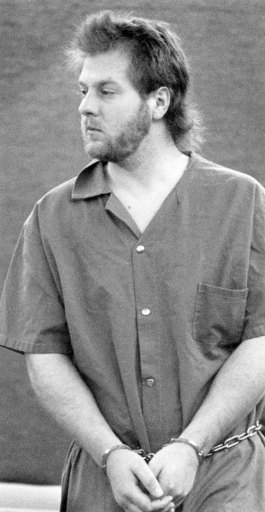
John Fautenberry
American Serial Killer Case
CLASSIFICATION: Serial Homicide
LOCATION
United States
TIME PERIOD
1990-1991
VICTIMS
5 confirmed
John Joseph Fautenberry, an American serial killer, was active between 1990 and 1991, murdering five individuals across Oregon, New Jersey, Ohio, and Alaska. He was apprehended on March 17, 1991, and later confessed to an additional murder dating back to 1984, for which another man had been wrongfully convicted. Fautenberry was sentenced to death for one of his murders and executed by lethal injection at the Southern Ohio Correctional Facility on July 14, 2009. Key evidence included Fautenberry's own confessions and forensic links to the crime scenes, which solidified his convictions for aggravated murder, first-degree murder, and other charges in multiple states.
Investigators and the public theorize that John Fautenberry's troubled childhood, marked by familial rejection and abuse, may have contributed to his violent behavior as an adult. Some speculate that his profession as a long-haul trucker provided him with the means and opportunity to commit murders across multiple states. Additionally, there is speculation that he may have been involved in more homicides than the five confirmed, particularly given his confession to a murder for which another man was wrongfully convicted.
The Sinister Journey of John Fautenberry
Early Life: A Troubled Beginning
John Joseph Fautenberry entered the world on July 4, 1963, in New London, Connecticut, into a life that would foreshadow a troubled path. His father, a former Marine and police officer, divorced John's mother shortly after the birth of his sister, leaving young John adrift in a sea of familial rejection. His father and grandparents turned their backs, placing him solely in the care of his mother. She, seeking companionship, remarried twice. Unfortunately, these new father figures brought no solace, only neglect and physical abuse. The smallest mistakes—like confusing a potato salad with tomato salad—invited harsh beatings.
In the midst of this turmoil, Fautenberry sought refuge in his imagination. He would pretend to nail his and his sister's blankets to their beds with an imaginary hammer, hoping to anchor them against the malevolent forces he feared. The family’s frequent relocations—from Ohio to Hawaii and eventually to North Kingstown, Rhode Island, in 1983—did little to stabilize his life. By then, he'd already brushed with the law for stealing a 1968 Chrysler in Atlanta, only to be apprehended in Heflin, Alabama, after a gas station incident.
The loss of his mother to cancer in 1985 further eroded his trust in the world, pushing him towards drugs and alcohol. He drifted through various short-term jobs as a long-haul trucker, crisscrossing the United States but often losing these positions due to poor performance. His criminal record grew with minor offenses, including carrying a concealed weapon in Ohio and causing a public disturbance in Ledyard, Connecticut.
In 1986, with his birth father's assistance, Fautenberry moved to Portland, Oregon. However, his father soon relocated to southern Oregon with John’s half-brothers, leaving John Jr. behind. It was during this period that Fautenberry began a scandalous affair with his stepmother, Olivia Herndon, which persisted for nearly 15 years despite his subsequent incarceration.
The Murders: A Trail of Death
John Fautenberry's descent into murder began in November 1990 at a truck stop in Troutdale, Oregon. There, he befriended 47-year-old Donald 'Don' Nutley from Waco, Texas. Learning of Nutley's plan to visit Mount Hood for target practice, Fautenberry offered to join him. Nutley vanished that day, his fate a mystery until April 21, 1991, when his skull and teeth, marked by a bullet hole, were discovered in a wooded area near Zigzag.
The killing spree continued on February 1, 1991, when Fautenberry encountered 27-year-old trucker Gary Farmer at the Pilot Truck Stop in Bloomsbury, New Jersey. Fautenberry claimed Farmer made unwelcome sexual advances, prompting him to retaliate by killing Farmer and stealing his knife, watch, and $40, leaving the body in the truck's sleeping compartment. Farmer's identity remained unknown for days until authorities, upon identification, released a sketch of a man wanted for questioning. At the time, Fautenberry was en route to Zion, Illinois, having stopped at the truck stop for breakfast.
Just sixteen days later, 45-year-old Joseph Daron Jr. disappeared from his home in Miami Township, Ohio, after dropping off his daughters. Despite a missing persons report filed by a colleague, Daron's whereabouts remained unknown. His white 1988 Subaru was spotted in Portland, Oregon, and Idaho, while his credit cards were used 25 times by Fautenberry. On March 20, a motorist discovered Daron's body near River Downs in Anderson Township. Fautenberry had posed as a hitchhiker, only to kill and rob the kind-hearted Daron afterward.
Fautenberry then drove Daron's car across several states, eventually arriving at a party in Portland on February 23. There, he met 32-year-old Christine Anne Guthrie, a bank teller who agreed to accompany him to the Silver Sands Motel in Rockaway Beach. Anna Modrell, the motel owner, remembered seeing them. Guthrie vanished, later found dead from gunshot wounds near Timber on April 1.
The journey took him next to the Seattle–Tacoma International Airport, where he abandoned Daron's car and flew to Juneau, Alaska, on March 2 or 3. Finding work on a fishing boat, he took residence in the downtown Bergman Hotel. After being fired, Fautenberry met 39-year-old miner Jefferson "Jeff" Diffee at a rural bar on March 14. Diffee, sympathetic to Fautenberry's plight, invited him to his condominium. There, Fautenberry brutally murdered him, stabbing him 17–18 times before stealing his wallet, ATM card, and handgun. The next day, he withdrew $400 from Diffee's account, a transaction that drew police attention. Diffee's absence from work prompted coworkers to file a missing persons report.
Arrest and Legal Proceedings
Fautenberry's luck ran out three days after Diffee's murder. Under surveillance due to his connection with Daron's stolen car, police arrested him in his Juneau hotel room, where they found Diffee's bank card. During interrogations, Fautenberry confessed to six murders, including the 1984 stabbing of 25-year-old homeless man Richard F. Combs in Roseburg, Oregon. Fautenberry claimed he murdered Combs in a drunken rage, but another man, Michael T. Collier, had already confessed to and been convicted for that crime, leaving Fautenberry's confession unpursued.
Law enforcement briefly considered Fautenberry a suspect in the Dr. No murders due to his trucking profession and questioned him about another trucker’s murder in New York, though he was cleared of these suspicions. In a recorded phone interview with WKRC-TV, Fautenberry confessed to four murders but later attempted suicide, slashing his wrist with a razor. He survived the attempt.
While incarcerated, authorities profiled Fautenberry as a serial killer, drawing comparisons to notorious figures like Ted Bundy. However, Fautenberry rejected this label, insisting he killed for monetary gain, not for sexual or personal satisfaction.
Initially held at the Lemon Creek Correctional Center on $1 million bail, later raised to $3 million, Fautenberry faced murder charges for Diffee, Farmer, and Daron. In Alaska, he pleaded guilty to Diffee's murder in exchange for the other charges being dropped, receiving a 99-year sentence. Extradited to Ohio, he was sentenced to death for Daron's murder. In New Jersey, he received a life sentence after pleading guilty to Farmer's murder.
Execution and Legacy
Following his death sentence in Ohio, Fautenberry pursued multiple appeals, all unsuccessful. By 2008, having exhausted all state and federal appeals, Prosecutor Joe Deters formally requested his execution. Family members of Fautenberry’s victims consistently opposed parole bids, reinforcing the severity of his crimes.
On July 14, 2009, at the Southern Ohio Correctional Facility, John Joseph Fautenberry was executed by lethal injection. The Supreme Court denied a final request to delay the procedure just two hours before his execution, closing the chapter on his violent legacy.
Sources
For further reading, the original Wikipedia entry on John Fautenberry can be accessed here.
No Recent News
No recent news articles found for this case. Check back later for updates.
No Evidence Submitted
No evidence found for this case. Be the first to submit evidence in the comments below.
Join the discussion
Loading comments...
First Murder Committed
John Fautenberry murders Donald Nutley after befriending him at a truck stop.
Second Murder Committed
Fautenberry kills fellow trucker Gary Farmer in New Jersey after alleged sexual advances.
Third Murder Committed
Fautenberry meets and murders Christine Anne Guthrie after a party in Portland.
Fourth Murder Committed
Fautenberry kills Jefferson Diffee in Alaska after befriending him.
Arrest Made
Fautenberry is arrested in Juneau after being linked to the murders and stolen vehicles.
Sentenced to Death
Fautenberry is sentenced to death for the murder of Joseph Daron in Ohio.
Life Sentence in New Jersey
Fautenberry pleads guilty to the murder of Gary Farmer and receives a life sentence.
Execution Requested
Prosecutor requests execution after Fautenberry exhausts all appeals.
Execution
John Fautenberry is executed by lethal injection at the Southern Ohio Correctional Facility.
John Joseph Fautenberry, an American serial killer, was active between 1990 and 1991, murdering five individuals across Oregon, New Jersey, Ohio, and Alaska. He was apprehended on March 17, 1991, and later confessed to an additional murder dating back to 1984, for which another man had been wrongfully convicted. Fautenberry was sentenced to death for one of his murders and executed by lethal injection at the Southern Ohio Correctional Facility on July 14, 2009. Key evidence included Fautenberry's own confessions and forensic links to the crime scenes, which solidified his convictions for aggravated murder, first-degree murder, and other charges in multiple states.
Investigators and the public theorize that John Fautenberry's troubled childhood, marked by familial rejection and abuse, may have contributed to his violent behavior as an adult. Some speculate that his profession as a long-haul trucker provided him with the means and opportunity to commit murders across multiple states. Additionally, there is speculation that he may have been involved in more homicides than the five confirmed, particularly given his confession to a murder for which another man was wrongfully convicted.
The Sinister Journey of John Fautenberry
Early Life: A Troubled Beginning
John Joseph Fautenberry entered the world on July 4, 1963, in New London, Connecticut, into a life that would foreshadow a troubled path. His father, a former Marine and police officer, divorced John's mother shortly after the birth of his sister, leaving young John adrift in a sea of familial rejection. His father and grandparents turned their backs, placing him solely in the care of his mother. She, seeking companionship, remarried twice. Unfortunately, these new father figures brought no solace, only neglect and physical abuse. The smallest mistakes—like confusing a potato salad with tomato salad—invited harsh beatings.
In the midst of this turmoil, Fautenberry sought refuge in his imagination. He would pretend to nail his and his sister's blankets to their beds with an imaginary hammer, hoping to anchor them against the malevolent forces he feared. The family’s frequent relocations—from Ohio to Hawaii and eventually to North Kingstown, Rhode Island, in 1983—did little to stabilize his life. By then, he'd already brushed with the law for stealing a 1968 Chrysler in Atlanta, only to be apprehended in Heflin, Alabama, after a gas station incident.
The loss of his mother to cancer in 1985 further eroded his trust in the world, pushing him towards drugs and alcohol. He drifted through various short-term jobs as a long-haul trucker, crisscrossing the United States but often losing these positions due to poor performance. His criminal record grew with minor offenses, including carrying a concealed weapon in Ohio and causing a public disturbance in Ledyard, Connecticut.
In 1986, with his birth father's assistance, Fautenberry moved to Portland, Oregon. However, his father soon relocated to southern Oregon with John’s half-brothers, leaving John Jr. behind. It was during this period that Fautenberry began a scandalous affair with his stepmother, Olivia Herndon, which persisted for nearly 15 years despite his subsequent incarceration.
The Murders: A Trail of Death
John Fautenberry's descent into murder began in November 1990 at a truck stop in Troutdale, Oregon. There, he befriended 47-year-old Donald 'Don' Nutley from Waco, Texas. Learning of Nutley's plan to visit Mount Hood for target practice, Fautenberry offered to join him. Nutley vanished that day, his fate a mystery until April 21, 1991, when his skull and teeth, marked by a bullet hole, were discovered in a wooded area near Zigzag.
The killing spree continued on February 1, 1991, when Fautenberry encountered 27-year-old trucker Gary Farmer at the Pilot Truck Stop in Bloomsbury, New Jersey. Fautenberry claimed Farmer made unwelcome sexual advances, prompting him to retaliate by killing Farmer and stealing his knife, watch, and $40, leaving the body in the truck's sleeping compartment. Farmer's identity remained unknown for days until authorities, upon identification, released a sketch of a man wanted for questioning. At the time, Fautenberry was en route to Zion, Illinois, having stopped at the truck stop for breakfast.
Just sixteen days later, 45-year-old Joseph Daron Jr. disappeared from his home in Miami Township, Ohio, after dropping off his daughters. Despite a missing persons report filed by a colleague, Daron's whereabouts remained unknown. His white 1988 Subaru was spotted in Portland, Oregon, and Idaho, while his credit cards were used 25 times by Fautenberry. On March 20, a motorist discovered Daron's body near River Downs in Anderson Township. Fautenberry had posed as a hitchhiker, only to kill and rob the kind-hearted Daron afterward.
Fautenberry then drove Daron's car across several states, eventually arriving at a party in Portland on February 23. There, he met 32-year-old Christine Anne Guthrie, a bank teller who agreed to accompany him to the Silver Sands Motel in Rockaway Beach. Anna Modrell, the motel owner, remembered seeing them. Guthrie vanished, later found dead from gunshot wounds near Timber on April 1.
The journey took him next to the Seattle–Tacoma International Airport, where he abandoned Daron's car and flew to Juneau, Alaska, on March 2 or 3. Finding work on a fishing boat, he took residence in the downtown Bergman Hotel. After being fired, Fautenberry met 39-year-old miner Jefferson "Jeff" Diffee at a rural bar on March 14. Diffee, sympathetic to Fautenberry's plight, invited him to his condominium. There, Fautenberry brutally murdered him, stabbing him 17–18 times before stealing his wallet, ATM card, and handgun. The next day, he withdrew $400 from Diffee's account, a transaction that drew police attention. Diffee's absence from work prompted coworkers to file a missing persons report.
Arrest and Legal Proceedings
Fautenberry's luck ran out three days after Diffee's murder. Under surveillance due to his connection with Daron's stolen car, police arrested him in his Juneau hotel room, where they found Diffee's bank card. During interrogations, Fautenberry confessed to six murders, including the 1984 stabbing of 25-year-old homeless man Richard F. Combs in Roseburg, Oregon. Fautenberry claimed he murdered Combs in a drunken rage, but another man, Michael T. Collier, had already confessed to and been convicted for that crime, leaving Fautenberry's confession unpursued.
Law enforcement briefly considered Fautenberry a suspect in the Dr. No murders due to his trucking profession and questioned him about another trucker’s murder in New York, though he was cleared of these suspicions. In a recorded phone interview with WKRC-TV, Fautenberry confessed to four murders but later attempted suicide, slashing his wrist with a razor. He survived the attempt.
While incarcerated, authorities profiled Fautenberry as a serial killer, drawing comparisons to notorious figures like Ted Bundy. However, Fautenberry rejected this label, insisting he killed for monetary gain, not for sexual or personal satisfaction.
Initially held at the Lemon Creek Correctional Center on $1 million bail, later raised to $3 million, Fautenberry faced murder charges for Diffee, Farmer, and Daron. In Alaska, he pleaded guilty to Diffee's murder in exchange for the other charges being dropped, receiving a 99-year sentence. Extradited to Ohio, he was sentenced to death for Daron's murder. In New Jersey, he received a life sentence after pleading guilty to Farmer's murder.
Execution and Legacy
Following his death sentence in Ohio, Fautenberry pursued multiple appeals, all unsuccessful. By 2008, having exhausted all state and federal appeals, Prosecutor Joe Deters formally requested his execution. Family members of Fautenberry’s victims consistently opposed parole bids, reinforcing the severity of his crimes.
On July 14, 2009, at the Southern Ohio Correctional Facility, John Joseph Fautenberry was executed by lethal injection. The Supreme Court denied a final request to delay the procedure just two hours before his execution, closing the chapter on his violent legacy.
Sources
For further reading, the original Wikipedia entry on John Fautenberry can be accessed here.
No Recent News
No recent news articles found for this case. Check back later for updates.
No Evidence Submitted
No evidence found for this case. Be the first to submit evidence in the comments below.
Join the discussion
Loading comments...
First Murder Committed
John Fautenberry murders Donald Nutley after befriending him at a truck stop.
Second Murder Committed
Fautenberry kills fellow trucker Gary Farmer in New Jersey after alleged sexual advances.
Third Murder Committed
Fautenberry meets and murders Christine Anne Guthrie after a party in Portland.
Fourth Murder Committed
Fautenberry kills Jefferson Diffee in Alaska after befriending him.
Arrest Made
Fautenberry is arrested in Juneau after being linked to the murders and stolen vehicles.
Sentenced to Death
Fautenberry is sentenced to death for the murder of Joseph Daron in Ohio.
Life Sentence in New Jersey
Fautenberry pleads guilty to the murder of Gary Farmer and receives a life sentence.
Execution Requested
Prosecutor requests execution after Fautenberry exhausts all appeals.
Execution
John Fautenberry is executed by lethal injection at the Southern Ohio Correctional Facility.