ANALYZING EVIDENCE
Processing case files...
Processing case files...
Mercenary Recruitment Magazine Case
CLASSIFICATION: Murder
LOCATION
Florida, United States
TIME PERIOD
1985
VICTIMS
3 confirmed
In May 2022, the ownership of Soldier of Fortune magazine transitioned from founder Robert K. Brown to Susan Katz Keating, a noted author and security journalist. The magazine, originally established in 1975, has a history of reporting on global conflicts and has been associated with controversial recruitment practices, particularly during the Rhodesian Bush War. While it gained significant popularity in the 1970s, selling up to 120,000 copies monthly, it has faced criticism for promoting narratives that some scholars argue reflect racial and gender biases. Currently, Soldier of Fortune operates as a daily web magazine based in Tampa, Florida, continuing its focus on military and security topics under Keating's editorial leadership.
On a February day in 1985, Sandra Black was shot to death inside her home in Bryan, Texas. [1]
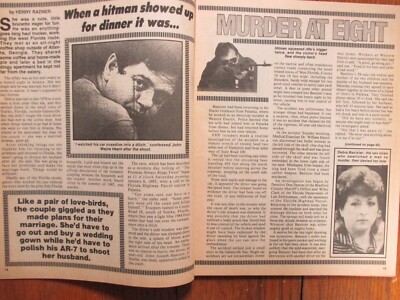
The gunman was not a burglar, not a stranger who wandered in off the street. According to trial testimony, he was a man hired for $10,000 by Sandra’s own husband, Robert Black, who expected to collect a $175,000 life insurance payout when she was dead. [1]
© Mapbox © OpenStreetMap
The man who pulled the trigger, John Wayne Hearn, had marketed himself the way someone might advertise yard work or moving services: through a small ad in the back pages of Soldier of Fortune magazine, offering his skills for “high-risk assignments.” [1]
That brief classified would help send Robert Black to the death chamber, give Hearn a life sentence, and drag a national magazine into years of litigation over when an advertisement becomes an invitation to murder. [1]
This is the story that began in a quiet Texas house and ended in a courtroom fight over the First Amendment.
Sandra Black’s killing was as domestic as violence can be: she was shot to death at her family home in Bryan on February 21, 1985. [1]
By the time Robert Black went to trial, prosecutors laid out a stark financial motive. Testimony showed that he had arranged to pay $10,000 to a gunman, John Wayne Hearn, to kill his wife so he could collect a $175,000 life insurance benefit. [1]
This was not a crime of sudden rage as it was presented in court. It was a transaction — money for murder — and the crucial connection between husband and hit man was a magazine a world away from Bryan, Texas.
In 1985, Soldier of Fortune was known for its gritty aesthetic and its sprawling classified section aimed at military enthusiasts, security contractors, and would‑be adventurers. Among the ads that year was a small notice placed by John Wayne Hearn. [1]
Hearn’s classified offered his services for “high-risk assignments,” the kind of vague but menacing phrase that could mean anything from security work to something much darker. [1]
Robert Black found Hearn through that classified ad. [1]
By the time the case reached court, the sequence was clear enough for a jury to follow: a husband looking for someone to kill his wife, a gunman essentially advertising for dangerous work, and a national magazine acting—however unintentionally—as the bridge between them. [1]
John Wayne Hearn did not remain in the shadows for long. At some point after the murder, he admitted killing Sandra Black. [1]
His confession came with a bargain. In exchange for a life prison term, Hearn agreed to testify against Robert Black. [1]
In court, Hearn’s testimony dovetailed with other evidence that Robert Black had paid him $10,000 to carry out the killing for the life insurance money. [1] It was the ultimate betrayal of a wife by her husband, made possible by a stranger who sold his willingness to take “high-risk” work to anyone who read the classifieds. [1]
Hearn walked away from the death penalty with that deal, serving life in prison. [1] Robert Black did not.
Robert Black was not just a husband and defendant. He was a 45‑year‑old former Marine captain when the state of Texas executed him by lethal injection at the state prison early on May 23, 1992. [1]
He was put to death for hiring a killer through a magazine advertisement to murder his wife. [1]
As his case moved through its final stages, Black’s lawyers tried a new argument that had never been brought up at his trial. [1] They contended that he had been led to have his wife killed because he was suffering from post‑traumatic‑stress syndrome brought on by his combat service in Vietnam. [1]
The claim did not persuade the courts. The United States Supreme Court, by a 6–3 vote, denied him a stay of execution. [1] Justices Harry Blackmun, Sandra Day O’Connor and John Paul Stevens dissented. [1]
With that, the legal fight over Robert Black’s life ended. But the legal fight over the magazine that carried John Wayne Hearn’s ad was still building.
Sandra Black’s family did not stop with the criminal justice system. They also turned to civil court and sued Soldier of Fortune magazine, arguing that the publication shared responsibility for her death because it ran Hearn’s classified advertisement. [1]
In 1988, a jury agreed. It found Soldier of Fortune liable for Mrs. Black’s death and ordered the magazine to pay $9.4 million to the Blacks’ son and Sandra Black’s mother. [1]
For publishers and press‑freedom lawyers, the verdict was chilling. If a magazine could be punished for printing a vaguely worded ad later linked to a murder, what did that mean for every classifieds page in the country?
In 1989, a Federal appeals court stepped in and threw out the $9.4 million award. [1] The court held that the verdict had imposed too high a standard on the magazine, warning that upholding it could discourage publishers from accepting ambiguously worded advertisements. [1]
In Sandra Black’s case, the magazine ultimately escaped financial liability. But the question the lawsuit raised — when does an ad pose an unreasonable risk to the public? — did not go away.
It would take another killing tied to another Soldier of Fortune classified to push that debate to the edge of the Supreme Court.
In 1985, the same year Sandra Black was murdered, an unemployed Vietnam veteran named Michael Savage sent Soldier of Fortune a classified ad under an unmistakable headline: “Gun for Hire.” [2]
ASSA 2025 - Sandra Black 01.jpg
In the ad, Savage described himself as a “37-year-old professional mercenary (who) is discrete (sic) and very private. Body guard, courier and other special skills. All jobs considered.” [2] The ad even included his address and phone number. [2]
Savage would later testify that he had been looking for work as a security guard. Instead, he accepted an offer to kill a man named Richard Braun. [2]
On August 26, 1985, Michael Savage and another man ambushed Richard Braun in the driveway of Braun’s suburban Atlanta home. [2] They shot and killed Braun, and the attack also wounded Braun’s 16‑year‑old son. [2] The killers were convicted and sentenced to prison. [2]
Once again, a family turned their loss into a civil case against Soldier of Fortune. The Brauns filed a wrongful‑death suit, arguing that the magazine’s decision to run Savage’s ad had helped facilitate the killing. [2]
A jury found Soldier of Fortune liable and handed down a $4.3‑million verdict. [2] The magazine’s owners said that amount would be “fatal” to the 17‑year‑old publication’s existence. [2]
Unlike in the Black case, this verdict would survive.
On appeal in the Braun case, Soldier of Fortune’s lawyers argued that the First Amendment sharply limited when publishers could be punished for running an ad. [2] In their view, a publication could face damages only when it specifically solicited a crime. [2] The magazine’s attorneys said they would not have printed an advertisement that openly solicited illegal activity. [2]
But the appeals court saw it differently. It ruled that Soldier of Fortune could be held liable because the ad posed an “unreasonable risk of... substantial harm to the public.” [2] The court concluded that the First Amendment does not shield the publication of an advertisement that “on its face makes it apparent that there is a substantial danger of harm to the public.” [2]
In other words, if an ad read like an offer to commit violent crime, a publisher could not hide behind press freedom.
The magazine took the fight toward the Supreme Court, warning through its lawyers that the lower court ruling “opens the floodgates for unprecedented and crippling lawsuits against publishers.” [2] Press groups including the Magazine Publishers of America and the National Newspaper Association urged the justices to hear the case and reverse the decision. [2]
By then, the stakes were obvious. In 1991, $30.4 billion in advertising was placed in American newspapers, about one‑third of it—$10.5 billion—coming from classified ads. [2] On a typical Sunday, papers like the Los Angeles Times, the Washington Post and the New York Times ran more than 50 pages of classifieds. [2]
If one “Gun for Hire” ad could bring down a $4.3 million judgment against a niche magazine, editors and publishers across the country wanted to know: where exactly was the line? [2]
The Supreme Court’s response was terse. It dismissed the appeal in Soldier of Fortune v. Braun (No. 92‑817) without comment or dissent. [2] The Court’s refusal to hear a case does not set a binding national precedent, and no justice publicly dissented. [2] The Court, the article noted, had never ruled directly on what level of protection publishers should receive when they print advertisements. [2]
Still, press lawyers said the case marked the first time the high court had effectively upheld a damage award against a publisher for printing an advertisement written by someone else. [2] The Braun verdict remained standing.
Side by side, the Black and Braun cases sketched an uneasy boundary. In Sandra Black’s case, an appellate court threw out a $9.4 million judgment against Soldier of Fortune, worried about chilling “ambiguously worded” ads. [1] In the Braun case, courts let stand a $4.3 million verdict where the advertisement’s “Gun for Hire” message and wording made the danger obvious on its face. [2]
John Wayne Hearn’s ad for “high-risk assignments” never became the centerpiece of a Supreme Court opinion. [1][2] But the path it opened — from the back of a magazine to a woman’s murder in her own home — helped force courts to grapple with what happens when speech and commerce brush up against paid violence. [1]
Hearn admitted he killed Sandra Black and secured a life prison term by testifying against the man who had hired him. [1] Robert Black, a former Marine captain, died by lethal injection in 1992 after the Supreme Court rejected his final plea that war‑induced trauma had led him to have his wife killed. [1]
Sandra Black’s death did more than unravel a family. It pulled a glossy, high‑adventure magazine into court and helped define how far a publisher can go before an ad stops being protected speech and starts being a foreseeable instrument of harm. [1][2]
ASSA 2025 - CSWEP Award Tesar and Black.jpg
At the center of it all was a stark, simple transaction: $10,000 for a human life, arranged through a few lines of small print. [1]
Adapted from Wikipedia: John Wayne Hearn.
This case file is an original Bloody Likely narrative synthesis based on the cited sources. Article © Bloody Likely. All rights reserved. Source materials remain the property of their respective owners. Facts, public records, quotations, and cited references are used for reporting, research, commentary, and documentation. Bloody Likely content license
No recent news articles found for this case. Check back later for updates.
No evidence found for this case. Be the first to submit evidence in the comments below.
Join the discussion
Loading comments...
Robert K. Brown founds Soldier of Fortune magazine.
Soldier of Fortune sells 120,000 copies per month, becoming popular.
John Wayne Hearn kills Sandra Black for a payment arranged via SOF ad.
Sandra Black's family files a wrongful-death lawsuit against SOF.
Four men convicted of conspiracy to murder Richard Braun, linked to SOF ad.
Court reverses jury's decision against SOF regarding the Black case.
Supreme Court allows jury's award against SOF to stand in Braun case.
Soldier of Fortune publishes its last print edition.
Susan Katz Keating buys Soldier of Fortune from Robert K. Brown.
Keating publishes investigative series on cocaine found in the Biden White House.