ANALYZING EVIDENCE
Processing case files...
Processing case files...
Alaska Serial Killer Case
CLASSIFICATION: Serial Homicide
LOCATION
Anchorage, Alaska
TIME PERIOD
1994-2007
VICTIMS
5 confirmed
Joshua Alan Wade, an American serial killer, was convicted of two murders committed in Alaska in 2000 and 2007, and sentenced to 99 years imprisonment. He pled guilty to one murder to avoid execution and later confessed to three additional murders dating back to 1994 as part of a plea deal. Wade died in custody on June 14, 2024, marking the case as solved with a total of five confirmed victims.
The community theories surrounding Joshua Wade's case speculate on the motivations behind his violent behavior, particularly his expressed hatred towards women and Alaska Natives, which some believe could have stemmed from his traumatic childhood experiences and failed relationships. Additionally, there is speculation regarding the potential for more undiscovered victims, given his confessions and the span of his criminal activities. The plea deal he accepted to confess to additional murders also raises questions about the reliability of his confessions and whether he might have been involved in other unsolved cases.
By 2014, Joshua Wade was already exactly where Alaska wanted him: convicted in two notorious Anchorage murders and facing the rest of his life behind bars. [1]
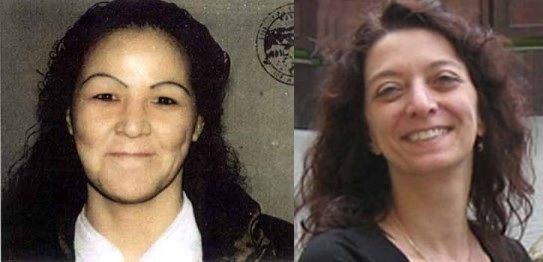
He had pleaded guilty to carjacking and killing his neighbor, 52‑year‑old Mindy Schloss, in 2007. [1][2] As part of the same 2009 deal, he admitted he had murdered another Anchorage resident, Della Brown, back in 2000. [1][2]
State and federal judges stacked the punishment high. Alaska’s Superior Court handed down 99 years to serve. [1] A federal judge then added a consecutive life sentence with no possibility of parole. [1] On paper, Wade would die in custody even if he somehow won parole from the state case decades down the line. [1]
But in a 2010 sentencing hearing, when a judge called him a coward, Wade said something that chilled the courtroom: “What about the men?” [2]
At the time, no one knew exactly what he meant. Four years later, Alaska would find out.
By the late 2000s, Joshua Wade’s name was already linked to two women whose deaths had shaken Anchorage.
Seven years later, he targeted a neighbor, Mindy Schloss, an Anchorage resident. [2] In 2009, Wade pleaded guilty in federal court to carjacking and killing Schloss in 2007. [1][2] That plea bundled in his admission to Brown’s murder, resolving both cases in one sweeping conviction. [1]
For that combination of crimes, the Alaska Superior Court sentenced Wade to 99 years to serve, with the structure of the original sentences requiring he serve at least 66 years before he could even be considered for state parole. [1] At the same time, the United States District Court imposed a consecutive sentence of life in prison without the possibility of parole. [1] Should he ever leave state custody, he would go straight into the federal system to serve the balance of that life sentence. [1]
By any conventional measure, those cases were over. Closure, to the extent the word can apply, had been delivered. But investigators and families would later learn that during those same proceedings, Wade was already gesturing toward a wider trail of victims.
Years into his incarceration, Wade reached a new agreement with state and federal law enforcement. [1]
Under that deal, he agreed to provide information about three additional murders he claimed to have committed. [1][2] In return, prosecutors agreed to transfer him from an Alaska state prison to a maximum‑security federal facility outside the state, where he would serve his life sentence. [1]
State and federal investigators later said Wade had confessed to killing three men: one in Anchorage in 1994, another in 1999, and a third unidentified man on the same night he murdered Della Brown in 2000. [1][2]
Law enforcement soon concluded that the 1994 and 1999 killings Wade described likely referred to two long‑cold unsolved Anchorage homicides: the shootings of 38‑year‑old John Michael Martin and 30‑year‑old Henry Ongtowasruk. [1] Their families were contacted and told a convicted killer had claimed responsibility for the deaths of their loved ones. [1][2]
In June 2014, those revelations became public. An Anchorage Daily News story laid out Wade’s claims and the old cases they might finally explain. [2]
John Michael Martin’s death had been a mystery for two decades by the time Wade invoked a 1994 killing. [1][2]
On a night in May 1994, Martin was found dead from a single gunshot wound to the back of his head. [2] His body lay beside a bike trail along Anchorage’s Northern Lights Boulevard. [2]
Martin was a familiar figure in the neighborhood. He often came to a nearby Village Inn restaurant for at least five years, typically sitting down for coffee with friends. [2] On the night he died, he left the restaurant to walk home around 2:30 a.m. His body was discovered about 30 minutes later. [2]
Police said Martin was unemployed but not homeless. [2] According to his sister, Joan Woodard, and earlier reporting, he lived with schizophrenia and received treatment through Southcentral Counseling, where many of his friends were also outpatients. [2]
After his killing, fliers with his picture went up around town, and detectives scoured for leads. [2] Then‑Detective Leo Brandlen said at the time that he had no clues and had exhausted every lead he had. [2] The case stalled.
Two decades later, Wade told Anchorage Police detectives and FBI agents that he was responsible for killing a man in Anchorage in 1994. [1] In a lengthy interview with authorities, he specifically took responsibility for Martin’s death, a killing he said he committed when he was just 14. [2] Law enforcement announced they believed the 1994 homicide he was describing was Martin’s. [1]
Presbyterian Orphans' Home - report of contributions on support fund and equipment fund from churches, Sunday schools, societies, and individuals, for the year ending October 1st, 1921 (IA presbyterianorph5065pres).pdf
Wikimedia Commons· Public domain
For Martin’s family, the news, conveyed by investigators, brought a complicated sense of movement in a case long frozen in place. Anchorage police Sgt. Slawomir Markiewicz said Martin’s relatives in Washington state were encouraged by the update. [2]
The second cold case Wade allegedly claimed was his own reached back to December 1999.
That winter, 30‑year‑old Henry Ongtowasruk was found dead in Room 221 of the Alaska Budget Motel in Anchorage’s Fairview neighborhood. [2] A maintenance worker at the motel discovered his body. [2]
The state medical examiner determined Ongtowasruk had been killed and had been dead for about two days by the time he was found. [2] He had been staying at the motel a week or more at a time over the previous couple of years. [2] According to reporting later cited by investigators, he had a mental‑health case manager, and his $194 weekly rent was paid by the state. [2]
Ongtowasruk’s obituary noted he was born in the northwestern Alaska village of Wales, connecting his life in Anchorage to a much smaller community on the state’s far edge. [2]
In his confession deal, Wade told authorities that he killed a man in Anchorage in 1999. [1] Investigators concluded he was likely referring to Ongtowasruk. [1][2] Law enforcement notified Ongtowasruk’s family that Wade had claimed responsibility for his death. [1][2]
As with Martin, the claim did not immediately translate into a closed case. It did, however, breathe new urgency into a file that had once looked destined to gather dust indefinitely.
The third killing Wade described reaches back to the same night in 2000 when he murdered Della Brown. [1]
He told investigators he killed an unidentified man that night. [1][2] According to his later account, the man had been with him in the Spenard shed where Brown was killed. [2] Wade said he knocked the man out, placed him in the trunk of his car, and later violently assaulted him when the man started thumping around, before driving him out of town and killing him. [2]
In a subsequent phone interview with Anchorage television station KTVA, Wade repeated the story and claimed he had driven “out to the Valley,” taken the man out, removed his clothes, and shot him with a shotgun. [2]
© Mapbox © OpenStreetMap
It was a brutal narrative, and one that has never been matched to an identified victim. Wade described the man as unknown, and officials have not publicly tied his account to any specific missing person or body. [1][2]
Investigators have acknowledged that some of Wade’s descriptions of this third killing — as well as references to other “potential” victims — vary in specificity and detail, raising questions about which parts of his account can be substantiated. [2]
For Wade, the confessions had a clear practical payoff.
In 2014, Alaska Department of Corrections and Federal Bureau of Prisons records showed he was transferred from Spring Creek Correctional Facility in Seward to federal custody in February. [2] As part of his agreement with prosecutors, he was moved to a maximum‑security federal prison outside Alaska to serve his life sentence — a facility identified in reporting as the federal penitentiary in Terre Haute, Indiana. [1][2]
In that KTVA interview, Wade said bluntly that he had made the new admissions in order to get out of state custody, where he claimed he was not being treated well. [2]
At the time, state prosecutors were also navigating a legal counter‑move by Wade himself. He had filed a notice for post‑conviction relief, attempting to backtrack on his prior confessions to killing Schloss and Brown. [2] Assistant Attorney General John Novak later said that post‑conviction case was dismissed on June 10. [2]
With that dismissed, the original convictions — and the towering sentences attached to them — stood firm. Whatever Wade revealed about other crimes would not reduce the time he would spend in a cell. As Novak put it, rhetorically, “How many life sentences can somebody get?” [2] He predicted that Wade would “take his last breath in a cage.” [2]
Wade’s new confessions forced Alaska’s criminal justice system to reopen some of its oldest wounds.
The Alaska Department of Law, the U.S. Attorney’s Office for the District of Alaska, the Anchorage Police Department, and the FBI’s Alaska office formed a joint effort to investigate his claims. [1] They set out to determine whether Wade’s statements about three additional murders were, in their words, “truthful and accurate.” [1]
Law enforcement circulated a joint announcement:
Families of Martin and Ongtowasruk were formally notified and asked for privacy as the investigation continued. [1] Law enforcement likewise urged media outlets to respect those families’ rights while the cases remained active and under review. [1]
To the public, officials delivered a different message: if anyone had information that had not previously been shared with law enforcement, now was the time. They asked people to contact Anchorage Police Detective Sgt. Slawomir Markiewicz or the FBI’s Anchorage office, or to use Crime Stoppers to remain anonymous. [1]
Anchorage police Chief Mark Mew said his department would investigate every one of Wade’s claims. [2] But he added a note of caution: investigators were not equally confident about all of them. [2]
That skepticism tracked with the tone from prosecutors. Novak said Wade had not offered meaningful details about any additional potential victims beyond the three men he had already described. [2] Officials, he emphasized, were focused on whatever could bring closure to the families of people already known to be dead. [2]
At the federal level, U.S. Attorney Karen Loeffler declined to speculate about why Wade might have killed the men he now claimed as victims, past saying that his actions appeared “situational” rather than predatory. [2]
Even with a confession in hand, solving a homicide is rarely simple. Wade’s case underscores just how fraught that process can be when the only new witness is a convicted killer with little to gain — and little left to lose.
Officials have been explicit: they are still following up on Wade’s admissions to determine whether his claims are accurate. [1] Because those investigations remain open and active, they have declined to release further details. [1]
Privately, investigators must weigh the specificity of Wade’s descriptions against the physical and historical record of each crime. Publicly, they have acknowledged discrepancies. Some of Wade’s stories, including graphic accounts of the unidentified man said to have been killed on the night of Della Brown’s murder, go into lurid detail. [2] In contrast, prosecutors say he has not provided concrete information about any other potential unnamed victims. [2]
Those inconsistencies affect how much confidence investigators place in each claim. [2] They also shape a larger unanswered question: how far Wade’s violence really extended.
Officials have said they have yet to decide whether Wade will ever face new trials for the deaths of Martin or Ongtowasruk, even if his confessions about those cases are fully corroborated. [2]
In the meantime, state and federal agencies say they will keep working together “to solve crimes committed by Wade and provide closure for victims’ families.” [1]
“What about the men?” Wade asked in 2010, when his known victims were two women whose names and stories had already become part of Anchorage’s grim history. [2]
The men he seems to have been referring to — Martin, Ongtowasruk, and an unidentified stranger from a shed in Spenard — came from the margins in different ways. Two lived with profound mental‑health challenges and relied on social services to stay afloat. [2] One walked home from late‑night coffee, another holed up in a budget motel, the third known to the public only through the disturbing story of a man who has already admitted to multiple murders. [2]
All three, like Brown and Schloss before them, are now part of a single, expanding file labeled with one name: Joshua Wade. [1][2]
Wade is unlikely to ever leave prison. He has been transferred to a maximum‑security federal facility where, under the terms of his state and federal sentences, he is expected to spend the rest of his life without the possibility of parole. [1]
For the families left behind, that reality may offer some measure of safety. It does not, on its own, answer the questions that still hang over Anchorage’s older unsolved homicides — or over Wade’s own cryptic challenge from the defense table.
Whether his words ultimately help close those cases, or simply deepen their mystery, is a decision now in the hands of detectives, prosecutors, and the slow grind of forensic work. Until that process is done, the men at the heart of Wade’s question remain in an uneasy place between rumor and resolution.
Adapted from Joshua Wade - Wikipedia.
This case file is an original Bloody Likely narrative synthesis based on the cited sources. Article © Bloody Likely. All rights reserved. Source materials remain the property of their respective owners. Facts, public records, quotations, and cited references are used for reporting, research, commentary, and documentation. Bloody Likely content license
Audio narration © Bloody Likely. All rights reserved. The audio player is provided for personal streaming/listening only.
No recent news articles found for this case. Check back later for updates.
No evidence found for this case. Be the first to submit evidence in the comments below.
Join the discussion
Loading comments...
Joshua Wade murders John Michael Martin, found shot dead.
Wade kills Della Brown and leaves her body in a shed.
Wade kidnaps and murders Mindy Schloss, a nurse practitioner.
Wade is apprehended after holding hostages at gunpoint.
Wade pleads guilty to Schloss' murder to avoid death penalty.
Wade confesses to three more murders in exchange for a transfer.
Wade found unresponsive in his cell and pronounced dead.