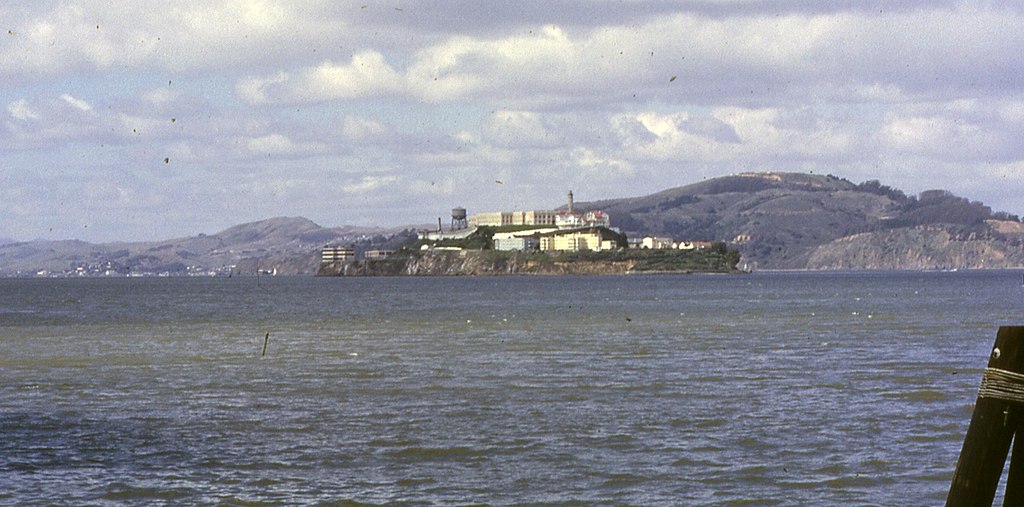
June 1962 Alcatraz Escape
Prison Escape Case
CLASSIFICATION: Missing Person
LOCATION
San Francisco, California
TIME PERIOD
June 11-12, 1962
VICTIMS
0 confirmed
On the night of June 11, 1962, inmates Frank Morris and brothers Clarence and John Anglin escaped from Alcatraz Federal Penitentiary in San Francisco, California, using improvised tools to break through ventilation ducts and an unguarded utility corridor. Despite extensive investigations by the FBI and local law enforcement, the case remains officially unsolved, with the FBI concluding in 1979 that the men likely drowned in San Francisco Bay during their escape attempt.
Theories surrounding the June 1962 Alcatraz escape speculate on the fate of the escapees, with the FBI concluding they likely drowned in the cold waters of San Francisco Bay. However, the lack of conclusive evidence has led to ongoing speculation about their survival, with some community members suggesting they may have successfully reached the mainland and started new lives. Theories are fueled by numerous leads pursued over the years, yet none have definitively resolved the mystery of what happened to Frank Morris and the Anglin brothers.
The June 1962 Alcatraz Escape: A Tale of Daring and Mystery
Overview
On the night of June 11, 1962, three inmates made a legendary escape from Alcatraz Federal Penitentiary, a maximum-security prison perched on Alcatraz Island in San Francisco Bay, California. Frank Morris, along with brothers Clarence and John Anglin, executed a meticulously planned escape that has since captivated the imagination of the public and investigators alike. However, despite extensive searches and countless theories, their fate remains a chilling mystery.
Key Details:
- Date: June 11–12, 1962
- Time: Approximately 10:30 p.m. (UTC–7)
- Location: Alcatraz Federal Penitentiary, Alcatraz Island, San Francisco, California, U.S.
The Escape Plan
The Escapees
Frank Morris
Frank Lee Morris was born on September 1, 1926, in Washington, D.C. Orphaned at age 11, he spent his youth in foster homes and quickly fell into a life of crime. He was convicted of his first offense at 13 and became well-known for his intelligence, scoring in the top 2% of the population on IQ tests (133). After numerous arrests, including for armed robbery and grand larceny, he was sentenced to ten years for bank robbery and ended up at Alcatraz on January 20, 1960, as inmate number AZ1441.
John and Clarence Anglin
Brothers John William Anglin, born May 2, 1930, and Clarence Anglin, born May 11, 1931, came from a large family in Donalsonville, Georgia. They became notorious for their bank robberies in the early 1950s, typically opting for non-violent methods. They were sentenced to 35 years for a bank robbery in Alabama and were eventually transferred to Alcatraz, with John arriving on October 24, 1960 (inmate AZ1476) and Clarence on January 16, 1961 (inmate AZ1485).
Allen West
Allen West, born March 25, 1929, in New York City, was also part of the escape plan. He had a history of arrests, predominantly for car theft, and was sent to Alcatraz in 1957 as inmate AZ1335. West, Morris, and the Anglin brothers had forged a bond during their time in the same facilities in Florida and Georgia, which would later facilitate their escape planning.
Formulating the Escape
The escape plan began to take shape in December 1961 when the four inmates were assigned adjacent cells. Under Morris's leadership, they started to widen the ventilation ducts in their cells using improvised tools, including discarded saw blades, metal spoons, and even an electric drill made from a vacuum cleaner motor. They cleverly concealed their work with painted cardboard and masked the sounds by playing music with Morris's accordion during the daily music hour.
After months of labor, they managed to break through to an unguarded utility corridor behind their cells. They then accessed a vacant section of the cellblock, where they set up a makeshift workshop. Using over fifty raincoats, they constructed life preservers based on a design from Popular Mechanics, and even stitched together a rubber raft measuring six-by-fourteen feet, sealing it with liquid plastic and heat from steam pipes. They also fashioned paddles from plywood.
To mask their absence during the escape, they created dummy heads from a mixture of soap, toothpaste, concrete dust, and toilet paper, painting them to look realistic and using hair collected from the barbershop floor. On the night of June 11, they tucked these heads under their blankets, making it appear as though they were still sleeping.
The Escape Night
On the evening of June 11, the plan was set in motion. However, West encountered a setback when the cement he used to reinforce his vent had hardened, trapping him. By the time he managed to escape, Morris and the Anglins had already departed.
From the utility corridor, Morris and the Anglins climbed to the roof of the prison. A loud crash alerted the guards, but they failed to investigate further. They then descended a 50-foot kitchen vent pipe, navigated through two 12-foot barbed-wire fences, and reached the northeast shoreline, which was a blind spot for the prison's searchlights.
Using a concertina stolen from another inmate as a bellows, they inflated their makeshift raft and launched it around 10:00 p.m. Toward Angel Island, just two miles away, they paddled into the uncertain depths of San Francisco Bay.
Discovery and Investigation
The escape went unnoticed until the morning of June 12, when guards discovered the ruse of the dummy heads. In the days that followed, multiple agencies launched a massive search, scouring air, land, and sea. The Coast Guard discovered a paddle floating about 200 yards off Angel Island, and workers found a wallet belonging to the Anglins nearby.
On June 21, remnants of the raft were found on a beach near the Golden Gate Bridge, alongside a deflated life jacket. The FBI soon concluded that the men likely drowned in the bay’s frigid waters, citing the absence of personal belongings and human remains as evidence of their tragic fate.
However, the investigation did not end there. There were numerous reported sightings of the escapees over the years, with family members occasionally receiving postcards that sparked speculation about their survival.
The Aftermath
Allen West, the only conspirator who did not escape, cooperated with authorities and was not charged for his role. After a transfer to McNeil Island and then back to Atlanta Penitentiary, he was released in 1967, only to face further legal troubles, including a murder conviction in 1972.
Alcatraz itself closed on March 21, 1963, due to operational costs and deterioration. The FBI officially closed its investigation on December 31, 1979, concluding that Morris and the Anglin brothers likely drowned. However, the U.S. Marshals Service retains an open case on the trio, with leads still coming in as of 2009.
Reported Sightings and Theories
In the years following the escape, numerous reported sightings emerged, including rumors that Clarence Anglin was living in Brazil. Family members received mysterious postcards, and some claimed to have spotted the brothers in various states across the U.S. An anonymous letter claiming to be from John Anglin surfaced in 2013, asserting that he was alive and negotiating his surrender.
In 2015, a documentary presented evidence suggesting a raft had been found on Angel Island the day after the escape, leading to theories that the brothers might have survived. Further studies into ocean currents concluded that, under specific conditions, reaching land was possible.
Cultural portrayals of the escape have also kept the story alive, with films and documentaries exploring the events surrounding the infamous breakout.
Conclusion
The June 1962 Alcatraz escape remains one of the most captivating and debated escape attempts in American history. While the FBI concluded that the escapees likely drowned, the lack of conclusive evidence has allowed for a plethora of theories, speculation, and folklore to flourish around the fates of Frank Morris and the Anglin brothers. Their daring escape continues to be a subject of intrigue, challenging the boundaries of truth and myth in the realm of true crime.
Sources
- Bruce, J. Campbell (April 1, 2005). Escape from Alcatraz. Ten Speed Press. ISBN 978-1-58008-678-3.
- DeNevi, Don (December 31, 1990). Riddle of the Rock: The Only Successful Escape from Alcatraz. Prometheus Books. ISBN 978-0-87975-647-5.
- FBI Investigation File 76-26295.
- Milton, Giles (2016). Escape from Alcatraz. Fascinating Footnotes from History. London: John Murray. ISBN 9781473624993.
- Zimmerman, Keith; Zimmerman, Kent; Hyneman, Jamie; Savage, Adam; Rees, Peter (2005). Mythbusters: The Explosive Truth Behind 30 of the Most Perplexing Urban Legends of All Time. Simon & Schuster. ISBN 978-1-4169-0929-3.
For further reading, check out the detailed Wikipedia article on the June 1962 Alcatraz escape.
No Recent News
No recent news articles found for this case. Check back later for updates.
No Evidence Submitted
No evidence found for this case. Be the first to submit evidence in the comments below.
Join the discussion
Loading comments...
Alcatraz Escape Begins
Inmates Frank Morris and the Anglin brothers escape from Alcatraz using improvised tools and a raft.
Escape Discovered
The escape is discovered when guards check the cells and find dummy heads in the beds.
First Clue Found
A Coast Guard cutter finds a paddle floating near Angel Island, indicating the escapees' possible route.
Raft Remnants Found
Shreds of raincoat material believed to be from the escape raft are found near the Golden Gate Bridge.
Body Sighted
A Norwegian ship spots a body floating in the ocean, raising speculation about the fate of the escapees.
FBI Case Closed
The FBI officially closes its investigation, concluding that the escapees likely drowned.
Letter from Anglin
A letter allegedly from John Anglin is received, claiming he is alive and negotiating for medical treatment.
Age-Progressed Drawings Released
The U.S. Marshals Service releases age-progressed drawings of the missing escapees.
On the night of June 11, 1962, inmates Frank Morris and brothers Clarence and John Anglin escaped from Alcatraz Federal Penitentiary in San Francisco, California, using improvised tools to break through ventilation ducts and an unguarded utility corridor. Despite extensive investigations by the FBI and local law enforcement, the case remains officially unsolved, with the FBI concluding in 1979 that the men likely drowned in San Francisco Bay during their escape attempt.
Theories surrounding the June 1962 Alcatraz escape speculate on the fate of the escapees, with the FBI concluding they likely drowned in the cold waters of San Francisco Bay. However, the lack of conclusive evidence has led to ongoing speculation about their survival, with some community members suggesting they may have successfully reached the mainland and started new lives. Theories are fueled by numerous leads pursued over the years, yet none have definitively resolved the mystery of what happened to Frank Morris and the Anglin brothers.
The June 1962 Alcatraz Escape: A Tale of Daring and Mystery
Overview
On the night of June 11, 1962, three inmates made a legendary escape from Alcatraz Federal Penitentiary, a maximum-security prison perched on Alcatraz Island in San Francisco Bay, California. Frank Morris, along with brothers Clarence and John Anglin, executed a meticulously planned escape that has since captivated the imagination of the public and investigators alike. However, despite extensive searches and countless theories, their fate remains a chilling mystery.
Key Details:
- Date: June 11–12, 1962
- Time: Approximately 10:30 p.m. (UTC–7)
- Location: Alcatraz Federal Penitentiary, Alcatraz Island, San Francisco, California, U.S.
The Escape Plan
The Escapees
Frank Morris
Frank Lee Morris was born on September 1, 1926, in Washington, D.C. Orphaned at age 11, he spent his youth in foster homes and quickly fell into a life of crime. He was convicted of his first offense at 13 and became well-known for his intelligence, scoring in the top 2% of the population on IQ tests (133). After numerous arrests, including for armed robbery and grand larceny, he was sentenced to ten years for bank robbery and ended up at Alcatraz on January 20, 1960, as inmate number AZ1441.
John and Clarence Anglin
Brothers John William Anglin, born May 2, 1930, and Clarence Anglin, born May 11, 1931, came from a large family in Donalsonville, Georgia. They became notorious for their bank robberies in the early 1950s, typically opting for non-violent methods. They were sentenced to 35 years for a bank robbery in Alabama and were eventually transferred to Alcatraz, with John arriving on October 24, 1960 (inmate AZ1476) and Clarence on January 16, 1961 (inmate AZ1485).
Allen West
Allen West, born March 25, 1929, in New York City, was also part of the escape plan. He had a history of arrests, predominantly for car theft, and was sent to Alcatraz in 1957 as inmate AZ1335. West, Morris, and the Anglin brothers had forged a bond during their time in the same facilities in Florida and Georgia, which would later facilitate their escape planning.
Formulating the Escape
The escape plan began to take shape in December 1961 when the four inmates were assigned adjacent cells. Under Morris's leadership, they started to widen the ventilation ducts in their cells using improvised tools, including discarded saw blades, metal spoons, and even an electric drill made from a vacuum cleaner motor. They cleverly concealed their work with painted cardboard and masked the sounds by playing music with Morris's accordion during the daily music hour.
After months of labor, they managed to break through to an unguarded utility corridor behind their cells. They then accessed a vacant section of the cellblock, where they set up a makeshift workshop. Using over fifty raincoats, they constructed life preservers based on a design from Popular Mechanics, and even stitched together a rubber raft measuring six-by-fourteen feet, sealing it with liquid plastic and heat from steam pipes. They also fashioned paddles from plywood.
To mask their absence during the escape, they created dummy heads from a mixture of soap, toothpaste, concrete dust, and toilet paper, painting them to look realistic and using hair collected from the barbershop floor. On the night of June 11, they tucked these heads under their blankets, making it appear as though they were still sleeping.
The Escape Night
On the evening of June 11, the plan was set in motion. However, West encountered a setback when the cement he used to reinforce his vent had hardened, trapping him. By the time he managed to escape, Morris and the Anglins had already departed.
From the utility corridor, Morris and the Anglins climbed to the roof of the prison. A loud crash alerted the guards, but they failed to investigate further. They then descended a 50-foot kitchen vent pipe, navigated through two 12-foot barbed-wire fences, and reached the northeast shoreline, which was a blind spot for the prison's searchlights.
Using a concertina stolen from another inmate as a bellows, they inflated their makeshift raft and launched it around 10:00 p.m. Toward Angel Island, just two miles away, they paddled into the uncertain depths of San Francisco Bay.
Discovery and Investigation
The escape went unnoticed until the morning of June 12, when guards discovered the ruse of the dummy heads. In the days that followed, multiple agencies launched a massive search, scouring air, land, and sea. The Coast Guard discovered a paddle floating about 200 yards off Angel Island, and workers found a wallet belonging to the Anglins nearby.
On June 21, remnants of the raft were found on a beach near the Golden Gate Bridge, alongside a deflated life jacket. The FBI soon concluded that the men likely drowned in the bay’s frigid waters, citing the absence of personal belongings and human remains as evidence of their tragic fate.
However, the investigation did not end there. There were numerous reported sightings of the escapees over the years, with family members occasionally receiving postcards that sparked speculation about their survival.
The Aftermath
Allen West, the only conspirator who did not escape, cooperated with authorities and was not charged for his role. After a transfer to McNeil Island and then back to Atlanta Penitentiary, he was released in 1967, only to face further legal troubles, including a murder conviction in 1972.
Alcatraz itself closed on March 21, 1963, due to operational costs and deterioration. The FBI officially closed its investigation on December 31, 1979, concluding that Morris and the Anglin brothers likely drowned. However, the U.S. Marshals Service retains an open case on the trio, with leads still coming in as of 2009.
Reported Sightings and Theories
In the years following the escape, numerous reported sightings emerged, including rumors that Clarence Anglin was living in Brazil. Family members received mysterious postcards, and some claimed to have spotted the brothers in various states across the U.S. An anonymous letter claiming to be from John Anglin surfaced in 2013, asserting that he was alive and negotiating his surrender.
In 2015, a documentary presented evidence suggesting a raft had been found on Angel Island the day after the escape, leading to theories that the brothers might have survived. Further studies into ocean currents concluded that, under specific conditions, reaching land was possible.
Cultural portrayals of the escape have also kept the story alive, with films and documentaries exploring the events surrounding the infamous breakout.
Conclusion
The June 1962 Alcatraz escape remains one of the most captivating and debated escape attempts in American history. While the FBI concluded that the escapees likely drowned, the lack of conclusive evidence has allowed for a plethora of theories, speculation, and folklore to flourish around the fates of Frank Morris and the Anglin brothers. Their daring escape continues to be a subject of intrigue, challenging the boundaries of truth and myth in the realm of true crime.
Sources
- Bruce, J. Campbell (April 1, 2005). Escape from Alcatraz. Ten Speed Press. ISBN 978-1-58008-678-3.
- DeNevi, Don (December 31, 1990). Riddle of the Rock: The Only Successful Escape from Alcatraz. Prometheus Books. ISBN 978-0-87975-647-5.
- FBI Investigation File 76-26295.
- Milton, Giles (2016). Escape from Alcatraz. Fascinating Footnotes from History. London: John Murray. ISBN 9781473624993.
- Zimmerman, Keith; Zimmerman, Kent; Hyneman, Jamie; Savage, Adam; Rees, Peter (2005). Mythbusters: The Explosive Truth Behind 30 of the Most Perplexing Urban Legends of All Time. Simon & Schuster. ISBN 978-1-4169-0929-3.
For further reading, check out the detailed Wikipedia article on the June 1962 Alcatraz escape.
No Recent News
No recent news articles found for this case. Check back later for updates.
No Evidence Submitted
No evidence found for this case. Be the first to submit evidence in the comments below.
Join the discussion
Loading comments...
Alcatraz Escape Begins
Inmates Frank Morris and the Anglin brothers escape from Alcatraz using improvised tools and a raft.
Escape Discovered
The escape is discovered when guards check the cells and find dummy heads in the beds.
First Clue Found
A Coast Guard cutter finds a paddle floating near Angel Island, indicating the escapees' possible route.
Raft Remnants Found
Shreds of raincoat material believed to be from the escape raft are found near the Golden Gate Bridge.
Body Sighted
A Norwegian ship spots a body floating in the ocean, raising speculation about the fate of the escapees.
FBI Case Closed
The FBI officially closes its investigation, concluding that the escapees likely drowned.
Letter from Anglin
A letter allegedly from John Anglin is received, claiming he is alive and negotiating for medical treatment.
Age-Progressed Drawings Released
The U.S. Marshals Service releases age-progressed drawings of the missing escapees.