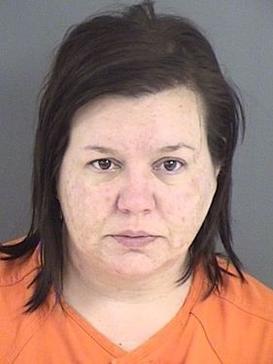
Kimberly Clark Saenz
Healthcare Serial Killer
CLASSIFICATION: Serial Homicide
LOCATION
Lufkin, Texas
TIME PERIOD
2008
VICTIMS
5 confirmed
Kimberly Clark Saenz, a former licensed practical nurse, was apprehended in 2008 for the murder of five patients at a DaVita dialysis center in Lufkin, Texas, where she injected bleach into their dialysis lines. The incidents occurred in the spring of 2008, marked by an alarming increase in emergency medical calls—30 in April alone—compared to only two in the previous 15 months. Saenz was convicted of capital murder and aggravated assault, receiving a sentence of life plus 60 years. Significant evidence included patient medical records indicating unusual spikes in adverse reactions during her shifts, as well as witness testimonies linking her to the patients' deteriorating conditions. She is currently incarcerated at the Patrick O'Daniel Unit of the Texas Department of Criminal Justice.
Investigators and the public theorize that Kimberly Clark Saenz's motivations for killing her patients may have stemmed from a desire for attention or a need to feel powerful in a healthcare setting. Some speculate that her history of drug dependence and previous employment issues contributed to her unstable mental state, leading her to commit these heinous acts. Additionally, there are theories suggesting that the timing and nature of the murders indicate a possible pattern, where Saenz may have been attempting to cover up her own incompetence or mistakes as a nurse.
The Chilling Case of Kimberly Clark Saenz: A Nurse's Descent into Murder
Kimberly Clark Saenz: From Caregiver to Killer
Kimberly Clark Saenz, born Kimberly Clark Fowler on November 3, 1973, in Fall River, Massachusetts, was once a licensed practical nurse entrusted with the care of patients. However, beneath her professional facade lay a sinister persona that would ultimately lead her to become a convicted serial killer. Known for her heinous acts at a Texas dialysis center, Saenz injected bleach into patients' dialysis lines, resulting in multiple deaths and assaults.
Early Life and Troubled Career
Raised in Pollok, Texas, Kimberly's life seemed ordinary. She attended Central ISD, where she was a cheerleader, and it was during her junior year that she learned she was pregnant. The birth of her son marked the end of her high school journey. Determined to carve a path for herself, she earned her high school diploma or equivalency and pursued a vocational nursing license at Angelina College in Lufkin, Texas.
Despite achieving her nursing license, Saenz's career was marred by instability. She was fired from healthcare jobs at least four times, including an incident at Woodland Heights Hospital where she was caught stealing Demerol and cheating on a urine test. Her personal life was equally tumultuous, marked by drug dependence and a 2007 arrest for public intoxication and criminal trespass following a domestic disturbance with her husband.
A String of Mysterious Illnesses
In the spring of 2008, the DaVita dialysis clinic in Lufkin, Texas, where Saenz worked, experienced an alarming rise in medical emergencies. The frequency of emergency calls skyrocketed from just two over the previous 15 months to thirty in April alone. Patients, including Thelma Metcalf, suffered severe health issues, such as excessive heparin administration and cardiac arrests, raising red flags about the clinic's operations.
The situation took a grave turn when Thelma Metcalf and Clara Strange died of cardiac arrest on April 1. In response, DaVita dispatched clinical coordinator Amy Clinton to oversee the clinic. Yet, the unexplained illnesses persisted. Concerned paramedics alerted their supervisors, prompting a covert request for an investigation by state health inspectors.
The Investigation Unfolds
On April 28, 2008, as inspectors scrutinized the clinic, patients Marva Rhone and Carolyn Risinger experienced drastic drops in blood pressure. Witnesses, including patients Linda Hall and Lurlene Hamilton, reported seeing Saenz draw bleach into syringes and inject it into the dialysis lines of Rhone and Risinger. When confronted, Saenz claimed she was cleaning an unused machine, a method against DaVita's corporate policy.
The evidence against Saenz mounted when her cleaning bucket and syringes tested positive for bleach. The clinic was subsequently shut down for two months, and Saenz was dismissed from her position. Despite her suspension, she attempted to secure a receptionist job at a Lufkin medical office, violating her bail conditions.
A pivotal breakthrough came when an epidemiologist from the Centers for Disease Control and Prevention linked Saenz to every incident of patient death in April. Further damning evidence emerged as a search of Saenz's computer revealed Google searches on bleach's lethality. During police questioning, she inadvertently mentioned using bleach before detectives broached the topic. Her explanation involved using syringes for measurement due to a lack of measuring cups.
Forensic Evidence and Arrest
Despite strong forensic evidence and eyewitness accounts, law enforcement and prosecutors initially hesitated to prosecute. The challenge lay in proving that bleach had indeed entered the patients' bloodstreams. At the time, research on detecting bleach in blood was limited.
Enter Mark Sochaski, an analytical chemist and bioterrorism expert, who was developing a test to measure chlorine exposure via chlorotyrosine, an amino acid indicative of contact with chlorinating agents like bleach. Sochaski's tests on samples from the clinic revealed chlorotyrosine peaks, confirming bleach exposure. According to Sochaski, bleach caused hemolysis, where red blood cells rupture, leading to cardiac arrest and death.
The Trial and Conviction
On March 31, 2012, Kimberly Clark Saenz faced a jury in Angelina County and was convicted of five counts of capital murder and five counts of aggravated assault with a deadly weapon. The prosecution sought the death penalty, but on April 2, 2012, Saenz was sentenced to life imprisonment without parole for the murders, plus an additional sixty years for aggravated assault. The five murder victims included Clara Strange, Thelma Metcalf, Garlin Kelley, Cora Bryant, and Opal Few.
Despite the conviction, District Attorney Clyde Herrington speculated that Saenz's crimes extended beyond the ten indicted cases. However, due to limited evidence, further indictments were not pursued. During the trial's victim impact statements, Thelma Metcalf's daughter confronted Saenz, branding her as a "psychopathic serial killer" and wishing her to "burn in hell."
Saenz's defense team appealed the conviction, but the Twelfth Court of Appeals of Texas upheld the verdict. Today, Saenz serves her sentence at the Patrick O'Daniel Unit in Gatesville, Texas, identified as inmate #01775033.
Sources
For more information, visit the original Wikipedia article on Kimberly Clark Saenz.
No Recent News
No recent news articles found for this case. Check back later for updates.
No Evidence Submitted
No evidence found for this case. Be the first to submit evidence in the comments below.
Join the discussion
Loading comments...
First Patient Deaths
Two patients, Thelma Metcalf and Clara Strange, die of cardiac arrest at the dialysis clinic.
Bleach Injection Incident
Witnesses see Saenz inject bleach into patients' dialysis lines, leading to severe health crises.
Saenz Fired
Saenz is fired from the dialysis clinic after testing positive for bleach in syringes.
Arrest of Saenz
Kimberly Saenz is arrested on five counts of capital murder and five counts of aggravated assault.
Conviction
An Angelina County jury convicts Saenz of murdering five patients and injuring five others.
Sentencing
Saenz is sentenced to life in prison without parole plus 60 years for aggravated assault.
Appeal Denied
Saenz's appeal against her conviction is denied by the Twelfth Court of Appeal of Texas.
Kimberly Clark Saenz, a former licensed practical nurse, was apprehended in 2008 for the murder of five patients at a DaVita dialysis center in Lufkin, Texas, where she injected bleach into their dialysis lines. The incidents occurred in the spring of 2008, marked by an alarming increase in emergency medical calls—30 in April alone—compared to only two in the previous 15 months. Saenz was convicted of capital murder and aggravated assault, receiving a sentence of life plus 60 years. Significant evidence included patient medical records indicating unusual spikes in adverse reactions during her shifts, as well as witness testimonies linking her to the patients' deteriorating conditions. She is currently incarcerated at the Patrick O'Daniel Unit of the Texas Department of Criminal Justice.
Investigators and the public theorize that Kimberly Clark Saenz's motivations for killing her patients may have stemmed from a desire for attention or a need to feel powerful in a healthcare setting. Some speculate that her history of drug dependence and previous employment issues contributed to her unstable mental state, leading her to commit these heinous acts. Additionally, there are theories suggesting that the timing and nature of the murders indicate a possible pattern, where Saenz may have been attempting to cover up her own incompetence or mistakes as a nurse.
The Chilling Case of Kimberly Clark Saenz: A Nurse's Descent into Murder
Kimberly Clark Saenz: From Caregiver to Killer
Kimberly Clark Saenz, born Kimberly Clark Fowler on November 3, 1973, in Fall River, Massachusetts, was once a licensed practical nurse entrusted with the care of patients. However, beneath her professional facade lay a sinister persona that would ultimately lead her to become a convicted serial killer. Known for her heinous acts at a Texas dialysis center, Saenz injected bleach into patients' dialysis lines, resulting in multiple deaths and assaults.
Early Life and Troubled Career
Raised in Pollok, Texas, Kimberly's life seemed ordinary. She attended Central ISD, where she was a cheerleader, and it was during her junior year that she learned she was pregnant. The birth of her son marked the end of her high school journey. Determined to carve a path for herself, she earned her high school diploma or equivalency and pursued a vocational nursing license at Angelina College in Lufkin, Texas.
Despite achieving her nursing license, Saenz's career was marred by instability. She was fired from healthcare jobs at least four times, including an incident at Woodland Heights Hospital where she was caught stealing Demerol and cheating on a urine test. Her personal life was equally tumultuous, marked by drug dependence and a 2007 arrest for public intoxication and criminal trespass following a domestic disturbance with her husband.
A String of Mysterious Illnesses
In the spring of 2008, the DaVita dialysis clinic in Lufkin, Texas, where Saenz worked, experienced an alarming rise in medical emergencies. The frequency of emergency calls skyrocketed from just two over the previous 15 months to thirty in April alone. Patients, including Thelma Metcalf, suffered severe health issues, such as excessive heparin administration and cardiac arrests, raising red flags about the clinic's operations.
The situation took a grave turn when Thelma Metcalf and Clara Strange died of cardiac arrest on April 1. In response, DaVita dispatched clinical coordinator Amy Clinton to oversee the clinic. Yet, the unexplained illnesses persisted. Concerned paramedics alerted their supervisors, prompting a covert request for an investigation by state health inspectors.
The Investigation Unfolds
On April 28, 2008, as inspectors scrutinized the clinic, patients Marva Rhone and Carolyn Risinger experienced drastic drops in blood pressure. Witnesses, including patients Linda Hall and Lurlene Hamilton, reported seeing Saenz draw bleach into syringes and inject it into the dialysis lines of Rhone and Risinger. When confronted, Saenz claimed she was cleaning an unused machine, a method against DaVita's corporate policy.
The evidence against Saenz mounted when her cleaning bucket and syringes tested positive for bleach. The clinic was subsequently shut down for two months, and Saenz was dismissed from her position. Despite her suspension, she attempted to secure a receptionist job at a Lufkin medical office, violating her bail conditions.
A pivotal breakthrough came when an epidemiologist from the Centers for Disease Control and Prevention linked Saenz to every incident of patient death in April. Further damning evidence emerged as a search of Saenz's computer revealed Google searches on bleach's lethality. During police questioning, she inadvertently mentioned using bleach before detectives broached the topic. Her explanation involved using syringes for measurement due to a lack of measuring cups.
Forensic Evidence and Arrest
Despite strong forensic evidence and eyewitness accounts, law enforcement and prosecutors initially hesitated to prosecute. The challenge lay in proving that bleach had indeed entered the patients' bloodstreams. At the time, research on detecting bleach in blood was limited.
Enter Mark Sochaski, an analytical chemist and bioterrorism expert, who was developing a test to measure chlorine exposure via chlorotyrosine, an amino acid indicative of contact with chlorinating agents like bleach. Sochaski's tests on samples from the clinic revealed chlorotyrosine peaks, confirming bleach exposure. According to Sochaski, bleach caused hemolysis, where red blood cells rupture, leading to cardiac arrest and death.
The Trial and Conviction
On March 31, 2012, Kimberly Clark Saenz faced a jury in Angelina County and was convicted of five counts of capital murder and five counts of aggravated assault with a deadly weapon. The prosecution sought the death penalty, but on April 2, 2012, Saenz was sentenced to life imprisonment without parole for the murders, plus an additional sixty years for aggravated assault. The five murder victims included Clara Strange, Thelma Metcalf, Garlin Kelley, Cora Bryant, and Opal Few.
Despite the conviction, District Attorney Clyde Herrington speculated that Saenz's crimes extended beyond the ten indicted cases. However, due to limited evidence, further indictments were not pursued. During the trial's victim impact statements, Thelma Metcalf's daughter confronted Saenz, branding her as a "psychopathic serial killer" and wishing her to "burn in hell."
Saenz's defense team appealed the conviction, but the Twelfth Court of Appeals of Texas upheld the verdict. Today, Saenz serves her sentence at the Patrick O'Daniel Unit in Gatesville, Texas, identified as inmate #01775033.
Sources
For more information, visit the original Wikipedia article on Kimberly Clark Saenz.
No Recent News
No recent news articles found for this case. Check back later for updates.
No Evidence Submitted
No evidence found for this case. Be the first to submit evidence in the comments below.
Join the discussion
Loading comments...
First Patient Deaths
Two patients, Thelma Metcalf and Clara Strange, die of cardiac arrest at the dialysis clinic.
Bleach Injection Incident
Witnesses see Saenz inject bleach into patients' dialysis lines, leading to severe health crises.
Saenz Fired
Saenz is fired from the dialysis clinic after testing positive for bleach in syringes.
Arrest of Saenz
Kimberly Saenz is arrested on five counts of capital murder and five counts of aggravated assault.
Conviction
An Angelina County jury convicts Saenz of murdering five patients and injuring five others.
Sentencing
Saenz is sentenced to life in prison without parole plus 60 years for aggravated assault.
Appeal Denied
Saenz's appeal against her conviction is denied by the Twelfth Court of Appeal of Texas.