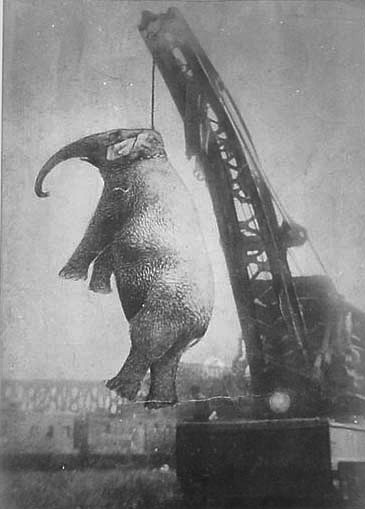
Mary, a five-ton Asian elephant performing with the Sparks World Famous Shows circus, killed her handler, Walter "Red" Eldridge, on September 12, 1916, in Kingsport, Tennessee. Eldridge, who had only been on the job for one day, reportedly provoked Mary with a hook, leading to a violent attack where she threw him against a drink stand and trampled him. Following the incident, a mob demanded retribution, resulting in Mary's execution by hanging in Erwin, Tennessee, on September 13, 1916. The event was marked by sensationalist media coverage and conflicting eyewitness accounts, with significant public outcry against the circus for allowing the incident to occur.
Many believe that Red Eldridge's lack of experience and improper handling of Mary contributed to the tragic incident, speculating that his actions provoked her. Some argue that the execution of Mary was unjust and driven by public outrage rather than a fair assessment of the situation. There is also speculation regarding the authenticity of a photograph purportedly showing Mary's hanging, with doubts raised about its credibility.
The Tragic Tale of Mary: The Elephant Who Was Hanged
Introduction: The Life of Mary
In the late 19th century, a majestic Asian elephant named Mary captivated audiences across America. Known as "Mighty Mary," she was a star performer for the Sparks World Famous Shows circus, where she dazzled crowds with her ability to play musical instruments and even pitch baseballs. Weighing in at five tons and standing nearly 12 feet tall, Mary was an imposing figure, yet it was her tragic end in 1916 that would forever etch her name in history. Her tale is one of misunderstanding, fear, and ultimately, a public execution that would haunt a Tennessee town for over a century.
Death of Red Eldridge
The fateful events leading to Mary's death began on September 11, 1916, in Sullivan County, Tennessee. A man named Walter "Red" Eldridge, who had been working as a janitor at the Riverside Hotel, found himself unexpectedly thrust into a new role as an elephant handler for the circus. Despite having no experience, Eldridge was tasked with leading the elephant parade, riding atop Mary's back as she took her place at the front of the procession.
Tragedy struck the very next evening. Accounts of what transpired vary, but one witness, W. H. Coleman, described how Eldridge's actions triggered a deadly response from Mary. As the story goes, Eldridge prodded Mary behind the ear with a hook when she reached for a watermelon rind. Reacting in fury, Mary snatched Eldridge with her trunk, threw him against a drink stand, and crushed his head underfoot.
The Johnson City Staff newspaper offered a more dramatic account: Mary lifted Eldridge ten feet into the air with her trunk before violently dashing him to the ground. The paper claimed she then impaled him with her tusks—a detail conflicting with the fact that female Asian elephants lack tusks. Despite discrepancies, the essence of the reports was clear: Mary, in a fit of rage, killed Eldridge.
Execution of Mary
The aftermath of Eldridge's death unfolded amid a swirl of sensationalist newspaper stories and community panic. The crowd, witnessing the horrifying event, quickly turned against Mary, chanting for her execution. Local blacksmith Hench Cox attempted to shoot Mary with five rounds, but the bullets had little effect on the massive creature. Meanwhile, a number of towns threatened to bar the circus from visiting if Mary remained part of the troupe.
Charles Sparks, the circus owner, faced with a potential financial disaster and mounting public pressure, made the grim decision to execute Mary. On a foggy, rainy September 13, 1916, Mary was transported by rail to Erwin, Tennessee. There, in the Clinchfield Railroad yard, over 2,500 onlookers, including many children, gathered to witness the hanging.
Mary was hanged by the neck using a railcar-mounted industrial derrick. The first attempt was botched when the chain snapped, causing Mary to fall and break her hip. As children screamed and fled, a second attempt was made, successfully ending Mary's life. A veterinarian later found that Mary had a severely infected tooth at the exact spot where Eldridge had prodded her, perhaps explaining her violent reaction.
The authenticity of a photograph purportedly documenting Mary’s hanging has been questioned by publications such as Argosy magazine.
Aftermath and Legacy
The execution of Mary cast a long shadow over the town of Erwin, which became infamously known as "the town that hanged an elephant." In efforts to overcome this stigma, local residents have since raised thousands of dollars for elephant rescue initiatives.
Cultural References
Mary's story has permeated popular culture, inspiring plays, songs, and novels. Mark Medoff's "Big Mary" and George Brant's "Elephant's Graveyard" dramatize the events surrounding her execution. Caleb Lewis's play "Clinchfield" and Chuck Brodsky's song "Mary the Elephant" also explore the tragic tale. Authors like Jodi Picoult and Barbara Kingsolver, among others, have referenced Mary in their works, ensuring that her story remains a poignant reminder of the intersection between human and animal worlds.
Conclusion
The tragic tale of Mary, the elephant, is a stark reminder of the consequences of fear and misunderstanding. Her story continues to resonate, sparking discussions on animal welfare and the ethics of circus performances. Mary may have been hanged over a century ago, but her legacy endures, serving as a testament to the power of storytelling to keep history alive.
Sources
To explore more about the story of Mary, visit the original Wikipedia page: Mary (elephant)
No Recent News
No recent news articles found for this case. Check back later for updates.
No Evidence Submitted
No evidence found for this case. Be the first to submit evidence in the comments below.
Join the discussion
Loading comments...
Red Eldridge Hired
Walter 'Red' Eldridge is hired as Mary's handler at the circus.
Eldridge Killed by Mary
Mary kills Red Eldridge after he prods her, leading to a public outcry.
Mary's Execution
Mary is hanged in front of a crowd after the circus owner decides to kill her.
Mary's Death
Mary dies during the second attempt to hang her after a failed first attempt.
Mary Buried
Mary is buried beside the railroad tracks after her execution.
Public Outcry
The execution leads to a long-lasting stigma for Erwin as 'the town that hanged an elephant.'
Cultural References
Mary's story inspires various plays, songs, and literature over the years.
Mary, a five-ton Asian elephant performing with the Sparks World Famous Shows circus, killed her handler, Walter "Red" Eldridge, on September 12, 1916, in Kingsport, Tennessee. Eldridge, who had only been on the job for one day, reportedly provoked Mary with a hook, leading to a violent attack where she threw him against a drink stand and trampled him. Following the incident, a mob demanded retribution, resulting in Mary's execution by hanging in Erwin, Tennessee, on September 13, 1916. The event was marked by sensationalist media coverage and conflicting eyewitness accounts, with significant public outcry against the circus for allowing the incident to occur.
Many believe that Red Eldridge's lack of experience and improper handling of Mary contributed to the tragic incident, speculating that his actions provoked her. Some argue that the execution of Mary was unjust and driven by public outrage rather than a fair assessment of the situation. There is also speculation regarding the authenticity of a photograph purportedly showing Mary's hanging, with doubts raised about its credibility.
The Tragic Tale of Mary: The Elephant Who Was Hanged
Introduction: The Life of Mary
In the late 19th century, a majestic Asian elephant named Mary captivated audiences across America. Known as "Mighty Mary," she was a star performer for the Sparks World Famous Shows circus, where she dazzled crowds with her ability to play musical instruments and even pitch baseballs. Weighing in at five tons and standing nearly 12 feet tall, Mary was an imposing figure, yet it was her tragic end in 1916 that would forever etch her name in history. Her tale is one of misunderstanding, fear, and ultimately, a public execution that would haunt a Tennessee town for over a century.
Death of Red Eldridge
The fateful events leading to Mary's death began on September 11, 1916, in Sullivan County, Tennessee. A man named Walter "Red" Eldridge, who had been working as a janitor at the Riverside Hotel, found himself unexpectedly thrust into a new role as an elephant handler for the circus. Despite having no experience, Eldridge was tasked with leading the elephant parade, riding atop Mary's back as she took her place at the front of the procession.
Tragedy struck the very next evening. Accounts of what transpired vary, but one witness, W. H. Coleman, described how Eldridge's actions triggered a deadly response from Mary. As the story goes, Eldridge prodded Mary behind the ear with a hook when she reached for a watermelon rind. Reacting in fury, Mary snatched Eldridge with her trunk, threw him against a drink stand, and crushed his head underfoot.
The Johnson City Staff newspaper offered a more dramatic account: Mary lifted Eldridge ten feet into the air with her trunk before violently dashing him to the ground. The paper claimed she then impaled him with her tusks—a detail conflicting with the fact that female Asian elephants lack tusks. Despite discrepancies, the essence of the reports was clear: Mary, in a fit of rage, killed Eldridge.
Execution of Mary
The aftermath of Eldridge's death unfolded amid a swirl of sensationalist newspaper stories and community panic. The crowd, witnessing the horrifying event, quickly turned against Mary, chanting for her execution. Local blacksmith Hench Cox attempted to shoot Mary with five rounds, but the bullets had little effect on the massive creature. Meanwhile, a number of towns threatened to bar the circus from visiting if Mary remained part of the troupe.
Charles Sparks, the circus owner, faced with a potential financial disaster and mounting public pressure, made the grim decision to execute Mary. On a foggy, rainy September 13, 1916, Mary was transported by rail to Erwin, Tennessee. There, in the Clinchfield Railroad yard, over 2,500 onlookers, including many children, gathered to witness the hanging.
Mary was hanged by the neck using a railcar-mounted industrial derrick. The first attempt was botched when the chain snapped, causing Mary to fall and break her hip. As children screamed and fled, a second attempt was made, successfully ending Mary's life. A veterinarian later found that Mary had a severely infected tooth at the exact spot where Eldridge had prodded her, perhaps explaining her violent reaction.
The authenticity of a photograph purportedly documenting Mary’s hanging has been questioned by publications such as Argosy magazine.
Aftermath and Legacy
The execution of Mary cast a long shadow over the town of Erwin, which became infamously known as "the town that hanged an elephant." In efforts to overcome this stigma, local residents have since raised thousands of dollars for elephant rescue initiatives.
Cultural References
Mary's story has permeated popular culture, inspiring plays, songs, and novels. Mark Medoff's "Big Mary" and George Brant's "Elephant's Graveyard" dramatize the events surrounding her execution. Caleb Lewis's play "Clinchfield" and Chuck Brodsky's song "Mary the Elephant" also explore the tragic tale. Authors like Jodi Picoult and Barbara Kingsolver, among others, have referenced Mary in their works, ensuring that her story remains a poignant reminder of the intersection between human and animal worlds.
Conclusion
The tragic tale of Mary, the elephant, is a stark reminder of the consequences of fear and misunderstanding. Her story continues to resonate, sparking discussions on animal welfare and the ethics of circus performances. Mary may have been hanged over a century ago, but her legacy endures, serving as a testament to the power of storytelling to keep history alive.
Sources
To explore more about the story of Mary, visit the original Wikipedia page: Mary (elephant)
No Recent News
No recent news articles found for this case. Check back later for updates.
No Evidence Submitted
No evidence found for this case. Be the first to submit evidence in the comments below.
Join the discussion
Loading comments...
Red Eldridge Hired
Walter 'Red' Eldridge is hired as Mary's handler at the circus.
Eldridge Killed by Mary
Mary kills Red Eldridge after he prods her, leading to a public outcry.
Mary's Execution
Mary is hanged in front of a crowd after the circus owner decides to kill her.
Mary's Death
Mary dies during the second attempt to hang her after a failed first attempt.
Mary Buried
Mary is buried beside the railroad tracks after her execution.
Public Outcry
The execution leads to a long-lasting stigma for Erwin as 'the town that hanged an elephant.'
Cultural References
Mary's story inspires various plays, songs, and literature over the years.