ANALYZING EVIDENCE
Processing case files...
Processing case files...
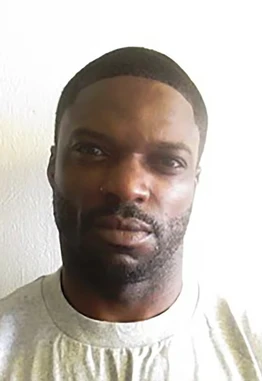
Double Murder Execution Case
CLASSIFICATION: Serial Homicide
LOCATION
Oklahoma City, Oklahoma
TIME PERIOD
2001-2002
VICTIMS
3 confirmed
On February 22, 2002, Michael Dewayne Smith, a member of the Oak Grove Posse gang, committed the double murder of Janet Moore, 41, and Sarath Pulluru, 22, in Oklahoma City. Smith was arrested, convicted, and sentenced to death in 2003 for these crimes, and after 21 years on death row, he was executed by lethal injection on April 4, 2024. The case is now considered closed following his execution.
Michael Dewayne Smith, known as the Hoover Killer, was involved in multiple murders and gang activities, with speculation surrounding his potential involvement in an earlier murder in 2001. Additionally, despite his conviction and execution, there are hints of community debate regarding his claims of innocence, indicating that some believe he may not have been guilty of the crimes for which he was sentenced to death. The connection to gang violence and the environment of his upbringing may also contribute to theories about the motivations behind his actions.
On the morning of April 4, 2024, 41‑year‑old Michael Dewayne Smith lay strapped to a gurney at the Oklahoma State Penitentiary in McAlester. [1] He had been condemned for a pair of Oklahoma City murders committed when he was 19 years old—the February 2002 killings of 40‑year‑old Janet Moore and convenience store clerk Sharath “Babu” Pulluru. [1][2][3]
At 10:20 a.m., after a three‑drug lethal injection, prison officials pronounced Smith dead. [1][4] He declined to give last words, answering “Nah, I’m good” when asked for a final statement. [4][5] To the end, he insisted he was innocent and claimed he had been in a PCP haze, with no memory of the crimes, his arrest, or his confession. [1][5]
Two decades earlier, the case against him had begun with a cash register fire in a South Oklahoma City market and an apartment door left inexplicably open across town.
By the turn of the millennium, Smith was already embedded in a south‑side street gang known as the Oak Grove Posse. [1][4] By 2002, Oklahoma City police considered him a wanted man in five separate felony cases, including shooting with intent to kill, assault with a dangerous weapon, assault on a police officer, attempting to elude police, drunken driving, and driving with a revoked license. [3][4]
On November 24, 2001, gunfire erupted outside the Lexus Club, a northeast Oklahoma City nightclub at 3700 N. Springlake Drive, as the club was closing and the parking lot was crowded. [3][6] Police heard the shots and stopped a sport utility vehicle about 100 yards from the club. [6] Inside, they found 26‑year‑old Otis Payne Jr. of Muskogee dead and 31‑year‑old passenger Meldon Moore wounded in the arm. [3][6]
Investigators quickly named two suspects: 19‑year‑old Michael DeWayne Smith of Del City and David Walter Burns of Oklahoma City. [6] Smith went underground. UPI later described him as a fugitive for his alleged role in Payne’s killing outside the club. [1]
Smith would eventually admit he handed the gun to the shooter, David Burns, and he was sentenced to life in prison for his role in Payne’s murder. [1][4][5] But before that conviction, another, bloodier day in Oklahoma City would fix his name on the state’s death row.
On February 22, 2002, just before 8:30 a.m., firefighters rushed to the A&Z Food Mart at 3820 S. May Avenue after a woman reported that the store’s cash register was on fire. [3] Once they put out the flames, they discovered a man’s body and called Oklahoma City police. [3] The victim was Sharath “Babu” Pulluru, a young clerk working the morning shift. [2][3] An autopsy would later show he had been shot at least nine times in the limbs, chest, and face. [4] Police and contemporaneous reports said he had been doused with lighter fluid and set on fire. [1][5]
Hours later, at the Del Mar Landing Apartments at 403 Tinker Diagonal, an apartment manager noticed that one tenant’s door—Janet Moore’s—stood open near midday. [3] When the manager went to check, she found Moore dead inside and called police. [3] Moore was 40 years old, a mother and Aunt; an autopsy showed she had been shot once in the left chest. [1][4]
At first, detectives worked the killings as separate crimes. [3] The victims had no obvious connection: Moore at home in her apartment, Pulluru tending a neighborhood store. But evidence at the scenes, and a tip to Crime Stoppers, began to pull the two cases together. [3]
© Mapbox © OpenStreetMap
The Crime Stoppers information, combined with physical evidence, steered investigators toward a familiar figure: Michael DeWayne Smith, already in the Oklahoma County jail. [3] Smith, then 19, was a resident of Del City and still wanted in the Payne homicide. [3][6]
The timing was tight. On February 23, 2002—the day after Moore and Pulluru were found—police responded to a complaint that Smith was threatening to shoot somebody around 12:30 p.m. in the 2000 block of NE 27. [3] After taking him into custody, officers discovered he was wanted in connection with Payne’s murder. [3]
Within days, police questioned Smith about the two fresh homicides. [3] Investigators filed a probable cause affidavit adding two counts of first‑degree murder for the deaths of Moore and Pulluru. [3] Oklahoma County District Attorney Wes Lane later said a 19‑year‑old man arrested in one death was expected to be named in two other first‑degree murder charges—a clear reference to Smith. [3]
Lane publicly praised Detectives Janet McNutt and Teresa Sterling for linking the cases, remarking that the killings “looked like cases that weren’t going to be easily solved.” [3]
From the outset, police and prosecutors cast the 2002 killings as gang retaliation.
Officers alleged that Smith, an Oak Grove Posse member, went first to Janet Moore’s apartment looking for her son, Phillip Zachary Jr., whom he believed had informed police about Smith’s whereabouts. [1][4] Prosecutors said Moore was shot in her apartment because Smith thought her son had “snitched” on him. [2] According to later reporting, Smith told The Oklahoman at the time of his arrest that he killed Moore while looking to kill Zachary, saying she reacted loudly when he broke into their home. [5]
The second killing, prosecutors argued, was tied to another gang grievance. They said Smith went to the A&Z Food Mart in south Oklahoma City and shot Pulluru nine times before dousing him in lighter fluid and setting him—and the store—on fire. [1][2] Police alleged Smith believed Pulluru had made comments to local media about another clerk shooting and killing a gang member during a 2000 robbery. [1][4]
That prior incident involved three of Smith’s fellow gang members—Teron Armstrong, Kenneth Kinchion, and Dewayne Shirley—who had attempted a convenience store robbery that ended when the owner, Han Van Ho, shot and killed Armstrong. [4] Kinchion and Shirley were later sentenced to life in prison for their roles in the robberies and Armstrong’s death, while Van Ho’s shooting was ruled justified. [4]
In the state’s telling, Smith targeted Pulluru because he thought the clerk had “disrespected” his gang in a newspaper interview about Armstrong’s death. [2][4] But the same sources note that Pulluru had not actually made those comments, suggesting a case of mistaken identity. [1][4]
Oklahoma Attorney General Gentner Drummond would later frame the crimes more simply, saying, “Janet and Sharath were murdered simply because they were in the wrong place at the wrong time; that was all.” [1]
Smith was arrested for the Payne slaying on February 24, 2002, and soon questioned about the double murder. [4] According to later accounts, he initially denied involvement in the killings of Moore and Pulluru. [4] Eventually, in a videotaped interrogation, he confessed to both murders. [4][5] That recording would become a cornerstone of the prosecution’s case.
In March 2002, Smith was charged with first‑degree murder in the deaths of Payne, Moore, and Pulluru, along with burglary, robbery by firearm, and arson. [4]
His first trial on the Moore and Pulluru charges began June 6, 2003, but a mistrial was declared because of procedural errors. [4] A second jury was empaneled on August 28, 2003. [4] During that trial, jurors saw the videotaped police interrogation in which Smith ultimately confessed. [4] A woman named Sheena Johnson testified that Smith had also admitted to her that he killed both Moore and Pulluru. [4]
Medical testimony laid out the violence of the attacks. Moore had been shot once in the chest; Pulluru had suffered at least nine gunshot wounds. [4]
On September 11, 2003, the jury found Smith guilty of two counts of first‑degree murder and one count each of robbery by firearm, burglary, and first‑degree arson. [1][4][5] On September 20, jurors recommended the death penalty for each murder and 85 years’ imprisonment for the non‑capital counts. [4] Oklahoma County District Judge Twyla Mason Gray formally sentenced him on October 14, 2003, imposing two death sentences and an 85‑year term, plus financial penalties on the lesser offenses. [1][4]
Even as Smith awaited execution for the February 2002 killings, the Lexus Club case moved forward.
In March 2004, he was tried for the November 2001 killing of Otis Payne Jr. [4] A jury convicted him of second‑degree murder, and he was sentenced to life in prison, to run consecutively with his death sentences. [4] UPI and HuffPost both noted that this sentence came alongside his earlier admission that he had handed the gun to Payne’s killer, David Burns. [1][5]
Burns, arrested earlier, was sentenced the same month to 25 years for second‑degree murder and five years for firearm possession in connection with Payne’s death. [4]
From his 2003 sentencing to his execution in 2024, Smith spent about 21 years on Oklahoma’s death row. [4][5] His appeals wound their way through the courts. In 2007 and 2016, appellate courts rejected his challenges, which raised claims of ineffective counsel and argued that his confession was involuntary because he was under the influence of drugs. [4] By March 2017, he had exhausted standard avenues of appeal and was deemed eligible for execution. [4]
Smith was also part of a broader legal fight over Oklahoma’s execution procedures. He joined 27 other condemned prisoners in a lawsuit challenging the state’s lethal injection protocol; a federal judge dismissed that suit in June 2022. [4][5]
In August 2022, the Oklahoma Court of Criminal Appeals issued death warrants for 25 inmates, including Smith, initially setting his execution date for July 6, 2023. [4] In January 2023, the court rescheduled his execution to April 4, 2024. [4]
The resumption of executions in Oklahoma formed the backdrop. The state had restarted lethal injections in 2021 after nearly six years without putting anyone to death and quickly arranged execution dates for 25 people—roughly half its death row at the time. [1][5] In 2023, officials agreed to space executions at least 60 days apart, and the Attorney General’s office later moved to stretch the interval to 90 days. [1][5] Smith’s execution was the first in Oklahoma in 2024 and the fourth in the United States that year, and he was the 12th person executed in the state since it resumed executions in 2021. [4][5]
As the execution date approached, the narrative around the Moore and Pulluru killings fractured.
Smith had undeniably confessed in 2002. [4][5] But he later said that confession was unreliable, insisting he had been high on PCP at the time and had no memory of the murders, his arrest, or his interrogation. [1][5] In a phone interview with The Oklahoman days before his death, he said, “I don’t want to die, man,” adding that he did not want to be executed “for something…he said he didn’t do.” [2] He told HuffPost he was innocent and said inconsistencies in his confession were never properly addressed. [5]
At his March 6, 2024 clemency hearing before the Oklahoma Pardon and Parole Board, Smith appeared via video. [5] He wept as he told the board, “I didn’t commit these crimes. I didn’t kill these people,” and said, “I was high on drugs. I don’t even remember getting arrested.” [2][4][5]
Those claims echoed issues his lawyers had been raising for years. Court records show he had argued his confession was involuntary and that he was under the influence of drugs when he spoke to police. [4] His later attorney, Mark Henricksen, told the board that Smith was intellectually disabled and that years of heavy PCP use had worsened his condition. [2][4] Henricksen asked that Smith’s life be spared and that he be allowed to die in prison instead. [2]
A 2002 U.S. Supreme Court decision had held that executing people with intellectual disabilities is unconstitutional, and Smith’s lawyers pointed to IQ scores ranging from 71 to 79 as evidence he fell into that category. [5] Rev. Don Heath, chair of the Oklahoma Coalition to Abolish the Death Penalty, said Smith “was a troubled and vulnerable young man with intellectual disabilities,” describing a “painful story” that included being a 10‑year‑old boy with borderline intellectual disability and habitual PCP use. [1][5]
Smith’s family, according to court records, had long claimed he developed a deep distrust of law enforcement after his father died in the Oklahoma County jail in 1991 when he was denied his heart medicine. [3] To Smith’s supporters, that history colored how he interacted with police and the courts.
Prosecutors pushed back hard. They rejected the claims of intellectual disability and portrayed Smith as a ruthless gang member who had killed in “misguided acts of revenge.” [2] They told the board that even behind bars he had remained dangerous, saying he had been caught with weapons on death row in 2019 and continued to communicate with gang members. [2][4] Assistant Attorney General Aspen Layman said of Smith, “He has expressed a desire to kill more.” [2]
Meanwhile, parts of the old case file began to show cracks. Two trial witnesses later recanted portions of their testimony, saying they had been coerced by police officers and by the trial judge. [5] Smith claimed he had been framed by the same people he believed had framed fellow Oklahoma death row inmate Richard Glossip, and he argued his case had never received the same level of scrutiny because he is Black and was labeled a gang member. [2][5]
Statistics suggested he did not see race in a vacuum. Black people make up about 7.9% of Oklahoma’s population, but roughly 42% of its death row as of early 2023; nationally, Black prisoners account for about 41% of people facing execution. [5]
In early 2024, facing a firm execution date, Smith’s legal team filed a motion asking for forensic DNA testing on evidence in the case. [1][5] The District Court of Oklahoma denied the request, ruling that Smith had “failed to demonstrate a reasonable probability that he would not have been convicted if DNA testing is conducted and yields favorable results.” [1][5]
On March 6, 2024, the Pardon and Parole Board heard Smith’s clemency plea and voted 4–1 to deny relief. [1][2][4][5] Rev. Heath later argued that Smith had been “ill‑served by advisers” who encouraged him to proclaim his innocence rather than accept responsibility, saying that stance “cost him any chance for clemency.” [1]
After the board’s rejection, Smith filed a last‑minute appeal to the Oklahoma Court of Criminal Appeals; the court again refused to stay his execution. [2][4] On the morning of April 4, his lawyers asked the U.S. Supreme Court for a stay, arguing his confession was not sufficiently corroborated. [4] The high court denied the petition. [4]
Smith would later say that Henricksen had told his family he would file no further appeals on Smith’s behalf, even as the execution drew near. [1]
Shortly before 10 a.m. on April 4, 2024, guards led Smith into the death chamber at the Oklahoma State Penitentiary in McAlester. [1][2] He declined a special last meal. [4] Witnesses said that once strapped to the gurney, he declined to make a final statement, answering, “Nah, I’m good.” [4][5]
His spiritual adviser, Rev. Jeff Hood, stood at his side. Hood later said Smith was tearful in the minutes before and during the execution, and that after doctors declared him dead, a single tear slid from Smith’s right eye. [5]
Media observers noted that the lethal injection proceeded without the obvious problems that had plagued some earlier Oklahoma executions. [5] At 10:20 a.m., officials pronounced Smith dead. [2][4][5] He was the first person executed in Oklahoma in 2024 and the fourth executed anywhere in the United States that year. [4][5]
In a nearby witness room, members of Janet Moore’s family watched the execution, including her son, Phillip Zachary Jr., and niece, Morgan Miller‑Perkins. [4] Afterward, they issued a statement saying, “Justice has been served,” and thanking authorities for pursuing punishment over 22 years. [4][5]
Pulluru’s brother Harish, a doctor living in Nebraska, said his sibling’s death had shattered their family. He said they were thankful that justice had been served and that Sharath would “forever live in their hearts.” [4][5]
Attorney General Gentner Drummond released a statement quoting both families, declaring that justice had been done and again emphasizing that Moore and Pulluru were innocent people who happened to be in the wrong place at the wrong time. [1][4][5]
On paper, the case against Michael Dewayne Smith looks decisive. A gang‑involved 19‑year‑old, already a fugitive in another killing and facing a string of felony charges, confessed on video to two brutal murders; a jury heard corroborating testimony, weighed autopsy reports, and twice recommended the ultimate punishment. [3][4]
For the families of Janet Moore and Sharath “Babu” Pulluru, the execution closed a chapter that had stretched across more than two decades. [4][5]
Yet significant parts of the story remain contested. Smith’s later insistence that he was in a PCP‑induced fog, his claim that he could not remember confessing, and longstanding disputes over the reliability of that confession all shadow the neatness of the state’s narrative. [1][2][4][5] So do the recantations by two trial witnesses, who now say they were pressured by authorities, and ongoing questions about whether Pulluru was misidentified as the clerk who had supposedly insulted Smith’s gang. [1][4][5]
Opponents of capital punishment point to Smith’s borderline intellectual scores, heavy drug use from a young age, and childhood trauma as factors that should have placed him beyond the reach of the death chamber. [1][3][5] Prosecutors, citing his prior crimes, prison behavior, and the cruelty of the 2002 murders, argue that the system worked as intended. [2][4]
What is certain is that a single day in February 2002 left two families grieving and set Michael Dewayne Smith on a path from Oklahoma City’s streets to its execution chamber. The argument over what justice required in his case will likely outlive everyone who was in that courtroom, and everyone who watched him die.
This case file is an original Bloody Likely narrative synthesis based on the cited sources. Article © Bloody Likely. All rights reserved. Source materials remain the property of their respective owners. Facts, public records, quotations, and cited references are used for reporting, research, commentary, and documentation. Bloody Likely content license
Audio narration © Bloody Likely. All rights reserved. The audio player is provided for personal streaming/listening only.
No recent news articles found for this case. Check back later for updates.
No evidence found for this case. Be the first to submit evidence in the comments below.
Join the discussion
Loading comments...
Michael Smith and accomplice kill 26-year-old Otis Payne outside a nightclub.
Smith murders Janet Moore and Sarath Pulluru in separate incidents in Oklahoma City.
Michael Smith is arrested for the murder of Otis Payne Jr. after the double murders.
Smith's trial for the murders of Moore and Pulluru begins but is declared a mistrial.
Smith's second trial for the murders of Moore and Pulluru begins.
Smith is found guilty of the murders of Janet Moore and Sarath Pulluru.
Smith is sentenced to death for the murders of Moore and Pulluru.
Smith is sentenced to life imprisonment for the murder of Otis Payne Jr.
Michael Dewayne Smith is executed by lethal injection in Oklahoma.
