ANALYZING EVIDENCE
Processing case files...
Processing case files...
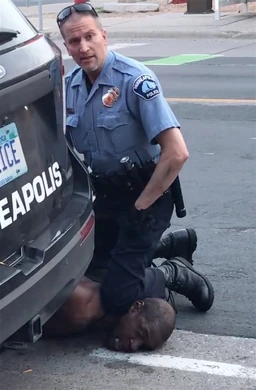
Minneapolis police custody murder
CLASSIFICATION: Murder
LOCATION
Minneapolis, Minnesota, U.S.
TIME PERIOD
May 25, 2020
VICTIMS
1 confirmed
On May 25, 2020, George Floyd, a 46-year-old Black man, was restrained by four Minneapolis police officers after a report of a counterfeit $20 bill; Derek Chauvin knelt on Floyd's neck while Floyd was handcuffed and lying face-down, and Floyd died. The encounter was recorded by multiple bystanders and body cameras; autopsies ruled the death a homicide caused by restraint and neck compression. Chauvin was criminally charged, convicted at state trial and pleaded guilty to related federal civil-rights charges; the three other officers (Kueng, Lane, Thao) were charged and later convicted or pleaded guilty on state and federal counts. Key documentary evidence includes multiple bystander videos, police body-worn camera footage, medical examiner findings, and witness testimony.
Some believe Derek Chauvin’s knee directly caused George Floyd’s death by asphyxiation—an independent autopsy and subsequent criminal and federal convictions frame the killing as a homicide caused by unlawful restraint. Others, including initial police statements, suggested Floyd suffered a “medical incident” possibly related to intoxication or pre-existing conditions, a narrative critics say has been used historically to justify or deflect responsibility for police use of force. Investigators and civil‑rights advocates have also alleged systemic discrimination and police misconduct at the Minneapolis Police Department, prompting broader probes and claims that institutional practices and possible cover‑ups contributed to the death.
A 'Black Lives Matter' sign along 38th St in Minneapolis on Wednesday, after the death of George Floyd on Monday night in Minneapolis, Minnesota (49943511536).jpg
On May 25, 2020, at a South Minneapolis intersection, a police officer pressed his knee into George Floyd’s neck for several minutes as other officers restrained him on the pavement. [1] Floyd begged for air and eventually stopped moving. [1] He died that day, and within hours the corner of 38th Street and Chicago Avenue would become a makeshift memorial—and the flashpoint for one of the largest protest movements in modern history. [1][2]
George Floyd was killed on May 25, 2020, at the corner of 38th Street and Chicago Avenue in Minneapolis. [2] A Minneapolis police officer used his knee to pin down Floyd’s neck for several minutes while Floyd lay restrained. [1] As he was held down, Floyd begged for air and eventually stopped moving. [1] He died on May 25. [1]
The image of an officer’s knee on a Black man’s neck, at a busy intersection in broad daylight, spread quickly through news reports and social media. The spot at 38th and Chicago—ordinary hours earlier—was suddenly synonymous with his name. [2]
Floyd’s death inspired international protests and drew renewed scrutiny to how police treat Black people in the United States. [1] It became a rallying cry against institutional racism, repeated in chants, painted on cardboard, and projected onto the walls of city halls and police precincts. [1]
Long before 38th and Chicago, George Floyd was “Big Floyd” from Houston’s Third Ward. He was raised in that neighborhood, one of the city’s historically Black communities. [1] As a teenager he was a high school football player, a local athlete with the kind of promise that fills Friday night bleachers. [1]
He was also part of Houston’s underground music scene, rapping with local legend DJ Screw. [1] His face would later appear on a mural in his old neighborhood, painted on brick and concrete that once formed the backdrop of his everyday life. [1]
Years before his death, Floyd moved to Minneapolis, seeking work and a fresh start. [1] That decision—part of an ordinary attempt at reinvention—placed him in the city where he would encounter the officers who restrained him on May 25, 2020. [3]
Within days of Floyd’s killing, streets across the United States and around the world filled with people carrying his name on signs and banners. [1] His death became shorthand for a wider, older story: Black Americans encountering police violence and systemic discrimination. [1]
In North Texas alone, protests had taken place every day since Friday, May 29. [1] On Saturday, thousands marched through downtown Dallas, calling for justice and racial equality. [1] The geography of grief stretched far beyond Minneapolis, connecting people who had never met Floyd but saw their own families in his last minutes.
The mourning for George Floyd unfolded in stages and across state lines. Memorials were held in Minneapolis, where he had lived before his death. [1] Another memorial took place in Raeford, North Carolina, near where he was born. [1]
Then his body came home to Texas. The body of George Floyd arrived there for a final memorial service and funeral, according to Houston Police Chief Art Acevedo. [1] Acevedo tweeted early one Sunday that Floyd’s family had arrived safely. [1] A six‑hour public viewing was planned for a Monday in Houston, giving thousands of people a chance to file past his casket. [1]
© Mapbox © OpenStreetMap
Funeral services and burial were planned for the following day in Pearland, a suburb of Houston. [1] George Floyd was to be laid to rest next to his mother, Larcenia Floyd. [1]
Protest against police violence - Justice for George Floyd, May 26, 2020 11.jpg
The man who had grown up in Houston’s Third Ward, played high school football, and rapped on local mixtapes was buried in Texas soil, while a mural bearing his likeness watched over the streets where he once walked. [1]
The restraint that killed George Floyd involved multiple officers. [3] One of them, Thomas Lane—reported as 42 years old—restrained Floyd’s back while Derek Chauvin knelt on Floyd’s neck for more than nine minutes, according to later reporting. [2]
Four fired Minneapolis police officers would ultimately be convicted in connection with Floyd’s killing. [2] Among them was Tou Thao, who had joined the force after earlier jobs as a supervisor in a fast‑food restaurant and as a security guard for a medical device manufacturer. [2]
Prosecutors in the federal case against Thao said he kept bystanders back as Floyd was restrained and alleged that he was “deliberately indifferent to Floyd’s medical needs.” [2] Thao was convicted in state and federal courts for his role in connection with the murder of George Floyd, including a federal conviction for violating Floyd’s civil rights. [2]
Thao served his federal prison time at a facility in Lexington, Kentucky. [2] According to later reporting, he was 39 and was released from prison on a Monday, then placed on supervised release until June 2027 in connection with his Hennepin County District Court sentence. [2] His attorney, Robert Paule, said that Thao “is happy to be back with his family.” [2]
Thao sought to challenge his federal conviction, but in January 2024 the U.S. Supreme Court declined to review his case. [2]
Two of Thao’s accomplices were freed earlier. [2] J. Alexander Kueng, reported as 32, left the federal prison in Lisbon, Ohio, in January 2025 and remains on supervised release until March 2026 stemming from his state conviction. [2] Thomas Lane, also convicted in connection with Floyd’s killing, was released from the federal prison in Littleton, Colorado, in August 2024; his supervised release ended a year later. [2][4]
Across these cases, federal allegations focused not only on the force used against Floyd but on what officers did—and failed to do—while he lay pinned on the street, including keeping bystanders away and showing deliberate indifference to his medical needs. [2]
As protests surged and the world watched video of Floyd’s final minutes, Minnesota officials faced a different question: Was his death a horrific anomaly, or a symptom of something deeper inside Minneapolis policing?
On June 2, 2020, Minnesota Department of Human Rights Commissioner Rebecca Lucero stood with Governor Tim Walz, Lieutenant Governor Peggy Flanagan, and Justin Terrell to announce that the Department had opened a civil rights investigation into the Minneapolis Police Department. [4] The Department’s webpage about the investigation—posted the following day—said plainly that the death of George Floyd had launched this probe. [4]
An 'Our Hearts Break' sign along 38th St in Minneapolis on Wednesday, after the death of George Floyd on Monday night in Minneapolis, Minnesota (49943002943).jpg
The investigation signaled that George Floyd’s death would not be treated only as a single criminal case; it would also be a lens through which the state examined an entire police department’s relationship with people of color. [4]
At the announcement, Lucero framed Floyd’s death as part of a much longer history. Communities of color and Indigenous communities in Minnesota, she said, were “facing outcomes that are the direct result of 400 years of intentional decisions to create and sustain systems, policies, and processes that have resulted in systematic discrimination and oppression.” [4] She added that everyone was called to do everything possible not just to prevent future deaths, but “to end the systemic racism that is leading to these outcomes throughout Minnesota.” [4]
The Department underscored that Minnesota has one of the strongest civil rights laws in the country. [4] Under the Minnesota Human Rights Act, it is illegal for a police department to discriminate against someone because of their race. [4] When the Department finds civil rights violations, it says it seeks structural change rather than narrow, one‑off fixes. [4]
On its webpage, the agency asked Minnesotans with relevant information to come forward—by calling a listed number or submitting information through an online form—to help document patterns of discrimination or abuse. [4]
The investigation signaled that George Floyd’s death would not be treated only as a single criminal case; it would also be a lens through which the state examined an entire police department’s relationship with people of color. [4]
Floyd’s killing did not stay confined to news reports and courtroom transcripts. It entered medical and academic literature, becoming a case study in how racism, policing, and drug policy intersect.
One PubMed entry carries the title “The Death of George Floyd: Bending the Arc of History Toward Justice for Generations of Children.” [5] The publication types listed for the article include “Biography” and “Historical Article,” signaling that it situates Floyd’s life and death within a broader historical context. [5] The MeSH (Medical Subject Headings) terms attached to the entry include “George Floyd” as a personal name subject and “Homicide / history,” linking the case directly to the medical and public‑health study of killing. [5]
Those MeSH terms also include “Law Enforcement / methods,” “Police / education,” and “Prisons,” placing Floyd’s death in the wider system of policing and incarceration. [3][5] Others—“Racism / prevention & control,” “Black or African American,” “Brain,” “Child,” and “Adolescent”—suggest a focus on how structural racism and police violence affect the developing brains and futures of young people of color. [3][5]
The entry lists “Video Recording” and “Whistleblowing” among its MeSH terms, acknowledging the pivotal role of bystander video and public exposure in bringing cases like Floyd’s to light. [5]
There is tension even in how the article is cataloged. One part of the PubMed record notes “No abstract available.” [5] Yet a description of the article’s abstract states that exaggerations of the detrimental impact of recreational drug use on the human brain have bolstered support for draconian drug policies. [3] According to that abstract, such exaggerations have been used to justify police brutality against Black people, contributing to disproportionately high incarceration rates and countless Black deaths. [3] The author writes that they offer solutions to help remedy the multi‑century maltreatment of Black people. [3]
The article carries a 2020 copyright notice from Elsevier and a conflict‑of‑interest statement in which the authors report no potential conflicts to disclose. [3][5] Full‑text links connect readers to Silverchair Information Systems, Elsevier Science, Europe PMC, and MedlinePlus health information, with a free PMC article available. [3][5]
In its references, the article reaches beyond U.S. borders, citing pieces like a 2017 Rappler analysis of the Philippines’ “war on drugs,” along with multiple works by researcher C.L. Hart and others on drug effects and policy. [3]
Taken together, the clinical indexing and the abstract’s language show how George Floyd’s death became part of a scientific and policy conversation: not only about a single killing, but about the narratives that have justified harsh drug laws, aggressive policing, and racialized state violence. [3][5]
George Floyd’s life began in Houston’s Third Ward and ended on a Minneapolis street, under the weight of a police officer’s knee. [1][2] His death set off a chain of events that reached from city protests to federal courtrooms, and from a state civil‑rights investigation to peer‑reviewed journals. [2][4][5]
Four former Minneapolis officers were convicted in connection with his killing; some served federal prison terms and now live under the conditions of supervised release. [2] Minnesota’s Department of Human Rights undertook a sweeping review of its largest police force, explicitly tying Floyd’s death to systemic discrimination and calling for structural change. [4] Scholars used his name to examine how drug policy, racism, policing, and incarceration converge to produce Black suffering and death. [3][5]
2 A worker boards up a business in downtown Minneapolis, Minnesota as closing arguments take place in the Derek Chauvin trial (51127261010).jpg
None of this restores the years George Floyd lost—years that might have been spent with his family in Houston, under the gaze of the mural that now bears his face. [1] But the legal cases, the protests, the state investigation, and the academic work that followed ensure that his death remains part of an ongoing, uncomfortable question: whether the systems that failed him will change enough to spare the next person pinned to the pavement from the same fate. [1][4]
Adapted from Wikipedia: Murder of George Floyd.
This case file is an original Bloody Likely narrative synthesis based on the cited sources. Article © Bloody Likely. All rights reserved. Source materials remain the property of their respective owners. Facts, public records, quotations, and cited references are used for reporting, research, commentary, and documentation. Bloody Likely content license
Audio narration © Bloody Likely. All rights reserved. The audio player is provided for personal streaming/listening only.
No recent news articles found for this case. Check back later for updates.
No evidence found for this case. Be the first to submit evidence in the comments below.
Join the discussion
Loading comments...
After bystander and security videos circulated, the Minneapolis Police Department terminated the four officers involved.
Derek Chauvin was charged with third-degree murder and second-degree manslaughter; he was later held in custody at Oak Park Heights.
Hennepin County medical examiner and an independent family-commissioned autopsy reported Floyd's death as a homicide attributable to restraint and neck
The City of Minneapolis agreed to a $27 million wrongful-death settlement with George Floyd's family.
Derek Chauvin was sentenced to 22.5 years in state prison for the convictions related to Floyd's death.
Chauvin pleaded guilty to federal civil-rights charges for violating George Floyd's rights, admitting to use of unreasonable force and deliberate indifference
A federal jury convicted J. Alexander Kueng, Thomas Lane, and Tou Thao of violating George Floyd's civil rights; Kueng and Thao were also found to have failed
Judge Peter Cahill found Tou Thao guilty of aiding and abetting manslaughter following a stipulated-evidence proceeding, the final state verdict in the