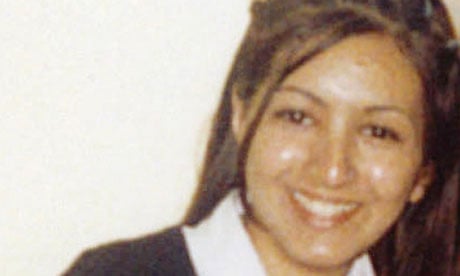
Murder Of Shafilea Ahmed
Honour Killing Case
CLASSIFICATION: Murder
LOCATION
Warrington, England
TIME PERIOD
2003
VICTIMS
1 confirmed
On September 11, 2003, Shafilea Iftikhar Ahmed, a 17-year-old British-Pakistani girl, was murdered by her parents in Warrington, England, as part of an honour killing due to her refusal to enter into a forced marriage. Her body was discovered in February 2004 in Sedgwick, Cumbria, after an extensive investigation was launched following her disappearance. In August 2012, her parents, Iftikhar and Farzana Ahmed, were each sentenced to a minimum of 25 years in prison for her murder. Investigators have raised the possibility that additional individuals may have assisted the parents in disposing of Shafilea's body, prompting calls for anyone with relevant information to come forward.
Shafilea Ahmed was murdered by her parents in an honour killing due to her refusal to accept a forced marriage. There is speculation that other individuals may have assisted her parents in disposing of her body. Following the trial, there were calls from community leaders for anyone with information to come forward to aid the investigation.
The Tragic Case of Shafilea Ahmed: A Story of Defiance and Betrayal
In the quiet town of Warrington, Cheshire, England, a chilling narrative unfolded on September 11, 2003. Seventeen-year-old Shafilea Iftikhar Ahmed, a British-Pakistani girl with aspirations of becoming a solicitor, vanished under sinister circumstances. Her disappearance was later revealed to be the result of an "honour killing," a term used to describe a murder committed by family members to protect or restore the family's honor. Shafilea's refusal to accept a forced marriage ultimately led to her tragic death at the hands of her own parents.
A Turbulent Background
Shafilea was born on July 14, 1986, in Bradford, West Yorkshire, to Iftikhar Ahmed and Farzana Ahmed. Her father, Iftikhar, had emigrated from Pakistan to the UK at the age of ten. Despite assimilating into Western culture, he was drawn back to traditional values under family pressure. After a failed marriage to a Danish woman named Vivi Lone Anderson, Iftikhar returned to Pakistan following his mother's death. There, he was coerced into marrying his cousin, Farzana, despite being entangled in a relationship with Anderson. This union marked a significant shift in Iftikhar's life, as he began to distance himself from Western influences and embraced a more traditional lifestyle.
Shafilea's childhood was marred by physical and emotional abuse at the hands of her parents. Her teachers noticed bruises and cuts, which she attributed to beatings. In February 2003, she sought refuge from this abuse by running away and requesting help from social services in Warrington. She described herself as homeless and feared being forced into an arranged marriage in Pakistan, a fear that was not unfounded. During a trip to Pakistan earlier that year, Shafilea reportedly attempted suicide by ingesting bleach, a desperate act stemming from the pressures she faced.
The Disappearance and Discovery
On September 11, 2003, Shafilea disappeared. Her absence went unnoticed for a week until her teachers alerted the authorities. A media campaign, fronted by actress Shobna Gulati, was launched to gather information. However, as days passed without any medical treatment for her throat injuries, detectives began to suspect foul play. The narrative pointed towards an honour killing related to her rejection of a suitor in Pakistan.
The mystery deepened when, in February 2004, Shafilea's dismembered body was discovered along the River Kent in Cumbria, 70 miles from Warrington. The flooding had unearthed her remains, which were deliberately concealed. A gold "zigzag" bracelet and a blue topaz ring, identified by her parents, accompanied the body. The advanced decomposition made it impossible for pathologist Alison Armer to determine the exact cause of death.
A Family's Betrayal
Shafilea's parents, Iftikhar and Farzana Ahmed, were initially arrested but released without charge. The investigation hit a dead end until a significant breakthrough in 2010. During a police interrogation following a robbery orchestrated by Shafilea's younger sister, Alesha, she revealed the dark truth: their parents had murdered Shafilea. She recounted how they suffocated Shafilea with a plastic bag, fearing her refusal of the arranged marriage would bring shame to the family.
In September 2011, the police charged Iftikhar and Farzana with murder. Their trial commenced in May 2012 at Chester Crown Court. On August 3, 2012, both were found guilty and sentenced to life imprisonment with a minimum term of 25 years. Justice Roderick Evans condemned their actions, emphasizing the unrealistic and cruel expectations they had placed on Shafilea.
Aftermath and Legacy
The conviction brought a semblance of justice, but questions lingered about potential accomplices in the disposal of Shafilea's body. The chief executive of Bradford Council for Mosques urged anyone with additional information to come forward.
The case left a lasting impact, leading to the establishment of the National Day of Memory for Victims of Honour Killings, observed annually on July 14, Shafilea's birthday. Her friend Melissa Powner expressed hope that Shafilea's story would inspire others facing similar situations to seek help and realize that such treatment is never acceptable.
As we remember Shafilea Ahmed, we are reminded of the cultural complexities and the dire consequences of imposing outdated traditions on the young. Her tragic story continues to resonate, urging society to champion the rights and freedoms of individuals, irrespective of cultural background.
Sources
For further reading and references, please visit the original Wikipedia article on the Murder of Shafilea Ahmed.
No Recent News
No recent news articles found for this case. Check back later for updates.
No Evidence Submitted
No evidence found for this case. Be the first to submit evidence in the comments below.
Join the discussion
Loading comments...
Shafilea Disappears
Shafilea Ahmed goes missing, prompting a nationwide search.
Body Discovered
Shafilea's dismembered remains are found in the River Kent.
Coroner's Inquest
Coroner rules Shafilea was unlawfully killed, labeling it a 'vile murder'.
Parents Charged
Shafilea's parents are charged with her murder after years of investigation.
Trial Begins
The trial of Shafilea's parents begins at Chester Crown Court.
Parents Convicted
Iftikhar and Farzana Ahmed are found guilty of Shafilea's murder.
Sentencing
Shafilea's parents are sentenced to life imprisonment with a minimum of 25 years.
National Day of Memory
First National Day of Memory for Victims of Honour Killings is held on Shafilea's birthday.
On September 11, 2003, Shafilea Iftikhar Ahmed, a 17-year-old British-Pakistani girl, was murdered by her parents in Warrington, England, as part of an honour killing due to her refusal to enter into a forced marriage. Her body was discovered in February 2004 in Sedgwick, Cumbria, after an extensive investigation was launched following her disappearance. In August 2012, her parents, Iftikhar and Farzana Ahmed, were each sentenced to a minimum of 25 years in prison for her murder. Investigators have raised the possibility that additional individuals may have assisted the parents in disposing of Shafilea's body, prompting calls for anyone with relevant information to come forward.
Shafilea Ahmed was murdered by her parents in an honour killing due to her refusal to accept a forced marriage. There is speculation that other individuals may have assisted her parents in disposing of her body. Following the trial, there were calls from community leaders for anyone with information to come forward to aid the investigation.
The Tragic Case of Shafilea Ahmed: A Story of Defiance and Betrayal
In the quiet town of Warrington, Cheshire, England, a chilling narrative unfolded on September 11, 2003. Seventeen-year-old Shafilea Iftikhar Ahmed, a British-Pakistani girl with aspirations of becoming a solicitor, vanished under sinister circumstances. Her disappearance was later revealed to be the result of an "honour killing," a term used to describe a murder committed by family members to protect or restore the family's honor. Shafilea's refusal to accept a forced marriage ultimately led to her tragic death at the hands of her own parents.
A Turbulent Background
Shafilea was born on July 14, 1986, in Bradford, West Yorkshire, to Iftikhar Ahmed and Farzana Ahmed. Her father, Iftikhar, had emigrated from Pakistan to the UK at the age of ten. Despite assimilating into Western culture, he was drawn back to traditional values under family pressure. After a failed marriage to a Danish woman named Vivi Lone Anderson, Iftikhar returned to Pakistan following his mother's death. There, he was coerced into marrying his cousin, Farzana, despite being entangled in a relationship with Anderson. This union marked a significant shift in Iftikhar's life, as he began to distance himself from Western influences and embraced a more traditional lifestyle.
Shafilea's childhood was marred by physical and emotional abuse at the hands of her parents. Her teachers noticed bruises and cuts, which she attributed to beatings. In February 2003, she sought refuge from this abuse by running away and requesting help from social services in Warrington. She described herself as homeless and feared being forced into an arranged marriage in Pakistan, a fear that was not unfounded. During a trip to Pakistan earlier that year, Shafilea reportedly attempted suicide by ingesting bleach, a desperate act stemming from the pressures she faced.
The Disappearance and Discovery
On September 11, 2003, Shafilea disappeared. Her absence went unnoticed for a week until her teachers alerted the authorities. A media campaign, fronted by actress Shobna Gulati, was launched to gather information. However, as days passed without any medical treatment for her throat injuries, detectives began to suspect foul play. The narrative pointed towards an honour killing related to her rejection of a suitor in Pakistan.
The mystery deepened when, in February 2004, Shafilea's dismembered body was discovered along the River Kent in Cumbria, 70 miles from Warrington. The flooding had unearthed her remains, which were deliberately concealed. A gold "zigzag" bracelet and a blue topaz ring, identified by her parents, accompanied the body. The advanced decomposition made it impossible for pathologist Alison Armer to determine the exact cause of death.
A Family's Betrayal
Shafilea's parents, Iftikhar and Farzana Ahmed, were initially arrested but released without charge. The investigation hit a dead end until a significant breakthrough in 2010. During a police interrogation following a robbery orchestrated by Shafilea's younger sister, Alesha, she revealed the dark truth: their parents had murdered Shafilea. She recounted how they suffocated Shafilea with a plastic bag, fearing her refusal of the arranged marriage would bring shame to the family.
In September 2011, the police charged Iftikhar and Farzana with murder. Their trial commenced in May 2012 at Chester Crown Court. On August 3, 2012, both were found guilty and sentenced to life imprisonment with a minimum term of 25 years. Justice Roderick Evans condemned their actions, emphasizing the unrealistic and cruel expectations they had placed on Shafilea.
Aftermath and Legacy
The conviction brought a semblance of justice, but questions lingered about potential accomplices in the disposal of Shafilea's body. The chief executive of Bradford Council for Mosques urged anyone with additional information to come forward.
The case left a lasting impact, leading to the establishment of the National Day of Memory for Victims of Honour Killings, observed annually on July 14, Shafilea's birthday. Her friend Melissa Powner expressed hope that Shafilea's story would inspire others facing similar situations to seek help and realize that such treatment is never acceptable.
As we remember Shafilea Ahmed, we are reminded of the cultural complexities and the dire consequences of imposing outdated traditions on the young. Her tragic story continues to resonate, urging society to champion the rights and freedoms of individuals, irrespective of cultural background.
Sources
For further reading and references, please visit the original Wikipedia article on the Murder of Shafilea Ahmed.
No Recent News
No recent news articles found for this case. Check back later for updates.
No Evidence Submitted
No evidence found for this case. Be the first to submit evidence in the comments below.
Join the discussion
Loading comments...
Shafilea Disappears
Shafilea Ahmed goes missing, prompting a nationwide search.
Body Discovered
Shafilea's dismembered remains are found in the River Kent.
Coroner's Inquest
Coroner rules Shafilea was unlawfully killed, labeling it a 'vile murder'.
Parents Charged
Shafilea's parents are charged with her murder after years of investigation.
Trial Begins
The trial of Shafilea's parents begins at Chester Crown Court.
Parents Convicted
Iftikhar and Farzana Ahmed are found guilty of Shafilea's murder.
Sentencing
Shafilea's parents are sentenced to life imprisonment with a minimum of 25 years.
National Day of Memory
First National Day of Memory for Victims of Honour Killings is held on Shafilea's birthday.