ANALYZING EVIDENCE
Processing case files...
Processing case files...
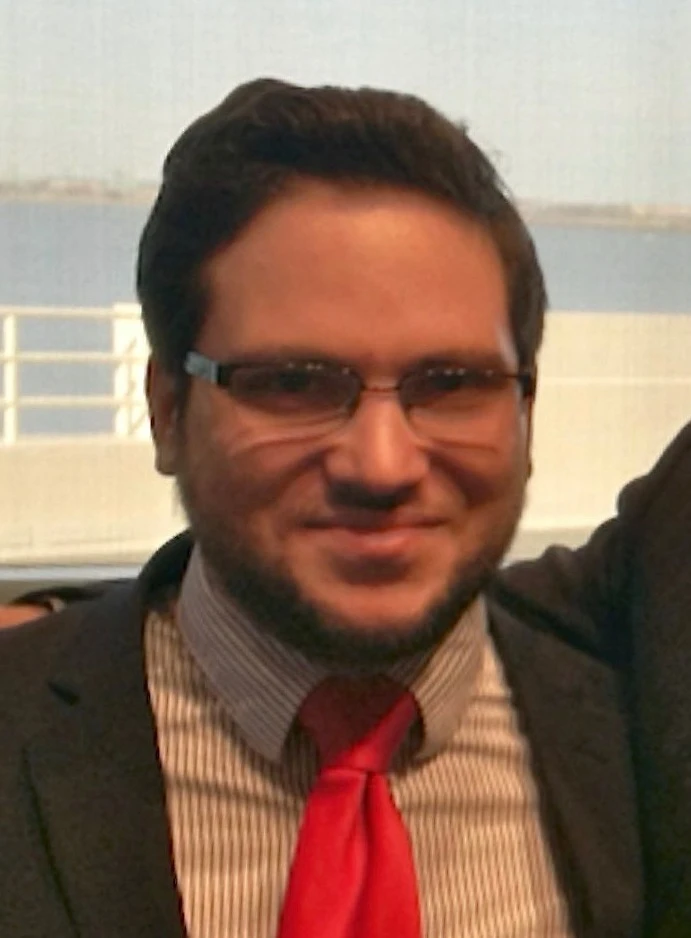
Fugitive Who Faked Death
CLASSIFICATION: Unknown
LOCATION
Utah, U.S.
TIME PERIOD
2008-2026
VICTIMS
2 confirmed
The subject, using multiple aliases including Nicholas Rossi and Arthur Knight, is an American sex offender who fled the United States and faked his own death in February 2020 while under federal inquiry. He was tracked to Scotland, arrested in a Glasgow hospital in December 2021, identified by fingerprints and tattoos, and extradited to Utah in January 2024. He stood trial on two separate 2008 rape charges and was convicted in August and September 2025, receiving consecutive indeterminate sentences of five years to life. He died in custody on June 25, 2026, from complications of preexisting medical conditions after discontinuing treatment.
Some reporting and forensic voice analysis allege that his then-wife (who posed as his widow) participated in spreading the false report of his death. Other speculation tied his false-death narrative to efforts to evade an FBI fraud probe and outstanding sex-offender registration warrants.
In late June 2026, Utah prison officials quietly announced that Nicholas Rossi — the man who had once been mourned in an obituary as Nicholas Alahverdian and later insisted he was an Irish orphan named Arthur Knight — was dead.[1]
Nicholas Alahverdian and Andre Dubus III.jpg
He died on 25 June 2026 in a Utah hospital, at 8:32 p.m., from complications of an existing medical condition after choosing to discontinue treatment, according to the Utah Department of Corrections.[1] He was 38.[1]
By then, Rossi was serving a cumulative sentence of 10 years to life for two counts of first‑degree felony rape in Utah, convicted in separate trials of sexually assaulting two women in 2008.[1][2]
His story, though, begins long before those Utah courtrooms — with a young man who cast himself as a survivor of abuse and a reformer, and ended up accused of faking his own death, reinventing his identity, and fighting extradition from a Glasgow Covid ward.
Before his name became synonymous with international manhunts and extradition hearings, Nicholas Alahverdian was a familiar figure in Rhode Island politics.[3]
He publicly criticized the state’s child welfare agency, the Department of Children, Youth and Families (DCYF), claiming he had been abused as a boy in its care.[3] He said the system had shuttled him through out‑of‑state placements and “night‑to‑night” foster homes.[3]
His story resonated at the State House. Lawmakers listened, and his account helped spur legislative reforms to the child welfare system.[3] In 2017, he wrote an opinion piece in The Providence Journal arguing that DCYF workers needed more support to protect children.[3]
Publicly, he was the damaged insider turned critic, demanding change.
Privately — and, later, across state lines — there was another pattern unfolding.
In 2008, according to court documents cited by The Providence Journal, Alahverdian was convicted on two sex‑related charges after an encounter with a fellow student in a stairwell at Sinclair Community College in Dayton, Ohio.[3] Police later said he lived in both Ohio and Utah under the name Nicholas Rossi.[3]
The DNA evidence from that 2008 case did not enter a national database until 2017.[3] That delay would matter.
In 2018, Utah authorities investigated a recent sexual assault. DNA from that case was processed and matched a profile already in the national database — the profile from the 2008 case tied to Nicholas Alahverdian.[3]
Utah officials said the man behind that DNA was using the alias Nicholas Rossi.[3] The Utah County Attorney’s Office later said that once the 2008 incident came into focus, agents discovered Nicholas Rossi was a suspect in a number of similar offenses in Utah and elsewhere in the United States.[3]
© Mapbox © OpenStreetMap
Here was a man who had rebranded himself as a reformer in Rhode Island, while, according to Utah officials, operating under another name and drawing attention from investigators across multiple jurisdictions.[3]
The DNA match in 2018 transformed what had been a scattering of allegations into something more cohesive: a suspect with an identifiable trail.
But before Utah could put him on trial, Nicholas Alahverdian — or Nicholas Rossi — appeared to disappear.
In early 2020, Alahverdian told reporters he had been diagnosed with late‑stage non‑Hodgkin lymphoma and had only weeks to live.[3] Two months later, an email from something called the “Alahverdian Family Office” announced that he was dead.[3]
An obituary said Nicholas Alahverdian had died on 29 February 2020 and listed his birth date as 11 July 1987.[3] A woman claiming to be his wife publicly announced his supposed death, saying his remains had been cremated and his ashes buried at sea.[3]
The story of the dying reformer quickly spread. But almost immediately, basic facts started to wobble.
Alahverdian had told reporters that he and his family had been living abroad for several years because of threats tied to his DCYF advocacy.[3] He once told a Providence Journal reporter they were living in Quebec.[3] State Rep. Raymond Hull recalled that the woman presenting herself as his widow said the family had been living in Ireland or Germany.[3] A Rhode Island priest, Father Bernard Healey, said the supposed wife told him they lived in Switzerland and asked for a memorial Mass at a parish in East Greenwich.[3]
Former Rhode Island Attorney General Jeffrey Pine said that, as far as he knew, Alahverdian had in fact been living in Ireland before the announced death.[3]
At the same time, Pine said, the FBI was looking into a fraud complaint filed against Alahverdian in Ohio.[3] His former foster mother in Ohio told the Journal that Alahverdian had fraudulently obtained 22 credit cards and loans in her husband’s name and amassed nearly $200,000 in debt.[3]
An FBI spokesman in Cincinnati, Todd Lindgren, would not confirm or deny the existence of “a potential investigation.”[3]
Pine later said that the timing of the federal inquiry, Alahverdian’s sudden announcement of terminal illness, and his swift “death” raised doubts.[3] According to the Providence Journal, state and federal law enforcement officials came to suspect that Nicholas Alahverdian had faked his own death in 2020.[3]
For more than a year, that suspicion remained just that — a suspicion. Then, in late 2021, a man with familiar tattoos showed up in a Glasgow hospital.
In December 2021, a man on a ventilator, seriously ill with Covid‑19, lay in a hospital in Scotland.[3] Staff in the Covid ward of a Glasgow hospital recognized his mugshot and distinctive tattoos from an Interpol wanted notice.[2]
They knew him as Nicholas Rossi.[2]
Police were called. The man was arrested in the Covid ward.[2] Reports later said he had fled to Scotland in 2021 in an attempt to evade justice.[2]
But he insisted the authorities had the wrong person. He said his name was Arthur Knight, and he described himself as an Irish‑born orphan who had never been to America.[2] He maintained this Arthur Knight story in an interview with the BBC.[2] When pressed, he could not produce a birth certificate or a passport to support that identity.[2]
Over a series of hearings at Edinburgh Sheriff Court, he continued to insist he was the victim of mistaken identity, not the American fugitive Utah wanted.[2] He usually attended in an electric wheelchair, wearing an oxygen mask, a hat, and a three‑piece suit.[2]
The court was not persuaded. In 2023, a sheriff ruled that the man in the Glasgow hospital bed and in the Edinburgh courtroom was indeed Nicholas Rossi.[2]
With that ruling, the Arthur Knight persona effectively collapsed. In January 2024, after prolonged proceedings, he was extradited to the United States.[2]
The DNA that had linked the 2018 Utah assault to a 2008 case in Ohio was about to be tested in front of juries.[3]
Back in Utah, prosecutors prepared two separate rape cases, both tied to 2008 and both involving women whose identities have been kept out of public view.[2]
In August and September 2024, juries in Utah heard from those two women. Each said Nicholas Rossi had raped her in 2008.[2] In each trial, Rossi — now recognized publicly as the same man once known as Nicholas Alahverdian — faced first‑degree rape charges.[1]
He was convicted in both trials of raping the two women in Utah in 2008.[2]
By the time sentencing was complete, Utah’s Department of Corrections recorded that he was serving a cumulative sentence of 10 years to life for two counts of first‑degree felony rape.[1] The BBC summarized that he was serving “10 years to life” for crimes that included sexual assault.[2]
Salt Lake County Attorney Sim Gill later described Rossi as a “sexual predator who tried to escape accountability.”[2] Gill said survivors of Rossi’s acts had some consolation in knowing “he died in prison with the knowledge of the crimes he committed.”[2]
For those survivors, justice had come late. The assaults dated to 2008.[2] The DNA that definitively linked Rossi to the Utah case was not entered into the national system until 2017.[3] It took the 2018 match, the unraveling of a dubious obituary, the recognition in a Glasgow Covid ward, and a contested extradition hearing to bring him into a Utah courtroom.[2][3]
On 26 June 2026, the Utah Department of Corrections issued a brief statement: Nicholas Rossi, also known as Nicholas Alahverdian, was dead.[1]
The department said he had been pronounced dead at a local hospital at 8:32 p.m. on Thursday, 25 June 2026.[1][2] He was 38 years old.[1]
Officials stated that Rossi died from complications of an existing medical condition after choosing to discontinue medical treatment.[1][2] The Utah Department of Corrections said he had been suffering from “chronic, degenerative conditions” and that he “chose to remove himself from the care that was being provided.”[2]
According to the department, the notification of his death came only after communication with his family and with his victims.[1][2]
Rossi’s death closed Utah’s criminal cases against him. It did not untangle the years of shifting narratives he left behind.
On paper, the man was a convicted rapist who died in a Utah prison system hospital bed, serving a 10‑years‑to‑life sentence for two first‑degree felony rapes.[1]
He was also the same person who once presented himself in Rhode Island as a traumatized former foster child fighting for reform, whose story helped drive changes to the state’s child welfare system.[3]
Investigators say that between those two poles, he lived under the name Nicholas Rossi in Ohio and Utah and emerged as a suspect in sexual offenses around the country.[3]
Layered on top of that is the 2020 obituary that said he died of lymphoma, the woman who claimed to be his widow and spoke of ashes scattered at sea, and the inconsistent stories about whether he and his family were living in Quebec, Ireland, Germany, Switzerland, or elsewhere.[3]
Former Attorney General Jeffrey Pine has said that the overlap between an FBI fraud inquiry in Ohio, Alahverdian’s public announcement of terminal cancer, and his rapid “death” left enduring questions.[3] The Providence Journal has reported that state and federal law enforcement officials came to believe he had faked that death entirely.[3]
When hospital staff in Glasgow recognized Nicholas Rossi from an Interpol notice in December 2021 — tattoos, mugshot, and all — they forced the question of who he really was into the open.[2][3]
In court he tried on one last identity, Arthur Knight, insisting he was an Irish‑born orphan who had never set foot in America.[2] He repeated that story to the BBC but could not produce basic documents like a birth certificate or passport to back it up.[2]
A Scottish sheriff’s 2023 ruling that he was in fact Nicholas Rossi ended the identity disputes for legal purposes.[2] DNA evidence and extradition followed.[2][3]
What remains is a trail of aliases and claims: the self‑portrait as a victim of state care; the reformer’s voice in op‑eds and hearings; the Ohio conviction on sex‑related charges in 2008; the later Utah rape convictions tied to that same year; the fraud allegations in Ohio; the terminal cancer that may never have existed; the obituary that may have been a tool of evasion.[3]
For the two women he was convicted of raping in Utah, there is at least a clear — if belated — record: Nicholas Rossi was found guilty in 2024 of raping them in 2008, and he died in custody less than two years later.[1][2]
For everyone else who crossed paths with Nicholas Alahverdian — or Nicholas Rossi, or Arthur Knight — the record is messier. The man who claimed to have been failed by the system spent his final years trying to outrun it, and the systems he once courted for sympathy ended up tracking him across continents, hospital wards, and names.
Adapted from Wikipedia: Nicholas Alahverdian.
This case file is an original Bloody Likely narrative synthesis based on the cited sources. Article © Bloody Likely. All rights reserved. Source materials remain the property of their respective owners. Facts, public records, quotations, and cited references are used for reporting, research, commentary, and documentation. Bloody Likely content license
Audio narration © Bloody Likely. All rights reserved. The audio player is provided for personal streaming/listening only.
No recent news articles found for this case. Check back later for updates.
No evidence found for this case. Be the first to submit evidence in the comments below.
Join the discussion
Loading comments...
Nicholas Alahverdian is born in Providence, Rhode Island.
Alahverdian alleges placement in DCYF 'night-to-night' program beginning in March 2002, a formative period he later cited in lawsuits and advocacy.
Convicted (as Nicholas Rossi) of public indecency and sexual imposition related to an incident at Sinclair Community College; required to register as a sex
An alleged rape in Orem, Utah, occurred in September 2008; evidence from a sexual-assault kit later tied to Alahverdian's DNA.
Reports and an obituary state Alahverdian died of non-Hodgkin lymphoma on February 29, 2020; Rhode Island authorities later questioned the authenticity of the
Arrested at Queen Elizabeth University Hospital, Glasgow, while receiving treatment for COVID-19 under the alias Arthur Knight; identified by tattoos and
Edinburgh Sheriff Court (ruling in November 2022) determines the arrested man is Nicholas Rossi based on fingerprint, tattoo and photographic evidence.
Scottish authorities extradite Alahverdian (Rossi) to the U.S. to face charges stemming from alleged 2008 sexual assaults in Utah.
In Utah court the defendant abandons his claim of mistaken identity and begins defense under his legal team.
At a Utah bail hearing he formally admits to having faked his death and acknowledges the deception to avoid authorities.
Found guilty in Salt Lake County, Utah, trial of a 2008 rape charge; later sentenced to five years to life.
Died in a Utah hospital from complications of existing medical conditions after discontinuing treatment, per Utah Department of Corrections.