Osage Indian Murders
Osage Nation Serial Murders
CLASSIFICATION: Serial Homicide
LOCATION
Osage County, Oklahoma, US
TIME PERIOD
1918-1931
VICTIMS
60 confirmed
The Osage Indian murders were a series of killings targeting wealthy members of the Osage Nation in Osage County, Oklahoma, occurring primarily between 1918 and 1931, during a period referred to as the "Reign of Terror." At least 60 individuals were confirmed murdered, with estimates suggesting the death toll could be in the hundreds, driven by motives related to inheritance of oil rights. The case has been largely resolved with the conviction of key perpetrators, including William Hale, although some aspects remain under investigation.
Theories surrounding the Osage Indian murders suggest that the high number of unsolved deaths among the Osage Nation, termed the "Reign of Terror," was driven by the motive of inheritance related to valuable oil rights. Speculation indicates that many suspicious deaths may have been misreported or covered up, with some estimates suggesting the death toll could be in the hundreds rather than the reported 60. The involvement of local authorities and systemic racism in the judicial process is also implied as a factor that allowed these crimes to occur without adequate investigation.
The Osage Indian Murders: A Reign of Terror in Oklahoma
The Case Unfolds
In the vast, rolling hills of Osage County, Oklahoma, a dark chapter in American history unfolded during the 1910s to the 1930s. The Osage Indian murders, a grim series of events, cast a shadow over this region, resulting in the deaths of at least 60 wealthy Osage individuals, with suspicions that the toll could be much higher. This tragic period became known as the "Reign of Terror" due to the wave of unsolved murders that plagued the Osage Nation. Most of these heinous acts occurred between 1921 and 1926, yet the true scope of the atrocities may have been far greater, as investigations suggested numerous suspicious deaths, possibly covered up as accidents or natural causes.
A Wealthy Target
The Osage tribe, forcibly relocated from Kansas to Oklahoma in the 1870s, found unexpected wealth when oil was discovered on their land in 1897. The U.S. government, through the Department of the Interior, managed oil leases and paid royalties to Osage allottees. By 1920, the tribe had amassed immense wealth, generating over $30 million in 1923 alone, a fortune that attracted both admiration and malice. The Osage were described in the media as the "richest nation, clan, or social group of any race on earth," leading to unwanted attention from opportunists and criminals alike.
Exploitation and Corruption
Despite their newfound wealth, the Osage faced systemic exploitation. In 1921, U.S. Congress enacted laws requiring courts to appoint guardians for Osage of half-blood or more ancestry, ostensibly to manage their financial affairs. These guardians, often local white lawyers or businessmen, wielded significant power and frequently abused it for personal gain. Many Osage, declared incompetent without just cause, saw their wealth siphoned away by those appointed to protect them. The allure of oil royalties led numerous white men to marry Osage women, aiming to gain control over their headrights.
The Murders Begin
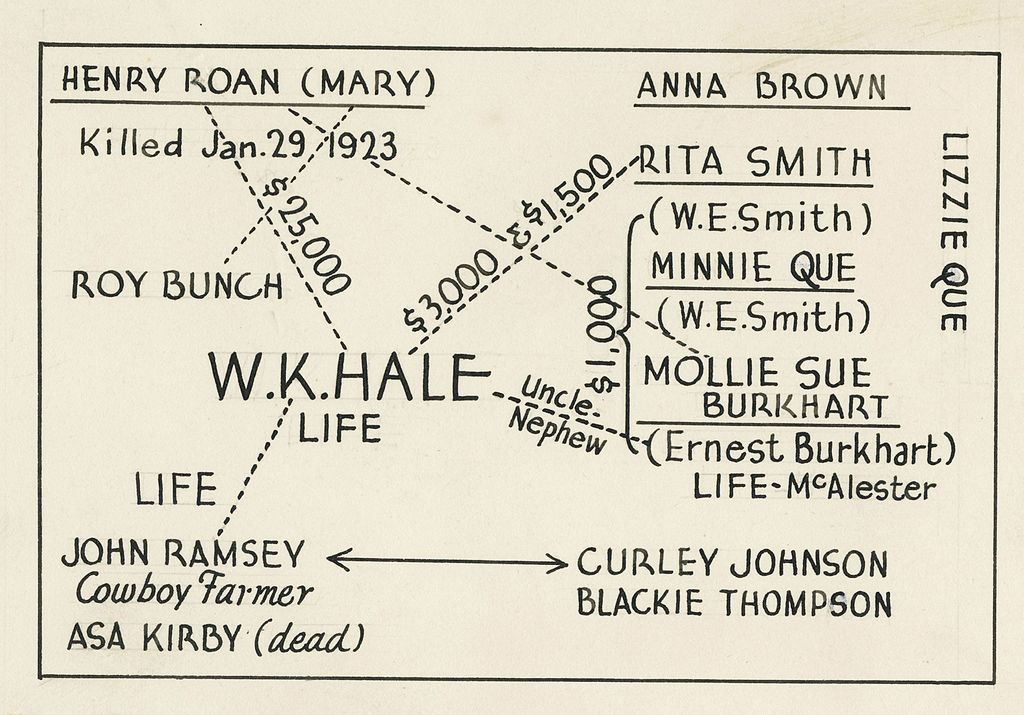
In the early 1920s, a series of brutal murders rocked Osage County. Among the first victims was Anna Brown, whose decomposed body was found in a ravine on May 27, 1921. Initially ruled an accidental death due to alcohol, an autopsy later revealed a bullet to the head. Kelsie Morrison, a petty criminal, confessed to her murder, implicating William Hale, a prominent rancher, as the mastermind. Hale sought control over the headrights and wealth of the Osage, orchestrating the murders through hired killers like Morrison.
The body of Charles Whitehorn, Brown's cousin, was discovered the same day, shot to death near Pawhuska. The killing spree continued with the deaths of Lizzie Q. Kyle, Anna's mother, and Henry Roan, another relative, whose murder was linked to a fraudulent life insurance policy Hale had manipulated to benefit himself. The violence escalated with the bombing of Rita Smith's home in 1923, killing her, her servant, and eventually her husband, Bill Smith.
The Investigation
Desperate for justice, the Osage turned to the federal government for help. The Bureau of Investigation (BOI), now the FBI, was called in to unravel the complex web of murder and corruption. Under the leadership of Tom White, the BOI launched a covert operation to infiltrate the community and expose the criminal enterprise orchestrated by Hale. The investigation revealed a well-organized crime ring, with Hale at its center, dubbed the "King of Osage" for his ruthless control over the murders.
Legal Proceedings and Aftermath
Despite the overwhelming evidence, local authorities, deeply intertwined with the corruption, offered little assistance. However, the BOI's relentless efforts led to the conviction of several individuals. William Hale, along with accomplices Ernest Burkhart, John Ramsey, and Kelsie Morrison, faced justice. Morrison received a life sentence, later overturned, and was killed in a shootout in 1937. Hale's conviction marked a small victory in a sea of injustice.
In response to these atrocities, Congress amended the law in 1925, preventing non-Osage from inheriting headrights from Osage individuals with significant Native American ancestry. Yet, the scars ran deep, and the Osage continued to battle for rightful management of their assets. In 2000, the Osage Nation sued the U.S. Department of the Interior for mismanagement of their oil assets, resulting in a $380 million settlement in 2011.
Conclusion
The Osage Indian murders remain a chilling reminder of the greed and prejudice that plagued the early 20th century. As the tribe sought justice and accountability, the legacy of these tragic events cast a long shadow over Osage County, serving as a somber testament to the resilience of the Osage Nation in the face of adversity.
Sources
No Recent News
No recent news articles found for this case. Check back later for updates.
No Evidence Submitted
No evidence found for this case. Be the first to submit evidence in the comments below.
Join the discussion
Loading comments...
Murders Begin
The Osage Indian murders start, targeting wealthy Osage individuals.
Anna Brown Found Dead
The body of Anna Brown is discovered, initially ruled accidental but later revealed to be a murder.
Henry Roan Murdered
Henry Roan is found dead, with evidence linking his murder to William Hale's financial interests.
BOI Investigation Begins
The Bureau of Investigation is called to investigate the rising number of Osage murders.
William Hale Charged
William Hale and several accomplices are charged with multiple murders linked to the Osage killings.
Ernest Burkhart Pleads Guilty
Ernest Burkhart pleads guilty to conspiracy related to the Osage murders and becomes a key witness.
Hale Convicted
William Hale is convicted of murder and sentenced to life in prison.
Settlement Reached
The US government settles a lawsuit with the Osage Nation for $380 million regarding trust management.
Cultural Recognition
The Osage murders gain renewed attention through media adaptations, highlighting historical injustices.
The Osage Indian murders were a series of killings targeting wealthy members of the Osage Nation in Osage County, Oklahoma, occurring primarily between 1918 and 1931, during a period referred to as the "Reign of Terror." At least 60 individuals were confirmed murdered, with estimates suggesting the death toll could be in the hundreds, driven by motives related to inheritance of oil rights. The case has been largely resolved with the conviction of key perpetrators, including William Hale, although some aspects remain under investigation.
Theories surrounding the Osage Indian murders suggest that the high number of unsolved deaths among the Osage Nation, termed the "Reign of Terror," was driven by the motive of inheritance related to valuable oil rights. Speculation indicates that many suspicious deaths may have been misreported or covered up, with some estimates suggesting the death toll could be in the hundreds rather than the reported 60. The involvement of local authorities and systemic racism in the judicial process is also implied as a factor that allowed these crimes to occur without adequate investigation.
The Osage Indian Murders: A Reign of Terror in Oklahoma
The Case Unfolds
In the vast, rolling hills of Osage County, Oklahoma, a dark chapter in American history unfolded during the 1910s to the 1930s. The Osage Indian murders, a grim series of events, cast a shadow over this region, resulting in the deaths of at least 60 wealthy Osage individuals, with suspicions that the toll could be much higher. This tragic period became known as the "Reign of Terror" due to the wave of unsolved murders that plagued the Osage Nation. Most of these heinous acts occurred between 1921 and 1926, yet the true scope of the atrocities may have been far greater, as investigations suggested numerous suspicious deaths, possibly covered up as accidents or natural causes.
A Wealthy Target
The Osage tribe, forcibly relocated from Kansas to Oklahoma in the 1870s, found unexpected wealth when oil was discovered on their land in 1897. The U.S. government, through the Department of the Interior, managed oil leases and paid royalties to Osage allottees. By 1920, the tribe had amassed immense wealth, generating over $30 million in 1923 alone, a fortune that attracted both admiration and malice. The Osage were described in the media as the "richest nation, clan, or social group of any race on earth," leading to unwanted attention from opportunists and criminals alike.
Exploitation and Corruption
Despite their newfound wealth, the Osage faced systemic exploitation. In 1921, U.S. Congress enacted laws requiring courts to appoint guardians for Osage of half-blood or more ancestry, ostensibly to manage their financial affairs. These guardians, often local white lawyers or businessmen, wielded significant power and frequently abused it for personal gain. Many Osage, declared incompetent without just cause, saw their wealth siphoned away by those appointed to protect them. The allure of oil royalties led numerous white men to marry Osage women, aiming to gain control over their headrights.
The Murders Begin
In the early 1920s, a series of brutal murders rocked Osage County. Among the first victims was Anna Brown, whose decomposed body was found in a ravine on May 27, 1921. Initially ruled an accidental death due to alcohol, an autopsy later revealed a bullet to the head. Kelsie Morrison, a petty criminal, confessed to her murder, implicating William Hale, a prominent rancher, as the mastermind. Hale sought control over the headrights and wealth of the Osage, orchestrating the murders through hired killers like Morrison.
The body of Charles Whitehorn, Brown's cousin, was discovered the same day, shot to death near Pawhuska. The killing spree continued with the deaths of Lizzie Q. Kyle, Anna's mother, and Henry Roan, another relative, whose murder was linked to a fraudulent life insurance policy Hale had manipulated to benefit himself. The violence escalated with the bombing of Rita Smith's home in 1923, killing her, her servant, and eventually her husband, Bill Smith.
The Investigation
Desperate for justice, the Osage turned to the federal government for help. The Bureau of Investigation (BOI), now the FBI, was called in to unravel the complex web of murder and corruption. Under the leadership of Tom White, the BOI launched a covert operation to infiltrate the community and expose the criminal enterprise orchestrated by Hale. The investigation revealed a well-organized crime ring, with Hale at its center, dubbed the "King of Osage" for his ruthless control over the murders.
Legal Proceedings and Aftermath
Despite the overwhelming evidence, local authorities, deeply intertwined with the corruption, offered little assistance. However, the BOI's relentless efforts led to the conviction of several individuals. William Hale, along with accomplices Ernest Burkhart, John Ramsey, and Kelsie Morrison, faced justice. Morrison received a life sentence, later overturned, and was killed in a shootout in 1937. Hale's conviction marked a small victory in a sea of injustice.
In response to these atrocities, Congress amended the law in 1925, preventing non-Osage from inheriting headrights from Osage individuals with significant Native American ancestry. Yet, the scars ran deep, and the Osage continued to battle for rightful management of their assets. In 2000, the Osage Nation sued the U.S. Department of the Interior for mismanagement of their oil assets, resulting in a $380 million settlement in 2011.
Conclusion
The Osage Indian murders remain a chilling reminder of the greed and prejudice that plagued the early 20th century. As the tribe sought justice and accountability, the legacy of these tragic events cast a long shadow over Osage County, serving as a somber testament to the resilience of the Osage Nation in the face of adversity.
Sources
No Recent News
No recent news articles found for this case. Check back later for updates.
No Evidence Submitted
No evidence found for this case. Be the first to submit evidence in the comments below.
Join the discussion
Loading comments...
Murders Begin
The Osage Indian murders start, targeting wealthy Osage individuals.
Anna Brown Found Dead
The body of Anna Brown is discovered, initially ruled accidental but later revealed to be a murder.
Henry Roan Murdered
Henry Roan is found dead, with evidence linking his murder to William Hale's financial interests.
BOI Investigation Begins
The Bureau of Investigation is called to investigate the rising number of Osage murders.
William Hale Charged
William Hale and several accomplices are charged with multiple murders linked to the Osage killings.
Ernest Burkhart Pleads Guilty
Ernest Burkhart pleads guilty to conspiracy related to the Osage murders and becomes a key witness.
Hale Convicted
William Hale is convicted of murder and sentenced to life in prison.
Settlement Reached
The US government settles a lawsuit with the Osage Nation for $380 million regarding trust management.
Cultural Recognition
The Osage murders gain renewed attention through media adaptations, highlighting historical injustices.