Queho
Nevada Mass Murderer Case
CLASSIFICATION: Mass Murder
LOCATION
Nevada
TIME PERIOD
1880s-1930s
VICTIMS
13 confirmed
Queho, a Native American outlaw, was implicated in a series of murders in Nevada during the early 20th century, earning the title of the state's first mass murderer. His crimes, which included the confirmed killings of at least 13 individuals and the alleged deaths of 23 more, were primarily reported around Eldorado Canyon and the Techatticup Mine from the 1910s to the 1930s. Queho, born circa 1880, was known for his distinctive club foot, which aided in tracking him, and he reportedly evaded capture for years until his remains were discovered in a cave near the Colorado River in 1940. His body, found alongside explosives from the Boulder Dam construction, indicated he had survived until the early 1930s; he was later buried in Cathedral Canyon after being exhibited by local authorities. The case remains a significant part of Nevada's criminal history, with ongoing discussions about the extent of Queho's culpability in the alleged murders.
Queho is believed by some to have killed his half-brother and a 100-year-old blind man known as Canyon Charlie, but there are theories that he may not have been responsible for all the murders attributed to him during his time. Some community members speculate that he was simply trying to survive and may have been wrongfully blamed for various deaths, while others view him as a cold-blooded killer. Additionally, locals have referred to the area as "The Curse of Queho," suggesting a belief that his presence brought misfortune and violence to the land.
The Legend of Queho: Nevada's First Mass Murderer
Outlaw and Renegade
In the shadowy recesses of Nevada's early 20th-century history, one name echoes with infamy—Queho. Born around 1880, Queho was a Native American whose life of crime and survival became woven into the fabric of Nevada legend. Known alternately as "The Mad Indian," Queho earned the grim title of Nevada's first mass murderer, with many deaths attributed to his hand. Yet, his story is not merely one of violence; it is also a tale of an outcast navigating a world that shunned him.
A Life on the Fringes
Queho's existence was marked by a harsh beginning, born to a mother from the Cocopah tribe who died shortly after his birth. Some speculated that he was of mixed heritage, possibly part Mexican, a status that marked him as a "half-breed" and an outsider in a society intolerant of such backgrounds.
Residing around Eldorado Canyon, Queho survived by taking on odd jobs. However, his life took a dark turn when he allegedly killed his half-brother and a 100-year-old blind man known as Canyon Charlie. These acts were just the beginning of a series of events that would etch his name into history.
The Trail of Violence
Queho's club foot left distinctive tracks, a trait that would both aid and hinder his efforts to evade capture. He became a fugitive, accused of committing murders driven by the need for food and supplies. Opinions about Queho's guilt were divided. Some believed he was not responsible for all the murders attributed to him, while others saw him as a ruthless killer determined to survive at any cost.
One of the most notorious incidents linked to Queho was the death of Maude "Daisy" J. Douglas, discovered outside a cabin at the Techatticup Mine in Nelson, Nevada. The settlers of the area spoke of a curse, "The Curse of Queho," that seemed to hang over the land.
The Hunt for Queho
By March 1919, the bounty for Queho's capture had escalated to $3,000, a testament to the threat he posed and the fear he inspired. In 1921, sightings of Queho near the Colorado River fueled ongoing efforts to apprehend him, but he continued to elude capture.
The Final Chapter
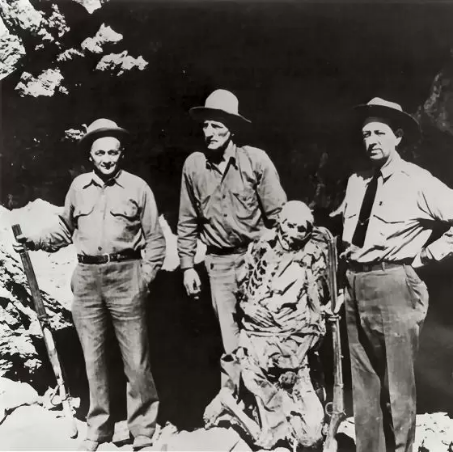
The mystery of Queho's fate lingered until 1940, when prospectors near the Colorado River stumbled upon a cave. Inside, they found the mummified remains of the elusive outlaw. The presence of blasting caps and dynamite suggested that Queho had lived at least into the early 1930s, likely surviving by raiding supplies meant for the construction of Boulder Dam.
In a macabre twist, Queho's remains were purchased by Frank Wait, a law officer who had once pursued him. The remains were displayed by the Las Vegas Elks Club during Helldorado Days, a local festival. Eventually, district attorney Roland Wiley intervened, ensuring Queho received a proper burial at Cathedral Canyon, Nevada.
Cultural Legacy
The life and legend of Queho have not been forgotten. In 1958, his story was dramatized in Bill Burrud's "Treasure" series, with actor Buddy Noonan portraying Queho in "Queho's Secret Hideout." This dramatization further cemented Queho's place in the annals of Nevada folklore.
Sources
For further reading and references, please visit the original Wikipedia article on Queho.
No Recent News
No recent news articles found for this case. Check back later for updates.
No Evidence Submitted
No evidence found for this case. Be the first to submit evidence in the comments below.
Join the discussion
Loading comments...
Queho Born
Queho, a Native American outlaw, is born, later becoming infamous in Nevada.
First Murders Attributed
Queho is suspected of killing his half-brother and a blind man known as Canyon Charlie.
Bounty Increased
The reward for capturing Queho 'dead or alive' is raised from $1,000 to $3,000.
Sightings Reported
Queho is reported to have been sighted near the Colorado River.
Queho's Death
Queho is believed to have died in the early 1930s, though the exact date is unknown.
Body Discovered
Prospectors discover Queho's mummified remains in a cave near the Colorado River.
Burial of Remains
Queho's remains are buried after being purchased by Frank Wait and exhibited at Helldorado Days.
Queho, a Native American outlaw, was implicated in a series of murders in Nevada during the early 20th century, earning the title of the state's first mass murderer. His crimes, which included the confirmed killings of at least 13 individuals and the alleged deaths of 23 more, were primarily reported around Eldorado Canyon and the Techatticup Mine from the 1910s to the 1930s. Queho, born circa 1880, was known for his distinctive club foot, which aided in tracking him, and he reportedly evaded capture for years until his remains were discovered in a cave near the Colorado River in 1940. His body, found alongside explosives from the Boulder Dam construction, indicated he had survived until the early 1930s; he was later buried in Cathedral Canyon after being exhibited by local authorities. The case remains a significant part of Nevada's criminal history, with ongoing discussions about the extent of Queho's culpability in the alleged murders.
Queho is believed by some to have killed his half-brother and a 100-year-old blind man known as Canyon Charlie, but there are theories that he may not have been responsible for all the murders attributed to him during his time. Some community members speculate that he was simply trying to survive and may have been wrongfully blamed for various deaths, while others view him as a cold-blooded killer. Additionally, locals have referred to the area as "The Curse of Queho," suggesting a belief that his presence brought misfortune and violence to the land.
The Legend of Queho: Nevada's First Mass Murderer
Outlaw and Renegade
In the shadowy recesses of Nevada's early 20th-century history, one name echoes with infamy—Queho. Born around 1880, Queho was a Native American whose life of crime and survival became woven into the fabric of Nevada legend. Known alternately as "The Mad Indian," Queho earned the grim title of Nevada's first mass murderer, with many deaths attributed to his hand. Yet, his story is not merely one of violence; it is also a tale of an outcast navigating a world that shunned him.
A Life on the Fringes
Queho's existence was marked by a harsh beginning, born to a mother from the Cocopah tribe who died shortly after his birth. Some speculated that he was of mixed heritage, possibly part Mexican, a status that marked him as a "half-breed" and an outsider in a society intolerant of such backgrounds.
Residing around Eldorado Canyon, Queho survived by taking on odd jobs. However, his life took a dark turn when he allegedly killed his half-brother and a 100-year-old blind man known as Canyon Charlie. These acts were just the beginning of a series of events that would etch his name into history.
The Trail of Violence
Queho's club foot left distinctive tracks, a trait that would both aid and hinder his efforts to evade capture. He became a fugitive, accused of committing murders driven by the need for food and supplies. Opinions about Queho's guilt were divided. Some believed he was not responsible for all the murders attributed to him, while others saw him as a ruthless killer determined to survive at any cost.
One of the most notorious incidents linked to Queho was the death of Maude "Daisy" J. Douglas, discovered outside a cabin at the Techatticup Mine in Nelson, Nevada. The settlers of the area spoke of a curse, "The Curse of Queho," that seemed to hang over the land.
The Hunt for Queho
By March 1919, the bounty for Queho's capture had escalated to $3,000, a testament to the threat he posed and the fear he inspired. In 1921, sightings of Queho near the Colorado River fueled ongoing efforts to apprehend him, but he continued to elude capture.
The Final Chapter
The mystery of Queho's fate lingered until 1940, when prospectors near the Colorado River stumbled upon a cave. Inside, they found the mummified remains of the elusive outlaw. The presence of blasting caps and dynamite suggested that Queho had lived at least into the early 1930s, likely surviving by raiding supplies meant for the construction of Boulder Dam.
In a macabre twist, Queho's remains were purchased by Frank Wait, a law officer who had once pursued him. The remains were displayed by the Las Vegas Elks Club during Helldorado Days, a local festival. Eventually, district attorney Roland Wiley intervened, ensuring Queho received a proper burial at Cathedral Canyon, Nevada.
Cultural Legacy
The life and legend of Queho have not been forgotten. In 1958, his story was dramatized in Bill Burrud's "Treasure" series, with actor Buddy Noonan portraying Queho in "Queho's Secret Hideout." This dramatization further cemented Queho's place in the annals of Nevada folklore.
Sources
For further reading and references, please visit the original Wikipedia article on Queho.
No Recent News
No recent news articles found for this case. Check back later for updates.
No Evidence Submitted
No evidence found for this case. Be the first to submit evidence in the comments below.
Join the discussion
Loading comments...
Queho Born
Queho, a Native American outlaw, is born, later becoming infamous in Nevada.
First Murders Attributed
Queho is suspected of killing his half-brother and a blind man known as Canyon Charlie.
Bounty Increased
The reward for capturing Queho 'dead or alive' is raised from $1,000 to $3,000.
Sightings Reported
Queho is reported to have been sighted near the Colorado River.
Queho's Death
Queho is believed to have died in the early 1930s, though the exact date is unknown.
Body Discovered
Prospectors discover Queho's mummified remains in a cave near the Colorado River.
Burial of Remains
Queho's remains are buried after being purchased by Frank Wait and exhibited at Helldorado Days.