ANALYZING EVIDENCE
Processing case files...
Processing case files...
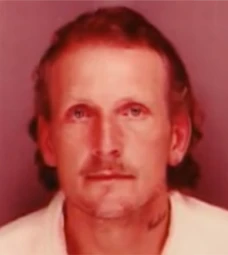
American Serial Killer Case
CLASSIFICATION: Murder
LOCATION
Tallahassee, Florida
TIME PERIOD
1994
VICTIMS
1 confirmed
Robert Joseph Silveria Jr., also known as The Boxcar Killer, is an American serial killer responsible for a series of murders spanning from 1981 to 1996 across multiple states, including California, Oregon, and Florida. Silveria was apprehended on March 2, 1996, and has since been convicted of multiple counts of aggravated murder and first-degree murder, resulting in double life sentences in Wyoming. His criminal activities involved targeting fellow freight-train riders, with his first known victim being Charles Randall Boyd in Kansas, and he has confessed to murdering at least 28 individuals. Significant evidence linking Silveria to these crimes includes his detailed confessions and knowledge of the crime scenes, particularly in cases such as the murders of Willie James Clark in Florida and Michael A. Garfinkle in California. Silveria is currently incarcerated at the Wyoming Medium Correctional Institution in Torrington, Wyoming, where he serves as the head cook.
Robert Joseph Silveria Jr. is believed to have killed between 9 and 30 individuals during his 15-year killing spree, primarily targeting fellow freight-train riders. Some investigators theorize that his nomadic lifestyle contributed to the difficulty in linking the murders and apprehending him sooner. Additionally, there is speculation regarding the possibility of Silveria having more undiscovered victims across the states he traveled through.
In the shadowy underworld of America's railways, a chilling figure emerged, riding the freight trains that crisscross the vast landscape of the United States. Born on March 3, 1959, in Redwood City, California, Robert Joseph Silveria Jr., later infamous as "The Boxcar Killer," traversed the country on steel wheels, leaving a bloody trail that spanned 15 years. This story begins with the life of a man who became synonymous with death among the homeless communities that sought refuge along the rails.
Robert Joseph Silveria Jr., now serving double life sentences in Wyoming, was a man whose name would become feared across several states. From California to Florida, Silveria's murderous spree claimed between 9 and 30 lives, a grim testament to his reign of terror from 1981 to 1996. His first known murder took place in Salem, Oregon, and it was there that a determined police detective and prosecutor would begin to unravel the horrifying truth behind Silveria's life of crime.
Silveria's victims were often those who, like him, lived on the fringes of society, hopping freight trains and eking out an existence in transient communities. On April 28, 1994, in Tallahassee, Florida, Willie James Clark, a 54-year-old Salvation Army bell ringer, was found dead, the victim of a fatal head injury and robbery.
Two years prior, on July 8, 1992, Darren Royal Miller, just 19, was discovered in Thompson Springs, Utah, with severe head injuries. Though Silveria was never formally charged with his murder, his arrest linked him to the crime. Michael A. Garfinkle, a 20-year-old recent college graduate, met a similar fate in Emeryville, California, on August 2, 1994, after planning a boxcar adventure to Santa Cruz. Silveria's confession later revealed intimate knowledge of Garfinkle's murder.
The list of victims continued to grow. Roger Lee Bowman was found dead on April 21, 1995, in Salt Lake City, Utah. Police, already suspecting Silveria, were actively searching for him under the alias "Brad Foster" when he confessed to Bowman's brutal beating and stabbing. Shortly after, on July 23, 1995, James E. McLean was found stabbed to death in his shack along the railroad tracks in Albany, Oregon. Silveria admitted to meeting McLean near the tracks before murdering him and stealing his money.
On July 28, 1995, Charles Randall Boyd was found bludgeoned in a collapsed tent at a Kansas campground. Boyd, who had met Silveria while working on a youth ranch bunkhouse in Texas, traveled with him to Kansas, only to fall victim to his lethal companion.
Paul Wayne Matthews was another life taken by Silveria's hands, his body discovered in a homeless encampment in Whitefish, Montana, on October 15, 1995. The killing spree continued with William Avis Pettit Jr., found in a Millersburg, Oregon boxcar on December 3, 1995, and Michael Andrew Clites, whose life ended in Portland, Oregon, just two days later.
Silveria's capture on March 2, 1996, marked the end of a relentless pursuit by law enforcement. When apprehended, he was found in possession of Pettit's backpack and documents belonging to Matthews and Boyd, including credit cards and identification. These items provided critical evidence linking him to the murders.
In January 1998, in an Oregon courtroom, Silveria pleaded guilty to the murders of Pettit and Clites, a move that allowed him to avoid the death penalty. Instead, he received two consecutive life sentences. Silveria's confessions were chilling in their clarity, detailing the methodical approach he took in eliminating those who crossed his path.
Now residing in the Wyoming Medium Correctional Institution in Torrington, Silveria spends his days as the head cook, a stark contrast to his former life on the rails. His name remains etched in infamy, a reminder of the dark paths some choose in the shadows of society's neglected corners.
The investigation into Silveria's crimes unveiled a network of violence that stretched across multiple states, including Oregon, Kansas, and Florida, among others. As authorities delved deeper, they unearthed a pattern of brutality linked to this drifter's transient lifestyle. Silveria's crimes highlighted the vulnerabilities within the rail-riding community, often overlooked by mainstream society.
The saga of Robert Joseph Silveria Jr. is a haunting reminder of the evil that can lurk in the unlikeliest of places. His life and crimes paint a picture of a man who used the freedom of the rails to carry out his dark deeds. Through the diligence of law enforcement and the justice system, Silveria's reign of terror was ultimately brought to an end, ensuring he would never again roam the rails in search of his next victim.
This case file adapts material from Wikipedia and is licensed under Creative Commons Attribution-ShareAlike 4.0 International. Additional Bloody Likely interface elements, metadata, images, comments, app features, and audio may be separately protected. Creative Commons Attribution-ShareAlike 4.0 International
Audio narration © Bloody Likely. All rights reserved. The audio player is provided for personal streaming/listening only.
No recent news articles found for this case. Check back later for updates.
No evidence found for this case. Be the first to submit evidence in the comments below.
Join the discussion
Loading comments...
Robert Silveria begins his killing spree, targeting fellow freight-train riders.
Willie Clark found dead in Tallahassee, Florida, bludgeoned to death.
Charles Randall Boyd found bludgeoned to death in Kansas.
William Avis Pettit Jr. found bludgeoned to death in a boxcar in Oregon.
Robert Silveria is apprehended, leading to confessions of multiple murders.
Silveria admits to killing throughout the western United States.
Silveria sentenced to two consecutive life terms in prison.
Silveria pleads guilty to murders in Oregon, avoiding death penalty.
Silveria extradited to Kansas for charges related to Boyd's murder.