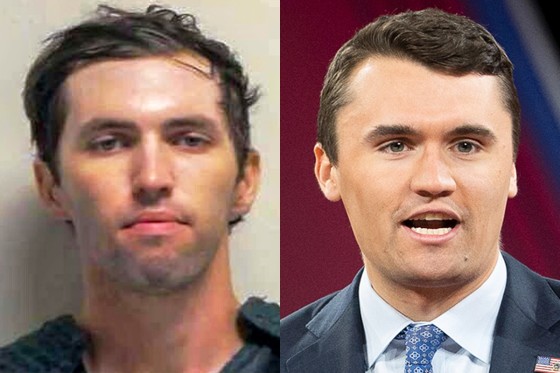
Shooting Of Charlie Kirk
Utah Campus Political Assassination
CLASSIFICATION: Murder
LOCATION
Orem, Utah, US
TIME PERIOD
2025-09-10
VICTIMS
1 confirmed
On 2025-09-10 at Utah Valley University in Orem, Charlie Kirk was fatally shot during an outdoor Turning Point USA debate by a lone sniper-style rifle shot to the neck. Investigators recovered a Mauser-type bolt-action rifle and engraved cartridge cases near the campus, palm prints, footwear impressions, and surveillance video showing a suspect on the Losee Center roof; a manhunt ended when Tyler James Robinson surrendered to authorities the next day. Robinson was charged by Utah prosecutors (who announced they would seek the death penalty) but has not been convicted; forensic links reported by the FBI include DNA matches to a towel wrapped around the rifle and other scene evidence. The case remains under active prosecution and publicly contentious, with significant political fallout and widespread misinformation surrounding motive and responsibility.
Numerous conspiracy theories circulated after the assassination, including claims it was a false flag, involvement by foreign intelligence agencies (notably Israel), or that the suspect was a scapegoat; some commentators amplified unverified theories about the inscriptions on bullet casings and the suspect's motives. Other speculation focused on the suspect's alleged political views, online subcultures (e.g., gaming and meme references), and the suspect's transgender partner as possible motive factors.
The Assassination of Charlie Kirk
Case Essentials
On September 10, 2025, at 12:23 p.m. MDT, Charlie Kirk—an American right‑wing political activist, media personality, and co‑founder and CEO of Turning Point USA—was shot once in the neck while speaking under a tent at an outdoor debate at Utah Valley University (UVU) in Orem, Utah.
The shot came from a sniper positioned on the roof of the nearby Losee Center, roughly 142 yards (about 430 feet, or 130 meters) away. Kirk, 31, was rushed by SUV to Timpanogos Regional Hospital in Orem, where he was later pronounced dead.
A 33‑hour manhunt ended the next day when 22‑year‑old Tyler James Robinson of Washington, Utah, surrendered to the local sheriff. Prosecutors charged Robinson with aggravated murder and related offenses and announced they would seek the death penalty, alleging a politically motivated attack.
The killing was immediately framed as an example of intensifying political violence in the United States. It triggered a sweeping federal response, a campaign of firings and reprisals against people who were seen as celebrating or criticizing Kirk, and an international wave of reaction, conspiracy theories, and political maneuvering.
Charlie Kirk and the Political Climate
Kirk’s Role in the MAGA Movement
Charlie Kirk had built a national profile as a right‑wing political organizer and media figure. He co‑founded Turning Point USA and served as its CEO, using social media and college‑campus organizing to shape the conservative youth movement.
He was a close ally of U.S. president Donald Trump. Major outlets described his importance:
- The New York Times called him “something of a kingmaker.”
- The Guardian dubbed him a “youth whisperer.”
- The Washington Post said he had become “one of the most prominent voices on the right.”
- Axios characterized him as a “driving force” in Trump’s presidential campaigns.
Kirk used that influence to rally support for embattled Trump cabinet nominees and to target Republican politicians he considered insufficiently loyal to Trump.
A Season of Political Violence
Kirk’s assassination came amid a sharp rise in politically motivated attacks in the United States. In the months leading up to his death, several high‑profile incidents had already shocked the country:
- June 2025: Two Democratic Minnesota legislators and their spouses were shot.
- May 2025: Two Israeli embassy staffers were killed in Washington, D.C.
- April 2025: An arson attack targeted Pennsylvania governor Josh Shapiro’s residence.
- December 2024: UnitedHealthcare CEO Brian Thompson was killed.
- July and September 2024: There were assassination attempts on Trump himself.
At a June 2025 campaign event in Kentucky with businessman Nate Morris, Kirk had spoken about the risk of violence tied to his work, telling the crowd, “We’re on the front lines where it’s not always safe.”
The Utah Valley University Event
Planning the American Comeback Tour Stop
On August 27, 2025, Turning Point USA announced that Kirk would visit a series of college campuses in September and October as part of the “American Comeback Tour,” a speech and debate series that had begun in February. His appearance at Utah Valley University was scheduled to be the first stop of the new season.
Kirk had spoken at UVU before, hosting a Turning Point USA event there in 2019 alongside conservative commentator Candace Owens.
As word of the 2025 event spread, a petition circulated urging UVU to cancel Kirk’s appearance. University officials refused, citing free‑speech and open‑discussion policies and allowing the event to go forward.
Security Concerns and Shortcomings
In the days before the event, Kirk’s security director identified “preventable” flaws in coordination and security planning, including:
- Rooftop exposure along nearby buildings
- Inadequate drone restrictions
- Staffing gaps
Security on the day of the event consisted of six police officers plus Kirk’s private security team. The event was ticketed, but ticket checks were not enforced. Attendees were not screened with metal detectors.
The debate was set up in a grassy amphitheater area of campus. Kirk would sit under a tent bearing the tour title while facing an audience that would eventually reach about 3,000 people.
The Day of the Assassination
The Suspect Arrives on Campus
According to investigators, security camera footage showed the suspected gunman arriving on campus at 8:29 a.m. MDT in a gray Dodge Challenger. Early footage showed him dressed differently than he would appear near the time of the shooting.
Around 11:50 a.m., cameras recorded him again, moving from a grassy area into a parking lot just north of campus. By then, he was wearing:
- A black shirt with a United States flag centered on the front
- A dark baseball cap
- Large sunglasses
At 11:53 a.m., he paused at the top of some stairs, pulled out his phone, then walked down into a pedestrian tunnel. FBI‑released still images later showed him climbing a stairwell in a parking garage adjacent to that tunnel.
Kirk Takes the Stage
The speaking event began at noon, drawing roughly 3,000 attendees.
At 12:02 p.m., the suspected gunman was seen walking on the north side of the Losee Center, a building that overlooked the amphitheater. Authorities would later say this was the path he used to reach the roof from which he fired.
Kirk appeared around 12:09 p.m., tossing hats into the crowd before settling under the tent. At 12:11 p.m., he began speaking.
According to a later affidavit, the suspect entered the Losee Center from the southeast and was seen 13 minutes later ascending stairs alongside the building. These stairs led to a public walkway next to the roof. Surveillance footage showed the suspect:
- Crossing a railing from the walkway onto the roof around 12:15 p.m.
- Disappearing from view briefly
- Then running across the roof and crawling into a prone firing position
By 12:22 p.m., investigators believe he was lying on his stomach on the roof, facing the tent where Kirk was speaking, approximately 430 feet away.
The Final Exchange
Under the tour tent, Kirk had moved into a back‑and‑forth discussion about mass shootings in the United States with UVU student Hunter Kozak, a member of a group called the “Unfuck America Tour.”
Kozak asked: “Do you know how many transgender Americans have been mass shooters over the last 10 years?”
Kirk answered: “Too many.”
Kozak replied: “It’s five. Now, five is a lot, right? I’m going to give you — I’m going to give you some credit. Do you know how many mass shooters there have been in America over the last 10 years?”
Kirk responded: “Counting or not counting gang violence?”
“Great,” Kozak answered.
Immediately after this exchange, at 12:23:30 p.m., a single shot rang out. The bullet struck Kirk in the neck. Investigators concluded that the shot came from the roof of the Losee Center.
Deseret News reporter Emma Pitts, who was in the crowd, later told NPR: “I just saw so much blood come out of the left side of Charlie’s neck, and then he went limp.”
Former U.S. representative Jason Chaffetz, also present, recalled: “As soon as the shot went out, everybody hit the deck and everybody started scattering and yelling and screaming.”
By 12:23:55 p.m., six men had lifted Kirk and carried him to an SUV, which sped him to Timpanogos Regional Hospital. He was later pronounced dead there. At 2:40 p.m., Trump announced Kirk’s death on his social media platform Truth Social.
The Shooter’s Escape
Video footage captured the suspected shooter running from the south corner of the Losee Center roof—where he had allegedly fired the shot—to the north corner, where the ground was higher. There, around 12:24 p.m., he hung from the roof edge and dropped to the ground.
At the edge of the roof, investigators later found palm prints and smudges from which they collected DNA samples. On the ground below, they recovered a footprint indicating the suspect had been wearing Converse sneakers.
From there, the suspect moved into a wooded area north of campus. In that area, law enforcement subsequently discovered a rifle with a scope, along with bullet casings that bore engraved messages.
Immediate Law‑Enforcement Response and Campus Lockdown
Audio recordings show that regional law enforcement became aware of the shooting no later than 12:26 p.m.
At 12:31 p.m., an officer radioed that “gunshots [were] heard near the library.” Four minutes later, at 12:35 p.m., the officer suggested “maybe the CS building,” and described a suspect “wearing jeans, black shirt, black mask, long rifle.”
At 12:36 p.m., the officer refined the report: the suspect was “on top of the building on the far north side, just east of the library.” A UVU police officer was the first to inspect the suspected firing position on the Losee Center roof.
By 12:39 p.m., FBI agents and area police chiefs had arrived at the scene.
At 1:37 p.m., UVU officials ordered the campus closed and urged everyone to leave. At 2:01 p.m., for those still on campus, the university instructed people to “secure in place until police officers can escort you safely off campus.” Classes and activities at all UVU campuses—including satellite locations—were suspended through September 15.
Manhunt and Early Missteps
Launching the Manhunt
The Utah Department of Public Safety led the investigation with assistance from the FBI and the Bureau of Alcohol, Tobacco, Firearms and Explosives (ATF). A manhunt began immediately after the shooting.
Two Initial Arrests
Very early in the search, police arrested two people, both of whom were later released.
One was a libertarian conservative man detained on campus after he claimed to have shot Kirk. He later told police he was “glad he said he shot the individual so the real suspect could get away.” Authorities said he had a history of mental health problems and was already known for disrupting public events. He was taken to a hospital, where officers discovered more than 20 images of child sexual abuse on his phone.
After his release on September 14, he was jailed on charges of obstruction of justice and sexual exploitation of minors. On December 17, he waived his right to a preliminary hearing. On January 29, 2026, he pleaded no contest to obstruction of justice and guilty to two counts of sexual exploitation of minors. He received a 15‑year prison sentence.
Confusion from the FBI Director
Hours after the shooting, FBI director Kash Patel announced on social media that “the subject” in the assassination had been apprehended. Utah governor Spencer Cox similarly said that a “person of interest” was detained.
Within about 90 minutes, Patel walked back his statement, saying the subject had been released after interrogation. The premature announcement and retraction were widely criticized and later figured prominently in congressional scrutiny of Patel.
Forensic Evidence and Investigative Leads
The Rifle and Engraved Ammunition
Investigators recovered an older‑make Mauser‑type bolt‑action hunting rifle chambered in .30‑06 from the wooded area north of campus. Alongside it, they found engraved cartridges and other forensic traces, including:
- A footwear impression
- A palm print
- Forearm imprints
At a September 11 press conference, officials said they had “good video footage” and were using facial recognition to identify the suspect. Later that day, the FBI admitted those efforts had not worked, released photographs of a person of interest, and offered up to $100,000 for information. Agents also began examining social media posts suggesting foreknowledge of the assassination.
The inscriptions on the cartridges quickly became a focus of public speculation. Early rumors claimed they contained slogans tied to anti‑fascism or “transgender ideology.” After an FBI briefing on September 12, officials described the messages instead as a mishmash of Internet memes and pop‑culture references.
The spent cartridge case was inscribed:
- “Notices Buldge OWO what’s this?” [sic] —a phrase associated with furry online role‑play.
Three unfired rounds bore separate engravings:
- “hey fascist! CATCH! ↑→↓↓↓” —the arrows referencing a code used to summon a 500 kg bomb in the 2024 video game Helldivers 2.
- “O Bella ciao, Bella ciao, Bella ciao, Ciao, ciao!” —lyrics from the Italian anti‑fascist song “Bella ciao” (“Goodbye, Beautiful”).
- “If you read This, you are GAY Lmao”.
“Bella ciao” is widely recognized as an anti‑fascist anthem, but it had also resurfaced in mainstream culture via the TV series Money Heist and the video games Hearts of Iron IV and Far Cry 6.
During the manhunt, law‑enforcement agencies reported receiving more than 7,000 tips and conducting over 200 interviews.
Congressional Scrutiny of the FBI
Patel Before the Senate
On September 16, 2025, FBI director Kash Patel appeared before the Senate Judiciary Committee. Senators grilled him on the Kirk investigation and his handling of it—especially his inaccurate social media post claiming a suspect had been detained.
Patel testified that more than 20 users in a Discord discussion group that included the eventual suspect, Tyler Robinson, would be investigated.
The hearing quickly turned combative. When California senator Adam Schiff questioned why child sex trafficker Ghislaine Maxwell had been transferred to a lower‑security prison, Patel lashed out, calling Schiff:
- “The biggest fraud in the U.S. Senate”
- A “disgrace”
- An “utter coward”
- A “political buffoon”
The spectacle drew bipartisan criticism and added to concerns about Patel’s leadership. His tenure had already involved turbulence at the FBI, including reassignments, firings, and loyalty tests. Notably, the shooting occurred just hours after former FBI agents filed a lawsuit accusing him of a politically motivated purge of agency leadership.
Patel Before the House
The next day, September 17, Patel testified before the House Judiciary Committee. Members pressed him both on the assassination and on files related to convicted sex offender Jeffrey Epstein.
In his opening statement, Patel claimed credit for decisions he said led to Robinson’s arrest. During questioning, he admitted he did not know how often Trump’s name appeared in the Epstein files, but insisted he was confident Trump was not implicated.
Representative Jamie Raskin accused Patel of transforming the FBI into a “political enforcement agency working directly for the president’s vengeance campaign.”
Representative Wesley Hunt asked Patel if he could answer questions about Thomas Crooks, the man who attempted to assassinate Trump during his 2024 presidential campaign. Patel replied, “As soon as the trial is over.” In reality, no trial occurred: Crooks was shot and killed by a Secret Service counter‑sniper team shortly after firing at Trump.
Identifying Tyler James Robinson
A Face on the News
Authorities eventually identified a 23‑year‑old American man, Tyler James Robinson (born April 16, 2003), as the suspect.
On September 11, the day after the shooting, Robinson’s parents recognized him in news images of the person authorities believed was the gunman. They persuaded him to come to their home in Washington, Utah, about 240 miles (390 km) southwest of UVU.
During their conversation, Robinson allegedly implied he was the shooter. He told them he was afraid that police or a SWAT team might kill him if they tried to arrest him at their house.
Robinson’s parents contacted a family friend who was a retired detective and sheriff’s deputy. The retired detective, in turn, called Washington County sheriff Nate Brooksby and arranged for Robinson to surrender.
That evening, Robinson’s father and the retired detective drove him to the sheriff’s office. He was taken into custody without incident. Governor Spencer Cox announced the next day that Robinson was the only suspect. The manhunt had lasted 33 hours.
Local law‑enforcement officials later alleged that Robinson had been acting irrationally and may have contemplated suicide during the period he was on the run.
Charges and Potential Death Penalty
Prosecutors initially filed seven charges against Robinson, including:
- One count of aggravated murder
- One count of felony discharge of a firearm
- Two counts of obstruction of justice
- Two counts of witness tampering
They added three counts of victim‑targeting enhancements and one count of violence committed in the presence of a child. Utah prosecutors declared they would seek the death penalty, citing as aggravating factors that Robinson allegedly targeted Kirk for his political expression and acted knowing children would witness the killing.
If convicted of aggravated murder, Robinson could face execution.
Robinson’s Background
Robinson grew up in Washington, Utah, the son of a social worker and a business owner. He had two younger brothers. His family members belong to the Church of Jesus Christ of Latter‑day Saints. His grandmother later said most of the family were Republicans and that she did not know “a single Democrat.”
Family photos show trips to shooting ranges and weapons displays, including a 2017 visit to a military facility. Robinson began attending Riverside Elementary School in 2008 and graduated from Pine View High School in May 2021. From 2019 to 2021, he earned college credits through Dixie State University (renamed Utah Tech University in 2020).
On May 31, 2022, police body‑camera footage captured Robinson and two family members being questioned after a traffic collision at an intersection.
At the time of his arrest, Robinson was living in St. George, Utah, about 240 miles from UVU, and was in his third year of an electrical apprenticeship at Dixie Technical College. He had enrolled at Utah State University but dropped out after one semester.
Robinson had no prior criminal record. He was registered to vote but not affiliated with any political party, and there was no record of him having voted in Washington County.
Digital Clues and DNA
The Roommate and Private Messages
Investigators interviewed Robinson’s roommate and romantic partner, who was transgender. The partner was not considered a suspect. Descriptions from authorities and reporters portrayed the partner as “aghast” and “shocked.” The partner denied any knowledge of the crime.
Governor Cox said the roommate had been “very cooperative,” turning over private messages that prosecutors described as incriminating. Those messages reportedly discussed:
- Retrieving a rifle from a “drop point”
- Leaving the rifle in a bush
- Watching the area where a rifle had been left
- A scope and engraved bullets
- Wrapping the rifle in a towel
The partner remained under FBI protection until January 15, 2026.
The Discord Conversation
Roughly an hour after the shooting, Robinson wrote in a private Discord group chat asking whether others had seen the news. One group member said he resembled the shooter seen in images released by authorities.
Robinson allegedly joked that he had a doppelgänger trying to frame him and suggested the group should give him a share of any FBI reward money for turning him in. He said he would avoid going to McDonald’s—a reference to Luigi Mangione, who had been arrested at a McDonald’s in Altoona, Pennsylvania, in connection with the killing of Brian Thompson—and joked about getting rid of his manifesto and rifle.
Later that day, another message appeared in the same group:
“Hey guys, I have bad news for you all. It was me at UVU yesterday. im [sic] sorry for all of this. im [sic] surrendering through a sheriff friend in a few moments, thanks for all the good times and laughs, you’ve all been so amazing, thank you all for everything.”
A friend in the chat wrote the next morning that the confession appeared real and called for prayers, both for Robinson’s repentance and for Kirk’s family. Discord later suspended Robinson’s account.
DNA Confirmation
On September 15, the FBI announced a DNA match: Robinson’s DNA was found on a towel wrapped around the rifle discovered in the wooded area and on a screwdriver recovered from the roof where the fatal shot had been fired.
Motive and Political Views
Shifts in Beliefs
Utah County prosecutor Jeffrey Gray said Robinson’s mother reported that her son had become more political over the previous year and had started to “lean more to the left, becoming more pro‑gay and trans rights–oriented.”
On September 14, Governor Spencer Cox described Robinson as holding “leftist ideology,” without specifying what he meant. He said Robinson’s views differed sharply from his conservative family’s and that Robinson seemed to have become radicalized after dropping out of Utah State University, influenced by aspects of Internet culture.
A relative told investigators that at a family dinner, Robinson expressed dislike of Kirk and brought up Kirk’s upcoming UVU visit.
Records showed no criminal history and no evidence, as of late September, of formal ties to any left‑wing organizations. Despite claims by Trump and some Republicans that Robinson was connected to left‑wing groups, sources familiar with the investigation said by September 21 there was no evidence supporting those allegations.
Statements About Motive
On September 16, Gray said the suspect had become “increasingly concerned about gay and trans rights” and had grown distant from his family’s conservative views—pointing to his relationship with his transgender roommate as a factor.
Gray also cited messages the prosecution attributed to Robinson, indicating the shooting had been planned for just over a week. When the roommate asked why he had done it, Robinson allegedly responded:
“I had enough of his hatred. Some hate can’t be negotiated out.”
During a phone call with his father on September 11, Robinson allegedly said he had killed Kirk because “there is too much evil and the guy [Kirk] spreads too much hate.”
ABC News noted that the charging documents did not spell out how Robinson’s political or social views related to the killing, or whether Kirk’s public positions on those issues were a direct motivating factor. Gray said he would leave it to a judge to determine whether the statements ascribed to Robinson amounted to a legal confession.
Legal Proceedings Against Robinson
Initial Hearings and Death‑Penalty Decision
After surrendering, Robinson was transferred to Utah County Jail in Spanish Fork. A judge ordered him held without bail.
On September 16, he appeared via video before Judge Tony Graf in Utah County Justice Court in Provo. Graf read out the charges:
- One count of aggravated murder
- One count of felony discharge of a firearm
- Two counts of obstruction of justice
- Two counts of witness tampering
- Three counts of victim‑targeting enhancement
- One count of violence committed in the presence of a child
That same day, Utah prosecutors formally announced they would seek the death penalty, citing as aggravating factors both the political targeting and the presence of children at the scene.
Robinson’s family began visiting him virtually and, at times, in person.
Defense Counsel and Courtroom Conditions
On September 24, Salt Lake City attorney Kathryn Nester was appointed to represent Robinson. On September 29, she requested more time to review what she described as a large volume of evidence before deciding whether to seek a preliminary hearing.
On October 24, a judge heard arguments on whether Robinson could appear in civilian clothes and without visible restraints in court. The defense argued that appearing in a jail uniform would prejudice potential jurors. On October 27, the judge ruled that Robinson could wear civilian clothing but, for security reasons, would remain physically restrained. The court barred media from photographing or filming the restraints.
Robinson’s Reaction and Media Access Battles
In October, Robinson participated in a phone call with a Washington Post reporter. The reporter told him that Kirk’s wife, Erika, had publicly forgiven him at the memorial, and that Trump had posthumously awarded Kirk the Presidential Medal of Freedom. Robinson had no audible reaction.
On November 5, after prosecutors moved to limit media coverage in the courtroom while Robinson was present, a coalition of news organizations—including The Salt Lake Tribune, The New York Times, CNN, the Associated Press, and Fox News—filed a motion demanding notice of any future attempts to restrict access. Erika Kirk supported their request, saying: “There have been cameras all over me. We deserve to have cameras in there.”
Robinson made his first in‑person court appearance on December 11, 2025, and appeared again on January 16, 2026. On January 22, concerned about potential delays, Erika filed a speedy‑trial motion seeking to ensure Robinson would be tried within a set timeframe.
Ballistics Dispute and Delays
On March 27, Robinson’s attorneys filed a motion to delay future proceedings, citing an ATF analysis that, they argued, could not conclusively match a bullet fragment recovered during Kirk’s autopsy to the rifle allegedly used. The same day, Washington County sheriff Nate Brooksby, who had overseen Robinson’s surrender, resigned after complaints about his department’s operations.
A preliminary hearing was initially scheduled for May 18, with three days allotted. In early May, Judge Graf ruled that cameras would be allowed in the courtroom but postponed the preliminary hearing until July, citing the vast amount of evidence.
The Trump Administration’s Response
A Nationwide Campaign Against “Political Extremism”
Republican officials at both state and federal levels responded to Kirk’s killing by urging the public to report anyone making comments about the assassination that were deemed inappropriate, celebratory, or even just critical of Kirk. Over time, this effort broadened to include criticism of Republican politicians’ responses to the killing. The New York Times described it as a conservative form of “cancel culture.”
On September 15, the Trump administration threatened a sweeping crackdown on liberal groups and donors, claiming that a network of left‑leaning organizations promoted violence and would be dismantled. Trump said he was considering labeling some organizations as terrorist groups. Vice President JD Vance specifically named the Open Society Foundations and the Ford Foundation, which had backed liberal and progressive causes. Legal analysts pointed out that First Amendment protections would make such actions difficult.
These threats came amid broader administration efforts targeting political opponents and civil society groups.
Free‑speech advocates and legal experts widely condemned the response, arguing that the administration was using Kirk’s assassination as a pretext to suppress opposition. NBC News reported that the White House appeared “to be using Kirk’s assassination as an excuse to crack down on left‑wing people and groups.”
A letter from 100 liberal philanthropies defended their work and accused the administration of exploiting political violence “to mischaracterize our good work or restrict our fundamental freedoms, like freedom of speech and the freedom to give.”
Debates Over “Hate Speech”
Attorney General Pam Bondi drew bipartisan criticism when she said the administration would treat some criticism of Kirk as prosecutable “hate speech,” even suggesting that veiled criticism from Supreme Court justice Sonia Sotomayor could be targeted. Some conservative commentators, including Tucker Carlson and Erick Erickson, also condemned her remarks.
Asked about allies who claimed hate speech was still protected speech, Trump responded that his administration would “probably go after people like you,” telling ABC’s Jonathan Karl that reporters had “a lot of hate” in their hearts.
Fox News later reported that Bondi had lost confidence in FBI director Patel because of his management of the investigation and manhunt. A former federal prosecutor and MSNBC legal analyst warned Patel’s public conduct could jeopardize Robinson’s right to a fair trial.
Rewriting the Domestic Terrorism Narrative
In the wake of the assassination, the U.S. Department of Justice removed a 2024 National Institute of Justice study titled “What NIJ Research Tells Us About Domestic Terrorism” from its website. That report had concluded that white supremacist and far‑right violence continued to outpace all other forms of terrorism and domestic violent extremism in the U.S.—a finding at odds with the administration’s rhetoric.
In its place, the DOJ posted a notice saying the Office of Justice Programs was reviewing websites and materials “in accordance with recent Executive Orders.”
Immigration and Ideological Crackdowns
The State Department announced it would review the immigration status of non‑citizens found to be “praising, rationalizing, or making light” of Kirk’s assassination.
White House deputy chief of staff for policy Stephen Miller called the killing the product of an “ideology” that was “at war with family and nature … that leads, always, inevitably and willfully, to violence.” He vowed to use “the power of law enforcement, under President Trump’s leadership” to “dismantle and take on” what he described as violent radical left organizations.
On September 17, one week after the shooting, Trump declared he would designate antifa as a terrorist group. On September 25, he signed a national security memorandum directing the Justice Department, FBI, and Joint Terrorism Task Forces to prioritize anti‑fascist political violence “before they result in violent political acts,” citing warning indicators such as anti‑capitalism, anti‑Americanism, and “hostility towards those who hold traditional American views.”
In January 2026, Utah senator Mike Lee publicly called for Robinson to be executed in public. Robinson’s attorneys argued that such remarks from high‑ranking officials would make it harder to seat an impartial jury.
Internal FBI Turmoil
In February 2026, Illinois senator Dick Durbin released a whistleblower report stating that the FBI’s shooting reconstruction team was delayed in traveling to the scene by a day because of a shortage of planes and pilots. The shortage was allegedly caused by director Patel’s personal use of FBI aircraft.
Funeral, Memorials, and Posthumous Honors
On September 11, Kirk’s casket—accompanied by Vice President JD Vance, second lady Usha Vance, and Erika Kirk—was flown on Air Force Two from Salt Lake City to Phoenix, Arizona. Trump ordered all federal flags flown at half‑staff until September 14 at 6 p.m. Critics noted he had not issued a similar order after Democratic Minnesota representative Melissa Hortman was killed in June.
The New York Times faulted Trump’s rhetoric, arguing he had abandoned the traditional presidential role of unifier in favor of blame and revenge. Trump later released a video tribute announcing that Kirk would receive the Presidential Medal of Freedom posthumously.
On September 11, sixteen Republican members of Congress sent a letter to House speaker Mike Johnson urging the erection of a Kirk statue in the U.S. Capitol.
On September 15, New College of Florida in Sarasota announced plans to erect a statue of Kirk on its campus.
On September 14, several officials—including Karoline Leavitt, Mike Johnson, and Robert F. Kennedy Jr.—attended a prayer vigil at the Kennedy Center in Washington, D.C., to honor Kirk’s life and work.
A large memorial service was held on September 21 at State Farm Stadium in Glendale, Arizona. Among those present were Erika, Trump, Vance, and Elon Musk. During his eulogy, Trump said Kirk “did not hate his opponents. He wanted the best for them. That’s where I disagreed with Charlie. I hate my opponent, and I don’t want the best for them.”
On Fox & Friends on September 19, Cardinal Timothy Dolan of the Catholic Church compared Kirk to “a modern‑day Saint Paul.”
A mural and memorial site were also established on the UVU campus near the shooting scene.
Firings, Suspensions, and the Jimmy Kimmel Fight
In the days and weeks after the assassination, people across the United States—and some abroad—faced suspensions, firings, or investigations for social‑media posts or public remarks that:
- Celebrated Kirk’s death,
- Criticized him,
- Or questioned how Republicans were using the killing politically.
Those affected included teachers, firefighters, and members of the military and U.S. Secret Service. Many received death threats.
Far‑right activists such as Laura Loomer called for revenge and doxxed people they accused of celebrating or justifying the assassination. An organization originally called “Expose Charlie’s Murderers” (later the “Charlie Kirk Data Foundation”) created a website that reportedly gathered more than 63,000 submissions documenting posts about Kirk. Cybersecurity experts compared it to Turning Point USA’s earlier “Professor Watchlist,” calling it a tool for harassment.
The site, hosted by Epik, was removed on September 16 for violating terms of service. Epik said the domain had been registered with false information and that it had received credible DDoS threats. Within three days of the shooting, the site had collected 30,000 submissions. Several people were falsely accused, including a Wisconsin elementary‑school teacher and a Walmart IT technician whose family fled their home after he was doxxed.
Reuters observed that some right‑wing influencers pushing for people to report offensive posts had themselves previously mocked other instances of political violence, including threats and attacks on figures such as Paul Pelosi. In some of those cases, Kirk’s own prior comments were cited.
The Jimmy Kimmel Suspension
Comedian Jimmy Kimmel entered the controversy when he used his ABC late‑night show Jimmy Kimmel Live! to attack Trump’s reaction to the shooting.
On September 12, Kimmel criticized Trump for failing to unite the country and instead attacking Democrats. On September 15, he said the “MAGA gang” was “desperately trying to characterize this kid who murdered Charlie Kirk as anything other than one of them” and accused them of trying to “score political points” rather than genuinely mourning.
FCC chief Brendan Carr accused Kimmel of “directly mislead[ing] the American public” and threatened ABC with potential regulatory action, including revoking broadcast licenses for its owned‑and‑operated stations. On September 17, Nexstar Media Group—seeking FCC approval for a $6.2 billion acquisition of Tegna Inc.—announced it would pre‑empt Jimmy Kimmel Live! on its 32 ABC affiliates “for the foreseeable future.”
ABC then said it would suspend the show indefinitely. Variety linked the decision to calls from prominent conservatives to silence any critics of Kirk, “no matter how nuanced.”
A public backlash ensued. Kimmel’s show ultimately returned to the air just days later.
Vice President Vance Hosts Kirk’s Podcast
On September 15, Vance guest‑hosted The Charlie Kirk Show podcast. He urged Americans to report anyone celebrating Kirk’s killing to their employers and vowed to use federal power to investigate and punish liberal organizations and donors.
The Associated Press reported that the campaign quickly expanded to target people whose statements were merely critical of Kirk, not celebratory of his death. Adam Goldstein of the Foundation for Individual Rights and Expression compared this to right‑wing cancel culture and warned that the government role pushed it toward “McCarthyism.”
CNN reported that Disney employees and other staff members received death threats and had their personal contact information exposed. Senator Ted Cruz criticized the FCC’s actions as “unbelievably dangerous,” warning that once government begins deciding which speech is acceptable, such powers could later be used against conservatives.
Erika Kirk’s Response
Shortly after her husband’s death, Erika Kirk addressed viewers in a livestream from his former podcast studio at Turning Point USA headquarters. She began by thanking first responders, Kirk’s staff, and the White House, and vowed: “My husband’s voice will remain.”
She called for retribution against “evil‑doers,” saying: “You have no idea the fire that you have ignited within this wife, the cries of this widow will echo around the world like a battle cry.” She promised to carry forward her husband’s ideals and ensure his name would never be forgotten.
In a later interview with The New York Times, Erika described insisting on viewing Kirk’s body against law‑enforcement advice. According to her, she told authorities, “With all due respect, I want to see what they did to my husband,” then kissed him goodbye. She said he appeared to have died with a “Mona Lisa‑like half smile,” and looked “happy.”
Domestic Political Response
Trump’s Blame on the “Radical Left”
In an address from the Oval Office on September 10, Trump placed responsibility for Kirk’s killing—and other recent political attacks—squarely on “radical left” groups, without mentioning recent Democratic victims of violence.
In the hours after the shooting, Trump had already blamed radical left organizations for the rising tide of political violence. Yet research showed that from 2022 through 2024, all 61 political killings in the United States had been committed by right‑wing extremists.
NBC News described Trump’s national address as “far more polarizing” than statements by many other leaders of both parties.
The next day, Trump declared, “We have radical left lunatics out there and we just have to beat the hell out of them,” though he later added that he hoped his supporters would remain nonviolent. On Fox & Friends on September 12, when asked about radicals on both sides, he said: “The radicals on the right oftentimes are radical because they don’t want to see crime ... The radicals on the left are the problem.”
Bipartisan Condemnation and Deepening Rancor
Politicians from both parties condemned the shooting.
Republicans expressing sympathy included:
- President Donald Trump
- Vice President JD Vance
- First lady Melania Trump
- House speaker Mike Johnson
- Senate majority leader John Thune
- Former president George W. Bush
Vance, hosting Kirk’s podcast, said he would not have become vice president without Kirk and vowed to carry on his legacy.
Democratic leaders who denounced the killing included:
- Former presidents Bill Clinton, Barack Obama, and Joe Biden
- Senate minority leader Chuck Schumer
- House minority leader Hakeem Jeffries
- California governor Gavin Newsom
- Minnesota representative Ilhan Omar
Republican members of Congress linked the shooting to what they called dangerous left‑wing rhetoric and blamed Democrats for inciting violence. Democrats and analysts countered that Trump’s own inflammatory language had also contributed to a toxic climate, and that political violence had hit both parties. Democrats used the moment to renew calls for gun‑safety legislation.
Several outlets—including The Economist, The New York Times, PBS (republishing The Conversation), and Time—pointed out that most perpetrators of political violence in the U.S. in recent decades have been right‑leaning, a conclusion repeatedly confirmed by research. As noted, the DOJ quietly removed from its website the NIJ report that had documented that most ideologically motivated homicides since 1990 (excluding 9/11) were committed by right‑wing extremists.
Pennsylvania governor Josh Shapiro, whose home had been targeted in an April 2025 arson attack, responded directly to Trump: “The president shouldn’t cherry‑pick what counts and what doesn’t count. When he does that, it gives a pass to some. We can’t have that. This is a moment where leaders need to speak and act with moral clarity.”
Congress and the Military
In the House of Representatives, speaker Mike Johnson led a 30‑second moment of silence for Kirk, observed by all members. Disputes quickly erupted, and the observance devolved into partisan acrimony and mutual accusations.
Defense secretary Pete Hegseth said the Pentagon was “tracking … very closely” any civilian or military employee who was a Kirk detractor or celebrated his death, with the aim of imposing punishment. Deputy secretary of state Christopher Landau urged social‑media users to report foreign residents of the U.S. who mocked or celebrated the assassination.
Comparing the Killing to the Reichstag Fire
Commentators across the spectrum, including far‑right voices and Trump critics, drew comparisons between Kirk’s assassination and the 1933 Reichstag fire in Germany, which Adolf Hitler used as a pretext to suspend civil liberties and crush political opposition. Some labeled Kirk’s death Trump’s “Reichstag fire moment,” warning that exploiting the killing to launch broad attacks on critics was “page one of the authoritarian playbook,” in the words of Harvard professor Steven Levitsky, co‑author of How Democracies Die.
Experts on political violence warned that rushing to assign blame would heighten conflict and that Trump’s previous pardons of January 6 defendants had created a “permission structure” for further political violence.
Elon Musk and the ADL
Elon Musk said that “people of the left” were celebrating Kirk’s death, adding: “Whether you choose violence or not, violence is coming to you. You either fight back or you die.”
Later that month, Musk called the Anti‑Defamation League (ADL) a “hate group” and accused it of being anti‑Christian. This came as the assassination renewed scrutiny of the ADL’s work on right‑wing antisemitism and extremism, including its criticism of Turning Point USA and Kirk. Facing political pressure, the FBI severed ties with the ADL, and director Patel publicly condemned the organization. The ADL subsequently retired its “Glossary of Extremism,” citing outdated entries.
International Reaction
Kirk’s assassination drew condolences from world leaders and foreign officials across the political spectrum. Among them were:
- Argentine president Javier Milei
- Australian prime minister Anthony Albanese
- British prime minister Keir Starmer and foreign secretary Yvette Cooper
- Canadian prime minister Mark Carney
- Czech prime minister Petr Fiala
- The French foreign ministry
- Georgian president Mikheil Kavelashvili and prime minister Irakli Kobakhidze
- Hungarian prime minister Viktor Orbán
- Israeli prime minister Benjamin Netanyahu
- Italian prime minister Giorgia Meloni
- Mexican president Claudia Sheinbaum
- New Zealand deputy prime minister David Seymour
- Polish president Karol Nawrocki
- Scottish first minister John Swinney
- Swedish deputy prime minister Ebba Busch
- Vatican secretary of state Pietro Parolin
- Salvadoran president Nayib Bukele
- Paraguayan president Santiago Peña
- Pope Leo XIV
- Russian president Vladimir Putin, who called the attack a “disgusting crime”
Bukele criticized how international media covered the assassination. Peña paid tribute to Kirk in a speech marking the 138th anniversary of Paraguay’s ruling Colorado Party. Pope Leo XIV expressed concern about rising political violence and prayed for Kirk and his family.
European Populist Right’s Response
Right‑wing and populist leaders in Europe used the killing to rally supporters and blame the left:
- Orbán likened it to attacks on former Czech prime minister Andrej Babiš and Slovak prime minister Robert Fico, urging the world to “stop the hate‑mongering left.”
- Georgian leaders Kavelashvili and Kobakhidze argued that the assassination illustrated where “so‑called liberals and pseudo‑liberals” were leading the world.
- Dutch politician Geert Wilders quoted Kirk’s anti‑Islam stance, saying those words applied to Europe as well.
- Jordan Bardella of France’s National Rally blamed “dehumanising rhetoric of the left,” claiming it fueled political violence.
- Alice Weidel of Germany’s Alternative for Germany said Kirk had been killed by “a fanatic who hates our way of life.”
- Italy’s Matteo Salvini said he had “cried” over Kirk’s death and hoped to emulate his outreach to young people.
- In Spain, Vox and Patriots.eu leader Santiago Abascal appeared at his party convention in a shirt similar to what Kirk wore when he was shot.
- In the UK, Reform UK leader Nigel Farage mourned the death of a personal friend in the House of Commons, and far‑right figure Tommy Robinson used the killing to mobilize support for an anti‑immigration “Unite the Kingdom” rally in London.
The European Parliament Debate
On September 11, members of the European Conservatives and Reformists Group (ECR) and the Europe of Sovereign Nations Group (ESN) moved to hold a minute of silence for Kirk in the European Parliament. Parliament president Roberta Metsola rejected the motion. Swedish ECR MEP Charlie Weimers was allowed to speak about the shooting before the voting session, but when he tried to yield time for a silent tribute, vice president Katarina Barley cut him off.
French MEP Nathalie Loiseau of Renew Europe said she received death threats for opposing the minute of silence. She argued that while Kirk was a victim, he “would have been considered a delinquent in France” for “racist, antisemitic, and homophobic” statements. Renew Europe leader Valérie Hayer likewise opposed honoring Kirk, citing his “supremacist, racist, anti‑abortion, and pro‑Russian” views.
By contrast, Lithuania’s parliament, the Seimas, held a moment of silence for Kirk on September 18 after a resolution by MP Rimas Jonas Jankūnas.
Religious and Media Reactions Abroad
On September 18, Czech cardinal Dominik Duka celebrated a Requiem Mass for Kirk at Prague’s Church of Our Lady before Týn. Hundreds of worshippers, including politicians, attended, while dozens of demonstrators outside carried banners calling Kirk “fascist, racist and sexist.”
Russian state media framed the assassination as evidence the U.S. was sliding toward civil war. Chinese state media portrayed it as a symptom of a disorderly, deteriorating society plagued by political turmoil and gun violence.
Media Coverage and Popular Culture
News of the shooting and Kirk’s death dominated the news cycle on September 10, 2025. Around 2:50 p.m. Eastern Time, major networks switched into continuous “breaking news” coverage that lasted into the night. Most outlets edited or blurred footage to avoid showing the moment of impact.
Fox News, MSNBC, and CNN saw a surge in viewership. Together, they averaged 6.9 million viewers on September 10—a 65% increase over the previous week—and 6.2 million on September 11, up 72% from the week before.
On September 12, Fox News aired a primetime special, Charlie Kirk: An American Original. Left‑leaning publications such as The National, The Nation, and The New Republic condemned the assassination but accused mainstream media of “whitewashing” Kirk’s record.
Fox host Jesse Watters declared: “They are at war with us ... We’re going to avenge Charlie’s death in the way he would want it avenged ... Charlie would want us to put as much pressure on these people as possible.”
Left‑wing streamer Hasan Piker, who had been scheduled to debate Kirk later that month, called the assassination a “terrifying incident.” He warned that the wave of people seeking vengeance afterward would be “genuinely worrisome.”
Entertainment Industry Reactions
On the day of the assassination, the website Jezebel removed a previously published satirical piece from September 8 titled “We Paid Some Etsy Witches to Curse Charlie Kirk,” which had mocked Kirk’s rhetoric and online “hex” sellers. The article was updated with a new headline and text clarifying it was meant purely as humor without any intent to encourage harm.
That night, Comedy Central canceled scheduled reruns of the South Park episode “Got a Nut,” in which Eric Cartman parodies Kirk. The move followed an online campaign calling for the show’s cancellation over its portrayal of Kirk; Kirk himself had previously called the parody “hilarious.”
Several NFL and Major League Baseball teams paid tribute to Kirk during games after his death. Teams in both leagues faced backlash from fans—some for honoring him, others for not doing so.
Musicians responded in divergent ways:
- On September 12 and 13, country singer Morgan Wallen dedicated his song “I’m a Little Crazy” to Erika Kirk at concerts in Edmonton.
- On September 14, during Coldplay’s Music of the Spheres tour, frontman Chris Martin referenced the Kirk family while asking the audience to send love into the world, including to those they disagreed with.
- That same night in Amsterdam, English rap duo Bob Vylan mocked Kirk’s death onstage, with frontman Bobby Vylan saying, “if you talk shit, you will get banged. Rest in piss, Charlie Kirk, you piece of shit.” A later Bob Vylan concert in Tilburg was canceled by the venue.
On September 16, an apparently AI‑generated song credited to Spalexma, “We Are Charlie Kirk,” appeared on streaming platforms. It briefly topped Spotify’s viral songs chart and reached Billboard’s Hot Christian Songs chart.
Social Media, AI, and “Kirkslop”
Viral Images and “Kirkified” Memes
Social media exploded with reactions: heartfelt tributes, partisan attacks, and rapid‑fire misinformation. Posts included AI‑generated images of Kirk being welcomed into heaven by Jesus, circulated widely by megachurches and Christian influencers.
Another trend involved “kirkified” images—AI face‑swap memes that pasted Kirk’s face onto cultural figures, fictional characters, and random people. Journalist Kieran Press‑Reynolds, writing for GQ, labeled the phenomenon “kirkslop,” describing it as a backlash to efforts to present Kirk as a folk hero. He called it “cruelty for the sake of clicks and engagement” and “a hate‑bait nuclear arms race.”
A previously circulated Kirk remark from 2023 went viral after his death:
“It’s worth to have a cost of, unfortunately, some gun deaths every single year so that we can have the Second Amendment to protect our other God‑given rights.”
Another of his past comments—“I can’t stand the word empathy, actually. I think empathy is a made‑up, new‑age term that does a lot of damage”—also spread widely.
Several far‑right commentators framed the assassination as a recruitment opportunity and called for retaliatory violence against Democrats. Before the shooter’s identity or motives were confirmed, influential right‑wing voices urged vengeance and spoke in terms of war.
Graphic Footage and Platform Responses
Uncensored videos capturing the moment Kirk was shot spread rapidly across platforms like Twitter and TikTok. The clips were widely described as “graphic” and “gory,” prompting calls—especially from Republicans—for stricter content moderation.
Many social‑media companies had previously relaxed their moderation rules to avoid conservative criticism, leading Politico to note a “whipsaw” effect as politicians now pushed for more censorship.
The Tech Transparency Project reported that even Instagram accounts configured with extra safeguards for teens could easily find shooting videos. Organizations such as Common Sense Media and the parental‑controls company Bark reported surges in web traffic as parents sought guidance on shielding children from the footage.
Within a day, most platforms had removed or down‑ranked the most graphic videos, though they still appeared in searches and algorithm‑driven feeds. Meta, YouTube, Reddit, Bluesky, and others issued statements condemning posts that glorified the killing or incited violence against other public figures, including J.K. Rowling.
Political Violence and Public Opinion
Senator Chris Coons blamed the Internet’s role in amplifying extremist politics and pointed to broad congressional support for the Kids Online Safety Act, which CBS News described as an effort to “protect children from dangerous online content.”
Opinion polling showed deep public concern about political violence. A YouGov poll on September 12 found 87% of respondents considered political violence a problem. Among 18‑ to 29‑year‑olds, 22% said violence could sometimes be justified for political reasons, compared to just 3% of those over 65. Previous polls in 2023 and 2024 had found roughly 10% of Democrats and 30% of Republicans believing violence might be “necessary,” and a May 2025 survey showed about 20% of both parties calling it “acceptable” in some circumstances.
However, data scientist G. Elliott Morris argued that polling exaggerates support for political violence. Research by Bright Line Watch suggested that fewer than 5% of Americans condone violent felonies for political ends, with only small differences between parties. People also tended to vastly overestimate how much the other party approved of violence—and were less likely to support it themselves once informed of the true numbers.
A separate YouGov poll asked whether it was ever acceptable to be happy about a public figure’s death. Fifty‑six percent said “never,” 22% “usually unacceptable,” 6% “usually acceptable,” and 3% “always acceptable.” Republicans were more likely than Democrats and independents to say it was “always” rather than “usually” unacceptable.
Another poll on September 14 found that 51% of respondents believed Kirk’s killer was driven by political beliefs (63% of Republicans, 44% of Democrats, 46% of independents). Forty percent said they were unsure of the killer’s political affiliation; 24% believed he was a Republican (41% of Democrats, 13% of Republicans), 21% a Democrat (40% of Republicans, 8% of Democrats), and 15% said neither.
A September 19 poll by the Associated Press–NORC Center for Public Affairs Research found rising pessimism after Kirk’s death. Just 49% of Republicans believed the country was headed in the right direction, down from 70% in June. Among Democrats, 8% felt things were going well (down from 12%), and among independents, 14% (down from 23%).
Vigils, Donations, and Global Mourning
In the days after the assassination, candlelight vigils—many organized by Turning Point USA, but not exclusively—were held across the U.S. Similar tributes took place in:
- Albania
- Australia
- Canada
- France
- Germany
- Italy
- Malta
- Spain
- South Africa
- South Korea
- The United Kingdom
By September 14, online fundraisers in Kirk’s name had collected more than $6 million to support his family and “honor his legacy.”
At the Utah State Capitol in Salt Lake City, mourners held a memorial event on September 11.
Misinformation, Conspiracy Theories, and Culture War Narratives
Early Speculation About the Shooter
The initial information vacuum fed rampant speculation online. Disinformation about Robinson circulated from both left and right, including:
- A doctored photo of him in a pro‑Trump shirt
- False claims that he was a registered Republican
- False claims he had donated to Trump’s campaign
- False claims he belonged to the Democratic Socialists of America
Foreign actors—including China, Iran, and Russia—used social‑media bots to spread divisive narratives and advance their own policy goals. AI‑powered tools such as Grok, Perplexity AI, and Google’s AI Overviews also repeated or amplified incorrect claims.
Because Kirk was shot while answering a question about transgender mass shooters, conservative media quickly speculated that the killer might be transgender. The New York Times called the timing “a grim coincidence that has fed into online conspiracies.” Kozak, the student who asked the question, later said: “I couldn’t have asked a worse question.” Kirk himself had promoted the unsubstantiated idea that transgender people are disproportionately likely to be mass shooters.
Major Conspiracy Theories
A wide variety of conspiracy theories emerged, including:
- Claims, promoted by political operative Roger Stone, that the shooting appeared to be a “professional hit” by a foreign state, rogue U.S. elements, or a terrorist group.
- A theory centered on people standing near Kirk who supposedly made “unusual gestures” before the shot, amplified by Russian state outlet RT.
- Assertions by Russian officials, including former president Dmitry Medvedev and Kremlin envoy Kirill Dmitriev, that the killing might be connected to U.S. support for Ukraine, given Kirk’s criticism of Western aid to Kyiv.
- Claims that Kirk faked his death and hid a blood bag under his shirt.
- Claims that Robinson was a scapegoat rather than the true assassin.
- The idea that Kirk died from shrapnel from an explosive planted in his microphone, not from a bullet.
- Allegations that the assassination was a false‑flag operation to divert attention from the Epstein files.
After prosecutors released text messages allegedly between Robinson and his partner, skeptics from both sides questioned their authenticity. Conspiracy‑theory specialist Joseph Uscinski challenged these doubts, and criminal‑law scholar Steven B. Duke argued there was nothing about the messages that made it plausible they had been fabricated by law enforcement.
Candace Owens and Rival Theories
Conservative commentator and Kirk ally Candace Owens became a major spreader of assassination conspiracies. She suggested in various statements that multiple entities could have been involved, including:
- Kirk’s own security team
- The governments of France, Israel, or Egypt
Kirk’s widow, Erika, responded curtly in one interview: “Stop. That’s it. That’s all I have to say. Stop.”
In December 2025, Erika said she and Owens had held a “very productive conversation” about these claims.
In January 2026, Owens advanced even more extreme notions, stating that Kirk “thought that he was a time traveler,” that he had some foreknowledge of his own death, that “agents … surrounded him throughout his entire life,” and that he had been “marked since he was a child.” She also released what she described as an “off‑putting” leaked audio recording of Erika speaking in the days after the assassination.
“Transgender Ideology” and the Bullet Inscriptions
An especially inflammatory storyline arose from early reporting in The Wall Street Journal, which cited what it claimed was an ATF internal bulletin saying the bullet inscriptions expressed “transgender ideology.” Trans journalists noted that the phrase “transgender ideology” is frequently used in right‑wing discourse to frame trans identity as a political choice.
A senior law‑enforcement official told The New York Times that the supposed ATF bulletin could not be verified and did not match other evidence summaries. Nonetheless, conservative figures used the report to argue for aggressive actions against the trans community, including banning pride flags and even mass incarceration of transgender people.
Later revelations about the actual engraved messages—none of which explicitly referenced transgender issues—prompted the Human Rights Campaign to issue an open letter demanding a retraction and public apology. They called the original reporting “reckless and irresponsible” and said it sparked a wave of threats against trans people. The Journal eventually amended the story with an editor’s note but did not retract it.
The White House’s May 2026 counter‑terrorism strategy pamphlet nonetheless framed the assassin as “a radical who espoused extreme transgender Ideologies [sic]” and cited the killing as justification for focusing on “anti‑American, radically pro‑transgender, and anarchist” groups.
Further speculation targeted the transgender partner of Robinson, suggesting the relationship or Kirk’s anti‑trans rhetoric might have motivated the crime. Jacey Thornton, executive director of LGBTQ group Rainbow Utah, criticized these claims as “really stretching to find a way to tie this in to the trans community,” calling them “very harmful.”
The climate was further charged by the fact that the assassination occurred just two weeks after a separate attack in which a transgender individual shot and killed two children and wounded 21 others at Annunciation Catholic Church in Minneapolis on August 27, 2025.
Groyper Speculation
Some social‑media users speculated that one bullet engraving referenced the far‑right “Groyper” subculture, pointing to the Groypers’ adversarial history with Kirk, including a 2019 heckling campaign.
Axios, however, described these theories as baseless. Groyper leader Nick Fuentes also rejected them, saying his followers were being framed.
Allegations of Israeli Involvement
Within days of the assassination, antisemitic conspiracy theories circulated online, alleging Israeli or Mossad involvement. Commentators drew tenuous links to:
- Kirk’s remarks about the Epstein files
- His past suggestion that Jeffrey Epstein might have been “a creation of either Mossad [or] Israeli Intelligence”
- An August 2025 Infowars claim that Kirk believed “Israel will kill [him] if he turns against them,” resurfaced by online personality Maram Susli
At Kirk’s memorial service, some pro‑Israel groups accused Tucker Carlson of hinting at such theories when he likened the assassination to the killing of Jesus Christ by “powerful people for telling the truth.”
Israeli prime minister Benjamin Netanyahu repeatedly and emphatically denied any Israeli government role, calling the theories “insane” in multiple video messages.
On October 6, Candace Owens released private WhatsApp messages in which Kirk allegedly wrote that he had “no choice but to leave the pro‑Israel cause” after losing $2 million from a Jewish donor over his refusal to condemn Carlson. The next day, Turning Point USA spokesman Andrew Kolvet published a video confirming the authenticity of the texts.
The Case in Context
From the first shot at 12:23:30 p.m. on September 10, 2025, to the 33‑hour manhunt and beyond, the assassination of Charlie Kirk became not just a murder investigation but a catalyst for broader conflicts over free speech, political extremism, civil liberties, and truth itself.
The legal case against Tyler James Robinson continues through forensic disputes, death‑penalty debates, and intense public scrutiny. Around it, the country has wrestled with escalating political violence, the weaponization of grief and outrage, and the ways in which a single bullet can echo through courts, legislatures, churches, newsrooms, and social‑media feeds across the world.
Sources
No Recent News
No recent news articles found for this case. Check back later for updates.
No Evidence Submitted
No evidence found for this case. Be the first to submit evidence in the comments below.
Join the discussion
Loading comments...
Fatal shooting at UVU
Charlie Kirk was shot in the neck at an outdoor Turning Point USA event at Utah Valley University at 12:23 p.m. MDT and later pronounced dead at Timpanogos Regional Hospital.
Campus lockdown and closure
Regional law enforcement responded, the university closed and ordered evacuation/secure-in-place; classes and activities were suspended across campuses through September 15.
Rifle recovered and images released
Law enforcement recovered a Mauser-type bolt-action rifle in a wooded area north of campus, recovered engraved cartridges and prints, and the FBI released photos of a person of interest while offering a reward.
Suspect surrenders
Tyler James Robinson surrendered to the Washington County sheriff after his parents recognized him from released images; he was taken into custody without incident, ending a roughly 33-hour manhunt.
Forensic link announced
The FBI announced that Robinson's DNA matched samples taken from a towel wrapped around the recovered rifle and a screwdriver recovered from the roof, tying him to evidence at the scene.
Formal charges filed
Utah prosecutors filed multiple charges against Tyler James Robinson, including aggravated murder, and said they would seek the death penalty, citing alleged political targeting and presence of children.
Memorial service held
A large memorial service for Charlie Kirk took place at State Farm Stadium in Glendale, Arizona, attended by national political figures.
Defense raises evidentiary concerns; sheriff resigns
Robinson's attorneys filed a motion citing ATF analysis that they said could not conclusively link a bullet fragment from the autopsy to the recovered rifle; Washington County Sheriff Nate Brooksby resigned amid complaints.
Judge rules on courtroom access
A judge ruled that cameras would be allowed in future court proceedings and noted scheduling changes due to voluminous evidence, delaying the preliminary hearing.
Preliminary hearing scheduled
A preliminary hearing in the case was scheduled to begin (originally set for this date) as part of the continuing pretrial process.
On 2025-09-10 at Utah Valley University in Orem, Charlie Kirk was fatally shot during an outdoor Turning Point USA debate by a lone sniper-style rifle shot to the neck. Investigators recovered a Mauser-type bolt-action rifle and engraved cartridge cases near the campus, palm prints, footwear impressions, and surveillance video showing a suspect on the Losee Center roof; a manhunt ended when Tyler James Robinson surrendered to authorities the next day. Robinson was charged by Utah prosecutors (who announced they would seek the death penalty) but has not been convicted; forensic links reported by the FBI include DNA matches to a towel wrapped around the rifle and other scene evidence. The case remains under active prosecution and publicly contentious, with significant political fallout and widespread misinformation surrounding motive and responsibility.
Numerous conspiracy theories circulated after the assassination, including claims it was a false flag, involvement by foreign intelligence agencies (notably Israel), or that the suspect was a scapegoat; some commentators amplified unverified theories about the inscriptions on bullet casings and the suspect's motives. Other speculation focused on the suspect's alleged political views, online subcultures (e.g., gaming and meme references), and the suspect's transgender partner as possible motive factors.
The Assassination of Charlie Kirk
Case Essentials
On September 10, 2025, at 12:23 p.m. MDT, Charlie Kirk—an American right‑wing political activist, media personality, and co‑founder and CEO of Turning Point USA—was shot once in the neck while speaking under a tent at an outdoor debate at Utah Valley University (UVU) in Orem, Utah.
The shot came from a sniper positioned on the roof of the nearby Losee Center, roughly 142 yards (about 430 feet, or 130 meters) away. Kirk, 31, was rushed by SUV to Timpanogos Regional Hospital in Orem, where he was later pronounced dead.
A 33‑hour manhunt ended the next day when 22‑year‑old Tyler James Robinson of Washington, Utah, surrendered to the local sheriff. Prosecutors charged Robinson with aggravated murder and related offenses and announced they would seek the death penalty, alleging a politically motivated attack.
The killing was immediately framed as an example of intensifying political violence in the United States. It triggered a sweeping federal response, a campaign of firings and reprisals against people who were seen as celebrating or criticizing Kirk, and an international wave of reaction, conspiracy theories, and political maneuvering.
Charlie Kirk and the Political Climate
Kirk’s Role in the MAGA Movement
Charlie Kirk had built a national profile as a right‑wing political organizer and media figure. He co‑founded Turning Point USA and served as its CEO, using social media and college‑campus organizing to shape the conservative youth movement.
He was a close ally of U.S. president Donald Trump. Major outlets described his importance:
- The New York Times called him “something of a kingmaker.”
- The Guardian dubbed him a “youth whisperer.”
- The Washington Post said he had become “one of the most prominent voices on the right.”
- Axios characterized him as a “driving force” in Trump’s presidential campaigns.
Kirk used that influence to rally support for embattled Trump cabinet nominees and to target Republican politicians he considered insufficiently loyal to Trump.
A Season of Political Violence
Kirk’s assassination came amid a sharp rise in politically motivated attacks in the United States. In the months leading up to his death, several high‑profile incidents had already shocked the country:
- June 2025: Two Democratic Minnesota legislators and their spouses were shot.
- May 2025: Two Israeli embassy staffers were killed in Washington, D.C.
- April 2025: An arson attack targeted Pennsylvania governor Josh Shapiro’s residence.
- December 2024: UnitedHealthcare CEO Brian Thompson was killed.
- July and September 2024: There were assassination attempts on Trump himself.
At a June 2025 campaign event in Kentucky with businessman Nate Morris, Kirk had spoken about the risk of violence tied to his work, telling the crowd, “We’re on the front lines where it’s not always safe.”
The Utah Valley University Event
Planning the American Comeback Tour Stop
On August 27, 2025, Turning Point USA announced that Kirk would visit a series of college campuses in September and October as part of the “American Comeback Tour,” a speech and debate series that had begun in February. His appearance at Utah Valley University was scheduled to be the first stop of the new season.
Kirk had spoken at UVU before, hosting a Turning Point USA event there in 2019 alongside conservative commentator Candace Owens.
As word of the 2025 event spread, a petition circulated urging UVU to cancel Kirk’s appearance. University officials refused, citing free‑speech and open‑discussion policies and allowing the event to go forward.
Security Concerns and Shortcomings
In the days before the event, Kirk’s security director identified “preventable” flaws in coordination and security planning, including:
- Rooftop exposure along nearby buildings
- Inadequate drone restrictions
- Staffing gaps
Security on the day of the event consisted of six police officers plus Kirk’s private security team. The event was ticketed, but ticket checks were not enforced. Attendees were not screened with metal detectors.
The debate was set up in a grassy amphitheater area of campus. Kirk would sit under a tent bearing the tour title while facing an audience that would eventually reach about 3,000 people.
The Day of the Assassination
The Suspect Arrives on Campus
According to investigators, security camera footage showed the suspected gunman arriving on campus at 8:29 a.m. MDT in a gray Dodge Challenger. Early footage showed him dressed differently than he would appear near the time of the shooting.
Around 11:50 a.m., cameras recorded him again, moving from a grassy area into a parking lot just north of campus. By then, he was wearing:
- A black shirt with a United States flag centered on the front
- A dark baseball cap
- Large sunglasses
At 11:53 a.m., he paused at the top of some stairs, pulled out his phone, then walked down into a pedestrian tunnel. FBI‑released still images later showed him climbing a stairwell in a parking garage adjacent to that tunnel.
Kirk Takes the Stage
The speaking event began at noon, drawing roughly 3,000 attendees.
At 12:02 p.m., the suspected gunman was seen walking on the north side of the Losee Center, a building that overlooked the amphitheater. Authorities would later say this was the path he used to reach the roof from which he fired.
Kirk appeared around 12:09 p.m., tossing hats into the crowd before settling under the tent. At 12:11 p.m., he began speaking.
According to a later affidavit, the suspect entered the Losee Center from the southeast and was seen 13 minutes later ascending stairs alongside the building. These stairs led to a public walkway next to the roof. Surveillance footage showed the suspect:
- Crossing a railing from the walkway onto the roof around 12:15 p.m.
- Disappearing from view briefly
- Then running across the roof and crawling into a prone firing position
By 12:22 p.m., investigators believe he was lying on his stomach on the roof, facing the tent where Kirk was speaking, approximately 430 feet away.
The Final Exchange
Under the tour tent, Kirk had moved into a back‑and‑forth discussion about mass shootings in the United States with UVU student Hunter Kozak, a member of a group called the “Unfuck America Tour.”
Kozak asked: “Do you know how many transgender Americans have been mass shooters over the last 10 years?”
Kirk answered: “Too many.”
Kozak replied: “It’s five. Now, five is a lot, right? I’m going to give you — I’m going to give you some credit. Do you know how many mass shooters there have been in America over the last 10 years?”
Kirk responded: “Counting or not counting gang violence?”
“Great,” Kozak answered.
Immediately after this exchange, at 12:23:30 p.m., a single shot rang out. The bullet struck Kirk in the neck. Investigators concluded that the shot came from the roof of the Losee Center.
Deseret News reporter Emma Pitts, who was in the crowd, later told NPR: “I just saw so much blood come out of the left side of Charlie’s neck, and then he went limp.”
Former U.S. representative Jason Chaffetz, also present, recalled: “As soon as the shot went out, everybody hit the deck and everybody started scattering and yelling and screaming.”
By 12:23:55 p.m., six men had lifted Kirk and carried him to an SUV, which sped him to Timpanogos Regional Hospital. He was later pronounced dead there. At 2:40 p.m., Trump announced Kirk’s death on his social media platform Truth Social.
The Shooter’s Escape
Video footage captured the suspected shooter running from the south corner of the Losee Center roof—where he had allegedly fired the shot—to the north corner, where the ground was higher. There, around 12:24 p.m., he hung from the roof edge and dropped to the ground.
At the edge of the roof, investigators later found palm prints and smudges from which they collected DNA samples. On the ground below, they recovered a footprint indicating the suspect had been wearing Converse sneakers.
From there, the suspect moved into a wooded area north of campus. In that area, law enforcement subsequently discovered a rifle with a scope, along with bullet casings that bore engraved messages.
Immediate Law‑Enforcement Response and Campus Lockdown
Audio recordings show that regional law enforcement became aware of the shooting no later than 12:26 p.m.
At 12:31 p.m., an officer radioed that “gunshots [were] heard near the library.” Four minutes later, at 12:35 p.m., the officer suggested “maybe the CS building,” and described a suspect “wearing jeans, black shirt, black mask, long rifle.”
At 12:36 p.m., the officer refined the report: the suspect was “on top of the building on the far north side, just east of the library.” A UVU police officer was the first to inspect the suspected firing position on the Losee Center roof.
By 12:39 p.m., FBI agents and area police chiefs had arrived at the scene.
At 1:37 p.m., UVU officials ordered the campus closed and urged everyone to leave. At 2:01 p.m., for those still on campus, the university instructed people to “secure in place until police officers can escort you safely off campus.” Classes and activities at all UVU campuses—including satellite locations—were suspended through September 15.
Manhunt and Early Missteps
Launching the Manhunt
The Utah Department of Public Safety led the investigation with assistance from the FBI and the Bureau of Alcohol, Tobacco, Firearms and Explosives (ATF). A manhunt began immediately after the shooting.
Two Initial Arrests
Very early in the search, police arrested two people, both of whom were later released.
One was a libertarian conservative man detained on campus after he claimed to have shot Kirk. He later told police he was “glad he said he shot the individual so the real suspect could get away.” Authorities said he had a history of mental health problems and was already known for disrupting public events. He was taken to a hospital, where officers discovered more than 20 images of child sexual abuse on his phone.
After his release on September 14, he was jailed on charges of obstruction of justice and sexual exploitation of minors. On December 17, he waived his right to a preliminary hearing. On January 29, 2026, he pleaded no contest to obstruction of justice and guilty to two counts of sexual exploitation of minors. He received a 15‑year prison sentence.
Confusion from the FBI Director
Hours after the shooting, FBI director Kash Patel announced on social media that “the subject” in the assassination had been apprehended. Utah governor Spencer Cox similarly said that a “person of interest” was detained.
Within about 90 minutes, Patel walked back his statement, saying the subject had been released after interrogation. The premature announcement and retraction were widely criticized and later figured prominently in congressional scrutiny of Patel.
Forensic Evidence and Investigative Leads
The Rifle and Engraved Ammunition
Investigators recovered an older‑make Mauser‑type bolt‑action hunting rifle chambered in .30‑06 from the wooded area north of campus. Alongside it, they found engraved cartridges and other forensic traces, including:
- A footwear impression
- A palm print
- Forearm imprints
At a September 11 press conference, officials said they had “good video footage” and were using facial recognition to identify the suspect. Later that day, the FBI admitted those efforts had not worked, released photographs of a person of interest, and offered up to $100,000 for information. Agents also began examining social media posts suggesting foreknowledge of the assassination.
The inscriptions on the cartridges quickly became a focus of public speculation. Early rumors claimed they contained slogans tied to anti‑fascism or “transgender ideology.” After an FBI briefing on September 12, officials described the messages instead as a mishmash of Internet memes and pop‑culture references.
The spent cartridge case was inscribed:
- “Notices Buldge OWO what’s this?” [sic] —a phrase associated with furry online role‑play.
Three unfired rounds bore separate engravings:
- “hey fascist! CATCH! ↑→↓↓↓” —the arrows referencing a code used to summon a 500 kg bomb in the 2024 video game Helldivers 2.
- “O Bella ciao, Bella ciao, Bella ciao, Ciao, ciao!” —lyrics from the Italian anti‑fascist song “Bella ciao” (“Goodbye, Beautiful”).
- “If you read This, you are GAY Lmao”.
“Bella ciao” is widely recognized as an anti‑fascist anthem, but it had also resurfaced in mainstream culture via the TV series Money Heist and the video games Hearts of Iron IV and Far Cry 6.
During the manhunt, law‑enforcement agencies reported receiving more than 7,000 tips and conducting over 200 interviews.
Congressional Scrutiny of the FBI
Patel Before the Senate
On September 16, 2025, FBI director Kash Patel appeared before the Senate Judiciary Committee. Senators grilled him on the Kirk investigation and his handling of it—especially his inaccurate social media post claiming a suspect had been detained.
Patel testified that more than 20 users in a Discord discussion group that included the eventual suspect, Tyler Robinson, would be investigated.
The hearing quickly turned combative. When California senator Adam Schiff questioned why child sex trafficker Ghislaine Maxwell had been transferred to a lower‑security prison, Patel lashed out, calling Schiff:
- “The biggest fraud in the U.S. Senate”
- A “disgrace”
- An “utter coward”
- A “political buffoon”
The spectacle drew bipartisan criticism and added to concerns about Patel’s leadership. His tenure had already involved turbulence at the FBI, including reassignments, firings, and loyalty tests. Notably, the shooting occurred just hours after former FBI agents filed a lawsuit accusing him of a politically motivated purge of agency leadership.
Patel Before the House
The next day, September 17, Patel testified before the House Judiciary Committee. Members pressed him both on the assassination and on files related to convicted sex offender Jeffrey Epstein.
In his opening statement, Patel claimed credit for decisions he said led to Robinson’s arrest. During questioning, he admitted he did not know how often Trump’s name appeared in the Epstein files, but insisted he was confident Trump was not implicated.
Representative Jamie Raskin accused Patel of transforming the FBI into a “political enforcement agency working directly for the president’s vengeance campaign.”
Representative Wesley Hunt asked Patel if he could answer questions about Thomas Crooks, the man who attempted to assassinate Trump during his 2024 presidential campaign. Patel replied, “As soon as the trial is over.” In reality, no trial occurred: Crooks was shot and killed by a Secret Service counter‑sniper team shortly after firing at Trump.
Identifying Tyler James Robinson
A Face on the News
Authorities eventually identified a 23‑year‑old American man, Tyler James Robinson (born April 16, 2003), as the suspect.
On September 11, the day after the shooting, Robinson’s parents recognized him in news images of the person authorities believed was the gunman. They persuaded him to come to their home in Washington, Utah, about 240 miles (390 km) southwest of UVU.
During their conversation, Robinson allegedly implied he was the shooter. He told them he was afraid that police or a SWAT team might kill him if they tried to arrest him at their house.
Robinson’s parents contacted a family friend who was a retired detective and sheriff’s deputy. The retired detective, in turn, called Washington County sheriff Nate Brooksby and arranged for Robinson to surrender.
That evening, Robinson’s father and the retired detective drove him to the sheriff’s office. He was taken into custody without incident. Governor Spencer Cox announced the next day that Robinson was the only suspect. The manhunt had lasted 33 hours.
Local law‑enforcement officials later alleged that Robinson had been acting irrationally and may have contemplated suicide during the period he was on the run.
Charges and Potential Death Penalty
Prosecutors initially filed seven charges against Robinson, including:
- One count of aggravated murder
- One count of felony discharge of a firearm
- Two counts of obstruction of justice
- Two counts of witness tampering
They added three counts of victim‑targeting enhancements and one count of violence committed in the presence of a child. Utah prosecutors declared they would seek the death penalty, citing as aggravating factors that Robinson allegedly targeted Kirk for his political expression and acted knowing children would witness the killing.
If convicted of aggravated murder, Robinson could face execution.
Robinson’s Background
Robinson grew up in Washington, Utah, the son of a social worker and a business owner. He had two younger brothers. His family members belong to the Church of Jesus Christ of Latter‑day Saints. His grandmother later said most of the family were Republicans and that she did not know “a single Democrat.”
Family photos show trips to shooting ranges and weapons displays, including a 2017 visit to a military facility. Robinson began attending Riverside Elementary School in 2008 and graduated from Pine View High School in May 2021. From 2019 to 2021, he earned college credits through Dixie State University (renamed Utah Tech University in 2020).
On May 31, 2022, police body‑camera footage captured Robinson and two family members being questioned after a traffic collision at an intersection.
At the time of his arrest, Robinson was living in St. George, Utah, about 240 miles from UVU, and was in his third year of an electrical apprenticeship at Dixie Technical College. He had enrolled at Utah State University but dropped out after one semester.
Robinson had no prior criminal record. He was registered to vote but not affiliated with any political party, and there was no record of him having voted in Washington County.
Digital Clues and DNA
The Roommate and Private Messages
Investigators interviewed Robinson’s roommate and romantic partner, who was transgender. The partner was not considered a suspect. Descriptions from authorities and reporters portrayed the partner as “aghast” and “shocked.” The partner denied any knowledge of the crime.
Governor Cox said the roommate had been “very cooperative,” turning over private messages that prosecutors described as incriminating. Those messages reportedly discussed:
- Retrieving a rifle from a “drop point”
- Leaving the rifle in a bush
- Watching the area where a rifle had been left
- A scope and engraved bullets
- Wrapping the rifle in a towel
The partner remained under FBI protection until January 15, 2026.
The Discord Conversation
Roughly an hour after the shooting, Robinson wrote in a private Discord group chat asking whether others had seen the news. One group member said he resembled the shooter seen in images released by authorities.
Robinson allegedly joked that he had a doppelgänger trying to frame him and suggested the group should give him a share of any FBI reward money for turning him in. He said he would avoid going to McDonald’s—a reference to Luigi Mangione, who had been arrested at a McDonald’s in Altoona, Pennsylvania, in connection with the killing of Brian Thompson—and joked about getting rid of his manifesto and rifle.
Later that day, another message appeared in the same group:
“Hey guys, I have bad news for you all. It was me at UVU yesterday. im [sic] sorry for all of this. im [sic] surrendering through a sheriff friend in a few moments, thanks for all the good times and laughs, you’ve all been so amazing, thank you all for everything.”
A friend in the chat wrote the next morning that the confession appeared real and called for prayers, both for Robinson’s repentance and for Kirk’s family. Discord later suspended Robinson’s account.
DNA Confirmation
On September 15, the FBI announced a DNA match: Robinson’s DNA was found on a towel wrapped around the rifle discovered in the wooded area and on a screwdriver recovered from the roof where the fatal shot had been fired.
Motive and Political Views
Shifts in Beliefs
Utah County prosecutor Jeffrey Gray said Robinson’s mother reported that her son had become more political over the previous year and had started to “lean more to the left, becoming more pro‑gay and trans rights–oriented.”
On September 14, Governor Spencer Cox described Robinson as holding “leftist ideology,” without specifying what he meant. He said Robinson’s views differed sharply from his conservative family’s and that Robinson seemed to have become radicalized after dropping out of Utah State University, influenced by aspects of Internet culture.
A relative told investigators that at a family dinner, Robinson expressed dislike of Kirk and brought up Kirk’s upcoming UVU visit.
Records showed no criminal history and no evidence, as of late September, of formal ties to any left‑wing organizations. Despite claims by Trump and some Republicans that Robinson was connected to left‑wing groups, sources familiar with the investigation said by September 21 there was no evidence supporting those allegations.
Statements About Motive
On September 16, Gray said the suspect had become “increasingly concerned about gay and trans rights” and had grown distant from his family’s conservative views—pointing to his relationship with his transgender roommate as a factor.
Gray also cited messages the prosecution attributed to Robinson, indicating the shooting had been planned for just over a week. When the roommate asked why he had done it, Robinson allegedly responded:
“I had enough of his hatred. Some hate can’t be negotiated out.”
During a phone call with his father on September 11, Robinson allegedly said he had killed Kirk because “there is too much evil and the guy [Kirk] spreads too much hate.”
ABC News noted that the charging documents did not spell out how Robinson’s political or social views related to the killing, or whether Kirk’s public positions on those issues were a direct motivating factor. Gray said he would leave it to a judge to determine whether the statements ascribed to Robinson amounted to a legal confession.
Legal Proceedings Against Robinson
Initial Hearings and Death‑Penalty Decision
After surrendering, Robinson was transferred to Utah County Jail in Spanish Fork. A judge ordered him held without bail.
On September 16, he appeared via video before Judge Tony Graf in Utah County Justice Court in Provo. Graf read out the charges:
- One count of aggravated murder
- One count of felony discharge of a firearm
- Two counts of obstruction of justice
- Two counts of witness tampering
- Three counts of victim‑targeting enhancement
- One count of violence committed in the presence of a child
That same day, Utah prosecutors formally announced they would seek the death penalty, citing as aggravating factors both the political targeting and the presence of children at the scene.
Robinson’s family began visiting him virtually and, at times, in person.
Defense Counsel and Courtroom Conditions
On September 24, Salt Lake City attorney Kathryn Nester was appointed to represent Robinson. On September 29, she requested more time to review what she described as a large volume of evidence before deciding whether to seek a preliminary hearing.
On October 24, a judge heard arguments on whether Robinson could appear in civilian clothes and without visible restraints in court. The defense argued that appearing in a jail uniform would prejudice potential jurors. On October 27, the judge ruled that Robinson could wear civilian clothing but, for security reasons, would remain physically restrained. The court barred media from photographing or filming the restraints.
Robinson’s Reaction and Media Access Battles
In October, Robinson participated in a phone call with a Washington Post reporter. The reporter told him that Kirk’s wife, Erika, had publicly forgiven him at the memorial, and that Trump had posthumously awarded Kirk the Presidential Medal of Freedom. Robinson had no audible reaction.
On November 5, after prosecutors moved to limit media coverage in the courtroom while Robinson was present, a coalition of news organizations—including The Salt Lake Tribune, The New York Times, CNN, the Associated Press, and Fox News—filed a motion demanding notice of any future attempts to restrict access. Erika Kirk supported their request, saying: “There have been cameras all over me. We deserve to have cameras in there.”
Robinson made his first in‑person court appearance on December 11, 2025, and appeared again on January 16, 2026. On January 22, concerned about potential delays, Erika filed a speedy‑trial motion seeking to ensure Robinson would be tried within a set timeframe.
Ballistics Dispute and Delays
On March 27, Robinson’s attorneys filed a motion to delay future proceedings, citing an ATF analysis that, they argued, could not conclusively match a bullet fragment recovered during Kirk’s autopsy to the rifle allegedly used. The same day, Washington County sheriff Nate Brooksby, who had overseen Robinson’s surrender, resigned after complaints about his department’s operations.
A preliminary hearing was initially scheduled for May 18, with three days allotted. In early May, Judge Graf ruled that cameras would be allowed in the courtroom but postponed the preliminary hearing until July, citing the vast amount of evidence.
The Trump Administration’s Response
A Nationwide Campaign Against “Political Extremism”
Republican officials at both state and federal levels responded to Kirk’s killing by urging the public to report anyone making comments about the assassination that were deemed inappropriate, celebratory, or even just critical of Kirk. Over time, this effort broadened to include criticism of Republican politicians’ responses to the killing. The New York Times described it as a conservative form of “cancel culture.”
On September 15, the Trump administration threatened a sweeping crackdown on liberal groups and donors, claiming that a network of left‑leaning organizations promoted violence and would be dismantled. Trump said he was considering labeling some organizations as terrorist groups. Vice President JD Vance specifically named the Open Society Foundations and the Ford Foundation, which had backed liberal and progressive causes. Legal analysts pointed out that First Amendment protections would make such actions difficult.
These threats came amid broader administration efforts targeting political opponents and civil society groups.
Free‑speech advocates and legal experts widely condemned the response, arguing that the administration was using Kirk’s assassination as a pretext to suppress opposition. NBC News reported that the White House appeared “to be using Kirk’s assassination as an excuse to crack down on left‑wing people and groups.”
A letter from 100 liberal philanthropies defended their work and accused the administration of exploiting political violence “to mischaracterize our good work or restrict our fundamental freedoms, like freedom of speech and the freedom to give.”
Debates Over “Hate Speech”
Attorney General Pam Bondi drew bipartisan criticism when she said the administration would treat some criticism of Kirk as prosecutable “hate speech,” even suggesting that veiled criticism from Supreme Court justice Sonia Sotomayor could be targeted. Some conservative commentators, including Tucker Carlson and Erick Erickson, also condemned her remarks.
Asked about allies who claimed hate speech was still protected speech, Trump responded that his administration would “probably go after people like you,” telling ABC’s Jonathan Karl that reporters had “a lot of hate” in their hearts.
Fox News later reported that Bondi had lost confidence in FBI director Patel because of his management of the investigation and manhunt. A former federal prosecutor and MSNBC legal analyst warned Patel’s public conduct could jeopardize Robinson’s right to a fair trial.
Rewriting the Domestic Terrorism Narrative
In the wake of the assassination, the U.S. Department of Justice removed a 2024 National Institute of Justice study titled “What NIJ Research Tells Us About Domestic Terrorism” from its website. That report had concluded that white supremacist and far‑right violence continued to outpace all other forms of terrorism and domestic violent extremism in the U.S.—a finding at odds with the administration’s rhetoric.
In its place, the DOJ posted a notice saying the Office of Justice Programs was reviewing websites and materials “in accordance with recent Executive Orders.”
Immigration and Ideological Crackdowns
The State Department announced it would review the immigration status of non‑citizens found to be “praising, rationalizing, or making light” of Kirk’s assassination.
White House deputy chief of staff for policy Stephen Miller called the killing the product of an “ideology” that was “at war with family and nature … that leads, always, inevitably and willfully, to violence.” He vowed to use “the power of law enforcement, under President Trump’s leadership” to “dismantle and take on” what he described as violent radical left organizations.
On September 17, one week after the shooting, Trump declared he would designate antifa as a terrorist group. On September 25, he signed a national security memorandum directing the Justice Department, FBI, and Joint Terrorism Task Forces to prioritize anti‑fascist political violence “before they result in violent political acts,” citing warning indicators such as anti‑capitalism, anti‑Americanism, and “hostility towards those who hold traditional American views.”
In January 2026, Utah senator Mike Lee publicly called for Robinson to be executed in public. Robinson’s attorneys argued that such remarks from high‑ranking officials would make it harder to seat an impartial jury.
Internal FBI Turmoil
In February 2026, Illinois senator Dick Durbin released a whistleblower report stating that the FBI’s shooting reconstruction team was delayed in traveling to the scene by a day because of a shortage of planes and pilots. The shortage was allegedly caused by director Patel’s personal use of FBI aircraft.
Funeral, Memorials, and Posthumous Honors
On September 11, Kirk’s casket—accompanied by Vice President JD Vance, second lady Usha Vance, and Erika Kirk—was flown on Air Force Two from Salt Lake City to Phoenix, Arizona. Trump ordered all federal flags flown at half‑staff until September 14 at 6 p.m. Critics noted he had not issued a similar order after Democratic Minnesota representative Melissa Hortman was killed in June.
The New York Times faulted Trump’s rhetoric, arguing he had abandoned the traditional presidential role of unifier in favor of blame and revenge. Trump later released a video tribute announcing that Kirk would receive the Presidential Medal of Freedom posthumously.
On September 11, sixteen Republican members of Congress sent a letter to House speaker Mike Johnson urging the erection of a Kirk statue in the U.S. Capitol.
On September 15, New College of Florida in Sarasota announced plans to erect a statue of Kirk on its campus.
On September 14, several officials—including Karoline Leavitt, Mike Johnson, and Robert F. Kennedy Jr.—attended a prayer vigil at the Kennedy Center in Washington, D.C., to honor Kirk’s life and work.
A large memorial service was held on September 21 at State Farm Stadium in Glendale, Arizona. Among those present were Erika, Trump, Vance, and Elon Musk. During his eulogy, Trump said Kirk “did not hate his opponents. He wanted the best for them. That’s where I disagreed with Charlie. I hate my opponent, and I don’t want the best for them.”
On Fox & Friends on September 19, Cardinal Timothy Dolan of the Catholic Church compared Kirk to “a modern‑day Saint Paul.”
A mural and memorial site were also established on the UVU campus near the shooting scene.
Firings, Suspensions, and the Jimmy Kimmel Fight
In the days and weeks after the assassination, people across the United States—and some abroad—faced suspensions, firings, or investigations for social‑media posts or public remarks that:
- Celebrated Kirk’s death,
- Criticized him,
- Or questioned how Republicans were using the killing politically.
Those affected included teachers, firefighters, and members of the military and U.S. Secret Service. Many received death threats.
Far‑right activists such as Laura Loomer called for revenge and doxxed people they accused of celebrating or justifying the assassination. An organization originally called “Expose Charlie’s Murderers” (later the “Charlie Kirk Data Foundation”) created a website that reportedly gathered more than 63,000 submissions documenting posts about Kirk. Cybersecurity experts compared it to Turning Point USA’s earlier “Professor Watchlist,” calling it a tool for harassment.
The site, hosted by Epik, was removed on September 16 for violating terms of service. Epik said the domain had been registered with false information and that it had received credible DDoS threats. Within three days of the shooting, the site had collected 30,000 submissions. Several people were falsely accused, including a Wisconsin elementary‑school teacher and a Walmart IT technician whose family fled their home after he was doxxed.
Reuters observed that some right‑wing influencers pushing for people to report offensive posts had themselves previously mocked other instances of political violence, including threats and attacks on figures such as Paul Pelosi. In some of those cases, Kirk’s own prior comments were cited.
The Jimmy Kimmel Suspension
Comedian Jimmy Kimmel entered the controversy when he used his ABC late‑night show Jimmy Kimmel Live! to attack Trump’s reaction to the shooting.
On September 12, Kimmel criticized Trump for failing to unite the country and instead attacking Democrats. On September 15, he said the “MAGA gang” was “desperately trying to characterize this kid who murdered Charlie Kirk as anything other than one of them” and accused them of trying to “score political points” rather than genuinely mourning.
FCC chief Brendan Carr accused Kimmel of “directly mislead[ing] the American public” and threatened ABC with potential regulatory action, including revoking broadcast licenses for its owned‑and‑operated stations. On September 17, Nexstar Media Group—seeking FCC approval for a $6.2 billion acquisition of Tegna Inc.—announced it would pre‑empt Jimmy Kimmel Live! on its 32 ABC affiliates “for the foreseeable future.”
ABC then said it would suspend the show indefinitely. Variety linked the decision to calls from prominent conservatives to silence any critics of Kirk, “no matter how nuanced.”
A public backlash ensued. Kimmel’s show ultimately returned to the air just days later.
Vice President Vance Hosts Kirk’s Podcast
On September 15, Vance guest‑hosted The Charlie Kirk Show podcast. He urged Americans to report anyone celebrating Kirk’s killing to their employers and vowed to use federal power to investigate and punish liberal organizations and donors.
The Associated Press reported that the campaign quickly expanded to target people whose statements were merely critical of Kirk, not celebratory of his death. Adam Goldstein of the Foundation for Individual Rights and Expression compared this to right‑wing cancel culture and warned that the government role pushed it toward “McCarthyism.”
CNN reported that Disney employees and other staff members received death threats and had their personal contact information exposed. Senator Ted Cruz criticized the FCC’s actions as “unbelievably dangerous,” warning that once government begins deciding which speech is acceptable, such powers could later be used against conservatives.
Erika Kirk’s Response
Shortly after her husband’s death, Erika Kirk addressed viewers in a livestream from his former podcast studio at Turning Point USA headquarters. She began by thanking first responders, Kirk’s staff, and the White House, and vowed: “My husband’s voice will remain.”
She called for retribution against “evil‑doers,” saying: “You have no idea the fire that you have ignited within this wife, the cries of this widow will echo around the world like a battle cry.” She promised to carry forward her husband’s ideals and ensure his name would never be forgotten.
In a later interview with The New York Times, Erika described insisting on viewing Kirk’s body against law‑enforcement advice. According to her, she told authorities, “With all due respect, I want to see what they did to my husband,” then kissed him goodbye. She said he appeared to have died with a “Mona Lisa‑like half smile,” and looked “happy.”
Domestic Political Response
Trump’s Blame on the “Radical Left”
In an address from the Oval Office on September 10, Trump placed responsibility for Kirk’s killing—and other recent political attacks—squarely on “radical left” groups, without mentioning recent Democratic victims of violence.
In the hours after the shooting, Trump had already blamed radical left organizations for the rising tide of political violence. Yet research showed that from 2022 through 2024, all 61 political killings in the United States had been committed by right‑wing extremists.
NBC News described Trump’s national address as “far more polarizing” than statements by many other leaders of both parties.
The next day, Trump declared, “We have radical left lunatics out there and we just have to beat the hell out of them,” though he later added that he hoped his supporters would remain nonviolent. On Fox & Friends on September 12, when asked about radicals on both sides, he said: “The radicals on the right oftentimes are radical because they don’t want to see crime ... The radicals on the left are the problem.”
Bipartisan Condemnation and Deepening Rancor
Politicians from both parties condemned the shooting.
Republicans expressing sympathy included:
- President Donald Trump
- Vice President JD Vance
- First lady Melania Trump
- House speaker Mike Johnson
- Senate majority leader John Thune
- Former president George W. Bush
Vance, hosting Kirk’s podcast, said he would not have become vice president without Kirk and vowed to carry on his legacy.
Democratic leaders who denounced the killing included:
- Former presidents Bill Clinton, Barack Obama, and Joe Biden
- Senate minority leader Chuck Schumer
- House minority leader Hakeem Jeffries
- California governor Gavin Newsom
- Minnesota representative Ilhan Omar
Republican members of Congress linked the shooting to what they called dangerous left‑wing rhetoric and blamed Democrats for inciting violence. Democrats and analysts countered that Trump’s own inflammatory language had also contributed to a toxic climate, and that political violence had hit both parties. Democrats used the moment to renew calls for gun‑safety legislation.
Several outlets—including The Economist, The New York Times, PBS (republishing The Conversation), and Time—pointed out that most perpetrators of political violence in the U.S. in recent decades have been right‑leaning, a conclusion repeatedly confirmed by research. As noted, the DOJ quietly removed from its website the NIJ report that had documented that most ideologically motivated homicides since 1990 (excluding 9/11) were committed by right‑wing extremists.
Pennsylvania governor Josh Shapiro, whose home had been targeted in an April 2025 arson attack, responded directly to Trump: “The president shouldn’t cherry‑pick what counts and what doesn’t count. When he does that, it gives a pass to some. We can’t have that. This is a moment where leaders need to speak and act with moral clarity.”
Congress and the Military
In the House of Representatives, speaker Mike Johnson led a 30‑second moment of silence for Kirk, observed by all members. Disputes quickly erupted, and the observance devolved into partisan acrimony and mutual accusations.
Defense secretary Pete Hegseth said the Pentagon was “tracking … very closely” any civilian or military employee who was a Kirk detractor or celebrated his death, with the aim of imposing punishment. Deputy secretary of state Christopher Landau urged social‑media users to report foreign residents of the U.S. who mocked or celebrated the assassination.
Comparing the Killing to the Reichstag Fire
Commentators across the spectrum, including far‑right voices and Trump critics, drew comparisons between Kirk’s assassination and the 1933 Reichstag fire in Germany, which Adolf Hitler used as a pretext to suspend civil liberties and crush political opposition. Some labeled Kirk’s death Trump’s “Reichstag fire moment,” warning that exploiting the killing to launch broad attacks on critics was “page one of the authoritarian playbook,” in the words of Harvard professor Steven Levitsky, co‑author of How Democracies Die.
Experts on political violence warned that rushing to assign blame would heighten conflict and that Trump’s previous pardons of January 6 defendants had created a “permission structure” for further political violence.
Elon Musk and the ADL
Elon Musk said that “people of the left” were celebrating Kirk’s death, adding: “Whether you choose violence or not, violence is coming to you. You either fight back or you die.”
Later that month, Musk called the Anti‑Defamation League (ADL) a “hate group” and accused it of being anti‑Christian. This came as the assassination renewed scrutiny of the ADL’s work on right‑wing antisemitism and extremism, including its criticism of Turning Point USA and Kirk. Facing political pressure, the FBI severed ties with the ADL, and director Patel publicly condemned the organization. The ADL subsequently retired its “Glossary of Extremism,” citing outdated entries.
International Reaction
Kirk’s assassination drew condolences from world leaders and foreign officials across the political spectrum. Among them were:
- Argentine president Javier Milei
- Australian prime minister Anthony Albanese
- British prime minister Keir Starmer and foreign secretary Yvette Cooper
- Canadian prime minister Mark Carney
- Czech prime minister Petr Fiala
- The French foreign ministry
- Georgian president Mikheil Kavelashvili and prime minister Irakli Kobakhidze
- Hungarian prime minister Viktor Orbán
- Israeli prime minister Benjamin Netanyahu
- Italian prime minister Giorgia Meloni
- Mexican president Claudia Sheinbaum
- New Zealand deputy prime minister David Seymour
- Polish president Karol Nawrocki
- Scottish first minister John Swinney
- Swedish deputy prime minister Ebba Busch
- Vatican secretary of state Pietro Parolin
- Salvadoran president Nayib Bukele
- Paraguayan president Santiago Peña
- Pope Leo XIV
- Russian president Vladimir Putin, who called the attack a “disgusting crime”
Bukele criticized how international media covered the assassination. Peña paid tribute to Kirk in a speech marking the 138th anniversary of Paraguay’s ruling Colorado Party. Pope Leo XIV expressed concern about rising political violence and prayed for Kirk and his family.
European Populist Right’s Response
Right‑wing and populist leaders in Europe used the killing to rally supporters and blame the left:
- Orbán likened it to attacks on former Czech prime minister Andrej Babiš and Slovak prime minister Robert Fico, urging the world to “stop the hate‑mongering left.”
- Georgian leaders Kavelashvili and Kobakhidze argued that the assassination illustrated where “so‑called liberals and pseudo‑liberals” were leading the world.
- Dutch politician Geert Wilders quoted Kirk’s anti‑Islam stance, saying those words applied to Europe as well.
- Jordan Bardella of France’s National Rally blamed “dehumanising rhetoric of the left,” claiming it fueled political violence.
- Alice Weidel of Germany’s Alternative for Germany said Kirk had been killed by “a fanatic who hates our way of life.”
- Italy’s Matteo Salvini said he had “cried” over Kirk’s death and hoped to emulate his outreach to young people.
- In Spain, Vox and Patriots.eu leader Santiago Abascal appeared at his party convention in a shirt similar to what Kirk wore when he was shot.
- In the UK, Reform UK leader Nigel Farage mourned the death of a personal friend in the House of Commons, and far‑right figure Tommy Robinson used the killing to mobilize support for an anti‑immigration “Unite the Kingdom” rally in London.
The European Parliament Debate
On September 11, members of the European Conservatives and Reformists Group (ECR) and the Europe of Sovereign Nations Group (ESN) moved to hold a minute of silence for Kirk in the European Parliament. Parliament president Roberta Metsola rejected the motion. Swedish ECR MEP Charlie Weimers was allowed to speak about the shooting before the voting session, but when he tried to yield time for a silent tribute, vice president Katarina Barley cut him off.
French MEP Nathalie Loiseau of Renew Europe said she received death threats for opposing the minute of silence. She argued that while Kirk was a victim, he “would have been considered a delinquent in France” for “racist, antisemitic, and homophobic” statements. Renew Europe leader Valérie Hayer likewise opposed honoring Kirk, citing his “supremacist, racist, anti‑abortion, and pro‑Russian” views.
By contrast, Lithuania’s parliament, the Seimas, held a moment of silence for Kirk on September 18 after a resolution by MP Rimas Jonas Jankūnas.
Religious and Media Reactions Abroad
On September 18, Czech cardinal Dominik Duka celebrated a Requiem Mass for Kirk at Prague’s Church of Our Lady before Týn. Hundreds of worshippers, including politicians, attended, while dozens of demonstrators outside carried banners calling Kirk “fascist, racist and sexist.”
Russian state media framed the assassination as evidence the U.S. was sliding toward civil war. Chinese state media portrayed it as a symptom of a disorderly, deteriorating society plagued by political turmoil and gun violence.
Media Coverage and Popular Culture
News of the shooting and Kirk’s death dominated the news cycle on September 10, 2025. Around 2:50 p.m. Eastern Time, major networks switched into continuous “breaking news” coverage that lasted into the night. Most outlets edited or blurred footage to avoid showing the moment of impact.
Fox News, MSNBC, and CNN saw a surge in viewership. Together, they averaged 6.9 million viewers on September 10—a 65% increase over the previous week—and 6.2 million on September 11, up 72% from the week before.
On September 12, Fox News aired a primetime special, Charlie Kirk: An American Original. Left‑leaning publications such as The National, The Nation, and The New Republic condemned the assassination but accused mainstream media of “whitewashing” Kirk’s record.
Fox host Jesse Watters declared: “They are at war with us ... We’re going to avenge Charlie’s death in the way he would want it avenged ... Charlie would want us to put as much pressure on these people as possible.”
Left‑wing streamer Hasan Piker, who had been scheduled to debate Kirk later that month, called the assassination a “terrifying incident.” He warned that the wave of people seeking vengeance afterward would be “genuinely worrisome.”
Entertainment Industry Reactions
On the day of the assassination, the website Jezebel removed a previously published satirical piece from September 8 titled “We Paid Some Etsy Witches to Curse Charlie Kirk,” which had mocked Kirk’s rhetoric and online “hex” sellers. The article was updated with a new headline and text clarifying it was meant purely as humor without any intent to encourage harm.
That night, Comedy Central canceled scheduled reruns of the South Park episode “Got a Nut,” in which Eric Cartman parodies Kirk. The move followed an online campaign calling for the show’s cancellation over its portrayal of Kirk; Kirk himself had previously called the parody “hilarious.”
Several NFL and Major League Baseball teams paid tribute to Kirk during games after his death. Teams in both leagues faced backlash from fans—some for honoring him, others for not doing so.
Musicians responded in divergent ways:
- On September 12 and 13, country singer Morgan Wallen dedicated his song “I’m a Little Crazy” to Erika Kirk at concerts in Edmonton.
- On September 14, during Coldplay’s Music of the Spheres tour, frontman Chris Martin referenced the Kirk family while asking the audience to send love into the world, including to those they disagreed with.
- That same night in Amsterdam, English rap duo Bob Vylan mocked Kirk’s death onstage, with frontman Bobby Vylan saying, “if you talk shit, you will get banged. Rest in piss, Charlie Kirk, you piece of shit.” A later Bob Vylan concert in Tilburg was canceled by the venue.
On September 16, an apparently AI‑generated song credited to Spalexma, “We Are Charlie Kirk,” appeared on streaming platforms. It briefly topped Spotify’s viral songs chart and reached Billboard’s Hot Christian Songs chart.
Social Media, AI, and “Kirkslop”
Viral Images and “Kirkified” Memes
Social media exploded with reactions: heartfelt tributes, partisan attacks, and rapid‑fire misinformation. Posts included AI‑generated images of Kirk being welcomed into heaven by Jesus, circulated widely by megachurches and Christian influencers.
Another trend involved “kirkified” images—AI face‑swap memes that pasted Kirk’s face onto cultural figures, fictional characters, and random people. Journalist Kieran Press‑Reynolds, writing for GQ, labeled the phenomenon “kirkslop,” describing it as a backlash to efforts to present Kirk as a folk hero. He called it “cruelty for the sake of clicks and engagement” and “a hate‑bait nuclear arms race.”
A previously circulated Kirk remark from 2023 went viral after his death:
“It’s worth to have a cost of, unfortunately, some gun deaths every single year so that we can have the Second Amendment to protect our other God‑given rights.”
Another of his past comments—“I can’t stand the word empathy, actually. I think empathy is a made‑up, new‑age term that does a lot of damage”—also spread widely.
Several far‑right commentators framed the assassination as a recruitment opportunity and called for retaliatory violence against Democrats. Before the shooter’s identity or motives were confirmed, influential right‑wing voices urged vengeance and spoke in terms of war.
Graphic Footage and Platform Responses
Uncensored videos capturing the moment Kirk was shot spread rapidly across platforms like Twitter and TikTok. The clips were widely described as “graphic” and “gory,” prompting calls—especially from Republicans—for stricter content moderation.
Many social‑media companies had previously relaxed their moderation rules to avoid conservative criticism, leading Politico to note a “whipsaw” effect as politicians now pushed for more censorship.
The Tech Transparency Project reported that even Instagram accounts configured with extra safeguards for teens could easily find shooting videos. Organizations such as Common Sense Media and the parental‑controls company Bark reported surges in web traffic as parents sought guidance on shielding children from the footage.
Within a day, most platforms had removed or down‑ranked the most graphic videos, though they still appeared in searches and algorithm‑driven feeds. Meta, YouTube, Reddit, Bluesky, and others issued statements condemning posts that glorified the killing or incited violence against other public figures, including J.K. Rowling.
Political Violence and Public Opinion
Senator Chris Coons blamed the Internet’s role in amplifying extremist politics and pointed to broad congressional support for the Kids Online Safety Act, which CBS News described as an effort to “protect children from dangerous online content.”
Opinion polling showed deep public concern about political violence. A YouGov poll on September 12 found 87% of respondents considered political violence a problem. Among 18‑ to 29‑year‑olds, 22% said violence could sometimes be justified for political reasons, compared to just 3% of those over 65. Previous polls in 2023 and 2024 had found roughly 10% of Democrats and 30% of Republicans believing violence might be “necessary,” and a May 2025 survey showed about 20% of both parties calling it “acceptable” in some circumstances.
However, data scientist G. Elliott Morris argued that polling exaggerates support for political violence. Research by Bright Line Watch suggested that fewer than 5% of Americans condone violent felonies for political ends, with only small differences between parties. People also tended to vastly overestimate how much the other party approved of violence—and were less likely to support it themselves once informed of the true numbers.
A separate YouGov poll asked whether it was ever acceptable to be happy about a public figure’s death. Fifty‑six percent said “never,” 22% “usually unacceptable,” 6% “usually acceptable,” and 3% “always acceptable.” Republicans were more likely than Democrats and independents to say it was “always” rather than “usually” unacceptable.
Another poll on September 14 found that 51% of respondents believed Kirk’s killer was driven by political beliefs (63% of Republicans, 44% of Democrats, 46% of independents). Forty percent said they were unsure of the killer’s political affiliation; 24% believed he was a Republican (41% of Democrats, 13% of Republicans), 21% a Democrat (40% of Republicans, 8% of Democrats), and 15% said neither.
A September 19 poll by the Associated Press–NORC Center for Public Affairs Research found rising pessimism after Kirk’s death. Just 49% of Republicans believed the country was headed in the right direction, down from 70% in June. Among Democrats, 8% felt things were going well (down from 12%), and among independents, 14% (down from 23%).
Vigils, Donations, and Global Mourning
In the days after the assassination, candlelight vigils—many organized by Turning Point USA, but not exclusively—were held across the U.S. Similar tributes took place in:
- Albania
- Australia
- Canada
- France
- Germany
- Italy
- Malta
- Spain
- South Africa
- South Korea
- The United Kingdom
By September 14, online fundraisers in Kirk’s name had collected more than $6 million to support his family and “honor his legacy.”
At the Utah State Capitol in Salt Lake City, mourners held a memorial event on September 11.
Misinformation, Conspiracy Theories, and Culture War Narratives
Early Speculation About the Shooter
The initial information vacuum fed rampant speculation online. Disinformation about Robinson circulated from both left and right, including:
- A doctored photo of him in a pro‑Trump shirt
- False claims that he was a registered Republican
- False claims he had donated to Trump’s campaign
- False claims he belonged to the Democratic Socialists of America
Foreign actors—including China, Iran, and Russia—used social‑media bots to spread divisive narratives and advance their own policy goals. AI‑powered tools such as Grok, Perplexity AI, and Google’s AI Overviews also repeated or amplified incorrect claims.
Because Kirk was shot while answering a question about transgender mass shooters, conservative media quickly speculated that the killer might be transgender. The New York Times called the timing “a grim coincidence that has fed into online conspiracies.” Kozak, the student who asked the question, later said: “I couldn’t have asked a worse question.” Kirk himself had promoted the unsubstantiated idea that transgender people are disproportionately likely to be mass shooters.
Major Conspiracy Theories
A wide variety of conspiracy theories emerged, including:
- Claims, promoted by political operative Roger Stone, that the shooting appeared to be a “professional hit” by a foreign state, rogue U.S. elements, or a terrorist group.
- A theory centered on people standing near Kirk who supposedly made “unusual gestures” before the shot, amplified by Russian state outlet RT.
- Assertions by Russian officials, including former president Dmitry Medvedev and Kremlin envoy Kirill Dmitriev, that the killing might be connected to U.S. support for Ukraine, given Kirk’s criticism of Western aid to Kyiv.
- Claims that Kirk faked his death and hid a blood bag under his shirt.
- Claims that Robinson was a scapegoat rather than the true assassin.
- The idea that Kirk died from shrapnel from an explosive planted in his microphone, not from a bullet.
- Allegations that the assassination was a false‑flag operation to divert attention from the Epstein files.
After prosecutors released text messages allegedly between Robinson and his partner, skeptics from both sides questioned their authenticity. Conspiracy‑theory specialist Joseph Uscinski challenged these doubts, and criminal‑law scholar Steven B. Duke argued there was nothing about the messages that made it plausible they had been fabricated by law enforcement.
Candace Owens and Rival Theories
Conservative commentator and Kirk ally Candace Owens became a major spreader of assassination conspiracies. She suggested in various statements that multiple entities could have been involved, including:
- Kirk’s own security team
- The governments of France, Israel, or Egypt
Kirk’s widow, Erika, responded curtly in one interview: “Stop. That’s it. That’s all I have to say. Stop.”
In December 2025, Erika said she and Owens had held a “very productive conversation” about these claims.
In January 2026, Owens advanced even more extreme notions, stating that Kirk “thought that he was a time traveler,” that he had some foreknowledge of his own death, that “agents … surrounded him throughout his entire life,” and that he had been “marked since he was a child.” She also released what she described as an “off‑putting” leaked audio recording of Erika speaking in the days after the assassination.
“Transgender Ideology” and the Bullet Inscriptions
An especially inflammatory storyline arose from early reporting in The Wall Street Journal, which cited what it claimed was an ATF internal bulletin saying the bullet inscriptions expressed “transgender ideology.” Trans journalists noted that the phrase “transgender ideology” is frequently used in right‑wing discourse to frame trans identity as a political choice.
A senior law‑enforcement official told The New York Times that the supposed ATF bulletin could not be verified and did not match other evidence summaries. Nonetheless, conservative figures used the report to argue for aggressive actions against the trans community, including banning pride flags and even mass incarceration of transgender people.
Later revelations about the actual engraved messages—none of which explicitly referenced transgender issues—prompted the Human Rights Campaign to issue an open letter demanding a retraction and public apology. They called the original reporting “reckless and irresponsible” and said it sparked a wave of threats against trans people. The Journal eventually amended the story with an editor’s note but did not retract it.
The White House’s May 2026 counter‑terrorism strategy pamphlet nonetheless framed the assassin as “a radical who espoused extreme transgender Ideologies [sic]” and cited the killing as justification for focusing on “anti‑American, radically pro‑transgender, and anarchist” groups.
Further speculation targeted the transgender partner of Robinson, suggesting the relationship or Kirk’s anti‑trans rhetoric might have motivated the crime. Jacey Thornton, executive director of LGBTQ group Rainbow Utah, criticized these claims as “really stretching to find a way to tie this in to the trans community,” calling them “very harmful.”
The climate was further charged by the fact that the assassination occurred just two weeks after a separate attack in which a transgender individual shot and killed two children and wounded 21 others at Annunciation Catholic Church in Minneapolis on August 27, 2025.
Groyper Speculation
Some social‑media users speculated that one bullet engraving referenced the far‑right “Groyper” subculture, pointing to the Groypers’ adversarial history with Kirk, including a 2019 heckling campaign.
Axios, however, described these theories as baseless. Groyper leader Nick Fuentes also rejected them, saying his followers were being framed.
Allegations of Israeli Involvement
Within days of the assassination, antisemitic conspiracy theories circulated online, alleging Israeli or Mossad involvement. Commentators drew tenuous links to:
- Kirk’s remarks about the Epstein files
- His past suggestion that Jeffrey Epstein might have been “a creation of either Mossad [or] Israeli Intelligence”
- An August 2025 Infowars claim that Kirk believed “Israel will kill [him] if he turns against them,” resurfaced by online personality Maram Susli
At Kirk’s memorial service, some pro‑Israel groups accused Tucker Carlson of hinting at such theories when he likened the assassination to the killing of Jesus Christ by “powerful people for telling the truth.”
Israeli prime minister Benjamin Netanyahu repeatedly and emphatically denied any Israeli government role, calling the theories “insane” in multiple video messages.
On October 6, Candace Owens released private WhatsApp messages in which Kirk allegedly wrote that he had “no choice but to leave the pro‑Israel cause” after losing $2 million from a Jewish donor over his refusal to condemn Carlson. The next day, Turning Point USA spokesman Andrew Kolvet published a video confirming the authenticity of the texts.
The Case in Context
From the first shot at 12:23:30 p.m. on September 10, 2025, to the 33‑hour manhunt and beyond, the assassination of Charlie Kirk became not just a murder investigation but a catalyst for broader conflicts over free speech, political extremism, civil liberties, and truth itself.
The legal case against Tyler James Robinson continues through forensic disputes, death‑penalty debates, and intense public scrutiny. Around it, the country has wrestled with escalating political violence, the weaponization of grief and outrage, and the ways in which a single bullet can echo through courts, legislatures, churches, newsrooms, and social‑media feeds across the world.
Sources
No Recent News
No recent news articles found for this case. Check back later for updates.
No Evidence Submitted
No evidence found for this case. Be the first to submit evidence in the comments below.
Join the discussion
Loading comments...
Fatal shooting at UVU
Charlie Kirk was shot in the neck at an outdoor Turning Point USA event at Utah Valley University at 12:23 p.m. MDT and later pronounced dead at Timpanogos Regional Hospital.
Campus lockdown and closure
Regional law enforcement responded, the university closed and ordered evacuation/secure-in-place; classes and activities were suspended across campuses through September 15.
Rifle recovered and images released
Law enforcement recovered a Mauser-type bolt-action rifle in a wooded area north of campus, recovered engraved cartridges and prints, and the FBI released photos of a person of interest while offering a reward.
Suspect surrenders
Tyler James Robinson surrendered to the Washington County sheriff after his parents recognized him from released images; he was taken into custody without incident, ending a roughly 33-hour manhunt.
Forensic link announced
The FBI announced that Robinson's DNA matched samples taken from a towel wrapped around the recovered rifle and a screwdriver recovered from the roof, tying him to evidence at the scene.
Formal charges filed
Utah prosecutors filed multiple charges against Tyler James Robinson, including aggravated murder, and said they would seek the death penalty, citing alleged political targeting and presence of children.
Memorial service held
A large memorial service for Charlie Kirk took place at State Farm Stadium in Glendale, Arizona, attended by national political figures.
Defense raises evidentiary concerns; sheriff resigns
Robinson's attorneys filed a motion citing ATF analysis that they said could not conclusively link a bullet fragment from the autopsy to the recovered rifle; Washington County Sheriff Nate Brooksby resigned amid complaints.
Judge rules on courtroom access
A judge ruled that cameras would be allowed in future court proceedings and noted scheduling changes due to voluminous evidence, delaying the preliminary hearing.
Preliminary hearing scheduled
A preliminary hearing in the case was scheduled to begin (originally set for this date) as part of the continuing pretrial process.