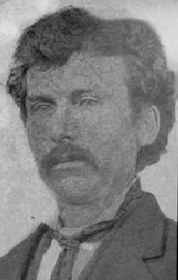
Stephen D. Richards
Old West Serial Killer
CLASSIFICATION: Serial Homicide
LOCATION
Kearney, Nebraska
TIME PERIOD
1876-1878
VICTIMS
6 confirmed
Stephen D. Richards, known as the "Nebraska Fiend" and "Ohio Monster," was an outlaw and serial killer who confessed to committing between nine and twelve murders across Nebraska and Iowa from 1876 to 1878. He was born on March 18, 1856, in Wheeling, Virginia, and later moved to Ohio before heading west in search of fortune. Richards was apprehended on December 20, 1878, after fleeing the scene of multiple murders, including that of Mary L. Harlson and her three children, as well as neighbor Peter Anderson. He was convicted of five counts of first-degree murder and executed by hanging on April 26, 1879, in Minden, Nebraska. Significant evidence included his own confessions and the testimonies of witnesses, which highlighted his lack of remorse and charismatic demeanor, drawing comparisons to modern serial killers.
Richards is believed to have committed his murders primarily in self-defense, a claim he made during his confessions. Some speculate that his time working in an asylum desensitized him to violence and contributed to his lack of empathy. Additionally, there are theories that his charismatic demeanor may have helped him lure victims and evade capture for an extended period.
The Haunting Tale of Stephen D. Richards: The Nebraska Fiend
Introduction to a Fiend
In the rugged expanse of the American Old West, a man named Stephen Decatur Richards emerged from obscurity to become one of the most infamous figures of his time. Born on March 18, 1856, in Wheeling, Virginia, Richards earned the chilling nicknames "The Nebraska Fiend" and "The Ohio Monster." Between 1876 and 1878, he confessed to a string of murders that stretched across Nebraska and Iowa, claiming the lives of nine to twelve victims. His story is one that intertwines the lawlessness of the frontier with the chilling coldness of a serial killer's mind.
Early Life and Descent into Darkness
Richards' journey began in Wheeling, Virginia, where he was born into a family with five sisters and a brother. By the age of six, his family had moved to Ohio, eventually settling in the Quaker village of Mount Pleasant. His mother, a devout Methodist, ensured that young Stephen attended both school and church regularly. Despite this seemingly wholesome upbringing, Richards would later recount a life that turned dark after a series of pivotal events.
At twenty, Richards faced the loss of his mother, a tragedy that coincided with his engagement to a woman named Anna Millhorne. His life took a sinister turn as he fell in with men of "questionable occupation," and began passing counterfeit bills. Seeking better opportunities, he left Mount Pleasant in 1876, a journey that would lead him to Iowa and then further west.
The Formation of a Killer's Mind
While working at the Iowa Lunatic Asylum in Mount Pleasant, Richards was tasked with burying deceased patients. This experience, he later reflected, stripped him of empathy and altered his view of humanity. He began to see people as mere "meat," a mindset that would underpin his gruesome acts in the years to come.
Richards drifted through the Midwest, adopting aliases such as William Hudson and F.A. Hoge, and mingling with train robbers. His time in Kansas City and Nebraska was marked by violence, as he engaged in gunfights and emerged unscathed, albeit with blood on his clothes—a prophetic omen of his future.
The Murders Begin
Richards' murderous spree commenced in late 1876, mere weeks after his arrival in Kearney, Nebraska. His first victim was a fellow traveler with whom he camped near Dobytown. During a gambling dispute, Richards shot the man above the left eye and disposed of the body in the Platte River. This marked the beginning of a harrowing chain of events.
In the following days, a second man, who had witnessed Richards with his first victim, met a similar fate. Richards, fearing exposure, shot the man in the back of the head and sold his horse to avoid suspicion. His travels took him to Cedar Rapids, Iowa, where he murdered a man who attempted to reclaim a horse and buggy sold under false pretenses.
Richards' rampage continued with the killing of a young man named Gemge during an argument near the Platte River. After this incident, Richards briefly found himself detained in Kearney on suspicion of murder, but was released due to lack of evidence. His freedom, however, would not last long.
The Grisly Massacre of the Harlson Family
The most notorious of Richards' crimes unfolded in October 1878, following his release from jail after a larceny charge. He had struck a deal with Mary L. Harlson, a woman he met while incarcerated, to purchase her property. Upon acquiring the land, Richards stayed with the Harlson family and, on November 3, 1878, committed an atrocity that would seal his fate.
Fearing that Mary Harlson might expose his past misdeeds, Richards brutally murdered her and her three children—Daisy, Mabel, and Jasper—using an ax. Despite some reports suggesting the use of a smoothing iron, Richards later confessed to killing them while they slept, with only Daisy surviving the initial blows long enough to suffer. After the massacre, Richards scrubbed the blood away and buried the bodies in a hole he had dug earlier.
Capture and Execution
Richards' capture came on December 20, 1878, when he was apprehended in Mount Pleasant, Ohio. By 1879, he stood trial for the murders of the Harlson family and Peter Anderson, a neighbor, and was convicted of five counts of first-degree murder. His sentencing culminated in execution by hanging on April 26, 1879, in Minden, Nebraska, at the age of 23.
Legacy of a Killer
Despite his heinous acts, Richards was described by some contemporaries as a charismatic figure, his demeanor belying his true nature. His lack of remorse and indifference toward his execution drew comparisons to another infamous killer, Ted Bundy, earning Richards the moniker "The Old West's Ted Bundy."
Richards' crimes and the subsequent media frenzy catapulted him to infamy, and he became Nebraska's first documented serial killer and the first person to be executed by the state. His story has been chronicled in books and articles, including a biography based on an interview conducted after his arrest, published in 1879 by the Nebraska State Journal.
In the annals of true crime, Stephen D. Richards remains a haunting reminder of the darker facets of human nature, a man whose life of violence and deception left an indelible mark on the history of the American frontier.
Sources
For further details on the life and crimes of Stephen D. Richards, please refer to the Wikipedia article.
No Recent News
No recent news articles found for this case. Check back later for updates.
No Evidence Submitted
No evidence found for this case. Be the first to submit evidence in the comments below.
Join the discussion
Loading comments...
First Murder Committed
Stephen D. Richards commits his first murder shortly after arriving in Kearney, Nebraska.
Harlson Family Murdered
Richards murders Mary L. Harlson and her three children to prevent exposure of his past crimes.
Murder of Peter Anderson
Richards kills neighbor Peter Anderson after a confrontation, fearing he would expose him.
Richards Arrested
Richards is captured in Mount Pleasant, Iowa, after being recognized from wanted posters.
Trial Begins
Richards' trial for the murders of the Harlson family and Peter Anderson begins in Minden.
Convicted of Murder
Richards is found guilty of the murders and sentenced to death by hanging.
Execution
Stephen D. Richards is executed by hanging, becoming the first person executed in Nebraska.
Stephen D. Richards, known as the "Nebraska Fiend" and "Ohio Monster," was an outlaw and serial killer who confessed to committing between nine and twelve murders across Nebraska and Iowa from 1876 to 1878. He was born on March 18, 1856, in Wheeling, Virginia, and later moved to Ohio before heading west in search of fortune. Richards was apprehended on December 20, 1878, after fleeing the scene of multiple murders, including that of Mary L. Harlson and her three children, as well as neighbor Peter Anderson. He was convicted of five counts of first-degree murder and executed by hanging on April 26, 1879, in Minden, Nebraska. Significant evidence included his own confessions and the testimonies of witnesses, which highlighted his lack of remorse and charismatic demeanor, drawing comparisons to modern serial killers.
Richards is believed to have committed his murders primarily in self-defense, a claim he made during his confessions. Some speculate that his time working in an asylum desensitized him to violence and contributed to his lack of empathy. Additionally, there are theories that his charismatic demeanor may have helped him lure victims and evade capture for an extended period.
The Haunting Tale of Stephen D. Richards: The Nebraska Fiend
Introduction to a Fiend
In the rugged expanse of the American Old West, a man named Stephen Decatur Richards emerged from obscurity to become one of the most infamous figures of his time. Born on March 18, 1856, in Wheeling, Virginia, Richards earned the chilling nicknames "The Nebraska Fiend" and "The Ohio Monster." Between 1876 and 1878, he confessed to a string of murders that stretched across Nebraska and Iowa, claiming the lives of nine to twelve victims. His story is one that intertwines the lawlessness of the frontier with the chilling coldness of a serial killer's mind.
Early Life and Descent into Darkness
Richards' journey began in Wheeling, Virginia, where he was born into a family with five sisters and a brother. By the age of six, his family had moved to Ohio, eventually settling in the Quaker village of Mount Pleasant. His mother, a devout Methodist, ensured that young Stephen attended both school and church regularly. Despite this seemingly wholesome upbringing, Richards would later recount a life that turned dark after a series of pivotal events.
At twenty, Richards faced the loss of his mother, a tragedy that coincided with his engagement to a woman named Anna Millhorne. His life took a sinister turn as he fell in with men of "questionable occupation," and began passing counterfeit bills. Seeking better opportunities, he left Mount Pleasant in 1876, a journey that would lead him to Iowa and then further west.
The Formation of a Killer's Mind
While working at the Iowa Lunatic Asylum in Mount Pleasant, Richards was tasked with burying deceased patients. This experience, he later reflected, stripped him of empathy and altered his view of humanity. He began to see people as mere "meat," a mindset that would underpin his gruesome acts in the years to come.
Richards drifted through the Midwest, adopting aliases such as William Hudson and F.A. Hoge, and mingling with train robbers. His time in Kansas City and Nebraska was marked by violence, as he engaged in gunfights and emerged unscathed, albeit with blood on his clothes—a prophetic omen of his future.
The Murders Begin
Richards' murderous spree commenced in late 1876, mere weeks after his arrival in Kearney, Nebraska. His first victim was a fellow traveler with whom he camped near Dobytown. During a gambling dispute, Richards shot the man above the left eye and disposed of the body in the Platte River. This marked the beginning of a harrowing chain of events.
In the following days, a second man, who had witnessed Richards with his first victim, met a similar fate. Richards, fearing exposure, shot the man in the back of the head and sold his horse to avoid suspicion. His travels took him to Cedar Rapids, Iowa, where he murdered a man who attempted to reclaim a horse and buggy sold under false pretenses.
Richards' rampage continued with the killing of a young man named Gemge during an argument near the Platte River. After this incident, Richards briefly found himself detained in Kearney on suspicion of murder, but was released due to lack of evidence. His freedom, however, would not last long.
The Grisly Massacre of the Harlson Family
The most notorious of Richards' crimes unfolded in October 1878, following his release from jail after a larceny charge. He had struck a deal with Mary L. Harlson, a woman he met while incarcerated, to purchase her property. Upon acquiring the land, Richards stayed with the Harlson family and, on November 3, 1878, committed an atrocity that would seal his fate.
Fearing that Mary Harlson might expose his past misdeeds, Richards brutally murdered her and her three children—Daisy, Mabel, and Jasper—using an ax. Despite some reports suggesting the use of a smoothing iron, Richards later confessed to killing them while they slept, with only Daisy surviving the initial blows long enough to suffer. After the massacre, Richards scrubbed the blood away and buried the bodies in a hole he had dug earlier.
Capture and Execution
Richards' capture came on December 20, 1878, when he was apprehended in Mount Pleasant, Ohio. By 1879, he stood trial for the murders of the Harlson family and Peter Anderson, a neighbor, and was convicted of five counts of first-degree murder. His sentencing culminated in execution by hanging on April 26, 1879, in Minden, Nebraska, at the age of 23.
Legacy of a Killer
Despite his heinous acts, Richards was described by some contemporaries as a charismatic figure, his demeanor belying his true nature. His lack of remorse and indifference toward his execution drew comparisons to another infamous killer, Ted Bundy, earning Richards the moniker "The Old West's Ted Bundy."
Richards' crimes and the subsequent media frenzy catapulted him to infamy, and he became Nebraska's first documented serial killer and the first person to be executed by the state. His story has been chronicled in books and articles, including a biography based on an interview conducted after his arrest, published in 1879 by the Nebraska State Journal.
In the annals of true crime, Stephen D. Richards remains a haunting reminder of the darker facets of human nature, a man whose life of violence and deception left an indelible mark on the history of the American frontier.
Sources
For further details on the life and crimes of Stephen D. Richards, please refer to the Wikipedia article.
No Recent News
No recent news articles found for this case. Check back later for updates.
No Evidence Submitted
No evidence found for this case. Be the first to submit evidence in the comments below.
Join the discussion
Loading comments...
First Murder Committed
Stephen D. Richards commits his first murder shortly after arriving in Kearney, Nebraska.
Harlson Family Murdered
Richards murders Mary L. Harlson and her three children to prevent exposure of his past crimes.
Murder of Peter Anderson
Richards kills neighbor Peter Anderson after a confrontation, fearing he would expose him.
Richards Arrested
Richards is captured in Mount Pleasant, Iowa, after being recognized from wanted posters.
Trial Begins
Richards' trial for the murders of the Harlson family and Peter Anderson begins in Minden.
Convicted of Murder
Richards is found guilty of the murders and sentenced to death by hanging.
Execution
Stephen D. Richards is executed by hanging, becoming the first person executed in Nebraska.