ANALYZING EVIDENCE
Processing case files...
Processing case files...
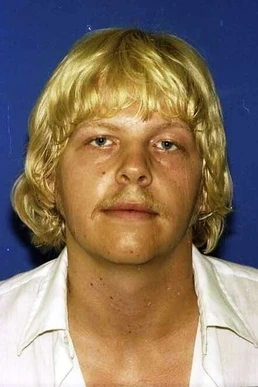
Southern California Hitchhiker Slayer
CLASSIFICATION: Serial Homicide
LOCATION
Isla Vista, California
TIME PERIOD
1976-1979
VICTIMS
4 confirmed
Between late 1976 and spring 1979, Thor Christiansen picked up female hitchhikers in southern California, shot them with a .22 caliber pistol and sexually assaulted their bodies post-mortem; four women were killed and one survived an April 18, 1979 attack. He was linked to three Isla Vista murders (the so-called "look-alike" killings) and the Los Angeles area murder of Laura Benjamin. Christiansen was arrested in July 1979 after a surviving victim identified him at a Hollywood bar, later convicted in Los Angeles and Santa Barbara courts, and sentenced to lengthy prison terms. He died in Folsom State Prison on 1981-03-30 after being stabbed in the exercise yard; his killer was never identified.
Investigators and the public noted the "look-alike" pattern—victims with similar hair, clothing and build—leading to speculation the killer targeted a specific type. Christiansen's admitted necrophilia and psychiatric evaluations fueled debate during trial over insanity and diminished capacity defenses.
On a summer night in 1979, a 24‑year‑old woman walked into a Hollywood bar and froze. Across the room, she recognized the man who had offered her a ride in Los Angeles three months earlier, then shot her in the head and left her for dead on the side of the road. [1]
Her name was Lydia Preston. His was Thor Nis Christiansen, a Danish-American from the small Central Coast town of Solvang. [1] By the time police led him away from that bar, investigators say he had already killed four young women in southern California—three near the college community of Isla Vista, and one in Los Angeles. [1]
The campus town he left behind was still living with the memory of three “look‑alike” murders that had haunted students since 1976. [2]
The first cluster of killings unfolded around Isla Vista, the dense student enclave beside the University of California, Santa Barbara. Between 1976 and 1977, three young women—Patricia “Pat” Laney, 21; Jacqueline Rook, 21; and Mary Ann Sarris, 19—were murdered. [2][3] All three lived in Isla Vista. [3]
Laney and Rook were university students. [2] Sarris worked in the vicinity of the campus. [2] They were all between 19 and 21 years old, part of the same youthful population that filled the town’s apartments, cafés, and lecture halls. [3]
Their bodies were found in remote canyon areas of Santa Barbara County. [3] In January 1977, the remains of Laney and Rook were discovered in Refugio Canyon, in the hills above Santa Barbara. [2] Months later, two hikers came across Sarris’s decomposed body in another canyon; reports described the location as Drum Canyon, a remote area of the county, while other accounts placed it near Los Alamos Canyon. [1][2]
A biographical history of the Eby family - being a history of their movements in Europe during the Reformation and of their early settlement in America (IA biographicalhist00ebye 0).pdf
Wikimedia Commons· Public domain
Laney, Rook, and Sarris had more in common than age and geography. Investigators noted that each woman was a frequent hitchhiker, relying on rides in and out of Isla Vista. [2] Contemporary descriptions pointed out that they all wore their hair long and straight, and shared a similar build and taste in clothes. [2] Those similarities contributed to one of the nicknames that would later cling to their killer: “The Look‑Alike Murderer.” [1]
Ballistics evidence tied the three Santa Barbara County murders together. Each woman had been killed with a.22‑caliber gun. [3] Years later, that detail would match what psychiatrists and police said about the man they ultimately accused—his pattern, they said, was to pick up hitchhikers, shoot them in the head with a.22 pistol, and sexually assault them after death. [1]
The killings shook the university community. Students and local activists organized large demonstrations against violence toward women and demanded safer transportation options for young people living in Isla Vista. [1]
The campus responded with tangible changes. In the wake of the 1976 killings, there was a coordinated campaign to discourage and eliminate hitchhiking. [2] The university began running a night bus service between campus and Isla Vista, and set up an escort system so women out late could get home without walking alone. [2]
© Mapbox © OpenStreetMap
Laney, who had volunteered with groups opposing violence against women before her death, soon became a symbol of that movement. [1] Community groups invoked her name as they pushed for reforms and safer streets. [1] Beginning in 1977, an annual Isla Vista Juggling Festival was held in her memory, a tradition that continued for decades. [1]
Even as the campus tried to protect its students, the case remained unsolved. The question of who had hunted young women around Isla Vista hung over the community.
While students were changing their routines, a young man an hour inland was drifting away from his own.
Thor Nis Christiansen was born in Denmark on December 28, 1957. [1] When he was five, his parents brought him to the United States. [1] The family first settled in Inglewood, California, before eventually moving to the Danish‑themed tourist town of Solvang in Santa Barbara County. [1] His father, Nis, ran a restaurant there, and his parents continued to live in Solvang even after their son’s arrest. [1][3]
Christiansen attended Santa Ynez Valley High School and was reportedly a good student until his junior year, when he began to neglect his schoolwork. [1][3] He moved out of his parents’ home, dropped out of school, and went to work as a gas or service station attendant; he was later described as a former gas station attendant in Goleta and a former service station employee. [1][2][3] At one point during this period he weighed around 275 pounds. [1]
By the time the Isla Vista murders drew intense press coverage, he was in his early twenties. One report later identified him as a 22‑year‑old. [3]
As sheriff’s deputies tried to untangle the canyon murders, they cast a wide net. Since the bodies were found in early 1977, investigators interviewed more than 115 people in connection with the case. [2] Among them was Thor Nis Christiansen. [2]
Around that same time, he attracted separate attention for another reason. In February 1977, investigators noted that Christiansen had been cited as a minor in possession of liquor, and officers confiscated a.22‑caliber pistol from his car. [1]
The connection between that encounter and the Isla Vista murders would become clearer only later. At the time, deputies publicly declined to discuss the evidence they believed linked Christiansen to the killings. [2] They said that evidence had been developed after consulting with Los Angeles County authorities about an attempted murder there that shared similar characteristics. [2]
For the moment, though, the canyon murders remained officially unsolved, and Christiansen remained free.
In the spring of 1979, Christiansen surfaced not in Santa Barbara County but in Los Angeles. By then, he had already committed his first three murders in Isla Vista, according to later accounts. [1]
On April 18, 1979, in Los Angeles, he offered 24‑year‑old Lydia Preston a ride. [1] Minutes later, he shot her in the ear. [1] Preston survived the attack, managed to reach a hospital, and had the bullet removed; she recovered from her wounds. [1]
Sometime that same month, another young woman crossed his path: 22‑year‑old Laura Benjamin. [1] On May 26, 1979, her decomposed body was found in a drainage culvert near Big Tujunga Dam, in the San Gabriel Mountains north of Los Angeles. [1] She had been shot twice in the head, and investigators concluded she had likely been killed in April. [1]
By this point, Christiansen had attacked two women in Los Angeles, killing one and leaving the other alive with a bullet wound to the head. [1]
The case broke open on July 11, 1979. That night, Preston walked into a bar in Hollywood and spotted the man she believed had shot her three months earlier. [1] She alerted staff or patrons and contacted police. [1]
Authorities moved in. A 21‑year‑old man from Goleta was arrested in connection with the three “look‑alike” murders that had haunted the UC Santa Barbara campus in 1976 and 1977. [2] He was identified as Thor Nis Christiansen. [2] Santa Barbara County Sheriff John Carpenter later said Christiansen was booked for investigation of murder. [2]
Jack Christiansen, circa 1976.png
Wikimedia Commons· Public domain
The man Preston had pointed out in the bar—overweight, from Solvang, a former service station employee—was suddenly the prime suspect in a string of murders stretching from the canyons above Isla Vista to the mountains outside Los Angeles. [1][2][3]
In the weeks that followed, investigators in Santa Barbara and Los Angeles compared notes. Deputies in Santa Barbara said that the evidence linking Christiansen to the earlier Isla Vista killings had been obtained only after they consulted with Los Angeles County authorities investigating Preston’s attempted murder, which had “similar characteristics” to their unsolved cases. [2]
On August 20, 1979, prosecutors in Los Angeles formally charged Christiansen with the murder of Laura Benjamin. [1] The next day, he was charged with the attempted murder of Lydia Preston. [1] He was set to stand trial in Los Angeles on February 4, 1980, for the Benjamin murder. [1]
Meanwhile, in Santa Barbara County, he was accused of the murders of Patricia Laney, Jacqueline Rook, and Mary Ann Sarris. [3] He was scheduled to stand trial there on March 17, 1980, for the Isla Vista murders. [1]
The man behind the quiet Solvang façade now carried two chilling monikers in the press: “The Hitchhiker Slayer” and “The Look‑Alike Murderer.” [1]
When Christiansen’s Los Angeles trial opened, his legal strategy shifted. Initially, he had entered dual pleas of “not guilty” and “not guilty by reason of insanity,” but he withdrew those pleas as the murder trial began. [3] His defense attorney, Davis Von Wittenberg, told the court that the defense would not claim he was innocent, but would instead argue diminished capacity. [3]
The diminished‑capacity case, reporters noted, would revolve around whether Christiansen could “meaningfully and maturely form the necessary intents” to commit the crimes. [3] Los Angeles prosecutor Michael Marcus countered that the testimony would show premeditation, malice, and a deliberate nature. [3]
Psychiatric evidence played a major role. One evaluation presented in court described Christiansen as suffering from intermittent explosive disorder, a paranoid personality, chronic drug use, and necrophilia. [1] A psychiatrist testified that he showed some degree of “provisional planning,” suggesting that his attacks were not purely impulsive. [1]
The picture that emerged was disturbing. According to testimony, Christiansen’s modus operandi was to pick up hitchhikers, shoot them in the head with a.22‑caliber pistol, and sexually assault them post‑mortem. [1] In statements reported from the trial, Christiansen said he killed his victims, took their bodies to secluded locations, unclothed them, and “sexually explored” them. [1]
Outside the jury’s presence, the scope of his violence became clearer still. An Associated Press report from Los Angeles stated that Christiansen had confessed to killing the three Isla Vista women. [3] His own defense attorney in the Los Angeles case told the court that his client had committed not only the Los Angeles murder but also the three Santa Barbara County murders. [3]
On April 16, 1980, the Los Angeles jury returned its verdict: Christiansen was found guilty of first‑degree murder and assault, for killing Laura Benjamin and shooting Lydia Preston. [1] At the time, he was already also on trial in Los Angeles in that combined case for one murder and one attempted murder. [3]
A month later, on May 14, 1980, the court sentenced him to 25 years to life in prison for Benjamin’s murder, plus an additional nine years for the attempted murder of Preston. [1]
Preston had not only survived a bullet to the head—she had helped bring her attacker to justice.
Back in Santa Barbara County, Christiansen initially pleaded “not guilty” and “not guilty by reason of insanity” to the murders of Laney, Rook, and Sarris. [3] His attorney there, R. James Westwick, represented him on the three Santa Barbara County counts. [3] Westwick later said he expected Christiansen to change his plea and admit to the murders, though he declined to discuss specifics. [3]
When the Santa Barbara trial opened on May 28, 1980, Christiansen did exactly that. He pleaded guilty to all three counts of murder in the Isla Vista cases. [1] On June 18, 1980, he was sentenced to life in a maximum security prison for those murders. [1]
With those pleas, the legal system formally tied him to the three canyon deaths that had terrified students in 1976 and 1977. [1] Between those crimes and the Los Angeles murder of Laura Benjamin, he had now been held accountable for four killings over three years. [1]
After his convictions, Christiansen entered the California prison system as a lifer, serving his combined sentences for the Los Angeles and Isla Vista murders. [1]
On March 30, 1981, less than a year after his final sentencing, his life ended abruptly. While walking in the exercise yard at Folsom State Prison, Christiansen was stabbed once in the chest and died. [1] He was 23 years old. [1] The person who killed him was not identified in public reports. [1]
The man who hunted hitchhikers and hid bodies in canyons died in another controlled, closed environment—behind the walls of a maximum security prison.
Thor Nis Christiansen’s crimes ended with his death, but the impact of his violence continued to ripple outward. The Isla Vista killings had already fueled protests against violence toward women and galvanized demands for better transportation and safer streets. [1] They spurred the university to establish night bus routes, campus escort services, and campaigns urging students not to hitchhike—measures that reshaped daily life for women in and around the campus. [2]
Patricia Laney’s name became a rallying point for local groups organizing against gender‑based violence. [1] Her memory lives on each year in the Isla Vista Juggling Festival, which has been held in her honor since 1977. [1]
Some aspects of the case were never fully aired in public. Deputies declined to spell out precisely what evidence tied Christiansen to the Isla Vista murders, beyond acknowledging that a Los Angeles attempted‑murder investigation had helped break the case open. [2] Accounts of where, exactly, Mary Ann Sarris’s body was found differ in the record, though all agree it was a remote canyon area of Santa Barbara County. [1][2][3]
This case file is an original Bloody Likely narrative synthesis based on the cited sources. Article © Bloody Likely. All rights reserved. Source materials remain the property of their respective owners. Facts, public records, quotations, and cited references are used for reporting, research, commentary, and documentation. Bloody Likely content license
Audio narration © Bloody Likely. All rights reserved. The audio player is provided for personal streaming/listening only.
No recent news articles found for this case. Check back later for updates.
No evidence found for this case. Be the first to submit evidence in the comments below.
Join the discussion
Loading comments...
Thor Nis Christiansen was born in Denmark.
Jacqueline Rook was last seen (later found shot to death).
Mary Sarris went missing (later found murdered).
Patricia Laney, age 21, was found shot to death in Refugio Canyon near Santa Barbara.
The body of Jacqueline Rook, 21, was found shot in the head in Refugio Canyon.
Police cited Christiansen for a liquor violation and confiscated a .22 caliber pistol from his car, drawing investigators' attention.
Remains of Mary Sarris, 19, were discovered near Los Alamos Canyon; she had been missing since December 1976.
Lydia Preston was offered a ride by Christiansen, shot in the ear, escaped and was hospitalized; the bullet was removed and she survived.
Decomposed body of Laura Benjamin, 22, was found in a drainage culvert near Big Tujunga Dam; she had been shot twice in the head in April.
After a surviving victim reported seeing her attacker at a Hollywood bar, police arrested Thor Christiansen and held him on multiple murder charges.
Christiansen was charged with the murder of Laura Benjamin.
Christiansen entered a plea of not guilty by reason of insanity in addition to a previous not guilty plea.
Christiansen was found guilty of first-degree murder and assault in the Los Angeles trial related to Laura Benjamin and the attack on Lydia Preston.
Sentenced to 25 years to life for murder of Laura Benjamin and 9 years for the attempted murder of Lydia Preston.
Christiansen unexpectedly pleaded guilty to three Isla Vista-area murders during the Santa Barbara trial.
Sentenced to life imprisonment in a maximum security prison for the three Isla Vista murders.
Thor Christiansen was stabbed once in the chest and died while walking in the exercise yard at Folsom State Prison; the killer was not identified.