ANALYZING EVIDENCE
Processing case files...
Processing case files...
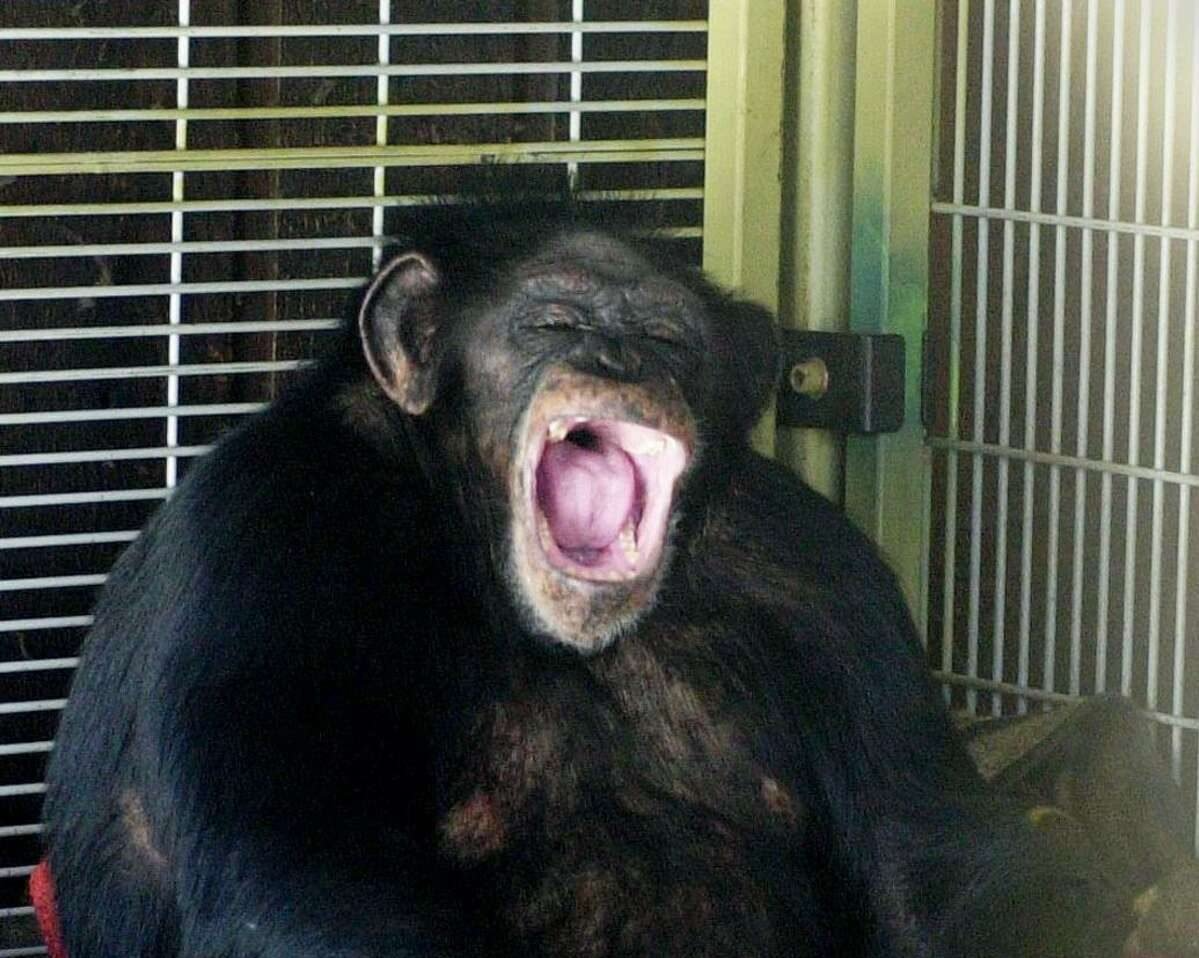
Stamford chimpanzee mauling
CLASSIFICATION: Unknown
LOCATION
Stamford, Connecticut, U.S.
TIME PERIOD
February 16, 2009
VICTIMS
1 confirmed
A 200-pound pet chimpanzee named Travis violently attacked and severely mauled 55-year-old Charla Nash on February 16, 2009, in Stamford, Connecticut, causing catastrophic facial and hand injuries and leaving her blind and disfigured. The animal’s owner, Sandra Herold, attempted to stop the attack and emergency police shot and killed the chimpanzee at the scene; Travis’ head tested negative for rabies and toxicology later showed Xanax in his system. The victim underwent extensive surgeries, later receiving a partial face transplant, and sued the owner’s estate, which settled; state and federal legislative efforts to restrict primate ownership intensified after the incident. The chimpanzee was cremated and necropsy confirmed he had been stabbed and was significantly overweight; the case is closed with the attacking animal deceased.
Some believe Travis’ sudden violence was triggered by misrecognition or perceived threat — his friend’s different hairstyle, unfamiliar car and an Elmo doll may have provoked him — and that sedative (Xanax) or Lyme medications altered his behavior. Investigators and commentators have suggested that lifelong human socialization, extreme pampering and obesity turned a wild animal into an unpredictable, territorial presence, while prior bite complaints and the state's long-standing non‑enforcement of exotic‑pet rules fuel allegations that officials and the breeder industry bore responsibility. Others have argued in litigation and public debate that the tragedy reflects broader systemic failures — from the commercial primate trade and alleged mistreatment at breeding facilities to contested decisions by regulators and responders — rather than a lone “freak” incident.
On a Monday afternoon in February 2009, a 14‑year‑old chimpanzee named Travis suddenly turned on a woman he had known for years in the yard of a home on Rock Rimmon Road in Stamford, Connecticut. [1][2]
Stamford, Connecticut — where Travis lived with Sandra Herold on Rock Rimmon Road.
© Mapbox © OpenStreetMap
By the time police arrived, Travis had mauled 55‑year‑old Charla Nash so badly that officers initially struggled to recognize the prone, blood‑covered body as a woman. [1][3]
Within minutes, the chimp would attack a police officer inside his cruiser and be shot dead. [1][2][3]
The incident would leave Nash clinging to life, destroy the small world that had grown up around a “pet” chimp who once starred in Old Navy and Coca‑Cola ads, and ignite a national argument over whether apes belong in human homes at all. [2][3][4]
Sandra “Sandy” Herold had lived her whole life in Stamford. [5]
Stamford chimp attack victim interviewed on Today show
Her parents ran a popular downtown bakery and built a shingled house on Rock Rimmon Road, where she grew up as an only child. [5]
As an adult, Sandy and her husband Jerry ran several local businesses, including a tow operation and an auto‑body shop. [5] In the 1970s, they hauled horses to rodeos, where Sandy barrel‑raced semi‑professionally. [5] It was on the rodeo circuit, working with Loretta Lynn’s traveling show, that Sandy formed a lifelong friendship with another horsewoman: Charla Nash. [5]
Backstage at one of those rodeos, Sandy encountered a performing chimpanzee. The animal took gummy bears from her and later leaped into her arms—a moment that lodged so deeply in her mind that, years later, it would shape the rest of her life. [5]
In 1995, a breeder in Festus, Missouri—Connie Casey—called to say a baby chimp had arrived. [5] Sandy flew out. In the Caseys’ living room she met an infant swaddled in blankets and wearing a diaper: Travis, named after the country singer Travis Tritt. [5]
He was the son of a chimp called Coco and an 11‑year‑old retired zoo chimp named Suzy. [5] Coco had been taken from equatorial Africa in the early 1970s and purchased for $12,000—a reminder that Travis’s life in an American living room began with a capture half a world away. [5]
The Caseys tranquilized Suzy to remove baby Travis from her cage a day before Sandy took him home. [5] Sandy paid $50,000 in cash for the infant chimp and, a few days later, flew back to Connecticut with him wrapped in baby blankets. [5]
Herold would later say she had raised Travis from when he was just three days old, and that he “couldn’t be more my son than if I gave birth to him.” [3]
Back in Stamford, the Herolds reshaped their home around Travis. They added a caged room with sliding doors to an outdoor enclosure and installed a heavy metal door on their bedroom. [5] While Sandy and Jerry were home, though, Travis usually had the run of the house and often slept in their bed. [5]
They took him to work every day, outfitting a room above their tow shop with tire swings, ropes, and trampolines. [5] Travis’s image appeared on the company tow trucks and flatbeds; he became, as one account put it, Stamford’s most famous resident. [5]
The chimp’s human‑like habits were talked about with a kind of local pride. Reports described him eating filet mignon and lobster tails, sipping wine from a stemmed glass, and learning to use the toilet, brush his teeth, and dress himself. [3][4] The Stamford Advocate noted that he walked around town without a leash, surfed the internet, changed TV channels with a remote, fed hay to the family’s horses, and ate at the table. [2] Another account said he could bathe and dress himself, drink wine, and use a computer. [1]
Travis appeared in national commercials for Old Navy and Coca‑Cola, and even showed up on “The Maury Povich Show” and in a TV pilot. [2][3][5] He posed for photos at the Herolds’ shop and was described as a “local celebrity” who performed tricks and watched baseball. [1]
Sometimes, strangers even handed him their babies to hold. [5]
To many in Stamford, Travis embodied the fantasy that a wild animal could be domesticated into a charming, furry person. That fantasy would prove fragile.
Behind the scenes, some professionals were uneasy.
Connecticut had a statute requiring permits for primates over 50 pounds. [5] By October 2003, Travis not only exceeded that limit but had also escaped downtown: he bolted from a stopped Toyota 4Runner, knuckle‑running across a Stamford road and evading capture for roughly two hours. [5] About a dozen officers responded; no charges were filed. [5]
The state Department of Environmental Protection knew about the incident and that the Herolds lacked the required permit, but chose not to act. [5] Stamford’s animal‑control officer warned Sandy that Travis was now a fully sexual adult chimp with the strength of at least five men, and that adult chimpanzees were unpredictable and potentially violent. [5]
Still, other authorities would later say Travis had “no history of violence,” characterizing the 2003 downtown escapade as playful traffic disruption rather than aggression. [1] The tension between those assessments—playful local fixture versus inherently dangerous adult ape—would hang over everything that followed.
Personal tragedy tightened Sandy’s bond with Travis. Her daughter Suzan, known as Sue, remarried and moved to the Outer Banks; in September 2000 she was killed in a car crash in Virginia, though her infant daughter survived. [5] In early 2005, Jerry developed rapidly spreading stomach cancer and died that April. [5]
An NBC interview later described Sandy as a 70‑year‑old widow whose husband and only daughter were gone, leaving Travis as her only family. [3]
At one point after Jerry’s death, Sandy drafted a handwritten letter to a respected chimpanzee sanctuary, enclosing a $250 check, but she never mailed it. [5] The chimp she had considered sending away stayed in the house instead.
After Jerry died, Charla Nash and her then‑12‑year‑old daughter moved into the loft apartment that had once belonged to Sue, rent‑free. [5] Nash took a job with Sandy, handling towing dispatch and bookkeeping. [5]
Their friendship dated back decades to the rodeo days. [5] Nash was not a stranger to Travis’s world; she had lived and worked alongside the family that had built its life around him.
Stamford woman won't be charged in chimpanzee attack
By early 2008, Travis was 14 years old, about five feet tall, and—according to one detailed description—around 240 pounds, morbidly obese, with a receding hairline and graying torso. [5] Other accounts put his weight at about 200 pounds. [1][2][4] A necropsy report later concluded he was obese and weighed “over 200 pounds.” [5]
His size meant his strength was immense. His status in the house, however, remained that of indulged, beloved child. [3]
On February 16, 2009, Sandy and Charla had just come home from a weekend at the Mohegan Sun casino when Travis got hold of Sandy’s car keys and let himself out the back door into the yard at 241 Rock Rimmon Road. [4][5]
He was described as “rambunctious” and “agitated,” banging on cars as if he wanted a ride. [2][3][4] Trying to calm him, Sandy prepared him tea laced with Xanax, an anti‑anxiety drug meant for humans. [2][3][4] Police later said she told them she had given him Xanax that had not been prescribed for him to settle him down. [5]
Toxicology tests would eventually confirm the presence of Xanax in Travis’s system, though investigators said they had not determined whether it played any role. [5] A police captain noted that the amount detected did not appear large. [5]
Unable to coax Travis back inside, Sandy called Charla Nash to come over and help lure him in. [2][3][5]
Nash drove to the house in a car that was unfamiliar to Travis, wearing a radically different hairstyle from what he knew, and holding a red Elmo doll in front of her as she walked through the gate and onto the yard’s frozen dirt and grass. [3][5][5] Later, Sandy would speculate that the change in Nash’s appearance and car, and the presence of the toy, might have confused or threatened the chimp, but those ideas remained speculative. [3][5]
Accounts differ on whether Travis was “behaving oddly” even before Nash arrived or merely energetic and difficult to corral. [2][4] What is not disputed is what happened next.
As Nash stepped through the gate, Travis knuckle‑ran toward her, rose onto his hind legs, and attacked, slamming her against her car and then to the ground. [2][4][5] Police later called the attack unprovoked, brutal, and lengthy—lasting around twelve minutes. [2][5]
Travis focused his assault on Nash’s face and hands, inflicting catastrophic injuries. [2][4][5] A New York Times report said much of her face was torn away. [1]
Sandy tried to pull Travis off but couldn’t. [2] She grabbed a snow shovel and began striking him over the head. [3][5] When that failed, she fetched a butcher knife from the kitchen and stabbed him multiple times in the back. [2][3][5] Police and Sandy herself later said the stabbing and blows “did not faze” him. [2]
At some point amid the chaos, Sandy retreated to a car in the yard and called 911. [2][3] On the recorded call, she begged dispatchers to “please hurry” and screamed that her chimpanzee was ripping her friend apart and had “killed” her. [2][3]
By the time officers and EMTs reached Nash, they saw what one account called a largely naked body covered in blood lying prone in the yard. [3][5] Even among responders accustomed to trauma, the scene stood out.
When police cars rolled onto Rock Rimmon Road that afternoon, Travis was still on the property, moving around the yard. [5] About a dozen cruisers ultimately converged on the scene. [4] Officers had to escort EMS workers to Nash under the threat that Travis might charge again. [3]
As they tried to corral him, the chimp chased them back into their patrol cars. [3] At one point, according to police, Travis walked up to a cruiser, opened the driver’s door, and started attacking the officer inside. [3][4]
A Stamford officer fired multiple rounds at close range. [2][3][4] One detailed account said four shots were fired through the open driver‑side door; Travis staggered, screeched, defecated, and ran off. [5] Another report described him limping away after being hit. [4]
The attack on the officer ended only when the gunfire did. [5]
Bleeding heavily, Travis fled the yard. Officers tracked him by a trail of blood. [4] He eventually returned to the house, knuckle‑walking through its rooms and leaving bloody prints on the floors before grasping his bedpost and collapsing. [3][5] Conklin later said police found him dead back inside the home. [2]
A necropsy determined that Travis died from multiple gunshot wounds. [5] It documented two substantial knife wounds in his back and confirmed his owner’s account that she had stabbed him with a butcher knife trying to save her friend. [5] The report concluded he was obese and weighed over 200 pounds. [5]
Following standard procedure, investigators removed Travis’s head and sent it to the state lab for rabies testing; his body went to the University of Connecticut for the necropsy. [2] When Sandy later arrived at the crematorium with one of his favorite T‑shirts, she discovered he had been decapitated for the testing. [5]
Police and city officials described the assault on Nash as “brutal and lengthy” and said they believed it was unprovoked. [2] They began a careful review of possible charges and any factors that might have set Travis off. [2][3]
At the scene, officers and medics could see that Nash had suffered devastating injuries to her face and hands. [2][5][5] She was rushed to Stamford Hospital in critical condition. [1][2]
Stamford chimp victim eligible for face transplant
Three days later, she was flown to the Cleveland Clinic in Ohio for advanced reconstructive care. [5] Doctors there said she was blind and faced years of surgeries. [5] One account described at least fifteen months of intensive medical intervention after her transfer. [5]
Nash’s injuries were, in the dry language of a medical summary, “catastrophic facial and hand injuries,” including the loss of her hands, nose, lips, and eyelids. [5][5] She was hospitalized with life‑threatening trauma and would endure a long series of operations and rehabilitation efforts. [2]
Nine months after the attack, on her 56th birthday, Nash appeared on “The Oprah Winfrey Show,” revealing her face to the public and saying she remembered nothing of the attack. [5]
About a month after the mauling, Nash’s family filed a $50 million civil lawsuit against Sandy Herold. [5] The suit alleged, among other claims, that Herold had given Travis medication that further unsettled him. [5] Nash’s attorney later said the Xanax toxicology finding provided strong support for the case, emphasizing that Xanax is a medication intended for people, not animals. [5]
Prosecutors and police, meanwhile, publicly acknowledged that they were weighing criminal charges against Herold. [3][5] Her lawyers argued there was no way she could have predicted that Travis would attack Nash. [5]
For all the legal maneuvering, life at 241 Rock Rimmon Road simply stopped.
After Travis’s death, Sandy was left in the house that had been retrofitted for him, surrounded by toys and reminders of the animal she still called her son. [3][5] Interviewed on television, she said the rampage was a freak incident that did not change her opinion of Travis and that he “wasn’t a horrible chimp.” [3] She showed pictures he had drawn for her and said she would post them on the refrigerator. [3]
Despite everything, she acquired another young chimpanzee named Chance, arranging joint custody with a friend out of state because Connecticut law no longer allowed her to keep such an animal at home. [5]
Her health deteriorated. She experienced chest pain, was rushed to the ER, and was prepared for emergency surgery to fix a bulging aorta. [5] She died on the operating table after her lungs filled with blood. [5]
After her death, the Rock Rimmon house remained eerily unchanged and was held in limbo by court order. [5] Burglars broke in repeatedly amid rumors that tens of thousands in cash were hidden inside. [5] A life‑size stuffed chimp still sat in the oversized chair in Travis’s room. [5]
At the Herolds’ cemetery plot, Jerry is buried beneath a headstone, while Sandy rests in a sealed vault wearing an animal‑print shirt and jeans, her hands folded over her abdomen with pink fingernails. [5] An urn at her side holds Suzan’s ashes; another contains Travis’s. [5]
When Nash’s brother told her that Sandy had died, Nash reportedly responded: “Sandra was a troubled woman, and maybe she has some peace now.” [5]
In the months after the attack, everyone—from investigators to primate experts to ordinary readers—tried to answer the same question: why?
Police Captain Rich Conklin said his department was taking its time to consider what might have provoked Travis. [2] He confirmed that the chimp had been “rambunctious” earlier in the day and that Sandy had put Xanax in his tea, but noted he did not know whether the drug had been prescribed for him or whether Sandy had done that before. [2]
Later, toxicology confirmed that Xanax was present. [5] Investigators said they had not yet determined if it affected his behavior, and Conklin noted it did not appear to be a large amount. [5] A psychiatrist quoted in coverage said that in humans, people who are already aggressive or unstable can become worse on Xanax, but he did not know how the drug might affect a chimpanzee. [5] A primate sanctuary operator added that giving sedatives like Valium to monkeys and apes during heightened adrenaline could sometimes have the opposite of a calming effect, though she knew of no prior cases involving Xanax. [5]
There were also competing theories about physical or environmental triggers. Conklin noted that Nash had recently gotten a haircut that significantly changed her appearance. [2] Sandy speculated that Travis might not have recognized her because she was in a different car, had a new hairstyle, and was holding a stuffed toy in front of her face—leading him, perhaps, to think he was protecting Sandy from an intruder. [3][5]
Media reports floated the possibility that Travis might have had Lyme disease and that the illness or its medication could have influenced his behavior. [3] Conklin said he could not confirm those reports. [2] The CDC notes that aggression can be a symptom in animals with Lyme disease, but, crucially, Travis’s medical condition and any role it played remained uncertain. [2]
Underneath the specific theories lay the more basic question: was an attack like this predictably unpredictable?
Some officials and news accounts emphasized that Travis had no formal record of prior violence; they highlighted the 2003 escape as playful mischief and pointed out that he had been around people, including strangers and children, for years without previously mauling anyone. [1][4][5]
Others pointed to the ignored warning signs. By 2009, Travis was an adult chimpanzee, inherently powerful and, according to Stamford’s animal‑control officer, capable of unpredictable and potentially violent behavior. [5] He had already demonstrated an ability to open doors, drive, escape into public streets, and “wreak havoc” downtown. [2] The state had a permitting system for dangerous primates and knew the Herolds were in violation after the 2003 incident, yet declined enforcement. [5]
Meanwhile, similar tragedies suggested that Travis’s attack was not entirely unique. In 2005, at a California wildlife refuge, visitors St. James and LaDonna Davis were feeding birthday cake to a 39‑year‑old chimp named Moe through a fence when two adolescent chimpanzees escaped their enclosure and savagely attacked. [3] St. James lost an eye and several fingers; LaDonna lost a thumb. [3] A ranger shot and killed the two adolescent chimps; Moe was not involved. [3]
Advocates for primate welfare and public safety seized on these cases to argue that even apparently “tame” apes remained wild animals—capable, at any moment, of turning that wildness on the people who treated them like family. [5]
At the time Travis was purchased in 1995, keeping a chimpanzee in a private home in Connecticut was legal. [5] The state later required permits for privately owned chimps, but because the law passed after Sandy had already acquired Travis, he was effectively grandfathered in; he was allowed to stay without going through the permit process. [3]
After the mauling, Stamford police studied the regulatory landscape as they considered possible charges. [2][5] State and federal lawmakers began introducing or re‑energizing proposals to restrict private primate ownership more broadly, often citing Travis by name as a cautionary tale. [5]
Stamford chimp attack victim Charla Nash receives face transplant
The policy debate has continued long after the ambulance sirens faded.
On April 30, 2024—fifteen years after the attack—a bill titled the Captive Primate Safety Act was introduced in the U.S. Senate. [6] Sponsored by Senator Richard Blumenthal of Connecticut, the bill aims to regulate the interstate trade and private possession of non‑human primates, placing the issue squarely in the realm of federal law. [6]
That day, S.4206 was read twice and referred to the Senate Committee on Environment and Public Works, where it remains in “Introduced” status. [6] The bill is classified under the policy area of “Animals,” a dry legislative label for a controversy born in one family’s attempt to make a wild animal part of their household. [6]
The attack on Rock Rimmon Road is, in some ways, two separate tragedies that collided: the destruction of Charla Nash’s face, independence, and financial stability, and the implosion of Sandra Herold’s improvised family, built around an animal she loved beyond reason. [3][5]
What remains is a set of painful facts. A chimpanzee raised like a human child grew into an adult ape weighing well over 200 pounds and, in barely a dozen minutes, permanently altered the lives of everyone around him. [5][5] His owner, warned yet indulged by authorities, made desperate decisions in the moment—Xanax in tea, a frantic phone call to a friend—that would be second‑guessed forever. [2][5][5]
For Nash, the story is not about a sensational rampage but about enduring what came after: the surgeries, the blindness, the long residence in assisted living, and the hopes pinned on experimental transplants. [5][5]
For lawmakers, the legacy is more abstract: a renewed push to ensure that animals powerful enough to kill or maim in seconds are not living in suburban bedrooms, however beloved they may be. [6]
The house at 241 Rock Rimmon Road may sit frozen in time, but the arguments that poured out of its yard that winter afternoon are still unfinished. [5]
Adapted from Travis (chimpanzee) - Wikipedia.
This case file is an original Bloody Likely narrative synthesis based on the cited sources. Article © Bloody Likely. All rights reserved. Source materials remain the property of their respective owners. Facts, public records, quotations, and cited references are used for reporting, research, commentary, and documentation. Bloody Likely content license
No recent news articles found for this case. Check back later for updates.
No evidence found for this case. Be the first to submit evidence in the comments below.
Join the discussion
Loading comments...
Travis the chimpanzee was born near Festus, Missouri.
Travis escaped from owner Sandra Herold’s car, was loose for several hours and held up traffic; prompted regulatory attention.
Connecticut enacted a law prohibiting ownership of primates over 50 pounds and requiring permits for exotic pets, legislation influenced by earlier incidents
Travis attacked and severely mauled Charla Nash at Sandra Herold’s home, inflicting catastrophic facial and hand injuries.
Police officer Frank Chiafari shot Travis multiple times; the chimpanzee was found dead inside the house next to its cage.
Travis’ body was cremated at All Pets Crematory after necropsy and testing procedures.
Necropsy confirmed Travis had been stabbed and was overweight; toxicology found Xanax in his system but head tested negative for rabies.
Sandra Herold, Travis’ owner, died suddenly of a ruptured aortic aneurysm.
Charla Nash underwent transplant surgery receiving a donated face (and hands initially) at Brigham and Women's Hospital.
Charla Nash settled with Sandra Herold’s estate and received approximately $4 million.