ANALYZING EVIDENCE
Processing case files...
Processing case files...
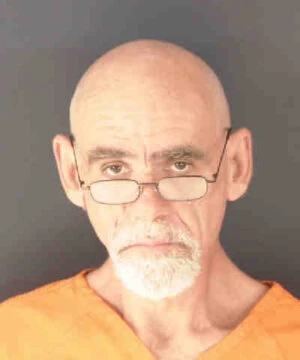
Florida Serial Killer Case
CLASSIFICATION: Serial Homicide
LOCATION
Sarasota, Florida
TIME PERIOD
2022
VICTIMS
2 confirmed
The case involves the murders of two homeless women in Sarasota, Florida, attributed to William Jeffrey Devonshire, who was a habitual criminal with a prior murder conviction in Delaware. The first victim, Kelliann Ripley, was discovered on February 25, 2022, with her death ruled a homicide due to blunt force trauma and manual strangulation. Devonshire was apprehended on March 11, 2022, but died on June 5, 2022, from medical complications while awaiting trial. Posthumous DNA evidence linked him to both murders, solidifying his involvement in these crimes. Investigators are continuing to examine any additional unsolved cases that may be connected to Devonshire's criminal history.
Investigators believe that William Devonshire's murder of Albert C. Harris Sr. was likely committed by someone who knew him, as the crime shocked the local community. Additionally, there is speculation that Devonshire may have been involved in more crimes than those for which he was convicted, given his extensive criminal history and the posthumous DNA links to the murders of two homeless women in Florida. Some theorists suggest that his pattern of violence and criminal behavior indicates a potential for a broader series of unsolved cases.
On a Friday in late February 2022, a body was found near the Centennial Park boat ramp in Sarasota, Florida.[1] The victim was identified as 48‑year‑old Kelliann “Kelly” Ripley of Sarasota.[1]
Within weeks, another woman would be found dead near the shore of Whitaker Bayou, just off North Tamiami Trail.[2] By early summer, police said DNA evidence tied both homicides to the same man: 52‑year‑old transient William Devonshire, already locked up on unrelated charges.[1][2][3]
He never made it to trial. In June, after what authorities described as a medical emergency, Devonshire was dead as well.[2] Police closed both homicide cases the next day, saying the evidence against him was “indisputable.”[2]
What happened between those two bodies on the waterfront and the suspect’s death in a hospital bed is a story about DNA, vulnerable women, and a man whose violent history stretched back nearly two decades.
Ripley’s body was discovered on February 25, 2022, near the Centennial Park boat ramp.[1] Police later identified her as 48‑year‑old Kelliann Ripley of Sarasota and described her as an “unhoused citizen.”[1][2]
© Mapbox © OpenStreetMap
Among the people who knew her was Jim Nellans, who said he lives on the streets of Sarasota and is part of a community that gathers near Central Avenue and 10th Street.[3] He remembered Ripley as someone who mattered in that world. “It’s good they got somebody in connection” with her death, he said later. “Kelly was really loved out here.”[3]
Roughly two weeks after Ripley was found, a second body surfaced. Police said the victim was a 59‑year‑old woman whose body was located near the 1900 block of North Tamiami Trail, close to the shore of Whitaker Bayou.[2] In public statements, the Sarasota Police Department noted that she had been “in between living with family members and was in the process of receiving housing.”[2]
California Digital Library (IA notitiabritannia00saulrich).pdf
Wikimedia Commons· Public domain
At first, authorities did not publicly identify this second woman in some reports, and later coverage would still refer to her only by age.[1] That anonymity, contrasted with the specific naming of Ripley, underscored how precarious lives on the margins can seem to blur together — even when they end violently.
Police were clear about one thing they could not say: investigators had not determined whether the two women knew each other.[2]
When Sarasota police began connecting the dots, one name kept coming up: William Devonshire.
The Sarasota Police Department and Sarasota County Sheriff’s Office both described him as a 52‑year‑old homeless man.[2] Jail paperwork listed his address simply as “transient.”[3] A corrections document put him at 6 feet 4 inches tall and around 220 pounds.[2]
By the time of his March 2022 arrest, the police department said he already had criminal histories in New Jersey, Maryland, Indiana, Ohio, Delaware, and Florida, with past charges that included assault, aggravated assault, disorderly conduct, battery, burglary, and trespassing.[2]
His record in Delaware was more serious. Court documents show that on January 5, 2004, a grand jury there indicted him on counts of first‑degree murder and possession of a deadly weapon during the commission of a felony, for conduct alleged to have occurred on April 3, 2003.[2] The case was captioned State of Delaware v. William J. Devonshire and decided in part by a written opinion issued June 15, 2004.[4] That opinion notes that Devonshire, who was also facing a separate attempted robbery case involving alleged victim and key witness Kimberly M. Susi, twice tried to delay the robbery trial until after the murder case, a request the court rejected.[2][4]
A later summary would describe him as having a prior murder conviction in Delaware.[5] Whatever the precise procedural history, Sarasota detectives knew they were dealing with a man who had already been tied to serious violence before.
After Ripley’s body was recovered in February, investigators moved quickly to secure forensic evidence. The Sarasota Police Department said that evidence collected during her autopsy was submitted to the Florida Department of Law Enforcement (FDLE) for analysis.[2]
On March 15, police obtained a buccal swab from Devonshire. Public information officer Genevieve Judge later wrote that he voluntarily provided the DNA sample to Sarasota officers.[2]
Calendar (IA calendar191819mcgiuoft).pdf
Wikimedia Commons· Public domain
At that moment, externally at least, he was not yet in serious trouble over Ripley’s death. That changed ten days later.
On March 25, 2022, Sarasota police arrested Devonshire in Pioneer Park, at 1260 12th Street.[2] He was booked on trespassing, possession of cocaine, and possession of paraphernalia — charges explicitly described as unrelated to the February homicide.[1][2][3]
According to interim Police Chief Rex Troche, the day after that arrest, the department learned that Devonshire’s DNA matched genetic material found on Ripley’s body.[3] That FDLE‑assisted match transformed him from a transient man on minor drug and trespass counts into an accused killer. Police charged him with murder in connection with Ripley’s death.[1][2][3]
Sarasota County Jail records show that on March 26 he was charged with “murder, dangerous depraved without premeditation” and held without bail.[1] Coverage and police statements tie his March murder charge to the February killing of Ripley.[1][2]
Those same records would later help fuel questions about whether that murder count reflected only Ripley’s case or also the second woman’s death — questions that still hang over the file.
Even before the DNA results, detectives had noticed similarities in the February and March killings. Interim Chief Troche said at a March 28 news conference that the “facts and evidence” in the February incident and in the March 10 death led police to believe the cases were related.[2] He spoke of a “very strong correlation” between the evidence collected in both.[2]
By then, internal suspicions were solidifying. The Sarasota Police Department and the Sarasota County Sheriff’s Office later said detectives believed Devonshire was responsible for the second homicide as well.[2]
William Cookworthy - Devonshire characters and strange events.jpg
Wikimedia Commons· Public domain
Publicly, Troche described Devonshire as a “strong suspect” in that March killing.[3] Some coverage noted that while police linked him to the second woman’s death, he had not actually been charged in that case.[1]
Behind the scenes, the forensic picture was sharpening. FDLE analysts reported that DNA found on Devonshire’s clothing matched the March homicide victim, according to a report sent to Sarasota police.[1] Another account would summarize that Sarasota police said DNA evidence connected him to that second woman’s death.[1]
Within the department, the language grew more certain. Captain Johnathan Todd of the Criminal Investigations Division later said that Sarasota police had “indisputable” evidence tying Devonshire to both homicides.[2]
He added that detectives were in the middle of writing a probable cause affidavit charging Devonshire with the murder of the second woman when they learned he had died.[2]
What happened on paper in the March case is less clear than investigators’ rhetoric.
On one side, local reporting and police statements repeatedly describe Devonshire as a “strong suspect” but say he was not formally charged in the March death of the 59‑year‑old woman whose name police did not publicly release.[1][3]
On the other, Sarasota County Jail records show that he was booked on a count of “murder, dangerous depraved without premeditation” on March 26 and held without bail.[1] Prosecutors and police also said he was arrested in March and facing a murder charge in connection with Ripley’s death — a charge corroborated by multiple accounts that he was charged in March in the February homicide of 48‑year‑old Kelliann Ripley.[1][2][3]
What remains unresolved is whether that March 26 murder count was strictly the formal booking for Ripley’s case, or whether at any point it was understood internally to also encompass the second homicide. Captain Todd’s later statement that detectives were still drafting a probable cause affidavit specifically for the March killing when they learned of Devonshire’s death suggests that, at least procedurally, a separate charge for the second woman had not yet been finalized.[2]
In practical terms, though, police leadership spoke as if both cases were solved — even without a second indictment.
Whatever the state of the paperwork, the prosecutions would never move forward.
On May 17, 2022, the Sarasota County Sheriff’s Office reported that Devonshire was taken to Sarasota Memorial Hospital following a “medical event.”[2] The exact nature of that emergency was not publicly detailed in the statements at the time.
In the early hours of Sunday, June 5, he died. Acting public information officer Douglas Johnson told a reporter by email that Devonshire died around 6:30 a.m. that day.[2]
Devonshire hospital and Buxton Bath charity instituted for the relief of poor persons from all parts of Great Britain and Ireland suffering from rheumatism gout sciatica and neuralgia (IA b24768303).pdf
Wikimedia Commons· Public domain
With the accused killer gone, the carefully built homicide cases transformed overnight into closed files.
On June 6, Sarasota Police public information officer Genevieve Judge announced that detectives would “close out” both the February homicide case and the March homicide case as a result of Devonshire’s death.[2]
She explained the practical consequence: with no living suspect, the State Attorney’s Office for Florida’s 12th Judicial Circuit would be unable to proceed with one or more of the cases.[2] Another account put it more bluntly — after Devonshire’s death, investigators closed both homicide cases.[1]
Internally, however, paperwork lagged behind the public declaration. When asked that same day about copies of the two homicide reports, Judge said the reports were incomplete and could not yet be released.[2] Devonshire’s death, she said, had occurred so recently that it would take time for detectives to fully close out the reports.[2]
Captain Todd’s statement about “indisputable” evidence linking Devonshire to both killings suggested confidence in the investigative work.[2] But with detectives still finalizing files and the official reports withheld, the public would not see the full evidentiary record behind that assertion.
Even with both cases officially closed, a number of questions linger.
Police acknowledged during the investigation that they had not determined whether Ripley and the second woman ever knew one another, despite similarities in their circumstances and in the evidence collected.[2]
Investigators have spoken in only broad terms about the forensic work — autopsy evidence from Ripley sent to FDLE, a voluntary DNA swab from Devonshire, and later lab reports matching his DNA to Ripley’s body and to the clothing linked to the second victim.[1][2][3] Captain Todd’s description of the evidence as “indisputable” has never been publicly tested in a courtroom.[2]
Image of American serial killer w:William Devonshire
Wikimedia Commons· Public domain
The existence of a prior Delaware murder indictment — and later descriptions of a murder conviction there — further darkens the portrait of Devonshire.[2][4][5] But again, in Sarasota, no jury ever heard that history, weighed his alibis, or cross‑examined the detectives who built the DNA case around two women found near the water.
What is clear is that in early 2022, two women living on the edge of housing stability were killed within weeks of each other in Sarasota, and police came to believe the same transient man was behind both deaths.[2]
For Ripley’s friends on the street, the closure brought by his identification was real but incomplete. “It’s good they got somebody in connection” with her killing, Nellans said. “Kelly was really loved out here.”[3]
With Devonshire’s death, any fuller accounting of what happened — and why — died with him. The case files are closed. The questions left behind are not.
This case file is an original Bloody Likely narrative synthesis based on the cited sources. Article © Bloody Likely. All rights reserved. Source materials remain the property of their respective owners. Facts, public records, quotations, and cited references are used for reporting, research, commentary, and documentation. Bloody Likely content license
No recent news articles found for this case. Check back later for updates.
No evidence found for this case. Be the first to submit evidence in the comments below.
Join the discussion
Loading comments...
Albert C. Harris Sr. found bludgeoned to death in his home.
William Devonshire charged with first-degree murder in Harris' death.
Devonshire's murder charge reduced to second-degree; released from prison.
Body of Kelliann Ripley discovered; cause of death ruled as blunt force trauma and strangulation.
Body of Vicky Levitch discovered; similar injuries to Ripley indicate possible serial killings.
Devonshire arrested for trespassing and drug possession; DNA sample taken.
Devonshire officially charged with Kelliann Ripley's murder; suspected in Levitch's case.
Devonshire hospitalized after refusing medication; suffers seizure and head injury.
William Devonshire dies from medical complications while in custody.
Devonshire's DNA definitively linked to both Ripley and Levitch's murders posthumously.