ANALYZING EVIDENCE
Processing case files...
Processing case files...
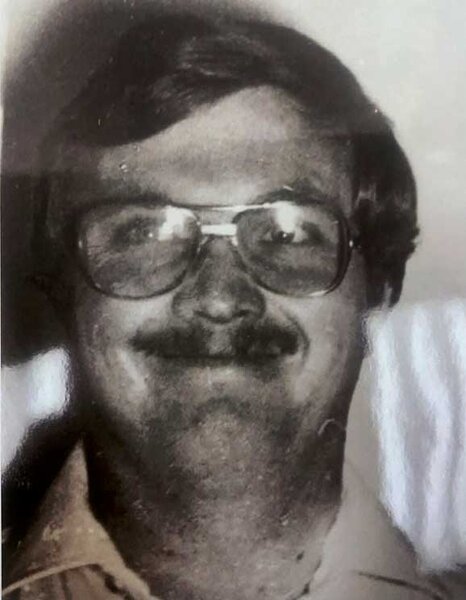
Child Serial Killer Case
CLASSIFICATION: Serial Homicide
LOCATION
Salt Lake City, Utah
TIME PERIOD
1979-1983
VICTIMS
5 confirmed
Arthur Gary Bishop, an American serial killer and sex offender, abducted and murdered five young boys in Salt Lake City, Utah, between October 14, 1979, and July 14, 1983. He was apprehended on July 24, 1983, after voluntarily leading police to the burial sites of his victims during questioning about several child disappearances. Bishop, who had previously been involved in the Big Brothers program, was described as manipulative and cunning, ultimately confessing that he killed the boys to conceal his sexual abuse of them. Convicted of five counts of first-degree murder, he was sentenced to death in 1984 and executed by lethal injection on June 10, 1988, at the age of 35. Significant evidence included his confession and the locations of the victims' remains, which he disclosed to investigators.
Some investigators and commentators have speculated that Bishop’s escalating violence was driven or triggered by an addiction to child pornography and sexual fantasies, a claim Bishop himself made in letters and trial statements linking pornography to his “downfall.” Other theories raised in coverage and commentary suggest there may have been additional victims or acquaintances who knew of his molestation and either enabled him or remained silent, given his use of aliases, extensive covert photography of boys, and the fact he lived near multiple victims. Commentators have also noted financial and identity controversies (embezzlement, multiple aliases) and raised questions about possible connections or parallels with another offender in his family circle, fueling debate about whether his crimes were part of a wider pattern of undetected abuse.
On a summer day in 1983, Utah detectives invited a friendly local man down to the station, ostensibly to help them understand how a teenage camping trip had gone so wrong. Within hours, the man—known to them by an alias—had given them his real name, admitted to killing five boys, and agreed to take them to where he had left their bodies, scattered across the scrubland and canyons outside Salt Lake City. [1]
His name was Arthur Gary Bishop, and over the next five years the state of Utah would try him, sentence him to death, and finally execute him for a series of crimes that shook families, a church community, and an entire state. [1][2]
Arthur Gary Bishop was born in Hinckley, a small Utah town where his family and neighbors expected him to grow into a model Latter-day Saint. Accounts differ on the exact year—some place it in 1951, others in 1952—but they agree that he arrived in the early 1950s and grew up there. [1][3][4]
He was the eldest of six brothers, raised in a devout Mormon household. [1] As a boy he checked all the right boxes: Eagle Scout, honor student, and, in time, a missionary in the Philippines in his late teens. [1][3]
Outwardly, Bishop’s path looked conventional—school, church, achievement. Inwardly, according to what he would later tell courts and interviewers, he was already wrestling with sexual urges he hid from everyone around him. Years later he would describe himself as a homosexual pedophile and claim that pornography had been a “determining factor” in his crimes. [3]
By the late 1970s, the respectable façade was starting to crack. In February 1978, Bishop was arrested for embezzlement and received a five-year suspended sentence. [1] Within months, the Church of Jesus Christ of Latter-day Saints excommunicated him—accounts again differ on the precise timing, but place it in the late 1970s. [1][3][4]
After that, Bishop largely disappeared from the straight path his family had pictured. He moved to Salt Lake City, began registering under false names—Lynn Jones and Roger W. Downs among them—and embedded himself in settings where he could be around children. [1] Under a pseudonym, he even joined the Big Brother program. [1]
Those choices would become devastatingly clear once detectives learned who he really was.
The known span of Arthur Bishop’s killing began on October 14, 1979, and ended on July 14, 1983. [1] All five murders took place in Utah. [1]
The first victim was four-year-old Alonzo Daniels. [1] On October 14, 1979, Alonzo disappeared from the courtyard of his apartment complex. [1] Neighbors and family searched, but the boy was simply gone.
Years later, Bishop admitted that he had lured Alonzo away with the promise of free candy, taking him from the courtyard back to his own apartment. [1][3] That quiet, ordinary setup—a trusted-looking adult, a child, and a simple offer—would become a pattern.
At the time of Alonzo’s disappearance, there was no suspect like Bishop in the police files. He was not yet known as anything more than a man who had gotten in trouble over money. [1] The case went cold, and the Daniels family was left with a missing boy and no answers.
A year later, another child vanished.
In November 1980, 11-year-old Kim Petersen met Bishop at a skating rink. [1] Skate rinks were social hubs for kids; an adult there could appear helpful, protective, even fun. Bishop used that setting—and Kim’s interest in skating—to his advantage.
He lured Petersen to his apartment under the pretext of buying roller-skates. [1] Witnesses who saw Kim talking with a man at the rink later described him as white, in his mid-20s to 30s, weighing around 200 pounds, with dark hair. [1] The description would only make sense in hindsight.
Kim never made it home. As with Alonzo, there was no immediate arrest, no clear suspect. Two boys gone, three years apart, both last seen with a man who left little trace.
By the time Danny Davis disappeared, the anxiety around missing children in Utah had grown sharper.
Danny’s exact date of abduction is not as clearly recorded as the others, but it came after Alonzo and Kim, and before the final two murders in 1983. Investigators would later say that Bishop killed him and, afterward, placed Danny’s body into garbage bags and buried it in Cedar Valley the next morning. [3]
What happened immediately after Danny vanished was unprecedented in local memory. Authorities in Salt Lake County launched one of the largest child-search operations in the area’s history: neighborhood canvasses, divers dredging ponds and lakes, hypnosis sessions with shoppers in case anyone had subconsciously noticed something, a $20,000 reward posted on fliers, and a call for assistance from the FBI. [1][3]
For all that effort, there was still no sign of Danny. No body, no vehicle, no clear suspect. The scope of the search only underscored how little investigators had to go on.
The case that finally cracked Arthur Bishop’s anonymity began on June 23, 1983.
Six-year-old Troy Ward was playing in a park not far from Bishop’s home when he vanished. [1] Witnesses saw Troy leaving the park on foot with a man shortly before 4 p.m. [1]
It had the same quiet, chilling simplicity: a public place, broad daylight, and a child walking away with an adult who did not raise enough alarm in the moment to be stopped.
By now, detectives in the Salt Lake area had a mental file of missing boys, but the breaks they needed hadn’t come. That would change within weeks.
On July 14, 1983, 13-year-old Graeme Cunningham disappeared from his neighborhood. [1] He had been preparing for a camping trip. The adult chaperone for that trip was a man parents knew as responsible, religious, and safe: Arthur Bishop.
Graeme never made it to camp. He vanished beforehand, and the man connected to both him and the trip, “Roger Downs” or “Lynn Jones” depending on the paperwork, suddenly occupied a very different place in investigators’ minds. [1]
Behind the scenes, detectives were already looking hard at the man attached to these aliases. On July 24, 1983, they brought him in. [1] In some accounts, they did so on the pretext that he might be able to help with the Cunningham case, a familiar adult in the boy’s orbit. [3]
At the station, officers pressed him, starting with his real name.
The man signed into the station as Roger W. Downs. [1] Once he was in a room with detectives, they pushed past the alias. Eventually, they obtained his legal name: Arthur Gary Bishop. [1]
From there, the conversation shifted from missing-persons inquiries to something much darker. Over the course of a confession that one account says lasted less than an hour, Bishop admitted to killing five boys: Alonzo Daniels, Kim Petersen, Danny Davis, Troy Ward, and Graeme Cunningham. [1][3]
He did not stop at words. The day after his confession, Bishop went with officers into the Utah countryside. Near Cedar Fort, they uncovered three skeletons. Nearby Big Cottonwood Creek, they found two more recent corpses. [1] These were the remains of the boys who had slipped out of parks, neighborhoods, and skating rinks and never come home. [1]
© Mapbox © OpenStreetMap
What Bishop told police about his motive was as disturbing as the crimes themselves. In one statement, he said he obtained a “thrill” from murder and added, chillingly, “I’d do it again.” [1] In his broader confession, he said he had killed his victims to cover up the fact that he had molested them. [3]
As investigators dug into his past, the picture grew worse. After his arrest for murder, dozens of children came forward accusing Bishop of abuse. [1] The five boys for whose deaths he would be charged were likely only part of his record of harm.
By early 1984, the state of Utah was ready to try Arthur Gary Bishop.
The span of his killings—October 14, 1979, to July 14, 1983—gave prosecutors a concise narrative: five boys, all in Utah, all allegedly killed by the same man, who had confessed and led police to their remains. [1] He was formally charged with aggravated murder, aggravated kidnapping, and sexual abuse of a minor. [1]
Bishop’s own defense centered not on outright denial, but on explanation and mitigation. During his trial, he claimed that an addiction to child pornography had molded his violent sexual fantasies and driven him to act them out. [1][3] In a later letter, he would describe himself as a homosexual pedophile and again point to pornography as a determining factor in his crimes. [3]
These claims did not erase the confession, the bodies, or the families waiting in courtrooms for a measure of justice.
On February 27, 1984, Bishop was brought into court for a trial that would last six weeks. [1] The proceedings unfolded against a backdrop of grief and outrage. Parents of the murdered boys sat in the same room as the man who had lured their children with promises of candy, skates, or a camping trip. [1]
Prosecutors painted Bishop as a calculating predator who used every tool at his disposal—religious respectability, community roles, and false identities—to gain access to children and then erase them. [1][4] One account summarized the state’s view by calling him “scheming, calculating, and cunning.” [3]
The evidence went beyond his confession. Detectives testified about the recovery of bodies near Cedar Fort and Big Cottonwood Creek. [1] Witnesses recalled seeing Kim Petersen with a dark-haired man at the skating rink; neighbors remembered Alonzo leaving his courtyard, Troy walking away from a park near Bishop’s home, and Graeme preparing for a camping trip under Bishop’s supervision. [1]
The defense did not seriously contest that the boys were dead or that Bishop had taken them. Instead, it leaned on his narrative of compulsion—pornography, deviant fantasies, a loss of control. [1][3]
On March 19, 1984, the jury delivered its verdict: guilty on five counts of aggravated murder, five counts of aggravated kidnapping, and one count of sexually abusing a minor. [1] These convictions formalized what his arrest and confession had already laid bare. Bishop was now, in the eyes of the law, a child molester, kidnapper, and serial killer. [1]
After the guilty verdict, the court sentenced Arthur Gary Bishop to death. [1] He was sent to Utah’s death row, where he would spend the next four years. [1][2]
Upon receiving his sentence, Bishop apologized to his victims’ families and requested that his execution be carried out by lethal injection. [3] He later declined a special last meal. [3]
From prison, he continued to write and speak about his crimes. In letters, he positioned pornography as central to his downfall and described his own pedophilia as something he had failed to resist. [3] In court and in those writings, he repeatedly expressed remorse and sorrow for what he had done. [1][3]
Those later expressions stood in sharp tension with what he had told detectives at the moment of his arrest—that he had felt a thrill from murder, that he would do it again, and that he had killed to hide his sexual abuse of the boys. [1][3]
Whether the remorse was genuine, tactical, or some mix of the two is something only Bishop would have fully known. For the families of Alonzo, Kim, Danny, Troy, and Graeme, the contradiction was just one more weight added to years of grief.
On June 10, 1988, Utah carried out Arthur Gary Bishop’s death sentence. [1][2] He was executed by lethal injection. [1]
Danny Davis and the Nashville Brass.png
Wikimedia Commons· Public domain
In the moments before the chemicals flowed, Bishop spoke one last time. His final statement echoed the apologies he had been offering from death row:
“I want to offer again my most profound and heartfelt apologies to my victims' families. I am truly sorry. I have tried my best to empathize with their grief and devastation and I hope they come to know of my concerns and prayers for them.” [2]
He died that day at the hands of the state he had once served as a missionary and the community he had once passed through as an Eagle Scout and honor student. [1][2]
Officially, the case of Arthur Gary Bishop is closed. He confessed to five murders, led police to the boys’ remains, was convicted on multiple counts of aggravated murder, aggravated kidnapping, and sexual abuse of a minor, and was executed by lethal injection. [1]
Unanswered questions linger at the edges.
Dozens of children came forward after his arrest to accuse him of abuse, suggesting a far broader pattern of harm than the five murders that made it into court. [1] Bishop himself admitted to being a pedophile and to using trust, church ties, and youth organizations to get near children. [1][3][4]
Even the basic facts of his biography—his exact birth year, the precise date of his excommunication—are recorded differently in different accounts, a reminder of how quickly he slipped behind new names and shifting roles. [1][3][4]
What is certain is the damage: five boys taken between 1979 and 1983, a community that mobilized everything from divers to hypnosis sessions to find them, and families who sat in court and on death row visiting lists hoping that, for once, the system would be able to finish what it started. [1][3]
For them, Arthur Gary Bishop’s story is not about the contradictions in his words or the arguments he made about pornography and compulsion. It is about Alonzo, Kim, Danny, Troy, and Graeme—five boys whose names and faces never left the center of the case, no matter how many aliases the man who killed them used to hide from what he had done. [1]
This case file is an original Bloody Likely narrative synthesis based on the cited sources. Article © Bloody Likely. All rights reserved. Source materials remain the property of their respective owners. Facts, public records, quotations, and cited references are used for reporting, research, commentary, and documentation. Bloody Likely content license
No recent news articles found for this case. Check back later for updates.
No evidence found for this case. Be the first to submit evidence in the comments below.
Join the discussion
Loading comments...
Arthur Gary Bishop abducts and murders 4-year-old Alonzo Daniels, marking the start of his killing spree.
Bishop murders 11-year-old Kim Peterson after luring him under the pretense of buying roller skates.
Bishop lures 4-year-old Danny Davis to his home and suffocates him, marking his third victim.
Bishop abducts and murders 6-year-old Troy Ward on his birthday, using the alias Roger Downs.
Bishop murders 13-year-old Graeme Cunningham, his last known victim, before his arrest.
Bishop is apprehended after police connect him to the abductions and he confesses to the murders.
The trial of Arthur Gary Bishop begins, where he faces multiple charges including first-degree murder.
Bishop is found guilty of five counts of first-degree murder and sentenced to death.
Arthur Gary Bishop is executed by lethal injection at Utah State Prison.