ANALYZING EVIDENCE
Processing case files...
Processing case files...
High-profile sexual assault allegations
CLASSIFICATION: Unknown
LOCATION
Philadelphia, Pennsylvania, U.S.
TIME PERIOD
1965–2026
VICTIMS
60 confirmed
Beginning in the mid-1960s and spanning decades, dozens of women came forward alleging that entertainer Bill Cosby drugged and sexually assaulted them, often citing incidents in Philadelphia, Los Angeles, and other locations. The most prominent criminal prosecution arose from Andrea Constand's accusations, which led to a 2018 guilty verdict for aggravated indecent assault, a subsequent prison sentence, and confinement at SCI Phoenix. In June 2021 the Pennsylvania Supreme Court overturned the conviction on due-process grounds related to a 2005 prosecution decision, resulting in Cosby's release; several civil juries later found him liable in separate historic assault claims. Key evidence in the matters included Cosby's deposition admissions about supplying sedatives (Quaaludes) to women and numerous witness allegations describing similar patterns of drugging and assault.
Some believe Cosby was the target of an organized plot or “conspiracy” to destroy his reputation—ranging from claims that elites or the so‑called Illuminati paid or coached accusers to more specific theories that accusations were timed to prevent him from buying NBC. Investigators, commentators, and “truther” supporters have also speculated that people in Hollywood (agents, colleagues, or networks) knew about or covered up his alleged misconduct for years, raising questions about who in the entertainment industry may have been complicit or negligent. Others point to prosecutorial and plea‑deal controversies — including the 2005 agreement with a prosecutor that critics say shielded Cosby from earlier charges — as evidence of negotiated immunity or official mishandling that complicates responsibility and timing of the prosecutions.
On June 21, 2022, a civil jury in California decided that Bill Cosby had sexually assaulted Judy Huth in the mid‑1970s, when she was 16 years old. [1][2]
There was no jail time at stake, but the verdict marked yet another courtroom finding that the once–revered entertainer — long branded “America’s Dad” — was legally responsible for sexually abusing a teenager decades earlier. [1][3]
By then Cosby’s story was already unprecedented: more than 60 women had accused him of sexual misconduct over half a century; he had been criminally convicted in 2018 of aggravated indecent assault against Andrea Constand — then freed in 2021 when the Pennsylvania Supreme Court vacated that conviction; and a string of civil juries were, case by case, formally labeling him a sexual assailant. [1][2]
Cosby, for his part, has consistently maintained his innocence. [2]
William Henry Cosby Jr. was born on July 12, 1937, in Philadelphia. [2]
He left school to serve in the U.S. Navy from 1956 to 1960, working as a hospital corpsman at several bases before earning a high‑school equivalency diploma through correspondence courses. [2]
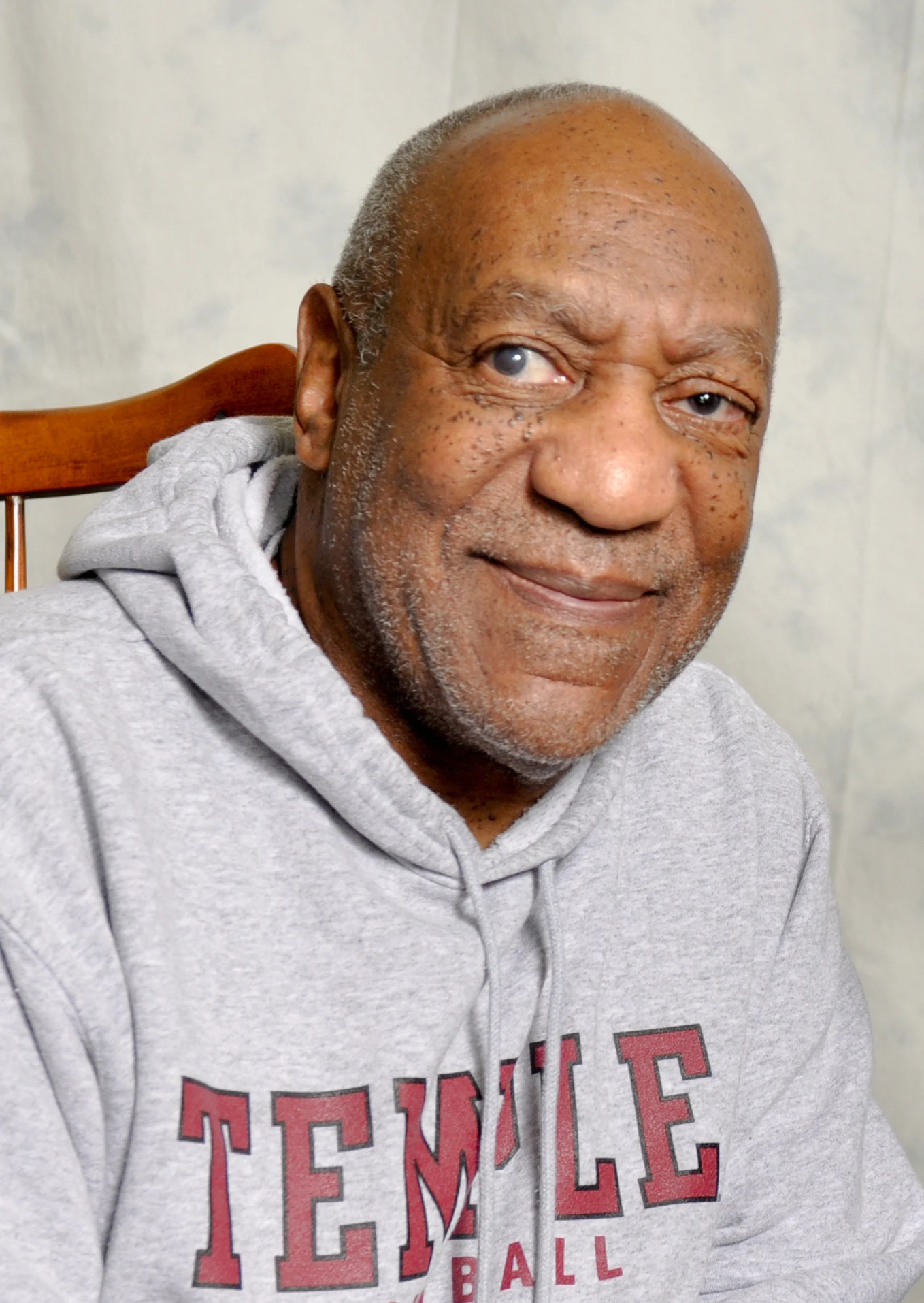
Bill Cosby at the World Affairs Council of Philadelphia and Girard College while promoting his latest book at the time, I Didn’t Ask to be Born, But I’m Glad I Was.
Wikimedia Commons· CC BY 2.0
In 1961 he landed a track‑and‑field scholarship to Temple University, where he studied physical education and soon started working clubs as a stand‑up, including San Francisco’s Hungry I, a key early venue. [2]
Comedy albums followed — his first LP, Bill Cosby Is a Very Funny Fellow…Right! came out in 1963 — and he would go on to win more Grammys for Best Comedy Album than any other performer. [2]
Television made him a star. From 1965 to 1968 he co‑starred in NBC’s I Spy, winning three Primetime Emmy Awards for Outstanding Lead Actor in a Drama Series and becoming the first Black actor to do so. [2]
He produced or headlined a slate of series — The Bill Cosby Show, Fat Albert and the Cosby Kids, The Cosby Show, A Different World, The Cosby Mysteries, Cosby — that painted him as a paternal, morally upright figure in American living rooms for decades. [2]
Offscreen, Cosby became a dominant advertising pitchman, endorsing everything from Jell‑O pudding to Ford, Coca‑Cola, Kodak and the 1990 U.S. census. [2]
He began promoting Jell‑O in 1974 and kept at it into the late 1990s, eventually holding the record as the longest‑serving celebrity spokesperson for a single product. [2]
In 2002, President George W. Bush awarded him the Presidential Medal of Freedom. [2]
By the early 2000s, Cosby’s genial TV persona and commercial ubiquity had cemented the nickname that would later feel bitterly ironic: he was widely known as “America’s Dad.” [3]
The earliest allegation documented in the available record dates to December 1965, when Kristina Ruehli later alleged that Cosby drugged and assaulted her at his home in Beverly Hills. [2]
Another woman, Joan Tarshis, would say decades later that she met Cosby in 1969 while staying in Beverly Hills and visiting the set of The Bill Cosby Show. [4]
Tarshis told Philadelphia Magazine in 2014 that Cosby socialized with her, offered her drinks at his cottage after shooting, and that she became incapacitated. [4]
She alleged that she found herself being undressed on his couch, described feeling “so out of it,” and said he held her down and used his greater size and force to sexually assault her. [4]
Tarshis said she later woke up naked in his bed after another outing and had no memory of what had happened. [4]
She told the magazine she disclosed the incident to a boyfriend and a couple of friends at the time but did not threaten legal action because she believed Cosby would “lawyer himself up” and she had no attorney. [4]
Tarshis said she came forward publicly in 2014 in part because her parents were older and she no longer feared upsetting them, and in part to support other women speaking about Cosby. [4]
The article identified her as the fifth woman to publicly accuse him of sexual assault. [4]
Other accounts surfaced over the years. In 2000, Lachele Covington filed a criminal complaint alleging that Cosby tried to force her hand down his pants, exposed himself, and grabbed her breasts at his Manhattan townhouse. The NYPD referred the case to the district attorney, who declined to prosecute. [2]
In 2005, Beth Ferrier alleged that Cosby had drugged her coffee in 1984; she said she woke with her clothes partly removed and believed something sexual had occurred. [2]
That same year, Shawn Upshaw Brown alleged in the National Enquirer that Cosby had drugged and raped her the last time they were together sexually. [2]
Each woman’s allegation landed largely in isolation. They did not coalesce into a widely understood pattern until one case — and one reluctant district attorney — drew lawyers and reporters into Cosby’s private life in 2004.
In January 2004, Andrea Constand accused Cosby of drugging and fondling her. [2]
She later filed a civil lawsuit in March 2005, naming Cosby as defendant and listing thirteen women as potential witnesses with similar stories. [2]
Criminally, things initially stalled. In February 2005, the district attorney in Montgomery County, Pennsylvania, announced that there would be no charges in the Constand matter, citing insufficient credible and admissible evidence. [2]
© Mapbox © OpenStreetMap
Civilly, however, the case moved forward. Court records from Constand’s suit indicated that there were more than a dozen women with accounts resembling hers. [4]
Cosby settled the lawsuit out of court in November 2006 for an undisclosed amount. [2]
In June 2006, Philadelphia Magazine published a feature titled “Dr. Huxtable & Mr. Hyde” that laid out Constand’s allegations alongside other similar accounts, juxtaposing Cosby’s family‑friendly TV persona with disturbing claims about his off‑screen behavior. [2]
Bill Cosby I Spy 1966.jpg
Wikimedia Commons· Public domain
For a time, that story and the sealed settlement were where the public record largely stopped. As of November 2014, the same magazine noted that Cosby had never been charged in criminal court with sexual assault or rape. [4]
On October 16, 2014, comedian Hannibal Buress performed a set in Philadelphia in which he bluntly accused Cosby of rape and urged the audience to search “Bill Cosby rape” online. [2]
Clips of the routine spread widely, directing a new generation to accusations that had long been easy to miss or dismiss.
Within weeks, more women went public. In November and December 2014 and into 2015, many additional accusers described alleged assaults by Cosby spanning from 1965 to 2004. [2]
By October 24, 2015, nearly sixty women had claimed he had sexually abused them, and later reporting would count more than 60 accusers overall alleging rape, drug‑facilitated assault, sexual battery, child sexual abuse, and sexual harassment. [2]
Jewell Allison, one of those women, described Cosby as a “sociopath” in coverage of the allegations. [2]
Cosby’s legal team, confronted in 2014 with Tarshis’s account and others, issued a statement calling the claims “decade‑old, discredited allegations” and insisting that repetition did not make them true. [4]
When Philadelphia Magazine sought further comment, Cosby’s lawyer hung up rather than answer additional questions. [4]
Cosby himself, through representatives and in public statements, maintained his innocence as the list of women grew. [2]
A crucial turn came not from new allegations but from old paperwork.
In July 2015, parts of the sealed court record from Andrea Constand’s 2005 civil suit were unsealed and made public. [2]
In that deposition, Cosby acknowledged having casual sex with a series of young women in encounters that involved the recreational use of methaqualone (Quaaludes), and he admitted that his dispensation of the prescription sedative had been illegal. [2]
Those admissions, coupled with the volume of public accusations, helped push prosecutors in Montgomery County to revive the Constand case. The renewed criminal case culminated in a high‑profile trial in Pennsylvania.
In June 2017, the first Constand trial ended in deadlock: a U.S. judge declared a mistrial after jurors could not reach a unanimous verdict. [5]
The BBC reported that, ahead of the announcement, one of Cosby’s accusers, actor Lili Bernard — who had been a guest star on The Bill Cosby Show — stood outside the courthouse and called him a “lying coward” and “master manipulator.” [5]
Prosecutors chose to retry the case. On April 26, 2018, a jury found Cosby guilty of three counts of aggravated indecent assault against Andrea Constand. [2]
Oversimplified headlines sometimes described this as a conviction for the “rape” of Constand, but the formal verdict rested on the aggravated indecent assault charges. [1][2]
In June 2021, the Pennsylvania Supreme Court vacated Cosby’s 2018 criminal sex‑crimes conviction related to the Constand case. [1]
The court’s decision — described in contemporaneous coverage as overturning his conviction for the 2004 assault — meant that Cosby was released from prison and could not be retried in that case. [1]
Bill Cosby 1965.JPG
Wikimedia Commons· Public domain
By the time of a major 2022 article about his legal troubles, Cosby was 84 years old. [1]
The vacated conviction created a sharp legal contrast: in criminal court, the one case that had produced a guilty verdict ended with the state’s highest court erasing it; in civil court, juries were beginning to rule against him in multiple cases.
Even as the criminal conviction fell away, civil litigation ramped up.
In 2022, a civil jury decided that Cosby was liable for sexually assaulting Judy Huth in the mid‑1970s, when she was 16. [1][2]
Reporting on the verdict emphasized that unlike his criminal trials, Cosby faced no possibility of jail time in this case. [1]
Sources close to Cosby told Deadline he was almost certain to appeal. [1]
Jurors, according to that same reporting, had submitted numerous questions to the judge during deliberations, and there was reported personal friction between two panel members as they worked toward a decision. [1]
Cosby Brook in Cosby - geograph.org.uk - 5602316.jpg
Another set of civil claims focused on an incident in 1972 in Santa Monica.
One report from The Independent states that a California civil jury ruled Cosby liable for drugging and sexually assaulting a woman in 1972 and awarded her $19.25 million. [3]
Separately, Wikipedia’s summary of the case identifies the woman as Donna Motsinger, stating that in 2026 Cosby was found liable for sexually assaulting Motsinger in Santa Monica in 1972 and ordered to pay $19 million in damages. [2]
Those accounts agree on the basics — a 1972 assault in Santa Monica and a multi‑million‑dollar award — but differ in the precise amount and, notably, in the date attributed to the verdict. [2][3]
The available dossier does not reconcile that discrepancy.
Both Constand and Motsinger have publicly come forward and consented to be named in press coverage, a practice the Associated Press ordinarily avoids with sexual‑assault complainants unless they choose to identify themselves. [3]
The wave of allegations and the legal findings against Cosby triggered a rapid dismantling of the image he had built over half a century.
Cosby had been a ubiquitous, trusted advertising face from the 1960s into the early 2000s, but he has not appeared in ad campaigns since the sexual‑assault allegations gained wide publicity in 2014. [2]
Television networks and distributors pulled reruns of The Cosby Show and other programs featuring him from syndication. [2]
Colleges and universities that had once held him up as a model of achievement began to distance themselves. Many awards and honorary degrees were revoked; in total, twenty‑five institutions rescinded honorary doctorates they had granted him. [2]
Public anger reached the White House. After revelations from Cosby’s unsealed deposition, a petition appeared on WhiteHouse.gov in July 2015, calling for his Presidential Medal of Freedom to be revoked. [2]
President Barack Obama responded that there was no precedent for stripping the honor — effectively signaling the petition would not succeed — but he also remarked that giving someone a drug without their knowledge and then having sex with that person is rape. [2]
Cosby Brook in Cosby - geograph.org.uk - 5602315.jpg
Cosby’s comedy and television work, once widely credited with expanding opportunities for Black performers and reshaping American family sitcoms, now sat under a cloud of accusations ranging from sexual harassment to child sexual abuse. [2]
Despite the criminal conviction that stood for three years, later erased; despite multiple civil juries finding him liable for sexual assault; and despite more than sixty accusers whose stories span from the mid‑1960s to the early 2000s, Bill Cosby has maintained that he is innocent of the accusations against him. [1][2]
His lawyers have repeatedly attacked the credibility of the allegations, at one point labeling them “decade‑old, discredited” and insisting that repetition does not confer truth. [4]
Some accusers, like Joan Tarshis, have said they came forward late precisely because they believed for years that Cosby’s power and resources made it futile to challenge him. [4]
The legal record itself is jagged. In criminal court, Cosby stands without a current conviction: the one guilty verdict was vacated by Pennsylvania’s highest court in 2021. [1]
In civil courtrooms, however, juries in multiple jurisdictions — in cases brought by Huth, the 1975 Playboy Mansion plaintiff, and at least one woman tied to a 1972 Santa Monica assault — have concluded that he is liable for sexual abuse and awarded substantial damages. [1][2][3]
Outside those court files sits the broader, unresolved question: what weight should be given to the dozens of women whose accusations will never be litigated at all — either because statutes of limitation expired, prosecutors declined to charge, or the women chose not to sue? [2]
Cosby’s rise from Navy corpsman to Emmy‑winning star, trusted pitchman, and Medal of Freedom recipient once looked like a straightforward American success story. [2]
The record now is more complicated: a vacated conviction, civil findings of liability, and a long trail of accusations that fundamentally altered how the public remembers “America’s Dad,” even as the man at the center of it insists he did nothing wrong. [1][2]
This case file is an original Bloody Likely narrative synthesis based on the cited sources. Article © Bloody Likely. All rights reserved. Source materials remain the property of their respective owners. Facts, public records, quotations, and cited references are used for reporting, research, commentary, and documentation. Bloody Likely content license
Audio narration © Bloody Likely. All rights reserved. The audio player is provided for personal streaming/listening only.
No recent news articles found for this case. Check back later for updates.
No evidence found for this case. Be the first to submit evidence in the comments below.
Join the discussion
Loading comments...
An allegation dating to December 1965 surfaced later when Kristina Ruehli (Jane Doe #12) reported Cosby had drugged and assaulted her in his Beverly Hills home.
Lachele Covington filed a criminal complaint alleging unwanted sexual contact at Cosby's Manhattan townhouse; the NYPD referred the matter to the DA, who
Andrea Constand, a former Temple University employee, accused Cosby of drugging and fondling her, an allegation that later formed the basis for civil and
Constand filed a civil claim against Cosby seeking damages; numerous women were identified as potential witnesses during the civil case.
Cosby settled Constand's civil lawsuit for an undisclosed amount (later reported as $3.38 million), and additional women spoke publicly about similar alleged
Comedian Hannibal Buress publicly called Cosby a rapist during a stand-up set in Philadelphia; the clip went viral and intensified media coverage of
New York magazine published a cover featuring 35 women who alleged they had been assaulted by Cosby, highlighting the similarity and breadth of accusations
Following a jury trial, Cosby was found guilty of three counts of aggravated indecent assault for the 2004 attack on Andrea Constand.
Cosby was sentenced to three to ten years in state prison, fined $25,000, and transferred to SCI Phoenix to begin serving his term.
The Pennsylvania Supreme Court overturned Cosby's 2018 conviction, citing due-process violations related to a 2005 prosecutor decision, and Cosby was released
A California jury found Cosby liable for sexually assaulting Judy Huth in the 1970s and ordered compensatory damages.
A jury found Cosby liable for sexually assaulting Donna Motsinger in Santa Monica in 1972 and ordered him to pay $19.25 million in damages.