ANALYZING EVIDENCE
Processing case files...
Processing case files...
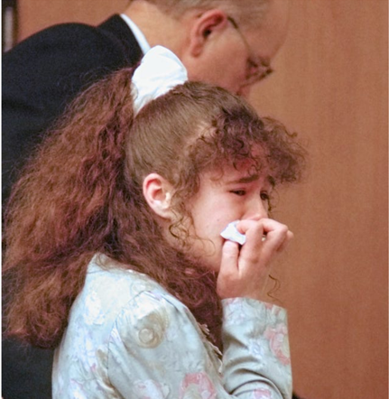
Knoxville Job Corps Murder
CLASSIFICATION: Murder
LOCATION
Knoxville, Tennessee
TIME PERIOD
January 12, 1995
VICTIMS
1 confirmed
An 18-year-old Christa Pike lured fellow Job Corps student Colleen Slemmer into a secluded area on January 12, 1995, where Slemmer was beaten, carved, and killed; Pike kept a piece of the victim's skull as a token and was arrested within 36 hours. Pike, two co-defendants and a juvenile accomplice were charged; Pike was convicted of first-degree murder and sentenced to death on March 30, 1996, and remains on Tennessee's death row. She has mounted domestic and international appeals, faced an attempted prison escape plot by outside co-conspirators, and was convicted in 2004 of an attempted murder of a fellow inmate. An execution attempt on September 30, 2026, was declared botched after Pike remained alive following administration of lethal drugs and legal actions continued; she remains incarcerated and subject to ongoing litigation.
Some believe Pike’s death sentence was the product of flawed defense work and prosecutorial decisions — critics argue her lawyers failed to present strong mitigating evidence about her youth, severe childhood trauma, and mental-health problems, fueling debate over whether the sentence should be commuted. Investigators and advocates have also pointed to alleged institutional misconduct and discrimination — from Tennessee’s long-term solitary confinement policies and unequal treatment of female death‑row inmates to the state’s refusal for years to return a fragment of the victim’s skull — as grounds for claims of a de facto cover‑up and cruel treatment. Others highlight contested facts about responsibility and motive: Pike consistently claimed the killing “got out of control” and that she acted alongside peers, while questions remain about the relative culpability of co‑defendants, plea deals, and later incidents in prison (including an alleged escape scheme involving a corrections officer) that some interpret as evidence of broader systemic failures or corruption.
On a cold January night in 1995, four teenagers signed out of their dorms at the Knoxville Job Corps Center and walked toward a wooded patch on the edge of the University of Tennessee’s agricultural campus. Only three came back. Nineteen‑year‑old Colleen Slemmer, a fellow Job Corps student, was found there beaten, slashed and bludgeoned to death, a pentagram carved into her chest. [1][2][3]
Within 36 hours, police arrested 18‑year‑old Christa Gail Pike, her 17‑year‑old boyfriend Tadaryl Shipp, and 18‑year‑old Shadolla Peterson for Colleen’s killing. [2][4] Pike quickly confessed. [4] A year later, she became the youngest woman sentenced to death in the modern era of Tennessee’s death penalty and remains the only woman on the state’s death row. [4][5]
Three decades later, on September 30, 2026, Tennessee strapped Pike to a gurney at Riverbend Maximum Security Institution and pushed lethal chemicals into her veins—only to discover that the state could not finish what it had set out to do. Witnesses said she was still breathing. An ambulance carried her away from the death chamber as courts tried to decide whether, legally, an execution had even happened. [4][6][7]
This is the story that brought Pike—and Colleen’s family—to that moment.
Family of Colleen Slemmer travels to witness Christa Pike's execution
Colleen Slemmer left high school in Florida for a fresh start at the Knoxville Job Corps, a federal job‑training program. She volunteered with disabled children, helped paint her school, worked at Special Olympics events, and was drawn to computers despite struggling with reading, her mother later said. [8] She was 19 when she was killed. [8][8]
At the Job Corps campus, Colleen met Pike and Shipp, another pair of troubled teens enrolled in the program. [9] By multiple accounts, Pike became convinced Colleen was trying to steal Shipp from her and saw her as a romantic rival. [5][8][10]
Christa Pike’s path to Knoxville ran through years of abuse, instability and juvenile confinement. Court records and later expert reports describe a childhood marked by sexual assaults beginning before kindergarten, neglect, and early mental‑health crises. [7][8][8]
Before her teens, Pike was repeatedly sexually assaulted by her grandmother’s boyfriend, according to a forensic psychologist’s report and court filings. [7][8][8] At 11, a neighbor raped her; she developed an infection, and soon after attempted suicide by overdosing on pills at age 12. [4][7][8] At 17, a stranger forced her into the woods in North Carolina and raped her again; hospital staff documented bruising and abrasions and collected a rape kit, but the attacker was never identified. [7][8]
By then, Pike had already entered the juvenile system. In late 1991, at 15, she was sent to the Juvenile Evaluation Center in Swannanoa, North Carolina, after breaking into a community center to steal candy. [1][4] She stayed there for more than a year—far longer than most youths—struggling with rules even as she earned her GED and became a teacher’s assistant. [1][4] She left the facility in March 1993 and, soon after, enrolled in the Knoxville Job Corps program. [1][4]
At Job Corps, Pike, Shipp, Peterson, and Slemmer were all students in what was widely described as a program for troubled teens. [5][11][12] Within months, jealousy and rumor would turn that campus into the backdrop for a killing that still haunts Tennessee.
On the evening of January 12, 1995, the four teenagers signed out of their Job Corps dormitory together. [1][4] Their stated plan, according to later testimony and filings, was to walk into nearby woods under the guise of sharing marijuana and “making peace” with Colleen. [1][4][8]
Accounts differ on the exact date of Colleen’s death—some place the killing on January 12, others on January 13—but all agree it happened during that overnight window in a secluded area near the University of Tennessee agricultural campus. [2][4][9]
What happened in those woods is not in serious dispute, though the details are unbearable. Prosecutors and later appellate opinions described Colleen being thrown to the ground, kicked and beaten, her head slammed against concrete or rock, and her body slashed with a box cutter while she begged for her life. [3][7][8] Her throat was repeatedly cut, and finally the back of her skull was smashed with a large piece of asphalt. [3][7][8]
A pentagram—an inverted star that some associate with satanic symbolism—was carved into her chest while she was still alive, according to trial testimony. [3][8][12] Investigators would later note how that symbol, combined with a missing piece of Colleen’s skull, fed into the broader “satanic panic” of the 1990s and shaped public perception of the case. [1][8]
Only three teenagers signed back in to the dorm that night. Colleen’s name never appeared on the return sheet. [1]
Knoxville police moved fast. Within 36 hours of the killing, they arrested Pike, Shipp and Peterson. [1][4] Detectives searching Pike’s jacket found what they believed—and forensic evidence later confirmed—to be a fragment of Colleen Slemmer’s skull tucked into a pocket. [1][5][8] Two other Job Corps students said Pike had bragged about keeping the shard as a souvenir and had shown it to them. [4][8][8]
The skull fragment quickly became one of the case’s defining and most disturbing details—proof, in many people’s minds, of a uniquely cruel mindset. [1]
After her arrest on January 14, 1995, Pike waived her Miranda rights and sat for a tape‑recorded interview. [1][4] She admitted attacking Colleen, saying she threw her down, kicked her, slammed her head into concrete, slashed her with a box cutter, slit her throat and struck her with asphalt. [1][5][8] Pike told investigators she hadn’t originally planned to kill Colleen, only to fight her, but that she “began hitting [her] and didn’t stop.” [1][8]
Lead detective Randy York would later tell a podcast that Pike was “giddy” as she recounted the killing and that the murder was “the greatest thing that ever happened to her.” [1] But audio of the interrogation and accounts from others who have known Pike contrast with that depiction, and some advocates argue that the “giddy” narrative has been overstated. [1]
All three teens were charged with first‑degree murder and conspiracy to commit first‑degree murder. [4] Because Shipp was 17, prosecutors could not seek the death penalty against him under Tennessee law. [1][4][12] Pike, who was 18 at the time of the crime, faced death. [1][2][8]
Pike went to trial in Knoxville in early 1996, represented by two overworked court‑appointed lawyers who had never handled a capital case. [1] Prosecutors portrayed her as the driving force behind a torture killing, arguing she plotted Colleen’s death, lured her to the woods, and prolonged her suffering “for sport.” [2][12]
The Knoxville Job Corps killing: Passage of time can't erase Christa Gail Pike's savage crime
The defense acknowledged Pike’s role but tried to situate her actions in a life shaped by sexual violence, mental illness and the influence of Shipp, who, they argued, was older, manipulative and obsessed with satanism. [1][2][12] A clinical psychologist hired by the defense concluded Pike had long‑undiagnosed bipolar disorder. [2] Another expert, neurologist Jonathan Pincus, testified in later hearings that Pike had brain damage, a history of abuse and mental illness—the three features he said he saw in every killer he examined. [2]
Despite those threads, the mitigation case at trial was thin. Pike’s lead lawyer later admitted he had asked her to sign over the rights to her life story so he could write a book, and post‑conviction records show he never called a psychologist who had compiled extensive documentation of her trauma—partly because she had previously been romantically involved with the lead prosecutor and because the judge ordered her notes turned over to the state. [1]
At sentencing, the prosecutor called Pike a “monster that we have to deal with.” The jury took less than an hour and a half to sentence her to death. [1] On March 30, 1996, the judge formally sentenced her to die by electrocution for murder and to 25 years in prison for conspiracy. [4][12] She was 20 years old. [1][11]
Her co‑defendants received much lighter punishments. In 1997, a jury convicted Tadaryl Shipp of first‑degree murder and conspiracy. [4][13] After jurors could not unanimously agree on life without parole, the judge imposed life in prison with the possibility of parole plus 25 years for conspiracy. [4] Shipp’s age at the time of the crime—17—made him ineligible for a death sentence. [1][4][14] He remains incarcerated, eligible for parole. [7][8]
Shadolla Peterson pleaded guilty to being an accessory after the fact, testified for the prosecution, and received probation. [4][12][15]
Even then, Pike’s age sat uncomfortably at the margin of the law. A decade after her sentencing, the U.S. Supreme Court’s decision in Roper v. Simmons barred executions for crimes committed under age 18. [14] Had Pike been one year younger, she could not have been sentenced to death in Tennessee at all. [5][14]
Pike entered the Tennessee Prison for Women—now the Debra K. Johnson Rehabilitation Center—in 1996. [5] Under a policy adopted after her trial, all death‑sentenced prisoners were kept in maximum‑security conditions. [4] Pike would spend nearly her entire adult life in some version of solitary confinement, the state’s only woman on death row. [1][5][6]
In August 2001, she proved she was still capable of violence. During a fire‑related evacuation, guards placed Pike, fellow inmate Patricia Ann Jones, and notorious Kentucky offender Natasha Cornett together in a recreation cage. [16] Pike had fashioned a shoestring‑like ligature. [4][16]
Once inside the cage, she wrapped it around Jones’s neck and tightened until Jones lost consciousness, foaming at the mouth and twitching, according to Pike’s own later description in a phone call to her mother. [16] Jones survived. [16]
Pike would later claim she was intervening to protect Cornett from Jones, who had a reputation for fighting and had expressed a desire to hurt Pike. [4][16] But a Davidson County jury convicted her of attempted first‑degree murder in 2004, and appellate judges said her own words undermined any claim she was simply playing peacemaker. [4][8][16]
A different sort of threat emerged in 2012. Authorities received a tip that someone was trying to break Tennessee’s lone female death‑row prisoner out of the Tennessee Prison for Women. [9][17] Investigators soon focused on two men: Justin Heflin, a 23‑year‑old correctional officer, and 34‑year‑old personal trainer Donald Kohut, a New Jersey man who had been visiting Pike frequently. [10][17]
According to the Tennessee Bureau of Investigation and media reports, Kohut and Heflin plotted to trace a prison key and create a duplicate. [4][10] Heflin allegedly accepted gifts and cash in exchange for his help. [10][17] Contraband tied to the plan was found inside the prison and traced back to Heflin. [10][17]
Both men were arrested and charged with bribery and conspiracy‑to‑escape offenses; Heflin was fired from his job and later cooperated, serving no prison time, while Kohut received a seven‑year sentence in Tennessee. [10][17][18] Pike herself was never charged in connection with the plot. [4]
For Colleen’s mother, May Martinez, the news that strangers were willing to risk prison to free the woman convicted of killing her daughter was another twist in a story that never seemed to end. [10]
From 1996 onward, Pike was held in conditions that several courts and international bodies would later describe as effectively solitary confinement. [1][4][19] She lived alone in a cell roughly the size of a parking space—about seven by twelve feet—with a bed, shelves, sink and toilet, locked inside 22 to 24 hours a day, with little meaningful human contact. [5][8]
Men on Tennessee’s death row, by contrast, were segregated from the general prison population but could work jobs, eat together, and spend substantial time outside their cells if they avoided disciplinary trouble. [5] Attorneys would later argue that the only reason Pike was excluded from such opportunities was the “arbitrary fact” that she was the state’s lone condemned woman and there was no equivalent facility for women. [5][19]
Pike’s isolation drew mounting criticism. In 2020, the Inter‑American Commission on Human Rights issued precautionary measures, finding she faced an urgent risk of irreparable harm and later concluding that her trial and conviction had violated rights to a fair trial, due process, and equality before the law. [4] United Nations experts condemned the “extraordinary duration” of her isolation and said the combination of her conditions, her vulnerability and the looming prospect of execution amounted, in their view, to torture. [19]
A court is deciding whether Tennessee's execution methods violate Christa Pike's rights. Hearings are underway. | WPLN News
In 2022, lawyers from the firm Bass, Berry & Sims and other advocates sued the Tennessee Department of Correction on Pike’s behalf, arguing that her conditions were cruel and unusual and unlawfully harsher than those imposed on men. [4][5]
Two years later, in September 2024, they reached a settlement. The state agreed Pike could earn behavior‑based privileges similar to those accorded to men on death row: more time out of her cell, the chance to hold a prison job, and the ability to share meals with other incarcerated women. [4][5][8] After nearly three decades in near‑total isolation, she could finally have something closer to ordinary human interaction. [5][7]
Even as she adjusted to slightly less restrictive confinement, Pike and her lawyers were still fighting the sentence imposed in 1996.
Her legal saga had been messy almost from the start. At different points, including in 2001 and 2002, Pike asked to abandon her appeals and be executed, and a trial judge set an execution date for August 19, 2002. [4][13] She later changed her mind. The Tennessee Court of Criminal Appeals granted a stay on August 2, 2002, vacated the looming date, and ordered the trial court to hear her motion to reinstate post‑conviction proceedings. [13]
Over the next two decades, state and federal courts rejected her claims. In 2008, Knox County Criminal Court Judge Mary Beth Leibowitz denied her bid for a new trial, finding her lawyers’ strategic choices were not constitutionally deficient. [2][3][12] In 2016, a federal district judge dismissed her habeas corpus petition, and in 2019 the U.S. Court of Appeals for the Sixth Circuit unanimously upheld that ruling. [4]
One of the central disputes was whether Pike’s jury ever truly heard the full picture of her trauma and mental illness. Forensic psychologist Dr. Diana McCoy had evaluated Pike in 1995 and documented years of severe neglect and sexual and physical abuse by multiple men in her life, including repeated rapes as a toddler and assaults at ages 11 and 17. [8] But she never took the stand; the trial lawyer chose not to call her, and later post‑conviction courts declined to fault him for that decision. [3][8]
Other experts would go further, diagnosing Pike with bipolar disorder, PTSD and possible brain damage and arguing that these conditions, along with her age, were powerful mitigating factors the jury should have weighed. [8][8][19] The Tennessee Supreme Court and federal appeals courts, however, concluded that much of this information overlapped with what jurors had already heard from family testimony and would not have changed the outcome. [8]
Christa Pike Could Be First Woman Executed in Tennessee in More Than 200 Years - The New York Times
Outside the United States, the assessment was different. In 2026, the Inter‑American Commission on Human Rights issued a detailed report concluding Pike’s trial had violated her rights and that her death sentence should be reviewed. [4] U.N. experts echoed those concerns and formally urged Tennessee and the federal government to commute her sentence. [19]
By 2020, Pike had exhausted ordinary appeals. [4] That August, the Tennessee Attorney General asked the state supreme court to set an execution date. [4] On September 30, 2025, the court issued a death warrant scheduling her execution for September 30, 2026. [1][4]
As the date approached, Pike’s lawyers shifted their focus to how the state planned to kill her. Tennessee executes people at Riverbend Maximum Security Institution, a men’s prison in Nashville, using either lethal injection or, at a prisoner’s option, electrocution. [4][20] The current protocol relies on a single drug: pentobarbital, a barbiturate that experts say is highly corrosive and can burn tissue like a caustic chemical if it escapes the vein. [20]
Pike and her team argued that her history and health made lethal injection uniquely dangerous and psychologically devastating for her. She has a blood‑clotting disorder, thrombocytosis, that can both increase clotting at the IV site—which could occlude catheters and force drugs into surrounding flesh—and heighten the risk of catastrophic bleeding. [4][20][21] She also has PTSD rooted in a lifetime of male sexual violence, they said, and being restrained by male officers while needles probed for veins in intimate areas would force her to relive those assaults. [19][20][21]
In 2024 and 2026, the Tennessee Supreme Court appointed a special master to hear evidence on whether the execution protocol would subject her to unconstitutional pain. [8][20] At multi‑day hearings in Knoxville in August 2024, expert witnesses walked through her childhood abuse and debated whether she would suffer more from a hanging or a lethal injection. [8][20] A clinical psychologist, Dr. Bethany Brand, described Pike’s case as “truly extreme” and said the process would not just remind her of past rapes, but make her “fully relive them.” [8][8]
Pike herself attended by video from the Debra K. Johnson Rehabilitation Center and became so overwhelmed by a day of testimony that, according to people present, she had to be carried from the room where she sat. [8]
Her lawyers proposed modifications: skip peripheral IVs and go straight to a central line, or substitute hanging as an alternative method they argued would, even if botched, cause at most 20 seconds of intense pain. [20][21] The state countered that her thrombocytosis did not establish a substantial risk of needless suffering, that IV difficulties are common in medical settings, and that Tennessee law does not permit hanging, nor is the death chamber equipped for it. [4][15][20]
The special master ultimately agreed with the state. In August 2026 he reported that Pike had failed to prove the lethal‑injection protocol would likely inflict unconstitutional pain. [4][21] The Tennessee Supreme Court adopted that view and later denied her request to halt the execution. [8][15]
Recognizing the psychological dimension of her claims, Tennessee did offer some accommodations. The state agreed that female correctional officers would transport her to Riverbend, that staff would attempt to use only female officers to observe her during the execution process, that a privacy screen would shield her while she showered or used the toilet, and that she could have contact with a spiritual adviser in the final 12 hours, including in the execution chamber. [4][15]
Behind the scenes, her lawyers assembled a 226‑page clemency petition, stacking expert reports and personal letters to urge Governor Bill Lee to commute her sentence to life without parole. [1][4] Among the signers was the North Carolina juvenile judge who had represented her as a teenager, now retired, who wrote that “we failed Christa.” [1]
On September 28, 2026, Lee rejected the plea. [1][4] The next day, the U.S. Supreme Court declined to intervene. [4][7]
Pike, 50 years old and now allowed limited contact with other prisoners, refused to choose a special last meal on September 29. [4][8] Unless another court stepped in, Tennessee would kill her the next morning. [8][15][20]
Pike’s execution was set for 10 a.m. on September 30, 2026, at Riverbend Maximum Security Institution in Nashville. [6][20][21] The state planned to use its standard single‑drug pentobarbital protocol. [19][20]
Her lawyers were still filing. On the evening of September 29 they submitted new arguments to the Sixth Circuit Court of Appeals, noting that Tennessee prosecutors had, for the first time, expressly acknowledged the depth of Pike’s childhood sexual abuse and arguing that this concession undermined earlier rulings. [7] Early on September 30, a panel of the Sixth Circuit issued a stay of execution “until further order of this court,” saying more time was needed to resolve the issues. [6][7]
Mother of Colleen Slemmer speaks as Christa Pike set to be executed at end of September
The Tennessee Attorney General asked the U.S. Supreme Court to overturn the stay. [6] Hours went by as Pike waited on death watch. Toward evening—just before 6 p.m. Central Time—the Supreme Court granted the state’s request, lifted the stay, and cleared the way for the execution to proceed. [4][6]
Inside the death chamber, what happened next would soon be described by witnesses and lawyers as a “botched” execution.
Tennessee’s lethal‑injection protocol calls for a set of syringes—two containing 50 milliliters of pentobarbital bracketed by saline—to be administered, followed by a five‑minute waiting period. [7] If the prisoner is not dead after a physician examines them, a backup set is prepared and given. [7] The written protocol does not say what should happen if the second set fails. [7]
According to an emergency motion her attorneys later filed, Pike was strapped to the gurney and injected with two full sets of pentobarbital—double the intended lethal dose. [6][7] Media witnesses reported that the curtains to the viewing room closed at least twice and that after the final syringes were pushed, Pike was still alive and “snoring.” [4][6][7]
Her lawyers wrote that at 8:26 p.m. Central Time, witnesses informed them both sets of lethal chemicals had been administered, and she remained alive and audibly breathing. [6][7] One witness quoted in court filings recalled her saying, “My arm feels like it’s about to burst open,” describing pain at the IV site—exactly the kind of burning that her team had warned pentobarbital might cause if it leaked into surrounding tissue. [7][20]
They rushed to file emergency motions in state and federal courts, arguing that the ongoing procedure was inflicting “unnecessary agony” and violating her right to be free from cruel and unusual punishment, and demanding that the Department of Correction begin life‑saving measures. [7]
The legal responses were as fragmented as the process itself. A federal district judge in East Tennessee declared one emergency motion moot after the state informed the court that Pike was receiving medical care, writing in a brief order that “this is the complete order of the court.” [6] The Tennessee Supreme Court, told that Pike had not been pronounced dead, similarly deemed a stay request moot. [7]
Outside Riverbend’s walls, confusion reigned. Reporters in the media center said they were told to leave prison property even as an ambulance arrived and drove Pike away to a hospital. [7] As of 10:10–10:30 p.m. Central Time that night, officials still had not publicly disclosed whether she was dead or alive. [6][7]
Subsequent reports and court filings consistently stated that Pike never lost consciousness, maintained a heartbeat throughout, and was transported by ambulance for further treatment. [4][6][7] The state had tried twice to kill her and had failed.
For Colleen Slemmer’s family, each twist in Pike’s case—from the escape plot to the solitary‑confinement lawsuits to the failed execution—reopened wounds that had never closed.
Colleen’s mother, May Martinez, has for years been one of the most persistent voices calling for the death sentence to be carried out. She told one interviewer she wanted Pike executed to “end it” and “relieve my daughter,” and has said repeatedly that she believes Pike should “pay for it.” [7][8] In 2021, she told a reporter she felt Colleen had been made a “human sacrifice.” [9] She has also expressed open anger, saying she thought Pike should suffer before she died and that she would feel better if Pike felt the same pain her daughter did. [8]
For years, Martinez’s grief was compounded by the physical reality of her daughter’s remains. Tennessee had kept at least one portion of Colleen’s skull—the same fragment found in Pike’s jacket—as evidence in an “open” case tied to ongoing appeals. [4][8][9] Martinez kept Colleen’s cremated remains in a pewter box in her Florida home but refused to bury them until she could bury “all of her,” saying the missing piece prevented a proper funeral. [9]
She has said the state sporadically mailed pieces of Colleen’s remains back over the years, sometimes without warning, and long insisted that the skull fragment Pike had taken was never returned and had been lost. [8][9] Pike’s legal team has disputed that, saying they confirmed with authorities that all remains and evidence related to Colleen’s body—including any skull fragments—were eventually released to Martinez. [8] In a later documentary, Martinez reportedly confirmed that after 16 years of letters and pressure, she did receive the missing fragment. [4]
The dispute over a small piece of bone captured something essential about the case: for one family, justice required not just a death sentence on paper but a completed execution and the return of every fragment of their daughter. For others, the failed execution and Pike’s survival underscored what they saw as the cruelty and unreliability of capital punishment itself.
Christa Pike’s story is unusually dense with contradictions.
She is, incontestably, the young woman who lured a classmate into the woods and participated in a prolonged, cruel killing, later found carrying a fragment of the victim’s skull in her pocket. [1][7] She is also a product of years of sexual abuse, neglect and untreated mental illness that began before she could read, whose brain may, according to at least one neurologist, have been “damaged from the get‑go.” [7][8][8]
Courts have said, again and again, that those facts do not excuse what she did—that jurors heard enough about her background to fairly weigh life against death. [8] International human‑rights bodies, women’s advocates and her lawyers disagree, arguing that had she been tried today, as an 18‑year‑old with documented bipolar disorder and PTSD, she would not have been sentenced to die. [8][15][19]
The events of September 30, 2026, added another layer of ambiguity. A federal appeals court stayed her execution; the U.S. Supreme Court cleared it; Tennessee administered two full lethal doses; Pike remained alive and snoring; and multiple courts then declared emergency motions “moot” on the ground that she had not yet been pronounced dead. [4][6][7] She left the prison in an ambulance rather than a hearse. [4][7]
For Colleen Slemmer’s family, those details may matter less than the simple fact that, more than 30 years after a walk into the woods near a Knoxville campus, there is still no clean ending—no final word that feels like justice or peace. [8][8]
For Tennessee and for anyone watching, the question that lingers is what it means when a state tries twice to end a life and cannot, and whether the system that produced that moment can ever be considered reliable, or humane, again.
This case file is an original Bloody Likely narrative synthesis based on the cited sources. Article © Bloody Likely. All rights reserved. Source materials remain the property of their respective owners. Facts, public records, quotations, and cited references are used for reporting, research, commentary, and documentation. Bloody Likely content license
Audio narration © Bloody Likely. All rights reserved. The audio player is provided for personal streaming/listening only.
No recent news articles found for this case. Check back later for updates.
No evidence found for this case. Be the first to submit evidence in the comments below.
Join the discussion
Loading comments...
Colleen Slemmer was lured from the Job Corps dorms and tortured and killed in a secluded area near Knoxville; Pike smashed her skull and kept a fragment
Pike and her two alleged co-conspirators were arrested within 36 hours after school logs and evidence linked them to Slemmer's disappearance.
Christa Pike was convicted of first-degree murder and sentenced to death by electrocution and received a concurrent prison term for conspiracy.
While on death row, Pike allegedly attacked inmate Patricia Jones with a shoestring; Jones survived the assault.
Pike was convicted of attempted first-degree murder for the 2001 attack on fellow inmate Patricia Jones.
Authorities arrested a visiting correspondent and a corrections officer in a foiled conspiracy to assist Pike's escape from prison.
The Tennessee Supreme Court issued a death warrant scheduling Pike's execution for September 30, 2026, with choice of electrocution or lethal injection.
The U.S. Court of Appeals for the Sixth Circuit temporarily stayed Pike's execution pending further review one hour before the scheduled time.
An attempt to execute Pike by lethal injection was declared botched after she remained alive and breathing following administration of drugs; she was taken