ANALYZING EVIDENCE
Processing case files...
Processing case files...
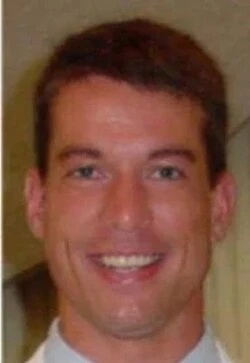
Missing Medical Student Case
CLASSIFICATION: Missing Person
LOCATION
Columbus, Ohio
TIME PERIOD
April 1, 2006
VICTIMS
1 confirmed
Brian Randall Shaffer, a 27-year-old medical student at Ohio State University, disappeared on April 1, 2006, after being last seen outside a bar in Columbus, Ohio. Earlier that evening, he had been celebrating with friends for spring break but became separated from them. Security footage captured him conversing with two women just before 2 a.m., after which he vanished without a trace, despite there being no publicly accessible exits from the bar. The case remains open and has garnered significant media attention, with various theories regarding his disappearance, including potential foul play and speculation about him living under a new identity. Investigators have pursued leads, including examining the involvement of a friend who was with him that night, but no conclusive evidence has emerged to resolve the case.
Some believe Shaffer was the victim of foul play, with speculation at times linking his disappearance to the disputed “Smiley Face” murder theory and investigators noting the puzzling lack of any clear public exit from the bar where he was last seen. Others have speculated he may have gone voluntarily and assumed a new identity—claims fueled by a hoax guestbook message referencing the U.S. Virgin Islands and an attorney’s email suggesting some investigators privately thought Shaffer might be alive. There is also suspicion focused on his friend William “Clint” Florence (who refused polygraph testing), and private investigators and family allies have accused police of withholding files or missing key evidence, fueling cover-up and investigative-oversight theories.
In the early hours of April 1, 2006, 27‑year‑old Brian Shaffer was caught on surveillance video at a packed campus bar near Ohio State University. [1][2] The cameras showed him talking with two women just before closing time, then walking away into the crowd. [1][2][3]
The Disappearance of Brian Shaffer, a Mysterious Case With No Answer - Cultura Colectiva
Those same cameras never captured him leaving.
Brian Randall Shaffer was born on February 11, 1979, a white male with light brown hair and hazel eyes. [2] At the time he vanished, he stood about 6'2" and weighed between 165 and 170 pounds, according to differing reports. [1][2]
He carried a few distinctive markers: a Pearl Jam symbol tattooed on his upper right arm, a dark fleck on his left iris, and wire‑framed glasses. [2][3] Those details would later anchor missing‑person posters and age‑progressed images.
By 2006, Brian was an Ohio State University medical student, the kind of young adult who spent his days in lecture halls and hospitals and his nights in the orbit of the High Street bar scene. [3] His girlfriend, Alexis Waggoner, was also a second‑year medical student at OSU. [3]
That spring, the Shaffer family had already been hit once. Brian’s mother, Renee, died of cancer three weeks before he disappeared. [3] His father, Randy Shaffer, and younger brother, Derek, were left to navigate that loss with him. [3]
What happened next would leave Randy and Derek as the public faces of a second, more baffling absence.
April 1, 2006, fell at the start of Ohio State’s spring break. Brian planned to celebrate. He and his former roommate, Clint Florence, headed to the campus‑area bar Ugly Tuna Saloona sometime after 9 p.m. [2][3] The bar sat in the North High Street area, just off the university campus, a popular student hangout wired with surveillance cameras. [1][3]
Just before 10 p.m., Brian spoke briefly with Alexis. [3] It would be the last time she ever heard his voice. [3]
From there, the night followed a familiar pattern. Brian and Clint left the Ugly Tuna area and barhopped through the Arena District and the Short North. [3] Along the way, they met a woman named Meredith Reed. [3] According to the later account, Brian drank several shots of hard liquor that night. [2]
Eventually, the trio made their way back to the Ugly Tuna. Surveillance cameras at the Gateway complex recorded them riding the escalator up toward the bar and stepping inside at 1:15 a.m. [3] From that point forward, the cameras would become the most haunting pieces of evidence in the case.
Some accounts place Brian’s final appearance between 1:30 and 2:00 a.m.; others note he was last seen “around 2 a.m.” [1][2][3] Shortly before closing, cameras inside the bar captured him speaking with two college‑age women. [1][2] He appeared to say goodbye, then walked away—deeper into the bar, and, as far as the cameras show, out of recorded existence. [1][3]
Brian Shaffer Walked Into a Bar 19 Years Ago and Was Never Seen Again. Revisiting the Bizarre Disappearance — and Why Some Think He Was a Victim of a Serial Killer -
What he was wearing that night depends on which description is read. A Columbus Dispatch article described jeans, a blue or green striped shirt, and tennis shoes. [1] The Charley Project’s archived entry lists an olive green short‑sleeved polo over a white long‑sleeved shirt, blue jeans, white Adidas sneakers, and a yellow rubber cancer‑awareness bracelet. [2]
In the hours after closing time, friends tried to reach Brian. Calls from Clint Florence and Meredith Reed went unanswered that night. [3] At first, it may have been easy to assume he’d crashed at someone’s place or gone home on his own.
© Mapbox © OpenStreetMap
The real alarm sounded a couple of days later. Brian had a long‑scheduled flight to Florida planned for Monday, a trip his family knew about well in advance. [3] When he failed to show up for the flight, his family became sure something was wrong and called Columbus police. [3]
Officers quickly confirmed that Brian’s car was still parked at his apartment and that none of his personal belongings appeared to have gone with him. [2] The last solid pin on his whereabouts remained the same: the Ugly Tuna Saloona in the first hours of April 1. [2][3]
Columbus police treated the case as an endangered missing person. [2] Detectives, including Sgt. John Hurst, began their work at the Ugly Tuna, the spot where they believed Brian likely ended his night. [3]
The bar’s cameras presented a maddening puzzle. Footage showed Brian entering, and later, clearly inside the bar. [2][3] It never showed him leaving. [1][2][3] If he had walked out a main entrance or obvious exit, he should have crossed the camera’s eye. Instead, he simply failed to reappear.
In the days after the disappearance, police mounted intensive searches with as many as 50 officers at a time. [3] They canvassed nearby streets, dumpsters, hospitals, homeless shelters, landfills, riverbanks, and sewer lines, and deployed K‑9 units. [3]
Detectives worked through a narrow set of possibilities. One theory held that Brian had left voluntarily, perhaps to escape the weight of his mother’s recent death and the pressures of medical school. [3] Another suggested he had been the victim of a crime—something that happened after he slipped outside of camera range, or in a space the cameras didn’t cover. [3]
Meanwhile, the digital trail went cold. In the months after his disappearance, Brian’s cellphone went straight to voicemail whenever anyone called. [3] Later, callers reported that the phone began to ring without being answered, a detail that briefly raised hope until it was attributed to a computer glitch in the Cingular system. [3]
A year into the search, the lack of activity looked even grimmer. No one had used Brian’s cellphone or his credit card, and none of the hundreds of tips had produced Brian—or a body. [3]
While detectives worked the official investigation, Brian’s father, Randy Shaffer, took on the hunt in public. He actively courted media attention, put up missing posters across the region, organized vigils and searches, and spoke openly with reporters about his son. [3]
Randy followed tips from every corner, including psychics. [3] One psychic claimed that Brian’s body lay submerged in water, caught in whirlpools at the base of concrete bridge posts. [3] Randy and his brother took the lead seriously enough to pull on waders and search the Olentangy River themselves, at one point nearly going under near a bridge post. [3]
His advocacy extended beyond his own family’s nightmare. With help from Crime Stoppers president Kevin Miles and parents of other missing children, Randy helped persuade the Ohio legislature to pass a missing adults bill. [3] The law established a statewide protocol for detectives handling adult disappearances, a lasting legacy of a father trying to make sense of what had happened to his son. [3]
On September 14, 2008, tragedy struck the Shaffer family again. During a windstorm, Randy was killed when a falling tree limb hit him; a neighbor found his body the next morning. [3] Brian’s mother was gone, his father now dead, and the central question remained exactly where it had been since 2006: where was Brian?
Brian’s younger brother Derek was left as one of the last close family members still waiting for an answer. [3]
As the years passed, tips continued to filter in. None definitively placed Brian alive or located his remains. [1][3]
In 2020, someone sent authorities a photograph of a homeless man in Mexico who bore a resemblance to Brian. [1] The image was forwarded to the FBI for facial recognition analysis. [1] After review, the FBI determined the man in the photo was not Brian Shaffer. [1] Another lead closed with no resolution.
By 2021, Brian’s case had been the subject of podcast episodes, television coverage, and an entire Wikipedia page, a kind of digital monument to an absence. [1] That March, the Ohio Bureau of Criminal Investigation released a new age‑progressed photo showing what Brian might look like in his early forties—he would have been 42 at that point. [1]
Columbus police and BCI expressed hope that the updated image would spark new information and help lead to answers in the case. [1] Interim Columbus police chief Michael Woods publicly thanked BCI and its forensic artists for the work and emphasized that finding every missing person remains a goal for the department. [1]
Brian Randall Shaffer has officially been missing from Columbus, Ohio, since April 1, 2006. [2] His case remains classified as “Endangered Missing.” [2]
He was last seen at a since‑closed bar, the Ugly Tuna Saloona, on North High Street near the Ohio State campus, around bar closing time. [1][2] Surveillance cameras recorded him entering the building and later moving through it, but never captured him leaving. [1][2][3]
Nearly two decades later, that gap in the footage still defines the mystery. Did Brian slip out a blind spot, walk away to start a new life, or cross paths with someone who meant him harm? Police, family, and the public have turned those possibilities over for years. [3] None has been proven.
INTERNATIONAL MARITIME SECURITY II- LAW ENFORCEMENT, PASSENGER SECURITY AND INCIDENT INVESTIGATION ON CRUISE SHIPS (IA gov.gpo.fdsys.CHRG-109hhrg28532).pdf
Wikimedia Commons· Public domain
Anyone who might recognize Brian—by his 6'2" frame, light brown hair, hazel eyes, the dark fleck in his left iris, or the Pearl Jam tattoo on his right upper arm—still has a chance to affect the one fact that has not changed since he disappeared: he has never been found. [2][3]
Authorities continue to ask that anyone with information about the disappearance of Brian Shaffer contact the Columbus Division of Police at 614‑645‑2358. [1]
Adapted from Disappearance of Brian Shaffer - Wikipedia.
This case file is an original Bloody Likely narrative synthesis based on the cited sources. Article © Bloody Likely. All rights reserved. Source materials remain the property of their respective owners. Facts, public records, quotations, and cited references are used for reporting, research, commentary, and documentation. Bloody Likely content license
Audio narration © Bloody Likely. All rights reserved. The audio player is provided for personal streaming/listening only.
No recent news articles found for this case. Check back later for updates.
No evidence found for this case. Be the first to submit evidence in the comments below.
Join the discussion
Loading comments...
27-year-old medical student Brian Shaffer goes missing after a night out with friends in Columbus.
Security footage shows Shaffer talking to two women outside the Ugly Tuna Saloona before disappearing.
Shaffer is reported missing after failing to board a flight to Miami with his girlfriend.
Columbus police begin searching the area around the Ugly Tuna Saloona and reviewing security footage.
The case receives national media attention, leading to increased public interest and tips.
Brian's father, Randy Shaffer, dies in an accident, leaving the search for Brian unresolved.
Columbus police report receiving ongoing tips about Shaffer's disappearance, but no breakthroughs.
Ohio Bureau of Criminal Investigation releases an age-progressed photo of what Shaffer might look like at age 42.