ANALYZING EVIDENCE
Processing case files...
Processing case files...
Massachusetts maternal filicide case
CLASSIFICATION: Murder
LOCATION
Duxbury, Massachusetts
TIME PERIOD
January 24, 2023
VICTIMS
3 confirmed
Three young children were strangled in their Duxbury, Massachusetts home on January 24, 2023, and their mother was found outside the house after a suicide attempt. The defendant, Lindsay Clancy, is charged with the first-degree murders of her children and has pleaded not guilty, claiming severe postpartum mental illness and psychosis. Prosecution alleges the killings were deliberate and planned, while the defense points to months of escalating psychiatric symptoms, multiple medication changes, hospital treatment, and command hallucinations. The case proceeded to a criminal trial in 2026, with treating psychiatrists and nurse practitioners testifying about her symptoms, medications and care.
Some believe Clancy was driven to filicide by a postpartum psychosis or undiagnosed bipolar episode — a defense that argues she heard commanding voices and was mentally unfit for criminal responsibility. Others, including prosecutors and some treating clinicians, argue she acted deliberately and rationally, accusing her of manipulating providers and making calculated decisions to get her husband out of the house. Debate also centers on alleged mismanagement by the mental‑health system — disputed medication choices, frequent drug changes, limited telemedicine visits, and poor coordination among clinicians (now the subject of civil suits) that critics say may have worsened her condition or failed to prevent the tragedy.
On the evening of January 24, 2023, first responders entered a family home in Duxbury, Massachusetts and headed for the basement. There, they found three young children—5‑year‑old Cora, 3‑year‑old Dawson and 8‑month‑old Callan Clancy—unresponsive. [1][2][3]
© Mapbox © OpenStreetMap
Outside, in the yard of the same home, their mother, 35‑year‑old Lindsay Clancy, lay badly injured after jumping from a second‑story window. She survived but was left paralyzed from the waist down. [1][2][3]
What happened in that house in the hours before has become the focus of one of the most contentious criminal trials in recent Massachusetts memory—a case that sits at the intersection of motherhood, mental illness, modern psychiatry and the limits of criminal responsibility.
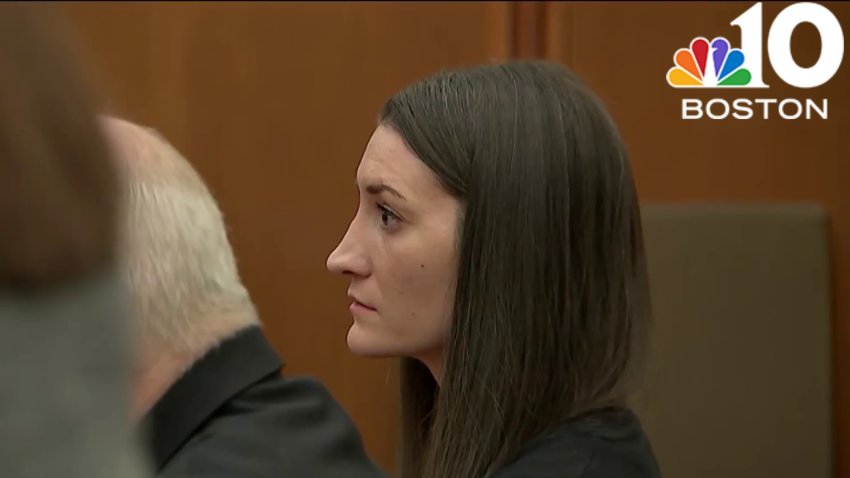
Lindsay Clancy, a Duxbury mother in her mid‑30s, has pleaded not guilty to murder charges in the deaths of her three children. [2][3] Prosecutors say she strangled Cora, Dawson and Callan in the basement and that she acted deliberately and rationally. [3] If convicted of murder, she faces life in prison without the possibility of parole. [2]
Prosecutors drop 'redundant' charges against Lindsay Clancy – NBC Boston
Her attorneys do not dispute that she killed the children. [2] Instead, they argue she should not be held criminally responsible because she was mentally ill—“in the grip,” in their telling, of bipolar disorder and postpartum psychosis, hearing voices commanding her to kill her children and herself. [1][2][3] If a jury finds her not guilty by reason of lack of criminal responsibility, she would be committed to a state mental health facility rather than a prison. [2]
The core factual dispute is not whether the children died at their mother’s hands. It is whether, at the time, Lindsay Clancy understood what she was doing and could stop herself.
In the months leading up to the killings, Clancy was not hiding her distress. Her attorneys say she sought help from multiple outpatient providers, tried a series of prescribed psychiatric medications, called a suicide hotline, went to an emergency room, and applied—but was not accepted—into a hospital‑based full‑day treatment program. [2] At one point she checked herself into a psychiatric hospital for several days. [2]
By September 2022 she was under the care of psychiatrist Dr. Jennifer Tufts, who had recently finished her residency and joined a private practice. [2] Tufts saw Clancy exclusively via 25‑minute video appointments from September until the day before the children were killed in January 2023. [2] Tufts diagnosed her with generalized anxiety disorder and an adjustment disorder with depressed mood. [2]
Lindsay Clancy trial: Opening statements to begin in trial of mother accused of killing 3 children in Duxbury, Massachusetts - ABC11 Raleigh-Durham
In November 2022, Clancy also began seeing psychiatric nurse practitioner Rebecca Jollotta through South Shore Health’s Perinatal Behavioral Health Program, which focuses on mental health during and after pregnancy. [1] Jollotta testified that she and Clancy met both in person and virtually and that they regularly exchanged messages through a patient portal in late November and December 2022. [1]
Those messages offer a stark window into Clancy’s state of mind. Less than two months before the killings, she wrote that she was experiencing “intrusive thoughts I never had before,” feeling “completely hopeless,” and worrying about becoming addicted to certain medications. [1] Much of her communication with Jollotta focused on her inability to sleep, depressive symptoms and the search for a tolerable mix of psychiatric drugs. [1]
At several points Clancy told Jollotta that she had not taken the full dose of a prescribed medication or wanted to cut back or switch because of side effects she found intolerable. [1] She expressed particular concern about becoming dependent on Ativan, though Jollotta told the court she did not believe Clancy was addicted. [1]
In one December message, Clancy said she disliked how she felt on the antidepressant Remeron and asked to go back to a previous combination of medications, writing: “I started having very intrusive thoughts that I never had before.” [1] According to Jollotta, she responded by telling Clancy that intrusive thoughts are common in people diagnosed with postpartum depression and anxiety and encouraged her to give Remeron more time to work. [1]
The content of those thoughts would become crucial at trial.
On the stand, Jollotta described a patient in distress, but not a patient she believed was psychotic. She acknowledged that Clancy reported thoughts of suicide. [1] She recalled a mid‑December phone call with Lindsay and her husband, Patrick, during which they said Lindsay was having her “worst day” and suffering “persistent, intrusive thoughts of suicide.” [1]
According to Jollotta, she told them that Clancy should consider a higher level of care, such as intensive treatment at a hospital like Massachusetts General. [1] Clancy ultimately enrolled instead in a postpartum program at Women and Infants Hospital in Rhode Island but was soon discharged, with advice from that program to stop one of her antipsychotic medications. [1]
That recommendation alarmed Jollotta. She testified that she was worried about the hospital’s desire to take Clancy off Seroquel, an antipsychotic that can aid with sleep, and feared that stopping it could worsen Clancy’s mood and insomnia. [1] Clancy, however, pushed to discontinue it, and Jollotta agreed to a gradual taper. [1]
The nurse practitioner said she suspected Clancy might have an underlying bipolar disorder, pointing to reports that Lindsay sometimes went days without sleep. [1] Patrick Clancy, she testified, rejected that idea. [1] Later, a forensic psychiatrist who evaluated Lindsay after the killings diagnosed her with bipolar disorder and postpartum psychosis, a finding the defense leans on heavily. [2]
Despite the suicidal thoughts and severe distress, Jollotta told jurors she did not see evidence that Lindsay was losing touch with reality. She said Clancy never spoke of a plan to harm herself or her children and showed no signs of psychosis or mania in their interactions. [1]
On cross‑examination, Jollotta elaborated on the boundaries she observed. She explained that for a patient who has suicidal thoughts but no plan, she would ask more questions; if someone described a concrete plan, she might call 911. [4] In Lindsay’s case, she testified, Clancy had suicidal thoughts but “did not disclose a plan” and had “no intent” to carry it out. [4] She also said Patrick Clancy was aware his wife was struggling with suicidal thoughts. [4]
Defense attorney Kevin Reddington pressed her on what she didn’t know. He argued that she was unfamiliar with care Clancy had received from other providers. [1] Jollotta admitted she had never spoken to Dr. Tufts, Lindsay’s psychiatrist, and had not accessed Tufts’ medical records. [1] She said she believed Tufts had begun treating Clancy in September. [1]
Jollotta also testified that she never spoke with staff from the Rhode Island hospital where Clancy attended the postpartum program and did not have access to records from McLean Hospital, where Lindsay admitted herself on New Year’s Eve. [1] She agreed it would have been important to find out the diagnoses and treatments from those institutions but acknowledged she never did. [1]
Over and over, she told the court she proposed alternative treatment options—different medications, behavioral therapy, support groups, meditation—and urged Clancy to document her symptoms in writing. [1] Ultimately, she said, it was up to Lindsay whether to follow that advice. [1]
Jollotta is now one of several providers whom Lindsay and Patrick Clancy have sued over her care. [1]
If Jollotta’s testimony centered on what she saw, Dr. Jennifer Tufts’s testimony revolved just as much around what she might have missed.
Tufts began seeing Lindsay Clancy via telehealth in September 2022, only weeks after finishing her psychiatric residency training and joining a private practice. [2] She continued to treat Clancy through a series of roughly 25‑minute video appointments up until the day before the children died. [2] Tufts’s diagnoses were generalized anxiety disorder and an adjustment disorder with depressed mood. [2]
On the stand, Tufts said that during those months Clancy sometimes told her she was “close” to feeling suicidal, hopeless or like she was going to die. [2] But, Tufts testified, Lindsay repeatedly denied having a specific plan to take her own life or to harm anyone else and never revealed any thoughts about harming her children. [2] Tufts also said Clancy never reported manic episodes, hearing voices or other classic signs of psychosis. [2]
The psychiatrist told jurors that treating Clancy over video did not seem to pose a problem. She testified that she did not feel she was missing anything by not seeing Lindsay in person. [2] When asked what she did after Lindsay told her she felt hopeless, Tufts said she tried to reassure her that her condition could be addressed and that there was hope and different types of programs available. [2]
A significant portion of the trial has focused on Tufts’s prescribing decisions and her reliance on video‑based, symptom‑driven care. Prosecutors and defense attorneys alike questioned her about how she adjusted medications as Clancy reported side effects and ongoing depression. [2] Tufts acknowledged that in psychiatry it can be difficult to know whether depression persists because of a medication or despite it. [2]
Lindsay Clancy case update today: Trial begins for mom accused of killing her 3 children in Duxbury, Massachusetts - ABC7 Chicago
Defense lawyer Kevin Reddington’s cross‑examination of Tufts stretched over multiple days in August 2026. [3] He pressed her on her level of experience, on her use of brief video appointments with limited time for talk therapy, and on the way she documented her observations on computerized forms. [2] He criticized the series of pharmaceuticals she prescribed as Lindsay continued to report distress, characterizing the care as inadequate and indifferent to a deteriorating patient and even implying that Tufts behaved like a box‑checking “robot.” [2]
Tufts pushed back. She told the court, “I do not believe that I’ve been negligent.” [2] She is now a named defendant, along with other psychiatrists, in civil suits filed by Lindsay and Patrick Clancy over her treatment. [2][3] At the time she treated Clancy, she was working for South Shore Health. [3]
Across one August Monday of the murder trial, most of the courtroom’s attention was fixed on Tufts, as Reddington questioned her in the morning and early afternoon and prosecutors conducted a re‑direct examination after lunch, followed by more defense questions. [3] The setting was Plymouth Superior Court, where the trial has unfolded in extensive, day‑by‑day testimony. [3]
For about ten days in November 2022, Lindsay Clancy saw yet another clinician: psychiatric nurse‑practitioner and nurse midwife Julie Paul. [2] Paul said Clancy came to her with concerns about medications she had been using for sleep. [2] Lindsay continued reporting various symptoms and seeking new solutions on a near‑daily basis, Paul testified, leading to several “reshufflings” of her prescriptions. [2] Paul told the court that such trial‑and‑error switching of medications is not unusual in psychiatry. [2]
2 jurors seated for trial of Lindsay Clancy in strangulation deaths of her 3 children
Paul’s window into Lindsay’s mind was brief, but she described no obvious signs of an unfolding psychosis. She testified that Clancy never told her of any thoughts of harming herself or her children and never reported hallucinations. [2] Clancy’s interactions with Paul ended as Paul was leaving for another job, and defense counsel later scheduled time to question Paul further about her care. [2]
Behind the scenes of these appointments and hospital visits, something in Lindsay Clancy’s mind was deteriorating. What exactly that was—and how it should be understood in the eyes of the law—is now the central question before a jury.
Prosecutors, led in part by Assistant District Attorney Shanan Buckingham, present Clancy as an intentional killer. They argue that on January 24, 2023, she contrived to send her then‑husband Patrick out of the house on errands and then strangled Cora, Dawson and Callan in the basement of their Duxbury home, using exercise bands. [1][2][3]
Buckingham has warned jurors not to treat the proceedings as “a public debate about women’s mental health and how the medical system treats women,” urging them instead to focus on the specific actions Clancy is accused of taking. [1][2]
The defense offers a radically different story. They say that Clancy, after months of failed treatment attempts and what they characterize as overmedication, descended into postpartum psychosis and bipolar disorder so severe that she heard command hallucinations ordering her to kill her children and herself. [1][2][3] A forensic psychiatrist who evaluated her after the children’s deaths diagnosed her with both bipolar disorder and postpartum psychosis, a diagnosis the defense argues matches her symptoms. [2]
There is sharp disagreement over whether she ever told any of her treating clinicians about hearing voices or other psychotic experiences before the killings. The defense insists her psychosis pre‑dated the deaths and was missed or mishandled. [3] But Tufts, Jollotta and Paul all testified that Lindsay never reported hallucinations or specific plans to hurt herself or her children to them and that they saw no signs of mania or psychosis in their encounters. [1][2]
The medications themselves have become another battleground. Her attorneys and family say her condition worsened as she cycled through a frequently changed mix of psychiatric drugs, some of which they argue are problematic for people with bipolar disorder. [2] Clinicians like Tufts counter that it is often difficult in practice to distinguish the effects of a drug from the relentless course of a serious mood disorder. [2]
What is undisputed is the outcome: three children, ages 8 months to 5 years, are dead; their mother survived a leap from a window and will likely never walk again. [1][2] The Clancy family’s loss is irreversible, and the criminal case has now been joined by civil suits in which Lindsay and Patrick Clancy accuse several of her providers, including Tufts and Jollotta, of failing her. [1][2][3]
Lindsay Clancy trial: What to know about the testimony, postpartum psychosis and more - ABC News
The trial forces jurors to sift through digital message logs, telehealth notes, hospital discharge plans and contested psychiatric labels, and then to decide which narrative they believe.
Was Lindsay Clancy, as prosecutors argue, a calculating murderer who used the language of mental illness to mask a deliberate act? [1][3] Or was she, as the defense contends, a woman engulfed by postpartum psychosis and bipolar disorder, undone not only by her illness but by a fragmented system of care that never fully grasped how close she was to the edge? [1][2]
The answer to that question will determine whether she spends the rest of her life in a prison cell—or behind the locked doors of a state psychiatric hospital. [2]
This case file is an original Bloody Likely narrative synthesis based on the cited sources. Article © Bloody Likely. All rights reserved. Source materials remain the property of their respective owners. Facts, public records, quotations, and cited references are used for reporting, research, commentary, and documentation. Bloody Likely content license
Audio narration © Bloody Likely. All rights reserved. The audio player is provided for personal streaming/listening only.
No recent news articles found for this case. Check back later for updates.
No evidence found for this case. Be the first to submit evidence in the comments below.
Join the discussion
Loading comments...
Dr. Jennifer Tufts began treating Lindsay Clancy via telehealth for anxiety, insomnia and postpartum issues.
Clancy exchanged portal messages with nurse practitioner Rebecca Jollotta about sleep, depression and medications.
Clancy reported intrusive suicidal thoughts and concerns about medication side effects while communicating with providers.
Clancy said Zoloft caused 48 hours of sleeplessness, prompting clinicians to consider possible bipolar disorder.
Clancy went to the emergency room complaining of persistent intrusive suicidal thoughts and planned to enter a partial hospitalization program.
Rebecca Jollotta's final recorded contact with Lindsay Clancy occurred.
Clancy admitted herself to McLean Hospital, a psychiatric facility, on New Year's Eve.
Clancy underwent a multiday inpatient psychiatric stay in early January 2023 with medication adjustments for insomnia and depression.
Dr. Jennifer Tufts saw Clancy via video the day before the killings and Clancy denied suicidal or homicidal ideation.
Clancy's three children were found dead in the basement and Lindsay Clancy was found injured in the yard after a suicide attempt.
After the killings, Clancy cut her wrists and neck and jumped from a second-story window, sustaining a thoracic spine injury and partial paralysis.
While on a ventilator, Clancy wrote responses indicating horror at the events and asked for an attorney during a hospital evaluation.
About a week after the killings, a psychiatric exam found Clancy calm, cooperative, and with organized, goal-directed thought.
Psychiatrist Dr. Jennifer Tufts began testifying in Lindsay Clancy's murder trial.