ANALYZING EVIDENCE
Processing case files...
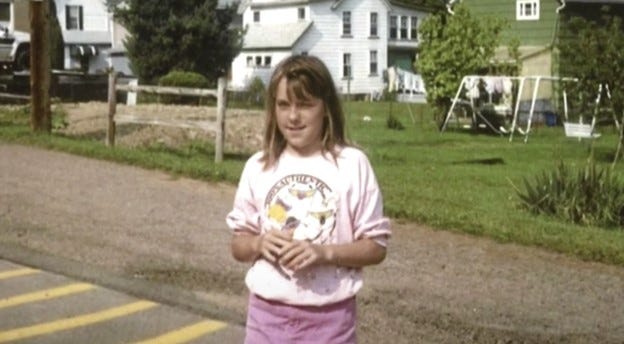
Child murder in Pennsylvania
CLASSIFICATION: Murder
LOCATION
Oil City, Pennsylvania
TIME PERIOD
1992-10-27
VICTIMS
1 confirmed
On October 27, 1992, 11-year-old Shauna Howe was abducted while walking home from a Girl Scouts Halloween event in Oil City, Pennsylvania, and later murdered by blunt force trauma after being thrown from a bridge. A local witness observed the abduction and provided descriptions of the abductor and getaway vehicle. A DNA match in 2002 tied James O'Brien to biological evidence on Howe's body, prompting expanded investigations that led to the arrest and prosecution of Eldred "Ted" Walker and brothers James and Timothy O'Brien. Walker pleaded guilty and was sentenced to 40 years; the O'Brien brothers were convicted and received life sentences without parole, and the case is considered solved.
Community analysis and theories will be displayed here when available.
On an October evening in 1992, eleven-year-old Girl Scout Shauna Melinda Howe left a Halloween party in Oil City, Pennsylvania, and started the short walk home. She never made it. [1][2]
Within days, her body was found on a rocky creek bed beneath a railroad trestle miles from town, dead from blunt force trauma. [1] The crime would stalk Oil City’s psyche for more than a decade, reshape the way the town celebrated Halloween, and fuel a long, bitter fight over who, exactly, bore responsibility for what happened to Shauna.
Shauna Melinda Howe was born July 11, 1981. [1] By the fall of 1992, she was an eleven-year-old Girl Scout living in Oil City, a working‑class town of about 10,000 people, roughly 80 miles north of Pittsburgh. [1]
On October 27, 1992, as Halloween approached, local children were excited for the holiday. [2] That evening, Shauna attended a Girl Scout Halloween party—described in some accounts as a church Halloween event connected with Scouts—in Oil City. [2]
Around 8 p.m., she left to walk home. [1] The route was short, only a couple of blocks. At the corner of West First Street and Reed Street—two blocks from her house—someone took her. [1]
A local resident, Dan Paden, saw a man approach Shauna. He then heard a scream; when he looked back, both the man and the girl were gone. [1] He would later give investigators details about the abductor and the car used as a getaway vehicle. [1]
That night, Shauna did not come home. [2]
Police and volunteers began searching. The next day, a family member—described as an uncle in local reporting—found a piece of Shauna’s clothing in the same general area where her body would later be discovered. A $15,000 reward was offered for information leading to the arrest of her killer.
Several days after the abduction, a family acquaintance searching near East Sandy Creek found Shauna’s body lying on a rock in the water. Her remains were discovered under or near a railroad trestle at a spot locals knew as Coulter’s Hole in Rockland Township, about eight miles from Oil City. She was still eleven years old.
The exact date of discovery is one of the case’s small but telling disputes. Some reports say her body was found on October 29, 1992; others give October 30, or simply “three days” or “two and a half days” after her abduction. All agree that the search ended in that creek bed beneath the trestle, a few days after she vanished.
Shauna had been sexually assaulted. [1] The cause of death was blunt force trauma. [1] At trial more than a decade later, forensic pathologist Dr. Isidore Mihalakis, who reviewed the original 1992 autopsy, told jurors that Shauna had fallen from the bridge, struck a concrete pier, scraped her side, and put her arm out to break her fall before landing in the rocky creek bed. The impact, he said, broke her arm, dislocated her shoulder, and caused fatal chest and head injuries. He testified that she must have been conscious as she fell, because she extended her arm in an instinctive attempt to brace herself.
A later defense argument highlighted the autopsy’s time‑of‑death window—between 2:30 p.m. October 28 and 2:30 a.m. October 29—as leaving some uncertainty about exactly when she died. Defense lawyers pointed to reports that people had searched the area earlier and claimed not to have seen the body, suggesting she might have been placed under the bridge after those searches. Mihalakis acknowledged that his opinion would change if there were irrefutable proof the body was not under the trestle on October 29.
The killing of an eleven-year-old Girl Scout as she walked home from a Halloween party cut directly into the town’s sense of safety. [1] With the community gripped by fear that a child killer was on the loose, city leaders made immediate changes.
Trick‑or‑treating scheduled for the day after the abduction was moved to daylight hours for the first time. Police watched from helicopters as parents escorted their children from house to house along quiet streets. Residents began locking their doors and driving their children to school.
In the longer term, the Oil City Council went even further. In the wake of Shauna’s abduction and murder, the council voted to ban night‑time trick‑or‑treating altogether. Every year afterward, trick‑or‑treating was held only in the afternoon. The ban would last 15 years.
Instead of traditional celebrations, Oil City residents gathered for gestures of remembrance—like a candlelit vigil held after Shauna’s death. [2]
Police Chief Robert Wenner, who had been a patrolman when Shauna was murdered and is a father of five, later said the crime shattered the “Mayberry attitude” many people had held toward their hometown. Years on, local parents spoke of still using tethers to keep toddlers from wandering and of a “gut‑wrenching feeling something bad’s going to happen” around Halloween.
For more than a decade, the case remained unsolved. The kidnapping and murder—and the allegation that Shauna had been thrown from the bridge—drew sustained media attention, but no charges that stuck.
Investigators did not forget the case. Venango County prosecutors later said that state police spoke to Eldred “Ted” Walker, an Oil City man, repeatedly between 1992 and 2004, but for years he denied knowing Shauna.
The real break came not from a new witness on the street, but from a prison cell and a lab.
In the mid‑1990s, James O’Brien, an Oil City resident, had been convicted in Venango County of attempting to abduct a woman on July 30, 1995. The victim testified that O’Brien followed her home from an Oil City tavern, forced her to the ground, tried to bash her head against the cement, and attempted to force her into the trunk of his car before fleeing when another vehicle passed. O’Brien admitted at trial that he fought with the woman after she slapped him but denied trying to abduct her. He was sentenced to 4½ to 20 years in prison.
In early 2002, while he was serving that sentence, O’Brien voluntarily gave police a DNA sample. According to reporting by The Derrick, sources said the FBI lab in Washington, D.C., told investigators that O’Brien’s DNA matched biological material recovered from Shauna Howe’s body.
That match has been consistently cited by prosecutors and the press as a major breakthrough. District Attorney Marie Veon would later tell jurors that a 2002 DNA test of seminal fluid found on Shauna’s bodysuit and in her mouth matched James O’Brien’s profile. According to a Web‑archived local article, O’Brien’s mother, Linda, said police informed her on March 1, 2002, that her son’s DNA matched DNA from the case.
The DNA evidence immediately intensified activity. The FBI and Pennsylvania State Police increased their presence in the region; troopers from multiple stations were called in, and an FBI profiler reportedly visited the area. Police retrieved employment records from area businesses and pursued new leads, but declined public comment, citing the ongoing investigation.
Around the same time, state police and forensic investigators began searching the yard at a modest house at 43 Laurel Avenue, the home of Eldred “Ted” Walker. A “low‑key” search of the house began late one Thursday and continued into Friday morning. Walker told a reporter he had opened his home to a number of people over the years and thought he might once have taken in some “really bad” people who had done “a disgusting thing.”
As of March 2002, despite the reported DNA match, James O’Brien had not been charged in connection with Shauna’s death.
The DNA link to James O’Brien became a cornerstone of the eventual prosecution—but it was contested from the start by his family.
Linda O’Brien has said publicly that she rejects the claimed match. She told reporters that investigators informed her the DNA match came from evidence recovered at Coulter’s Hole, where her son had camped in the past. In her view, DNA from bottles or other trash he left there could have contaminated evidence.
Linda also said that on March 1, 2002, her son was transported from state prison in Mercer to the FBI offices in Pittsburgh for questioning by state police and FBI agents. According to her account, he requested an attorney but that request was denied, and he ultimately refused to speak with investigators, maintaining his innocence.
Her contamination theory has never been adopted by authorities or the courts, but it has remained a point of dispute around the 2002 DNA breakthrough.
As investigators pressed on in the wake of the DNA news, Eldred “Ted” Walker moved from local curiosity to central suspect.
Walker, whose Laurel Avenue home had been searched in 2002, initially denied knowing Shauna when questioned by police. Prosecutors later said that over time, his story changed. According to District Attorney Marie Veon, Walker ultimately admitted that he and brothers James and Timothy O’Brien had plotted Shauna’s kidnapping, and that he overheard the O’Briens sexually assaulting her in his house.
By 2004–2005, the investigative dragnet closed. It was about twelve years after the crime when Walker and the O’Brien brothers were finally arrested for their roles in Shauna Howe’s kidnapping, rape, and murder.
In September 2005, Eldred “Ted” Walker pleaded guilty to kidnapping and third‑degree murder in Shauna Howe’s death as part of a plea bargain. He agreed to testify against James and Timothy O’Brien in exchange for lesser charges and a reduced sentence. Walker received a decades‑long term described in one report as 20 to 40 years in prison.
In court, Walker admitted that he physically grabbed Shauna that night and handed her to the O’Brien brothers. In a later‑leaked interrogation with a state police investigator, he described how he lured Shauna toward him by asking if she was selling Girl Scout cookies. He said he then grabbed her around the shoulders and passed her to Timothy O’Brien, who put her into their car, with James O’Brien behind the wheel.
Walker further admitted that he knew the O’Brien brothers were upstairs in his house with the girl because he heard her crying. According to prosecutors, this was the moment when the witness account from Dan Paden—the stranger approaching Shauna at the corner, the scream, the sudden disappearance—locked into place with Walker’s own admissions. [1]
In October 2005, James and Timothy O’Brien went on trial in Venango County before Judge Oliver J. Lobaugh. At the time, James was 33 and Timothy 39. They faced a slate of charges including murder (in multiple degrees), rape, kidnapping, involuntary deviate sexual intercourse, and criminal conspiracy.
District Attorney Marie Veon led the prosecution, assisted by Erie County District Attorney Brad Foulk. Veon told jurors that the evidence would show James and Timothy O’Brien kidnapped, raped, and then threw Shauna Howe to her death from a railroad trestle in Rockland Township. She said the case would be like a jigsaw puzzle with some missing pieces, but that the available pieces all pointed to the brothers’ guilt.
Veon outlined several key strands of evidence:
Physical and forensic evidence. Shauna’s body showed injuries consistent with being thrown or dropped from the trestle—scrapes, a broken wrist, and severe blunt force trauma. Jurors were shown crime‑scene photographs documenting these injuries, as well as an image the prosecution said showed evidence of sexual assault. A forensic pathologist testified that one wound would likely only be sustained if someone resisted an assault.
The trestle itself. Veon told jurors that fibers from Shauna’s clothing were found on a concrete pier near where she was believed to have struck during the fall, physically linking her to that structure.
DNA. Veon highlighted the 2002 DNA test showing that seminal fluid found on Shauna’s bodysuit and in her mouth matched James O’Brien’s profile. This, combined with the earlier FBI lab report cited in local coverage, was presented as objective scientific evidence connecting him to the assault.
Walker’s evolving admissions. Veon said that over years of questioning, Walker moved from denying knowing Shauna at all to admitting that he and the O’Brien brothers had plotted her kidnapping, that he grabbed her and handed her to them, and that he overheard them sexually assaulting her.
An inmate witness. Veon called Venango County inmate Ryan Heath, who she said came forward independently of Walker and corroborated crucial parts of his account. According to Veon, Heath reported that Timothy O’Brien admitted that he and his brother James had thrown Shauna off the bridge near Coulter’s Hole, where her body was found.
Together, prosecutors argued, these strands—Walker’s testimony, the DNA, the fibers, the inmate statement, and the autopsy—formed a coherent narrative: the brothers had participated in the kidnapping, sexually assaulted Shauna, and thrown her from the railroad trestle.
Defense lawyer Wayne Hundertmark advanced a very different story. He did not contest the condition of Shauna’s body or the horror of what had been done to her. Instead, he tried to reroute blame entirely onto Eldred “Ted” Walker.
In his opening, Hundertmark loudly called Walker “a murderer, a child molester,” stressing that the state had cut a deal with a self‑confessed participant in order to convict the O’Briens. He told jurors they would even tour the crime scene themselves.
Hundertmark’s core claims:
Walker as sole killer. Hundertmark argued that Walker, not the O’Briens, kidnapped and murdered Shauna. He said Walker had known her beforehand and was waiting for her that night, stalking her on her last walk home, contradicting Walker’s own suggestion that he simply handed her off.
Suspicious behavior and statements. The defense said witnesses would testify that one of Walker’s cars smelled of rotting flesh days after the abduction. Hundertmark also claimed Walker called his ex‑wife the night of the kidnapping and predicted that Shauna’s body would likely be found at Coulter’s Hole—knowledge the defense implied only the killer could have.
Timeline doubts. Hundertmark emphasized the medical examiner’s time‑of‑death window of 2:30 p.m. October 28 to 2:30 a.m. October 29. He pointed to accounts that people had searched under the trestle earlier without finding Shauna and argued she was not there at that time. If true, he suggested, this would undermine the state’s reconstruction and potentially the link to the O’Briens. Mihalakis himself had conceded his opinion would change if it were definitively proven that the body was not under the bridge on October 29.
Walker’s motive to lie. Hundertmark maintained that Walker only implicated the O’Briens after being prompted by investigators and after securing his plea deal. To the defense, Walker was an inherently unreliable narrator who had every incentive to shift blame.
The two narratives could not be reconciled. For the jury, the central question was whether Walker was telling the truth about the O’Briens’ involvement—or constructing a story to spare himself a life sentence.
In late 2005, after weeks of testimony and argument, the jury returned its verdict. Newspaper headlines in Pittsburgh summarized it bluntly: brothers guilty in the killing of an eleven‑year‑old girl.
James and Timothy O’Brien were found guilty on multiple murder and sexual‑assault‑related charges tied to Shauna Howe’s abduction, rape, and death. Each brother received a sentence of life imprisonment without the possibility of parole.
Walker, who had already pleaded guilty to kidnapping and third‑degree murder and agreed to testify against them, continued serving his 20‑to‑40‑year sentence.
For Shauna’s family, the courtroom was a painful place. Her great‑aunt, Alice Boozel, sat through testimony and later said the experience made her feel “half sick.” Shauna’s parents, Lucy Brown and Robert Howe, saw the case that had defined their town for years finally brought to a legal close.
Eldred “Ted” Walker remained in state custody after the trial. One report noted that he would have been eligible for parole in July 2024. In reality, he never reached that date.
Walker died in prison in 2022 at age 63 of natural causes, according to the Pennsylvania Department of Corrections. At the time, he was housed at the State Correctional Institution at Fayette, having been transferred there from SCI Albion in October 2021. A local article observed that his death fell on the 30th anniversary of the discovery of Shauna Howe’s remains.
Even with all three men convicted, pieces of the case remain contested:
Discovery date and timeline. Sources disagree on the exact day Shauna’s body was found—October 29, October 30, “two and a half” or “three” days after the abduction—and on how to interpret searches under the bridge that reportedly turned up nothing earlier.
Time of death. The broad 12‑hour window given for time of death leaves room for defense theories about when, and perhaps by whom, the fatal injuries were inflicted.
DNA interpretation. Prosecutors and an FBI lab report have consistently framed the DNA evidence as directly implicating James O’Brien; his mother has publicly argued that contamination at Coulter’s Hole could explain the match.
Who did what. The jury accepted the prosecution’s account that the O’Briens participated in the kidnapping, sexual assault, and fatal act of throwing Shauna from the trestle, but the defense’s portrayal of Walker as the sole killer continues to appear in commentary about the case.
Legally, however, the matter is settled: Walker, James O’Brien, and Timothy O’Brien all stand convicted for their roles in Shauna Howe’s murder.
The shadow of Shauna Howe’s murder changed Oil City’s Halloween for a generation. After the 1992 killing, trick‑or‑treating after dark was banned; every year, the council voted to keep the festivities confined to daylight.
It was not until 2008—fifteen years later—that the town finally restored night‑time trick‑or‑treating. The push came not from business owners or politicians, but from a fifth‑grader.
Ten‑year‑old Elizabeth Roess gathered 175 signatures, wrote an essay arguing that Halloween decorations are best appreciated at night and that many people aren’t home during the day to hand out candy, and presented her case to the Oil City Council. The council voted unanimously to bring back trick‑or‑treating after dark.
Even then, the town approached Halloween with caution. Police planned to deploy about twice their usual number of officers, plus school security and all of the town’s crossing guards. Chief Wenner recorded a public service announcement urging parents to accompany children, check their candy, and make sure kids wore reflective material.
One local blogger wrote that Shauna’s tragedy had “seemed to define Oil City for many years” and that “It’s time to move on.” But “moving on” has never meant forgetting. Shauna Howe is remembered in local accounts as an eleven‑year‑old Girl Scout whose walk home from a Halloween party ended in a crime that permanently altered how an entire town thinks about childhood, trust, and the dark. [1]
No recent news articles found for this case. Check back later for updates.
No evidence found for this case. Be the first to submit evidence in the comments below.
Join the discussion
Loading comments...
Shauna Melinda Howe was born.
Shauna Howe was abducted at the corner of West First Street and Reed Street while walking home from a Girl Scouts Halloween party.
Howe was raped and murdered; her body showed blunt force trauma and evidence indicated she had been thrown from a bridge.
Local resident Dan Paden witnessed the kidnapping and provided investigators details about the abductor and the getaway vehicle.
A DNA sample from Oil City resident James O'Brien matched DNA recovered from Howe's body, creating a major breakthrough in the investigation.
Following the DNA revelation, the FBI and Pennsylvania State Police increased their presence and searched Eldred "Ted" Walker's home.
Eldred "Ted" Walker pleaded guilty to kidnapping and third-degree murder as part of a plea bargain, agreed to testify against the O'Brien brothers, and was sentenced to 40 years in prison.
James and Timothy O'Brien were found guilty of charges related to Shauna Howe's abduction and murder and each received life sentences without the possibility of parole.
After remaining in place for 15 years following Howe's murder, Oil City's ban on night-time trick-or-treating was lifted in time for Halloween 2008.
Eldred "Ted" Walker, accessory in Howe's murder, died while serving his 40-year sentence; he would have been eligible for parole in 2024.
On October 27, 1992, 11-year-old Shauna Howe was abducted while walking home from a Girl Scouts Halloween event in Oil City, Pennsylvania, and later murdered by blunt force trauma after being thrown from a bridge. A local witness observed the abduction and provided descriptions of the abductor and getaway vehicle. A DNA match in 2002 tied James O'Brien to biological evidence on Howe's body, prompting expanded investigations that led to the arrest and prosecution of Eldred "Ted" Walker and brothers James and Timothy O'Brien. Walker pleaded guilty and was sentenced to 40 years; the O'Brien brothers were convicted and received life sentences without parole, and the case is considered solved.
Community analysis and theories will be displayed here when available.
On an October evening in 1992, eleven-year-old Girl Scout Shauna Melinda Howe left a Halloween party in Oil City, Pennsylvania, and started the short walk home. She never made it. [1][2]
Within days, her body was found on a rocky creek bed beneath a railroad trestle miles from town, dead from blunt force trauma. [1] The crime would stalk Oil City’s psyche for more than a decade, reshape the way the town celebrated Halloween, and fuel a long, bitter fight over who, exactly, bore responsibility for what happened to Shauna.
Shauna Melinda Howe was born July 11, 1981. [1] By the fall of 1992, she was an eleven-year-old Girl Scout living in Oil City, a working‑class town of about 10,000 people, roughly 80 miles north of Pittsburgh. [1]
On October 27, 1992, as Halloween approached, local children were excited for the holiday. [2] That evening, Shauna attended a Girl Scout Halloween party—described in some accounts as a church Halloween event connected with Scouts—in Oil City. [2]
Around 8 p.m., she left to walk home. [1] The route was short, only a couple of blocks. At the corner of West First Street and Reed Street—two blocks from her house—someone took her. [1]
A local resident, Dan Paden, saw a man approach Shauna. He then heard a scream; when he looked back, both the man and the girl were gone. [1] He would later give investigators details about the abductor and the car used as a getaway vehicle. [1]
That night, Shauna did not come home. [2]
Police and volunteers began searching. The next day, a family member—described as an uncle in local reporting—found a piece of Shauna’s clothing in the same general area where her body would later be discovered. A $15,000 reward was offered for information leading to the arrest of her killer.
Several days after the abduction, a family acquaintance searching near East Sandy Creek found Shauna’s body lying on a rock in the water. Her remains were discovered under or near a railroad trestle at a spot locals knew as Coulter’s Hole in Rockland Township, about eight miles from Oil City. She was still eleven years old.
The exact date of discovery is one of the case’s small but telling disputes. Some reports say her body was found on October 29, 1992; others give October 30, or simply “three days” or “two and a half days” after her abduction. All agree that the search ended in that creek bed beneath the trestle, a few days after she vanished.
Shauna had been sexually assaulted. [1] The cause of death was blunt force trauma. [1] At trial more than a decade later, forensic pathologist Dr. Isidore Mihalakis, who reviewed the original 1992 autopsy, told jurors that Shauna had fallen from the bridge, struck a concrete pier, scraped her side, and put her arm out to break her fall before landing in the rocky creek bed. The impact, he said, broke her arm, dislocated her shoulder, and caused fatal chest and head injuries. He testified that she must have been conscious as she fell, because she extended her arm in an instinctive attempt to brace herself.
A later defense argument highlighted the autopsy’s time‑of‑death window—between 2:30 p.m. October 28 and 2:30 a.m. October 29—as leaving some uncertainty about exactly when she died. Defense lawyers pointed to reports that people had searched the area earlier and claimed not to have seen the body, suggesting she might have been placed under the bridge after those searches. Mihalakis acknowledged that his opinion would change if there were irrefutable proof the body was not under the trestle on October 29.
The killing of an eleven-year-old Girl Scout as she walked home from a Halloween party cut directly into the town’s sense of safety. [1] With the community gripped by fear that a child killer was on the loose, city leaders made immediate changes.
Trick‑or‑treating scheduled for the day after the abduction was moved to daylight hours for the first time. Police watched from helicopters as parents escorted their children from house to house along quiet streets. Residents began locking their doors and driving their children to school.
In the longer term, the Oil City Council went even further. In the wake of Shauna’s abduction and murder, the council voted to ban night‑time trick‑or‑treating altogether. Every year afterward, trick‑or‑treating was held only in the afternoon. The ban would last 15 years.
Instead of traditional celebrations, Oil City residents gathered for gestures of remembrance—like a candlelit vigil held after Shauna’s death. [2]
Police Chief Robert Wenner, who had been a patrolman when Shauna was murdered and is a father of five, later said the crime shattered the “Mayberry attitude” many people had held toward their hometown. Years on, local parents spoke of still using tethers to keep toddlers from wandering and of a “gut‑wrenching feeling something bad’s going to happen” around Halloween.
For more than a decade, the case remained unsolved. The kidnapping and murder—and the allegation that Shauna had been thrown from the bridge—drew sustained media attention, but no charges that stuck.
Investigators did not forget the case. Venango County prosecutors later said that state police spoke to Eldred “Ted” Walker, an Oil City man, repeatedly between 1992 and 2004, but for years he denied knowing Shauna.
The real break came not from a new witness on the street, but from a prison cell and a lab.
In the mid‑1990s, James O’Brien, an Oil City resident, had been convicted in Venango County of attempting to abduct a woman on July 30, 1995. The victim testified that O’Brien followed her home from an Oil City tavern, forced her to the ground, tried to bash her head against the cement, and attempted to force her into the trunk of his car before fleeing when another vehicle passed. O’Brien admitted at trial that he fought with the woman after she slapped him but denied trying to abduct her. He was sentenced to 4½ to 20 years in prison.
In early 2002, while he was serving that sentence, O’Brien voluntarily gave police a DNA sample. According to reporting by The Derrick, sources said the FBI lab in Washington, D.C., told investigators that O’Brien’s DNA matched biological material recovered from Shauna Howe’s body.
That match has been consistently cited by prosecutors and the press as a major breakthrough. District Attorney Marie Veon would later tell jurors that a 2002 DNA test of seminal fluid found on Shauna’s bodysuit and in her mouth matched James O’Brien’s profile. According to a Web‑archived local article, O’Brien’s mother, Linda, said police informed her on March 1, 2002, that her son’s DNA matched DNA from the case.
The DNA evidence immediately intensified activity. The FBI and Pennsylvania State Police increased their presence in the region; troopers from multiple stations were called in, and an FBI profiler reportedly visited the area. Police retrieved employment records from area businesses and pursued new leads, but declined public comment, citing the ongoing investigation.
Around the same time, state police and forensic investigators began searching the yard at a modest house at 43 Laurel Avenue, the home of Eldred “Ted” Walker. A “low‑key” search of the house began late one Thursday and continued into Friday morning. Walker told a reporter he had opened his home to a number of people over the years and thought he might once have taken in some “really bad” people who had done “a disgusting thing.”
As of March 2002, despite the reported DNA match, James O’Brien had not been charged in connection with Shauna’s death.
The DNA link to James O’Brien became a cornerstone of the eventual prosecution—but it was contested from the start by his family.
Linda O’Brien has said publicly that she rejects the claimed match. She told reporters that investigators informed her the DNA match came from evidence recovered at Coulter’s Hole, where her son had camped in the past. In her view, DNA from bottles or other trash he left there could have contaminated evidence.
Linda also said that on March 1, 2002, her son was transported from state prison in Mercer to the FBI offices in Pittsburgh for questioning by state police and FBI agents. According to her account, he requested an attorney but that request was denied, and he ultimately refused to speak with investigators, maintaining his innocence.
Her contamination theory has never been adopted by authorities or the courts, but it has remained a point of dispute around the 2002 DNA breakthrough.
As investigators pressed on in the wake of the DNA news, Eldred “Ted” Walker moved from local curiosity to central suspect.
Walker, whose Laurel Avenue home had been searched in 2002, initially denied knowing Shauna when questioned by police. Prosecutors later said that over time, his story changed. According to District Attorney Marie Veon, Walker ultimately admitted that he and brothers James and Timothy O’Brien had plotted Shauna’s kidnapping, and that he overheard the O’Briens sexually assaulting her in his house.
By 2004–2005, the investigative dragnet closed. It was about twelve years after the crime when Walker and the O’Brien brothers were finally arrested for their roles in Shauna Howe’s kidnapping, rape, and murder.
In September 2005, Eldred “Ted” Walker pleaded guilty to kidnapping and third‑degree murder in Shauna Howe’s death as part of a plea bargain. He agreed to testify against James and Timothy O’Brien in exchange for lesser charges and a reduced sentence. Walker received a decades‑long term described in one report as 20 to 40 years in prison.
In court, Walker admitted that he physically grabbed Shauna that night and handed her to the O’Brien brothers. In a later‑leaked interrogation with a state police investigator, he described how he lured Shauna toward him by asking if she was selling Girl Scout cookies. He said he then grabbed her around the shoulders and passed her to Timothy O’Brien, who put her into their car, with James O’Brien behind the wheel.
Walker further admitted that he knew the O’Brien brothers were upstairs in his house with the girl because he heard her crying. According to prosecutors, this was the moment when the witness account from Dan Paden—the stranger approaching Shauna at the corner, the scream, the sudden disappearance—locked into place with Walker’s own admissions. [1]
In October 2005, James and Timothy O’Brien went on trial in Venango County before Judge Oliver J. Lobaugh. At the time, James was 33 and Timothy 39. They faced a slate of charges including murder (in multiple degrees), rape, kidnapping, involuntary deviate sexual intercourse, and criminal conspiracy.
District Attorney Marie Veon led the prosecution, assisted by Erie County District Attorney Brad Foulk. Veon told jurors that the evidence would show James and Timothy O’Brien kidnapped, raped, and then threw Shauna Howe to her death from a railroad trestle in Rockland Township. She said the case would be like a jigsaw puzzle with some missing pieces, but that the available pieces all pointed to the brothers’ guilt.
Veon outlined several key strands of evidence:
Physical and forensic evidence. Shauna’s body showed injuries consistent with being thrown or dropped from the trestle—scrapes, a broken wrist, and severe blunt force trauma. Jurors were shown crime‑scene photographs documenting these injuries, as well as an image the prosecution said showed evidence of sexual assault. A forensic pathologist testified that one wound would likely only be sustained if someone resisted an assault.
The trestle itself. Veon told jurors that fibers from Shauna’s clothing were found on a concrete pier near where she was believed to have struck during the fall, physically linking her to that structure.
DNA. Veon highlighted the 2002 DNA test showing that seminal fluid found on Shauna’s bodysuit and in her mouth matched James O’Brien’s profile. This, combined with the earlier FBI lab report cited in local coverage, was presented as objective scientific evidence connecting him to the assault.
Walker’s evolving admissions. Veon said that over years of questioning, Walker moved from denying knowing Shauna at all to admitting that he and the O’Brien brothers had plotted her kidnapping, that he grabbed her and handed her to them, and that he overheard them sexually assaulting her.
An inmate witness. Veon called Venango County inmate Ryan Heath, who she said came forward independently of Walker and corroborated crucial parts of his account. According to Veon, Heath reported that Timothy O’Brien admitted that he and his brother James had thrown Shauna off the bridge near Coulter’s Hole, where her body was found.
Together, prosecutors argued, these strands—Walker’s testimony, the DNA, the fibers, the inmate statement, and the autopsy—formed a coherent narrative: the brothers had participated in the kidnapping, sexually assaulted Shauna, and thrown her from the railroad trestle.
Defense lawyer Wayne Hundertmark advanced a very different story. He did not contest the condition of Shauna’s body or the horror of what had been done to her. Instead, he tried to reroute blame entirely onto Eldred “Ted” Walker.
In his opening, Hundertmark loudly called Walker “a murderer, a child molester,” stressing that the state had cut a deal with a self‑confessed participant in order to convict the O’Briens. He told jurors they would even tour the crime scene themselves.
Hundertmark’s core claims:
Walker as sole killer. Hundertmark argued that Walker, not the O’Briens, kidnapped and murdered Shauna. He said Walker had known her beforehand and was waiting for her that night, stalking her on her last walk home, contradicting Walker’s own suggestion that he simply handed her off.
Suspicious behavior and statements. The defense said witnesses would testify that one of Walker’s cars smelled of rotting flesh days after the abduction. Hundertmark also claimed Walker called his ex‑wife the night of the kidnapping and predicted that Shauna’s body would likely be found at Coulter’s Hole—knowledge the defense implied only the killer could have.
Timeline doubts. Hundertmark emphasized the medical examiner’s time‑of‑death window of 2:30 p.m. October 28 to 2:30 a.m. October 29. He pointed to accounts that people had searched under the trestle earlier without finding Shauna and argued she was not there at that time. If true, he suggested, this would undermine the state’s reconstruction and potentially the link to the O’Briens. Mihalakis himself had conceded his opinion would change if it were definitively proven that the body was not under the bridge on October 29.
Walker’s motive to lie. Hundertmark maintained that Walker only implicated the O’Briens after being prompted by investigators and after securing his plea deal. To the defense, Walker was an inherently unreliable narrator who had every incentive to shift blame.
The two narratives could not be reconciled. For the jury, the central question was whether Walker was telling the truth about the O’Briens’ involvement—or constructing a story to spare himself a life sentence.
In late 2005, after weeks of testimony and argument, the jury returned its verdict. Newspaper headlines in Pittsburgh summarized it bluntly: brothers guilty in the killing of an eleven‑year‑old girl.
James and Timothy O’Brien were found guilty on multiple murder and sexual‑assault‑related charges tied to Shauna Howe’s abduction, rape, and death. Each brother received a sentence of life imprisonment without the possibility of parole.
Walker, who had already pleaded guilty to kidnapping and third‑degree murder and agreed to testify against them, continued serving his 20‑to‑40‑year sentence.
For Shauna’s family, the courtroom was a painful place. Her great‑aunt, Alice Boozel, sat through testimony and later said the experience made her feel “half sick.” Shauna’s parents, Lucy Brown and Robert Howe, saw the case that had defined their town for years finally brought to a legal close.
Eldred “Ted” Walker remained in state custody after the trial. One report noted that he would have been eligible for parole in July 2024. In reality, he never reached that date.
Walker died in prison in 2022 at age 63 of natural causes, according to the Pennsylvania Department of Corrections. At the time, he was housed at the State Correctional Institution at Fayette, having been transferred there from SCI Albion in October 2021. A local article observed that his death fell on the 30th anniversary of the discovery of Shauna Howe’s remains.
Even with all three men convicted, pieces of the case remain contested:
Discovery date and timeline. Sources disagree on the exact day Shauna’s body was found—October 29, October 30, “two and a half” or “three” days after the abduction—and on how to interpret searches under the bridge that reportedly turned up nothing earlier.
Time of death. The broad 12‑hour window given for time of death leaves room for defense theories about when, and perhaps by whom, the fatal injuries were inflicted.
DNA interpretation. Prosecutors and an FBI lab report have consistently framed the DNA evidence as directly implicating James O’Brien; his mother has publicly argued that contamination at Coulter’s Hole could explain the match.
Who did what. The jury accepted the prosecution’s account that the O’Briens participated in the kidnapping, sexual assault, and fatal act of throwing Shauna from the trestle, but the defense’s portrayal of Walker as the sole killer continues to appear in commentary about the case.
Legally, however, the matter is settled: Walker, James O’Brien, and Timothy O’Brien all stand convicted for their roles in Shauna Howe’s murder.
The shadow of Shauna Howe’s murder changed Oil City’s Halloween for a generation. After the 1992 killing, trick‑or‑treating after dark was banned; every year, the council voted to keep the festivities confined to daylight.
It was not until 2008—fifteen years later—that the town finally restored night‑time trick‑or‑treating. The push came not from business owners or politicians, but from a fifth‑grader.
Ten‑year‑old Elizabeth Roess gathered 175 signatures, wrote an essay arguing that Halloween decorations are best appreciated at night and that many people aren’t home during the day to hand out candy, and presented her case to the Oil City Council. The council voted unanimously to bring back trick‑or‑treating after dark.
Even then, the town approached Halloween with caution. Police planned to deploy about twice their usual number of officers, plus school security and all of the town’s crossing guards. Chief Wenner recorded a public service announcement urging parents to accompany children, check their candy, and make sure kids wore reflective material.
One local blogger wrote that Shauna’s tragedy had “seemed to define Oil City for many years” and that “It’s time to move on.” But “moving on” has never meant forgetting. Shauna Howe is remembered in local accounts as an eleven‑year‑old Girl Scout whose walk home from a Halloween party ended in a crime that permanently altered how an entire town thinks about childhood, trust, and the dark. [1]
No recent news articles found for this case. Check back later for updates.
No evidence found for this case. Be the first to submit evidence in the comments below.
Join the discussion
Loading comments...
Shauna Melinda Howe was born.
Shauna Howe was abducted at the corner of West First Street and Reed Street while walking home from a Girl Scouts Halloween party.
Howe was raped and murdered; her body showed blunt force trauma and evidence indicated she had been thrown from a bridge.
Local resident Dan Paden witnessed the kidnapping and provided investigators details about the abductor and the getaway vehicle.
A DNA sample from Oil City resident James O'Brien matched DNA recovered from Howe's body, creating a major breakthrough in the investigation.
Following the DNA revelation, the FBI and Pennsylvania State Police increased their presence and searched Eldred "Ted" Walker's home.
Eldred "Ted" Walker pleaded guilty to kidnapping and third-degree murder as part of a plea bargain, agreed to testify against the O'Brien brothers, and was sentenced to 40 years in prison.
James and Timothy O'Brien were found guilty of charges related to Shauna Howe's abduction and murder and each received life sentences without the possibility of parole.
After remaining in place for 15 years following Howe's murder, Oil City's ban on night-time trick-or-treating was lifted in time for Halloween 2008.
Eldred "Ted" Walker, accessory in Howe's murder, died while serving his 40-year sentence; he would have been eligible for parole in 2024.